Capítulo 1
The Digital Paradox: When Information Meets Freedom
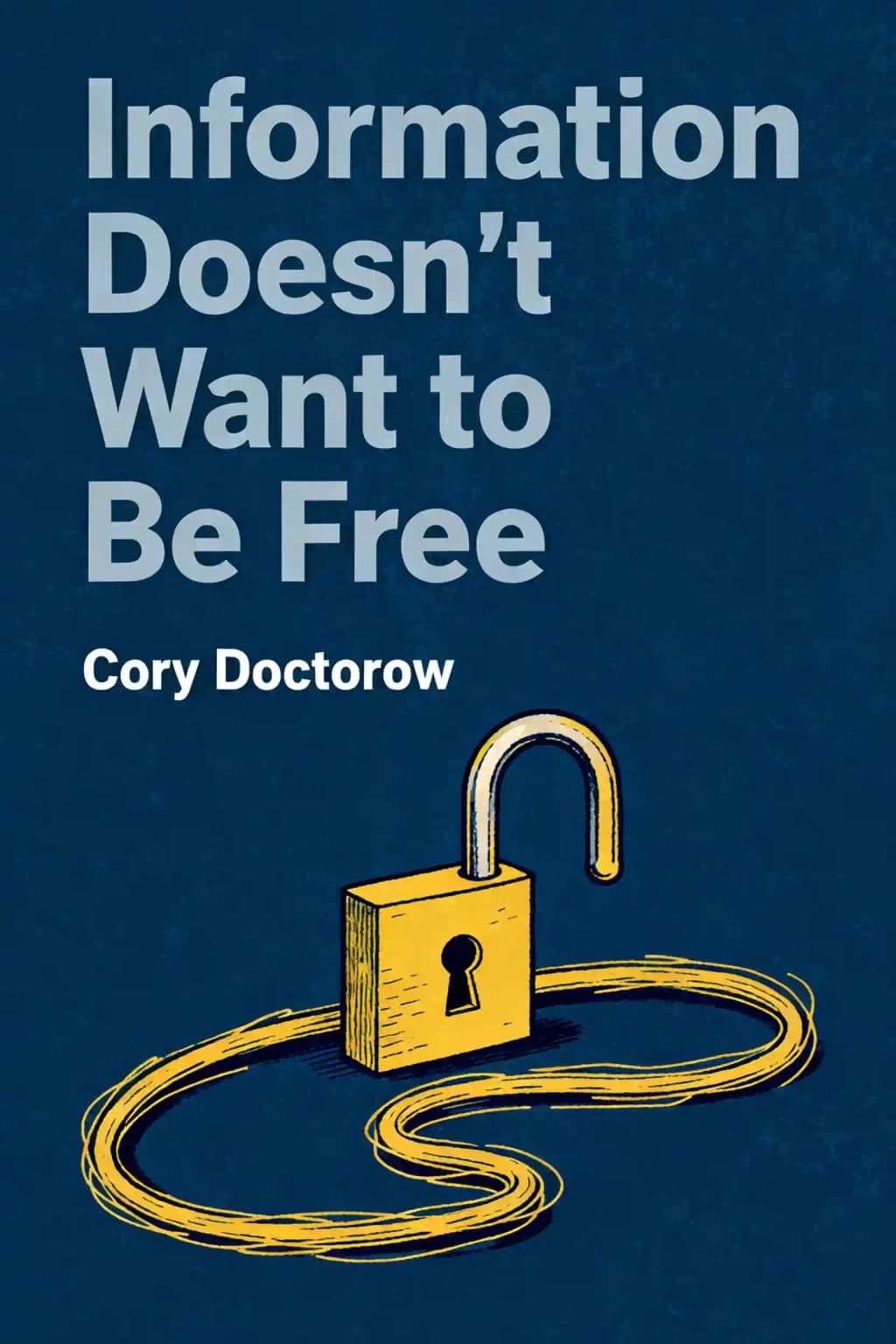
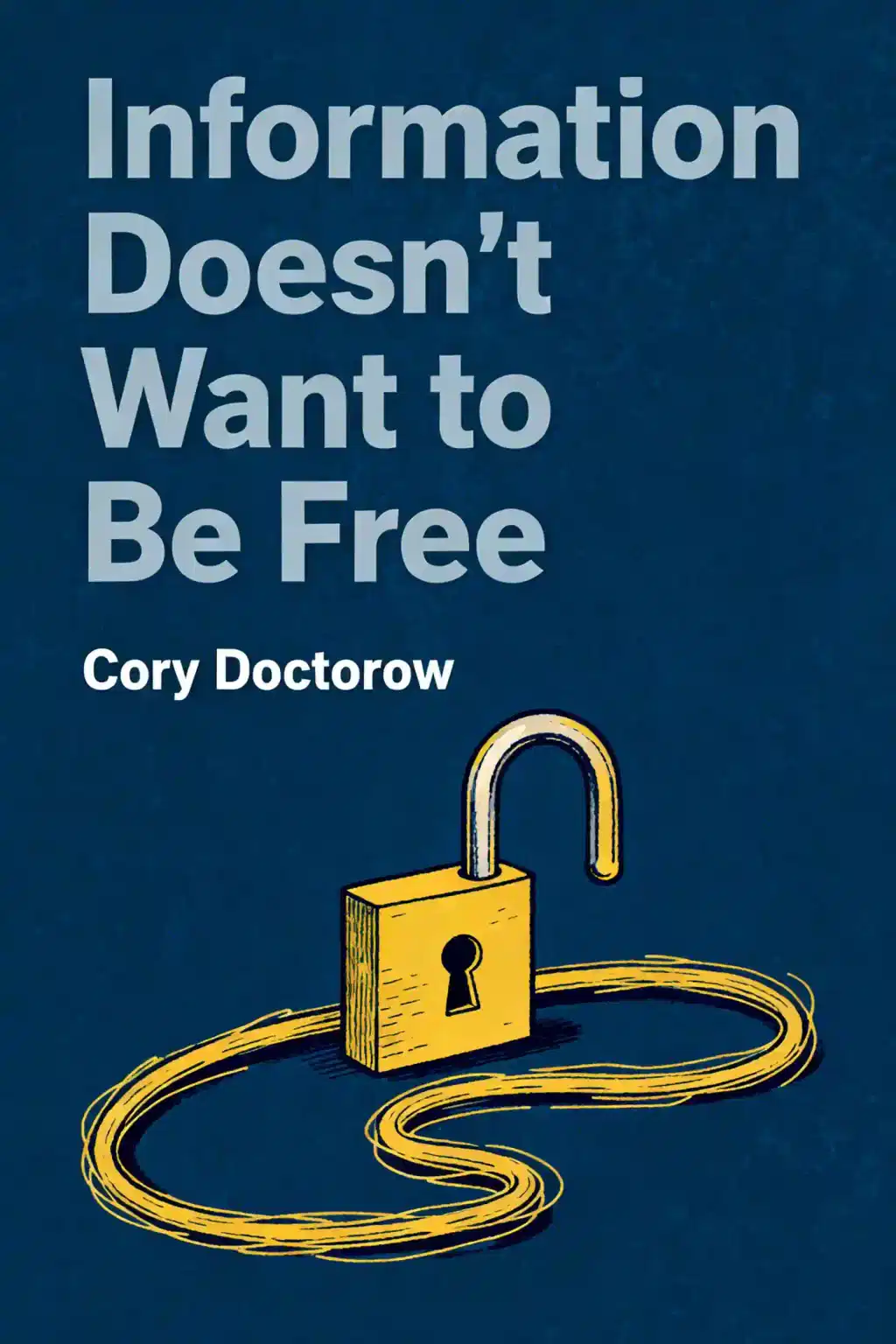
In a world where a single click can duplicate any file, what does it mean to "own" a digital creation? Cory Doctorow's provocative exploration of copyright, creativity and digital freedom has become required reading in Silicon Valley boardrooms and art school classrooms alike. When "Information Doesn't Want to Be Free" was published in 2014, it arrived with impressive endorsements - Neil Gaiman contributed a foreword comparing digital disruption to science fiction, while Amanda Palmer shared how her crowdfunding success validated the book's core principles. The book has since influenced a generation of creators navigating the digital landscape, from indie musicians to YouTube stars. What makes Doctorow's analysis so compelling is his rare dual perspective - he's both a successful author who depends on copyright and a digital rights activist who understands its limitations. His insights feel increasingly prescient as we witness the continued tension between creative livelihoods and technological change.
Capítulo 2
The Illusion of Digital Locks
Imagine buying a book that can only be read while standing on one foot, or a movie that stops playing if you blink too many times. These absurd restrictions would never work with physical media, yet we accept similar limitations on our digital purchases without question. This is the world of digital locks - technologies designed to control how we use content we've legitimately purchased.
Digital locks function through encryption - scrambling content so it can only be accessed through authorized devices with the right decryption keys. When you buy an e-book or digital movie, you're not really buying the content itself but a limited license to access it under specific conditions. The content remains scrambled, only temporarily decrypted when viewed through approved channels.
The problem? These locks don't actually prevent copying. They merely inconvenience legitimate customers while creating new power dynamics that harm creators. When a publisher uses Amazon's digital locks on e-books, they're not protecting against piracy - they're surrendering control to Amazon. If the publisher later disagrees with Amazon's terms (as happened with Hachette in 2014), they have no way to help customers transfer purchases to competing platforms. The books are effectively trapped in Amazon's ecosystem.
This creates what Brewster Kahle, founder of the Internet Archive, calls a "roach motel" where content checks in but can't check out. Microsoft demonstrated this strategy in the 1990s software market - encouraging developers to build Windows-exclusive software for "protection," then systematically undercutting those same partners once they became dependent on the platform. As Kahle puts it, Microsoft spent years shouting "Look out! Pirates!" with one hand while holding a knife in the other.
The music industry eventually recognized this danger. When Apple's iTunes Store gained monopolistic power through its proprietary FairPlay DRM system, record labels countered by offering DRM-free MP3s through Amazon. This competitive pressure eventually forced Apple to abandon music DRM entirely. Ironically, book publishers missed this lesson and eagerly locked their catalogs into Amazon's proprietary Kindle format.
Beyond market control, digital locks create serious security vulnerabilities. To function, they must hide their operations from device owners, essentially acting as sophisticated spyware. Sony's infamous 2005 CD rootkit secretly installed software that made files beginning with "$sys$" invisible to the operating system. When malware authors discovered this vulnerability, they began naming their viruses with the same prefix, effectively hiding behind Sony's protective shield.
The fundamental problem is inescapable: computers that deliberately hide their operations from their owners cannot be secure. As we increasingly live in a world made of computers - from cars to medical devices - this approach threatens not just our digital rights but our physical safety.
Capítulo 3
The Fame-Fortune Connection
"Obscurity is a far greater threat to authors and creative artists than piracy." This observation from Tim O'Reilly captures a fundamental truth about creative careers: before you can get paid, people need to know you exist. While copying alone won't make you rich, it can help build the audience necessary for financial success.
The internet excels at spreading information - both wanted and unwanted. Once something is online, it's nearly impossible to remove completely. Attempts to suppress content often backfire spectacularly through what Mike Masnick termed the "Streisand effect" (named after Barbra Streisand's lawsuit that transformed an obscure coastal erosion photo into an internet sensation). This reality shapes how creators must think about their work in the digital age.
While technological intermediaries have used digital locks to shift market power from creators to themselves, the internet has also weakened intermediary power by multiplying the ways audiences connect with creative works. Traditional gatekeepers like record labels offered notoriously unfair deals, but creators had little leverage when only three major labels existed. The explosion of internet distribution channels has changed this power dynamic.
Successful independent releases like Radiohead's "In Rainbows" and Nine Inch Nails' "Ghosts I-IV" proved artists could earn more outside the label system, forcing better terms for established artists and creating opportunities for newcomers. Even industry consolidation inadvertently helped by creating a pool of experienced freelancers available to indie projects.
For artists seeking to convert audience appreciation into income, several approaches remain viable in the internet era: (1) Selling physical copies - DVDs, books, prints - remains effective despite digital copying; (2) Selling ads, though less lucrative than before, benefits from lower production costs; (3) Selling merchandise and swag, which can become more valuable as work becomes more widely shared; (4) Taking commissions from companies or individuals who want to adjust your creative priorities; (5) Selling tickets to performances or events.
Randall Munroe's webcomic xkcd exemplifies the merchandise approach. By allowing unlimited noncommercial sharing while selling related t-shirts and posters, he's built a sustainable business where wider copying directly increases his income. Similarly, Madonna's $120 million deal with concert promoter Live Nation in 2007 showed how performers can profit from popularity regardless of whether their music is paid for or freely copied.
Live performance remains an ancient and reliable revenue stream - simply perform in a room with a door and charge admission. 2013 was the top-grossing year for live music in history, partly due to the internet's power to promote shows. The industry shift from recording to performance represents a technological disruption similar to how electric lights eliminated lamplighting jobs - technology gives and takes away business models.
Voluntary donations have also proven viable, especially when combined with psychological incentives. The Humble Indie Bundle's "pay-what-you-like" model for video games typically generates over a million dollars per bundle by leveraging competitive psychology and transparency. Similarly, Kickstarter enables crowdfunding through project pitches and tiered rewards.
Painter Molly Crabapple demonstrates crowdfunding's potential for visual artists. Rather than relying on galleries and wealthy patrons, she raised $25,805 for her "Week in Hell" project in 2011, where she decorated a hotel room while livestreaming to supporters. In 2012, she sought $30,000 for Occupy-inspired paintings and received nearly $65,000. Unlike traditional painters dependent on few wealthy patrons, Crabapple's thousands of supporters free her from worrying about "the caprice or high-handedness of a few fat cats."
Capítulo 4
The New Gatekeepers
Unless you're prepared to be your own ISP, payment processor, retailer, wholesaler, and marketing company, you'll need intermediaries to sell your work. These vital entities make it possible for creators to reach audiences without mastering every technical aspect of distribution. However, when competition among intermediaries becomes scarce, they turn into bottlenecks extracting maximum profit from dependent creators.
The internet is filled with intermediaries - ISPs, online service providers, software companies, app stores, payment processors, cloud computing services - all essential to creative ventures. What distinguishes modern intermediaries is their unprecedented scale. While a cable operator might manage hundreds of channels with thousands of hours of content daily, YouTube adds that much content every twenty minutes, making traditional oversight models impossible.
This scale problem becomes critical when considering intermediary liability - the legal responsibility platforms have for user-uploaded content. Cable operators aren't "common carriers," making them potentially liable for copyright infringement occurring on their channels. Under strict liability, they can be sued even for infringements during live broadcasts they couldn't possibly prescreen.
To manage this risk, the traditional media industry uses chains of indemnity - each channel indemnifies the carrier, each show indemnifies the channel, and suppliers indemnify shows, all backed by insurance. This creates a punishing "compliance" regime where artists must go far beyond legal requirements to satisfy insurers, such as documentary filmmakers needing permission to show company logos on bystanders' t-shirts.
Scaling this system to modern platforms is impossible - with Twitter processing 6,000 tweets per second, if just 0.01% infringed copyright, the hourly liability could approach a billion dollars before legal fees. The compromise solution has been "Notice and Takedown" (NaTD) - if someone claims your server hosts infringing content, you must remove it to avoid liability.
While pitched as "balanced," virtually everyone hates this system: media companies find searching every online service impossible and expensive; hosting companies struggle with thousands of daily takedown notices; and trolls abuse the system to silence critics. Abuses include police departments claiming copyright on videos of misconduct, Diebold suppressing evidence of flawed voting machines, and Scientology attacking opponents.
For creators whose content is wrongly flagged, they face a system without presumption of innocence, trying to convince administrators who prioritize avoiding legal trouble over making correct judgments. Despite these problems, the entertainment industry continues pushing for stricter enforcement through trade agreements and "voluntary" arrangements with major platforms.
The danger for creators is that regulations making it more expensive to be an intermediary will reduce their number. YouTube was founded by three people with venture capital; if legal costs vastly outweigh technical costs, there won't be new YouTubes. Existing services will consolidate and offer less competitive terms. Fewer channels means worse deals for creators, as any choke point between creator and audience becomes a tollbooth capturing profits.
Today, creators have many distribution options - if you don't like YouTube, there's Vimeo, Hulu and others. If you don't like Amazon, there's Smashwords, Lulu and more. This abundance gives creators leverage. When there are many buyers for creative works, creators get better deals. That's why increased operating costs for new distribution systems ultimately hurt creators' interests.
Capítulo 5
When Copying Is Life
The copyfight isn't primarily about creative livelihoods - it's about people and the open internet that affects everyone. When critics dismiss internet discourse as "trivial," they miss that most human interaction is trivial when viewed in isolation. These seemingly meaningless interactions bind us together and form the foundation for more significant moments.
The copyright wars impact all online expression. When we make it harder to share content online, we limit what people can say and do in this networked public sphere. Despite entertainment industry claims, simple math shows that only a fraction of YouTube could possibly consist of infringing content, with most being original personal expression.
Industrial regulations should apply to industries, not individuals. While banking regulations make sense for financial institutions, applying them to friends picking up lunch tabs would be absurd. Every regulation needs a test to distinguish industrial from private activity.
The internet has created "hyperinflation for copying." Copyright's test for industrial activity - making copies - no longer effectively distinguishes entertainment industry transactions from personal cultural activity. Forcing normal people doing normal things to navigate a system designed for sophisticated industries is unreasonable.
James Boyle describes traditional copyright as functioning like an anti-tank mine, designed to detonate only under heavy industrial equipment while ignoring civilians. But computers have made copying exponentially easier, turning anti-tank mines into anti-personnel mines. Now copyright affects twelve-year-olds posting Harry Potter fan fiction, not just corporations. Copyright makes sense as an industrial regulation between businesses, but not for regulating cultural activities among individuals.
While dispute resolution systems like Notice and Takedown might work for businesses, they're impractical for everyday users like teenagers or non-English speakers who lack legal resources. The Internet has become essential for political campaigns, job hunting, exposing police abuses, connecting diaspora communities, and countless other vital social activities.
A PricewaterhouseCoopers study in the UK found that Internet access significantly improved quality of life for vulnerable populations - better health, education, employment, and civic engagement. Families with Internet access enjoyed better health and nutrition, more social mobility, better educational outcomes for children, better jobs, more savings, and greater civic engagement. Internet access has become so essential that losing it creates increasingly grave consequences, yet policies haven't caught up with this reality.
Capítulo 6
The Surveillance-Censorship Complex
Despite research showing the benefits of Internet access, many countries still focus on restricting it. Internet blackouts have been used from Egypt to Burma to China's Xinjiang province. Even liberal democracies have implemented national censorwalls, usually starting with blocking child pornography.
These censorwalls aren't particularly effective - their proponents admit they're easy to circumvent, which is why blocklists must remain secret. This lack of transparency inevitably leads to overblocking and abuse. Copyright infringement is a particularly problematic censorship target because, unlike child pornography, it's ambiguous and lacks social consensus.
Modern censorship also requires surveillance - intercepting all Internet traffic to block specific requests. The MPAA even circulated a report arguing that SOPA/PIPA would work because they used the same measures as China, Iran, Saudi Arabia, and other authoritarian regimes. When Bono called for Chinese-style firewalls to protect artists' incomes, he failed to recognize that even China, with its engineering prowess and harsh punishments, can't effectively "track content" online.
Adding censorship to the Internet means adding surveillance. Creating firewalls means creating secret, unaccountable blocklists that result in mass abuse, even in liberal democracies.
Three Strikes laws in France, New Zealand, and the UK ban Internet access for users who receive three copyright complaints. But most connections serve multiple people - families or even multiple households. The accused might be innocent, with complaints resulting from WiFi tapping or rightsholder mistakes.
In 2008, the MPAA complained about movie downloads from an IP address that belonged to a University of Washington printer, demonstrating flaws in their enforcement system. In France, President Sarkozy's initial Three Strikes law (Hadopi) was rejected by the Constitutional Council as a human rights violation. Even after adding a "streamlined" court process, the system still presumed guilt, requiring the accused to prove their innocence.
Two years after Hadopi passed, the "You Have Downloaded" site traced copyright infringement to Sarkozy's official residence, while his government continued claiming millions of French citizens were about to be expelled from the internet. France abandoned Three Strikes in 2013 after only one case resulted in a fifteen-day ban that was ultimately canceled.
When Viacom sued Google over YouTube, they made a shocking demand: access to all videos marked "private" by users, claiming YouTube's privacy option prevented copyright enforcement. This would have exposed deeply personal content - like private videos of toddlers in bathtubs shared only with distant family members.
Viacom's legal theory, supported by major studios, broadcasters, publishers and record labels, argued that privacy itself was incompatible with copyright enforcement. It's absurdly hypocritical - these same studios enforce strict privacy at their own facilities, searching cars and confiscating cameras at studio gates. They would never tolerate the oversight they demand for everyone else.
Capítulo 7
The Computer-Infused World
Today's world is made of computers. Cars are computers we sit in, planes are flying Solaris minicomputers connected to industrial controllers, and houses increasingly are computers we live in. My generation will likely need hearing aids as we age, and these won't use analog circuits but will be digital computers with sophisticated algorithms for noise cancellation and connectivity features. We'll spend much of our lives with computers inside our bodies and our bodies inside computers.
Given this reality, I want protection. Any computer I put in my body or put my body into should take orders from its user and hide nothing. While malicious attacks will always be a risk - security is a process, not a product - we shouldn't deliberately build avoidable risks into the life-support mechanisms of our information society.
Security experts know that "security is a process, not a product." As Bruce Schneier noted, anyone can create an algorithm they themselves can't break - but that doesn't mean it's secure against everyone else. This is why real security systems are designed to be patched as flaws are discovered.
Digital locks increasingly demand "renewability" - the ability to update themselves after shipping. For example, if Blu-ray player keys are compromised, future discs can contain "revocation messages" that disable those players. From studios' perspective, this is security. But for device owners, it's a nightmare - your equipment can be remotely disabled through no fault of your own, with no way to predict or prevent it.
Renewability enables even worse abuses. Amazon once deleted purchased copies of Orwell's "1984" from customers' Kindles during a copyright dispute. They later restored the books and promised not to repeat this, but won't say if the capability remains. Traditional booksellers could never take back books after sale, nor could courts order them to. Amazon also remotely disabled text-to-speech features in books customers had already purchased.
The Snowden revelations shocked even the most paranoid security experts. While the public focused on the NSA collecting mountains of communications, tech experts were horrified by BULLRUN and EDGEHILL - $250 million annual programs where spy agencies deliberately sabotaged security products and standards.
The NSA even compromised NIST, forcing them to recall cryptographic standards after deliberate weakening - akin to introducing flaws in electrical wiring standards to start house fires when needed. This shocked experts because they understood a fundamental truth: security flaws can't be exploited only by "good guys." Deliberately weakening security in our digital infrastructure makes us all vulnerable to criminals and other malicious actors.
This connects directly to the copyfight because digital locks make it illegal to determine what your computer is doing, stop unwanted processes, or tell others about security issues. The situation worsened when the W3C agreed to bake DRM into web standards after pressure from entertainment companies and tech giants. This created browsers designed to disobey their owners' commands, requiring closed-source code and making security bug disclosure illegal.
Capítulo 8
Reimagining Copyright for the Digital Age
We're moving inexorably toward a world made of computers and networks. These systems must be designed as our honest servants, not our masters. Copyright still has a place, but since every device now functions by copying constantly, copyright can no longer be about "regulating copying."
The entertainment industry's biggest mistake was assuming that as copying became integral to every aspect of our world, their industrial regulations should expand to control everything. While specific regulations for entertainment's supply chain make sense, we must accept a fundamental truth: copying will never get harder. Hard drives will only get more capacious, cheaper, and faster. Networks will only become more accessible and faster. More people will know how to find content.
Today is the hardest day copying will ever face. Future generations will marvel at how limited our storage capacity was. In the 21st century, copying isn't a problem - it's a fact. You can't solve copying.
Limiting copyright's scope would allow us to design rules that treat copying as a fact rather than trying to prevent it. We could scrap digital-lock rules that empower retailers to create distribution choke points, and abolish intermediary liability rules that force authors to surrender rights to publishers.
The Copyright Act of 1790 established an elegant system: fourteen years of initial copyright, renewable by the author for another fourteen. This created a natural power balance. In the first term, publishers had leverage - they could demand full rights assignment to protect their investment against piracy, offering authors minimal compensation ("one potato").
But when renewal time came, the dynamic shifted dramatically. If the work had become successful, the author gained leverage. The publisher needed the author's signature to renew, or the work would fall into public domain. This forced publishers to offer fair compensation for successful works, creating a natural correction to initial power imbalances.
If digital locks and intermediary liability don't work, blanket licenses do. They're how karaoke bars, radio stations, and cover musicians legally use copyrighted works without individual negotiations. These licenses prioritize creators' economic rights to payment over their moral rights to control usage.
The system works by collecting fees from distributors or performers, pooling them in a collective licensing society, then dividing payments based on usage statistics. This approach makes copyright compliance normal and easy.
ISPs could offer "free downloads of all music, ever" by paying per-user fees to collectives, legitimizing currently "illicit" services and allowing them to focus on user experience rather than hiding from rightsholders. The ideal price point is where legal compliance becomes cheaper than skirting the law.
Capítulo 9
The Cycle of Creative Disruption
Copyright has always needed to evolve with technology, and these transitions are rarely smooth. When piano rolls were invented, sheet music composers were outraged and tried unsuccessfully to have recordings classified as copyright violations. Eventually, these "pirates" became the legitimate record industry through compulsory licensing.
Later, when radio emerged, record companies furiously tried to block broadcasts without explicit permission, arguing that while their technological appropriation of composers' works was progress, broadcasters doing the same to their records was piracy.
This pattern repeated with cable TV retransmitting broadcasts, and then with VCRs recording cable signals. Each time, the former "pirates" who had become established would argue that their own technological appropriation was progress, but the next wave was theft. Sony, after winning its landmark Betamax case in 1984, later became one of the first to sue Internet companies facilitating online copying. As Doctorow puts it: "Every pirate wants to be an admiral."
When confronted with this historical pattern, entertainment executives insist today's situation is different. The Internet makes copying so easy and global that technology must be tamed rather than accommodated.
They're half-right - technology is different now, but not how they think. Past regulations of technologies like VCRs affected limited domains. Today, regulating digital copying means regulating everything, as computers and networks are woven into every aspect of our lives.
No technological revolution happens without casualties. The information revolution, like those before it, creates opportunities for some while closing doors for others. No copyright system has ever provided income for more than a small fraction of artists.
What technology primarily does is create opportunities for new artists previously excluded from old systems. When movies emerged, stories that couldn't work on stage found a new medium. This pattern repeated with sound films, television, and internet video - each time expanding creative possibilities while increasing competition.
Just as the printing press fragmented religious authority by democratizing access to scripture, digital technology is transforming media creation and consumption. Before the Reformation, the Church commanded vast resources to build magnificent cathedrals over generations. When that era ended, humanity lost something magnificent.
But we gained something too: freedom of thought and more personal religious experiences through humble "wee kirks" that brought religion closer to congregants. The grand experience gave way to the intimate one, which offered its own kind of fulfillment.
Capítulo 10
Freedom's Digital Frontier
Historically, artists have championed free speech and privacy, fighting against censorship and surveillance. Some of the proudest moments in arts history have been when creators defended expression even for works they personally detested.
Despite the Internet's challenges to commercial fortunes, we must not sacrifice fundamental freedoms for better bottom lines - especially since such efforts have consistently failed, breeding increasingly resistant copying technologies like "trackerless torrents" that are harder to monetize or monitor.
Content-blocking and surveillance belong to censors, not creators. We owe it to our forebears who risked everything for creative freedom to uphold these values in the digital age. After Edward Snowden revealed the Internet's surveillance potential, we have a duty to make it a force for human connection with privacy and self-determination intact.
Science-fiction writers are terrible at predicting the future - but so is everyone else. Every significant aspect of the future is unguessably weird. Only the trivial can be extrapolated. What makes technology powerful is its ability to help us work in groups with lower coordination costs. Computers and networks have revolutionized our ability to coordinate, outperforming almost every previous technology except language itself.
I have fears that powerful entities will use technology to spy, sow discord, and oppress. But I also have hope that when the powerless gain organizational power, it creates a fundamental difference in kind, not just degree. Cryptography works - it can keep communications secure even from the most powerful surveillance agencies.
We need infrastructure that's free and fair, with rules promoting openness rather than centralization. It's never been cheaper to make art or reach an audience. My tool kit for creators: don't let retailers use DRM to control your customer relationships; don't let publishers use your copyright to corner your market; and remember the Internet is the nervous system of the 21st century - it can either set us free or enslave us.
For creators and their industries, it's not enough to love free speech - we must learn to share it too.