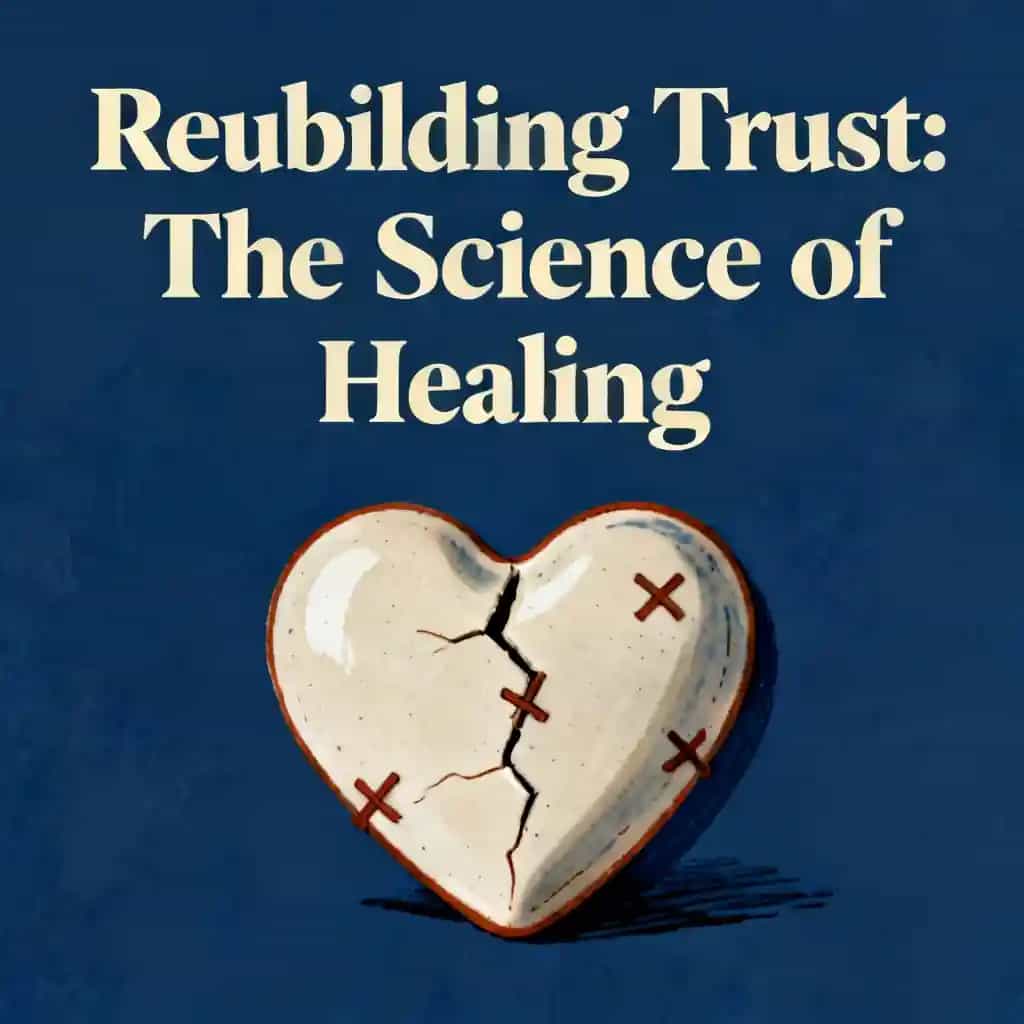
In "How Trust Works," USC professor Peter Kim shatters conventional wisdom: trust isn't always earned gradually. His award-winning research reveals why a single bad act outweighs lifetime goodness, and why apologies work for competence violations but not integrity breaches. Featured in NYT and NPR.
Sinta o livro através da voz do autor
Transforme conhecimento em insights envolventes e ricos em exemplos
Capture ideias-chave em um instante para aprendizado rápido
Aproveite o livro de uma forma divertida e envolvente
When trust is broken, it doesn't just damage a specific relationship-it can transform how we see humanity itself.
Divida as ideias-chave de How Trust Works em pontos fáceis de entender para compreender como equipes inovadoras criam, colaboram e crescem.
Destile How Trust Works em dicas de memória rápidas que destacam os princípios-chave de franqueza, trabalho em equipe e resiliência criativa.

Experimente How Trust Works através de narrativas vívidas que transformam lições de inovação em momentos que você lembrará e aplicará.
Pergunte qualquer coisa, escolha a voz e co-crie insights que realmente ressoem com você.

Criado por ex-alunos da Universidade de Columbia em San Francisco
"Instead of endless scrolling, I just hit play on BeFreed. It saves me so much time."
"I never knew where to start with nonfiction—BeFreed’s book lists turned into podcasts gave me a clear path."
"Perfect balance between learning and entertainment. Finished ‘Thinking, Fast and Slow’ on my commute this week."
"Crazy how much I learned while walking the dog. BeFreed = small habits → big gains."
"Reading used to feel like a chore. Now it’s just part of my lifestyle."
"Feels effortless compared to reading. I’ve finished 6 books this month already."
"BeFreed turned my guilty doomscrolling into something that feels productive and inspiring."
"BeFreed turned my commute into learning time. 20-min podcasts are perfect for finishing books I never had time for."
"BeFreed replaced my podcast queue. Imagine Spotify for books — that’s it. 🙌"
"It is great for me to learn something from the book without reading it."
"The themed book list podcasts help me connect ideas across authors—like a guided audio journey."
"Makes me feel smarter every time before going to work"
Criado por ex-alunos da Universidade de Columbia em San Francisco

Obtenha o resumo de How Trust Works como PDF ou EPUB gratuito. Imprima ou leia offline a qualquer momento.
Think about the last time someone let you down. Maybe a friend broke a promise, or a company failed to deliver what they advertised. Your first instinct was probably to pull back, to protect yourself. Yet here's what's strange: despite living in an era where trust seems to be collapsing-where only 36% of Americans say they trust their fellow citizens-we still extend trust to strangers every single day. We hand our credit cards to waiters, share our deepest fears with therapists we've just met, and click "I agree" on terms we haven't read. This paradox lies at the heart of a fascinating truth: we're hardwired to trust, even when logic suggests we shouldn't. Research reveals something counterintuitive about how we approach new relationships. We don't start at zero and slowly build confidence. Instead, we begin with surprisingly high trust levels-often at the midpoint or above on trust scales. This isn't naivety; it's evolutionary wisdom. Three forces drive this tendency: the systems around us (laws, incentives, social norms) that make betrayal costly; our personality traits that predispose many of us toward optimism; and our lightning-fast assessments of others based on competence, integrity, fairness, and loyalty. These snap judgments happen before we have real evidence, relying on shortcuts like group membership, reputation, and even facial features. A person with a "trustworthy face" often receives more trust-and then, remarkably, lives up to it. When people feel trusted, they frequently rise to meet those expectations rather than exploit them. This baseline trust greases the wheels of society. Without it, every handshake would require a background check, every transaction a legal team. Countries with higher trust levels consistently outperform low-trust societies economically, precisely because trust reduces friction and enables cooperation. But when that trust shatters, we're remarkably bad at putting the pieces back together.