How to be alone
Visão geral de How to be alone
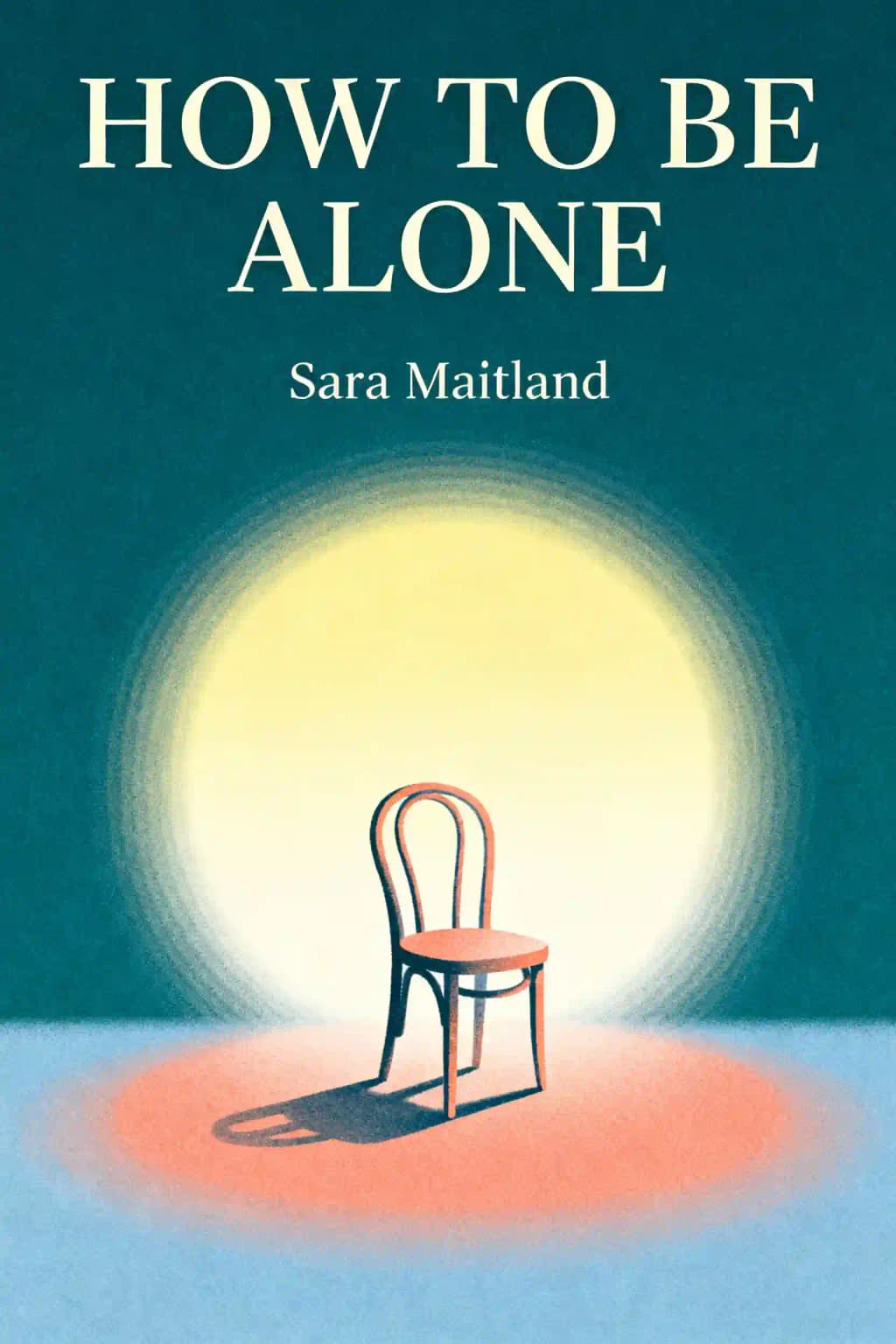
In "How to Be Alone," Sara Maitland boldly challenges our society's fear of solitude. Praised by The New York Times as "intelligent, non-self-helpy, yet immensely helpful," this cultural touchstone reveals why what we fear most might actually unlock our greatest creativity and fulfillment.

Temas principais em How to be alone
- intentional solitude
- cultural phobia
- solitary creativity
- historical asceticism
- monophobia recovery
Citações de How to be alone
We face a profound cultural problem with solitude.
The mass media profits from fear, making 'loner' synonymous with 'psychotic murderer.'
Living in constant defensive fear is unsustainable.
Running alone, for example, offers meditative benefits impossible in groups—'a mute button on the world.'
Maitland finds solitary walking in wild places 'a necessity as well as a joy'.
Personagens de How to be alone
- Sara MaitlandAuthor and solitude-seeker living in Scotland
- Philip KochThinker who identifies accusations against solitude
- Greta GarboActress who chose a simpler, solitary life
- Catherine of SienaSaint who created a 'hermitage of the heart'
- Anthony the GreatHistorical figure who lived decades in solitude
Baixar resumo de How to be alone
Obtenha o resumo de How to be alone como PDF ou EPUB gratuito. Imprima ou leia offline a qualquer momento.
Perguntas Frequentes Sobre Este Livro
How to Be Alone explores the cultural and historical stigma around solitude, arguing that embracing alone time fosters creativity, spiritual growth, and emotional resilience. Maitland blends personal anecdotes, philosophical insights, and practical strategies to reframe solitude as a rewarding experience rather than a social failure. The book critiques modern society’s fear of isolation and offers pathways to cultivate autonomy.
This book is ideal for introverts, writers, or anyone grappling with loneliness or societal pressure to conform to constant social interaction. It resonates with readers interested in mindfulness, spirituality, or self-discovery, particularly those seeking validation for valuing solitude. Fans of contemplative non-fiction like A Book of Silence (also by Maitland) will appreciate its depth.
Key themes include the distinction between loneliness and solitude, the historical evolution of societal attitudes toward being alone, and the connection between solitude and creativity. Maitland also examines how silence and wilderness experiences can deepen self-awareness and spiritual fulfillment.
Maitland challenges the notion that solitude is inherently negative by sharing her own experiences living in remote areas and citing historical figures like monks and mystics who embraced isolation. She provides experiments, such as quiet walks or digital detoxes, to help readers gradually acclimate to being alone without anxiety.
The book suggests incremental steps to embrace solitude, like spending time in nature, journaling, or engaging in solo creative projects. Maitland emphasizes “micro-solitudes”—brief daily moments of intentional isolation—to build comfort with being alone. She also advocates for reframing solitude as a choice rather than a deficiency.
Unlike memoirs like Lane Moore’s How to Be Alone (which focuses on emotional trauma) or Jonathan Franzen’s essay collection, Maitland’s work blends theology, philosophy, and self-help. It’s closer to her earlier book A Book of Silence but with a stronger emphasis on actionable strategies over purely reflective prose.
Some reviewers note the book leans heavily on historical and literary examples, which may overwhelm readers seeking straightforward self-help. Critics also highlight its niche appeal, as Maitland’s religious undertones and academic tone might not resonate with all audiences.
Maitland’s work as a theology writer, feminist, and wilderness dweller informs her perspective. Her conversion to Catholicism, residency in remote Scottish landscapes, and academic career shape the book’s blend of spiritual reflection, feminist critique of social norms, and advocacy for eccentricity.
Notable lines include:
- “Solitude is not the absence of company but the moment when our soul is free to speak to us.”
- “The fear of being alone is often the fear of encountering our true selves.”
These emphasize self-discovery and societal critique.
In an era dominated by digital connectivity and mental health crises, the book’s advocacy for intentional solitude offers a counterbalance to burnout and superficial social engagement. Its themes align with growing interests in mindfulness retreats and “quiet quitting” culture.
It expands on ideas from A Book of Silence by incorporating more practical guidance, while her theological works like A Big-Enough God underpin its spiritual arguments. Fans of her fiction, such as Daughter of Jerusalem, will recognize her lyrical prose style.
She likens solitude to a “wilderness”—a space for uncharted self-exploration—and a “mirror” reflecting unfiltered truths. These metaphors reinforce solitude as a transformative, albeit challenging, journey.