Capítulo 1
The Conservative Soul: Finding Home in a Fragmented World
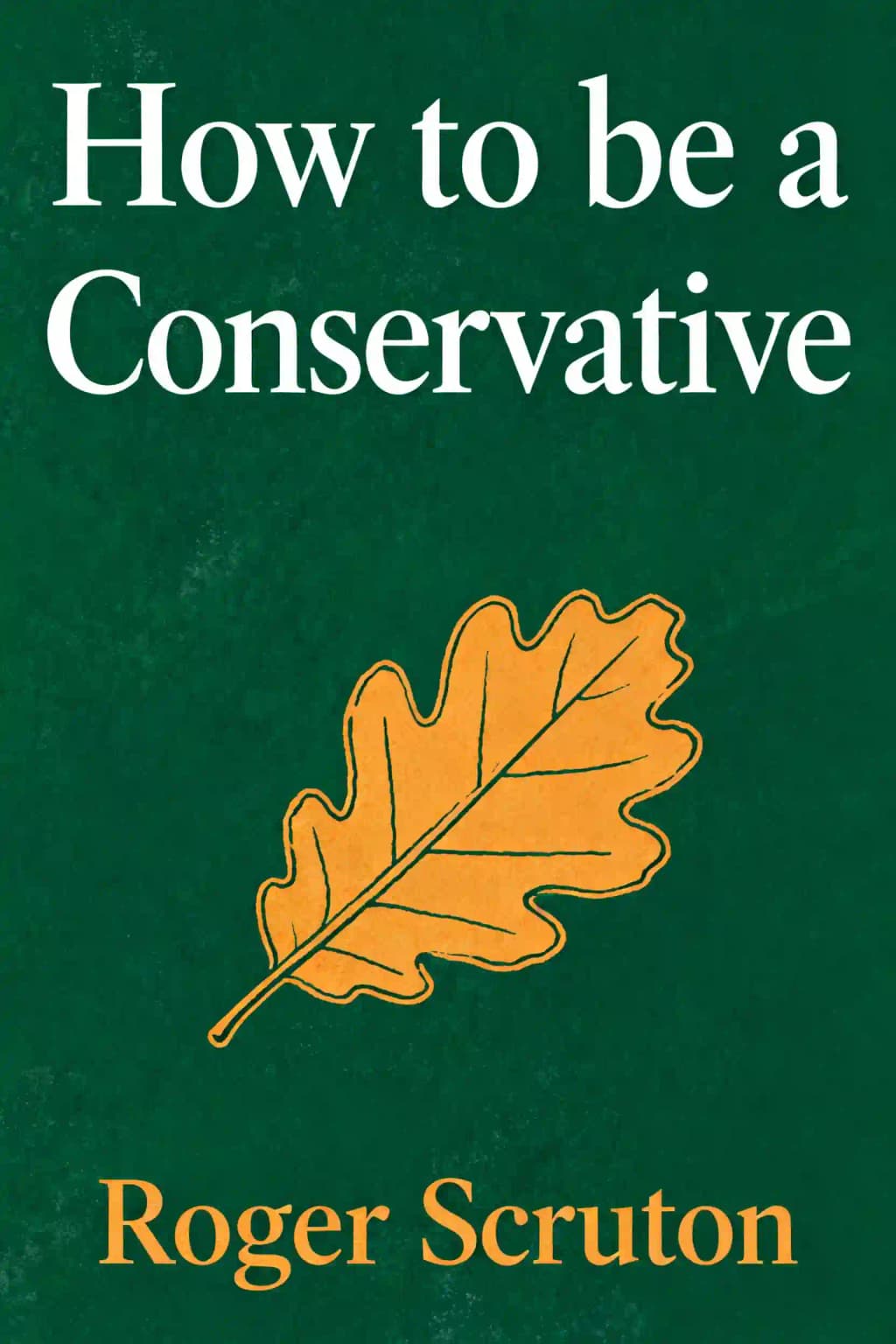
In a time when political labels are wielded like weapons, Roger Scruton's "How to Be a Conservative" stands as a thoughtful exploration of conservatism's intellectual foundations. Far from the caricature of stubborn resistance to change, Scruton reveals conservatism as a nuanced philosophy that acknowledges human imperfection while cherishing what works. The book has gained renewed relevance as Western democracies face crises of identity and purpose. Scruton, who passed away in 2020, was knighted for his contributions to philosophy and public education, and his work has influenced figures from Jordan Peterson to British Prime Minister Rishi Sunak. Even those who disagree with his conclusions respect his intellectual rigor-a quality increasingly rare in our polarized discourse.
Capítulo 2
A Personal Journey Through Political Awakening
My journey to conservatism began in unlikely circumstances. Growing up in a lower middle-class household with a Labour-supporting father, I absorbed his class-warfare perspective that viewed the Conservative Party as an establishment protecting business interests and aristocrats. Yet my father embodied what Robert Conquest observed-that everyone becomes right-wing about matters they understand deeply. Knowing local history, architecture, and countryside intimately, he became their ardent defender, founding the High Wycombe Society to protect against developers and modernist architecture. His example taught me that conserving things when worse alternatives threaten them is always right.
As an intellectual, I initially rebelled against authority at school and university. Yet about culture-philosophy, art, literature, music-I remained decidedly conservative, respecting order and discipline while acknowledging the need for judgment to preserve great traditions. My political transformation crystallized during the Paris events of May 1968, watching soixante-huitards attack "bourgeois" civilization while enjoying its freedoms and security. I realized that what they labeled "bourgeois" was precisely what made decent life possible.
The 1970s brought deeper engagement as I established the Conservative Philosophy Group and wrote "The Meaning of Conservatism" to counter Thatcherite free-market ideology. I reminded conservatives that society exists and is what conservatism fundamentally concerns. Freedom alone is insufficient-it's "a very good horse to ride, but to ride somewhere."
Visits to communist Eastern Europe revealed socialism not as idealistic theory but as an oppressive system maintained by force. In Prague, I encountered the dissident movement firsthand-professors, poets, students denied university admission-all reduced to working as "stokers" while devoting their lives to anamnesis, bringing forgotten cultural memory to consciousness. This experience showed me what happens when revolutionaries succeed in destroying inherited social fabric.
Through all these experiences, I've come to see our civilization as rooted in Christianity's culture of confession and forgiveness-habits that make civilization possible by enabling us to acknowledge faults, make recompense, and hold each other accountable.
Capítulo 3
The Bonds That Make Society Possible
We live in societies bound by citizenship, law, nationality, and neighborhood, yet these bonds alone cannot solve our coordination problem. Economic order depends on moral order, where sympathy, duty, and virtue create a foundation of self-sacrifice beneath self-interest. We are not merely rational economic actors but possess deeper motives enabling sacrifice either as blind attachment or responsible commitment to others.
Edmund Burke argued against "geometrical" revolutionary politics, seeing society as an association of the dead, living, and unborn bound by love rather than contract. We inherit benefits and pass them on, respecting accumulated social capital rather than consuming it through revolutionary destruction. Society depends on relations built from below through face-to-face interaction in families, clubs, schools, churches, and workplaces-traditions containing solutions to coordination problems discovered over time.
Political philosophers from Hobbes to Rawls have sought to ground political order in a social contract-freely chosen obligations reconciling freedom with obedience. But this theory assumes abstract individuals without attachments, while real human societies are inherently exclusive. The social contract paradoxically requires pre-existing membership. Even America's founding "We, the people" presupposed a community that already belonged together.
Human beings are fundamentally animated by oikophilia-love of home and the people within it. The oikos provides the foundation for the first-person plural of politics, the "we" that makes community possible. Through settlement, we create islands of intrinsic value amid instrumental reasoning. This is what conservatism defends.
When egalitarians targeted educational institutions in the 1960s, they transformed them from associations for transmitting knowledge into instruments of social engineering. By replacing education's internal purpose with the external goal of equality, they destroyed both knowledge and its benefits. Good effects in education arise not because they are directly pursued, but as by-products of pursuing knowledge for its own sake.
Despite the inevitable entropy of all human systems, conservatism remains the philosophy of attachment. We protect what we love against decay, studying how to retain these goods through necessary changes. As Lord Salisbury put it, "delay is life."
Capítulo 4
National Identity: Beyond Nationalism
When the French Revolutionaries burst onto the world stage, they declared the nation, not sovereign or deity, would command citizen allegiance. This new political conception spread devastation across Europe, eventually contributing to two world wars. By 1945, the emerging political class concluded nationalism had torn Europe apart and must be replaced-though precisely what remained buried in European integration processes.
Nationalism as ideology is dangerous like all ideologies, occupying religion's vacant space and exciting believers to worship the national idea. But for ordinary people, the nation simply means historical identity and continuing allegiance uniting them in the body politic-the first-person plural of settlement. These normal sentiments aren't just peaceful themselves but create peace between neighbors.
Our inheritance of secular law is precious-our principal defense against majority tyranny. Opposition must be protected for reason to enter government affairs. Politics requires a "we" that binds individuals together despite disagreements. Democracies need a national rather than religious "we," shaped by countless agreements between neighbors speaking the same language, living side by side.
Only when law derives from national sovereignty can it adapt to changing conditions. Religious law endures unchanging, becoming mysterious as its divine author. When we make laws for ourselves, we know what they mean. The essential question becomes "Who are we?" In modern conditions, the nation answers this question.
The European Union arose from belief that national sentiment caused European wars, requiring transnational government. But people don't identify with such entities. The Union suffers a permanent legitimacy crisis because treaties are dead hands that should govern only for specific purposes. The American experiment succeeded not as an empire but as a nation state, establishing secular law, territorial jurisdiction, and common language in a place people claimed as home.
Today, Western societies face a "culture of repudiation" in media and academia that attacks national identity. Conservatism counters with affirmation, recognizing the nation state as something worth defending in our increasingly global conflicts.
Capítulo 5
The Compassionate Society: Finding Truth in Socialism
Socialists believe in fundamental human equality and that society should provide all citizens equal chances at fulfilling lives. While the idea of "social justice" may not be fully coherent, it speaks to shared sentiments about fairness. No viable first-person plural can emerge in a society divided against itself-hence even conservative thinkers like Disraeli advocated "One Nation" approaches. Our mutual dependence creates obligations of gratitude, not just contract, and the benefits of social membership must extend to those whose efforts alone don't suffice. This is the truth in socialism: our interconnectedness demands we care for one another.
Modern welfare systems suffer from two major defects. First, they create a dependent class who lose incentives to work, often because employment would reduce family income compared to benefits. This dependency becomes intergenerational, with habits like out-of-wedlock births and malingering being inadvertently rewarded, ultimately damaging the sentiment of citizenship. Second, welfare systems have open-ended budgets with ever-increasing costs, particularly in healthcare and pensions, forcing governments to borrow against future generations. Though necessary reform is increasingly urgent, political polarization prevents consensus.
The real perversion of socialism lies in zero-sum thinking, which treats education as a system where success must be paid for by failure. This fallacy drives the hunt for places of excellence like Oxbridge and grammar schools to penalize them in the name of "social justice." Yet education, like markets, isn't zero-sum-a child failing at Latin might excel at music.
Rejecting this fallacy doesn't mean accepting all inequalities as just, since inequality breeds resentment that threatens social harmony. In America, wealthy people traditionally put their wealth to use, giving others a stake in their success, while Europeans often fear revealing success due to potential aggression.
Ultimately, socialism contains a core truth about sharing society's fruits but becomes dangerous when it attempts to remake human nature and impose equality from above through a benign state whose good intentions can never be tested.
Capítulo 6
Markets and Morality: The Truth in Capitalism
The term "capitalism" originated with Saint-Simon and was adopted by Marx to describe private ownership of production means. Though Marx's theory proved false, its terminology still shapes political debate. The fundamental truth in capitalism is that private ownership and free exchange are necessary in any large-scale economy where people depend on strangers. Unlike socialism, which views society as a mechanism for distributing pre-existing resources, capitalism recognizes that economic coordination requires dispersed knowledge accessible through the price mechanism.
Austrian economists like von Mises and Hayek demonstrated that economic activity depends on knowledge of others' wants and resources, which is dispersed throughout society and made accessible through the price mechanism in free exchange. When central authorities fix production and distribution, prices no longer indicate scarcity or demand, destroying crucial economic knowledge.
Hayek's theory doesn't claim markets are the only form of spontaneous order or sufficient for economic coordination. Free markets depend on other forms of spontaneous order for survival. Markets are held in place by moral and legal traditions that create solidarity which markets alone would erode. Both free exchange and enduring customs are justified as distillations of socially necessary knowledge.
Those who believe social order should constrain markets are right, but in true spontaneous order, these constraints already exist through customs, laws, and morals. British conservative thinkers like Hume, Smith, Burke, and Oakeshott saw no tension between free markets and traditional social order, trusting in the spontaneous moral constraints of community.
Yet conservatives should note that free markets and traditional morality may conflict despite both being forms of spontaneous order. Many conservative traditions actually rescue human life from market forces-traditional sexual morality, for instance, takes sex "off the market" by treating it as sacred rather than commodified. The sacred, by definition, is that which has no price, and concern for the priceless defines the conservative view of society.
A free economy requires free, responsible beings. Economic transactions depend not just on property rights but on trust-the relationship between parties. While Adam Smith's economy involved tangible assets with clear ownership and responsibility, modern financial markets trade in intangible assets that change hands before liability can arise. The subprime mortgage crisis exemplified this problem-banks trading debts no one could guarantee, conducted by "spectral entities" that evade accountability.
Conservatives support private property because they respect individual autonomy, but many fail to address property's abuses. Markets function beneficially only under impartial law where participants bear their actions' costs. Today's reality increasingly diverges from this ideal. Large corporations engage in malign competition to externalize costs. A new conservatism must defend property against its abusers and secure present freedom without burdening the next generation.
Capítulo 7
Individual Freedom: The Truth in Liberalism
The term "liberal" has evolved significantly over time. In America it now denotes those on the left who favor state intervention to equalize citizens' fates, while in the nineteenth century it meant advocating for individual freedom against authority and coercion. Liberalism is the philosophy that makes individual freedom a primary purpose of government while distinguishing political from religious social order.
Religious social order, exemplified in the Hebrew Bible and Koran, bases laws on divine prescriptions with earthly offices delegated from deity. By contrast, political order governs through man-made laws and human decisions. While religion demands unquestioning submission, politics offers participation, discussion, and consent-based lawmaking.
A society governed by consent emerges not necessarily from a social contract but from consensual dealings between citizens and authorities. As Adam Smith noted, order emerges "by an invisible hand" rather than through imposition. Hayek argued that common law emerges from free transactions, summarizing what reasonable beings already assume in their dealings. A consensual order requires individual sovereignty over one's life, with the state guaranteeing rights to life, property, and protection from coercion.
Modern democracy functions as a society of strangers where citizenship involves obligations to those we don't know. It enables strangers to stand together against authority and assert common rights. Western democracies grew from this virtue of citizenship rather than creating it. Political liberalism's gift has been working out conditions protecting dissidents and replacing religious unity with rational discussion.
In Western democracies, governments must make themselves acceptable to those who didn't vote for them. While compromise is suspect in battle or religion, it's essential to politics. Religious intrusion into politics endangers the political process-as seen in Egypt's struggles with the Muslim Brotherhood, which believes politics is about obedience to God's will rather than compromise.
Human rights emerged from two traditions: the ancient belief in natural law applying universally, and the common-law protection of individuals from arbitrary power. Locke combined these to argue for natural rights that guarantee individual sovereignty. These rights are fundamentally liberties-freedoms respected by leaving people alone. This tradition established liberal jurisprudence's fixed points: separation of powers, judicial independence, and procedural justice treating all citizens equally before impartial law.
Liberalism's truth slides into falsehood when the search for liberty becomes a search for "empowerment." While traditional natural rights are negative freedoms, egalitarians have inserted positive rights that impose duties on others. This opens the door to "rights inflation" and conflicts. Rights create three problems when inflated beyond basic liberties: they trump any non-right interest in court, courts resolve rights conflicts absolutely rather than through compromise, and many declared "human rights" lack philosophical foundation.
Freedom rights establish personal sovereignty where one's choice is law, creating fixed points from which people can negotiate and agree. Without these rights, agreements lack guarantees and our spheres of action remain vulnerable to invasion. While freedom rights protect sovereignty through non-interference, claim rights threaten consensual order by imposing duties without grounds, overriding others' sovereignty.
Capítulo 8
Cultural Inheritance: The Truth in Multiculturalism
Conservatism emerged with the Enlightenment, acknowledging the benefits of citizenship that vested power in people while recognizing that rulers must answer to the ruled. Yet conservatives like Herder, Maistre, and Burke warned that Enlightenment freedoms depended on cultural foundations the new order couldn't guarantee. They argued that political order requires cultural unity that politics alone cannot provide.
The Enlightenment recognized shared human reasoning powers across cultures, spurring immense curiosity about varieties of human experience and community. Western societies opened to immigration with an ideal of citizenship based on what unites people-territory, good government, neighborliness, civil institutions-rather than what divides them. Integration works when both sides make effort to adapt the common culture to include newcomers. This is the truth in multiculturalism: communities bearing strange gods can be absorbed into Western civilization.
The virtue of Western inclusivity has been weaponized to repudiate our civilization's claim on us. Political correctness demands we marginalize inherited customs to become "inclusive," while encouraging self-denigration. This "down with us" mentality destroys old loyalties and the certainties on which citizenship depends. The culture of repudiation attacks reason itself, dismissing it as merely "Western values" with no objective truth.
Richard Rorty's "pragmatism" rejects Enlightenment reason, defining truth merely as "what is good for us to believe" and objectivity as simply "intersubjective agreement." Yet his undefined "we" reveals itself as Western liberals who reject traditional authority and religion. This relativism creates a paradox: the Islamic ummah represents history's most extended consensus, yet Rorty would consider his post-modern atheism superior-something his own theory cannot justify.
Western culture has long celebrated universal human values, venturing beyond Christian boundaries in works from Orlando Furioso and Don Quixote to Madama Butterfly and Das Lied von der Erde. These achievements, alongside secular law and territorial jurisdiction, reflect loyalties enabling identification with those from "elsewhere." Our shared civic culture, built on Judeo-Christian neighbor-love and respect for individual sovereignty, allows for diverse private lives while maintaining public cohesion. Immigrants can share in this culture, which has always incorporated elements from around the world while maintaining core principles.
Capítulo 9
Stewardship: The Truth in Environmentalism
Conservatives view society as a partnership between the living, unborn and dead, favoring civil association over state intervention. This "oikophilia"-love of home-naturally aligns with environmentalism, yet conservative parties haven't embraced this cause. Two factors explain this: the conservative movement's corruption by big business interests that dismiss conservation efforts, and environmentalists' focus on overwhelming global problems beyond national control, leading to surrender of sovereignty to internationalist schemes.
Environmental protection requires non-egotistical motives that ordinary people can embrace. The common cause between environmentalists and conservatives is territory-the object of love expressed through the nation state. While environmentalists acknowledge local concerns with "Think globally, act locally," they often resist framing this in national terms. Yet nations possess both territorial attachment and sovereignty, translating belonging into collective decisions and self-imposed laws.
Global institutions have failed to limit environmental damage-they've actually accelerated it by eroding national sovereignty and breaking down self-sufficient economies. The most successful environmental initiatives have emerged from national or local schemes protecting places recognized as "ours" through inherited entitlement: England's National Trust, American national parks, Iceland's cod protection, Ireland's plastic bag ban, Swiss planning laws, Britain's Green Belt policies, and local fishery management in Maine and Norway.
While environmental problems transcend national boundaries, the solution isn't necessarily international bureaucracies with no attachment to places they regulate. The real solution to climate change is scientific-discovering affordable clean energy-rather than diplomatic. Meanwhile, treaty-making power is wasted on climate agreements no nation can currently implement, while solvable problems like overfishing, pesticide damage to biodiversity, and ocean plastic pollution are ignored.
Conservatives don't oppose all change-many things must change given our unprecedented prosperity and population. Throughout history, humans have survived through adaptation. Rather than vindictiveness, we need trusteeship; not unenforceable treaties but examples of successful stewardship; not attacking markets but using them to restore equilibrium.
Capítulo 10
Beyond Borders: The Truth in Internationalism
Conservatism is naturally suspicious of attempts to control a country from beyond its borders. While acknowledging individual rights, it recognizes that opposition, free expression, and compromise require a shared national identity. People must identify with their country, territory and cultural inheritance to take neighbors seriously as equals deserving protection. However, conservatives must also acknowledge the truth in internationalism: sovereign states should deal with each other through rights, duties, and responsibilities, entering binding agreements like the UN that have helped resolve many conflicts.
The fundamental truth of internationalism has been captured by people with an agenda and turned to falsehood. European integration, conceived during World War I and realized after World War II, was designed to prevent further continental conflicts. While these institutions have brought prosperity and security, conditions have changed dramatically. The EU's constant seizure of powers without accountability undermines trust in the political process, and "ever closer union" alienates Europeans rather than tapping their creative potential.
The European Union has attempted to soothe growing discontent through "subsidiarity," a term with Catholic origins meaning decisions should be taken at the lowest level compatible with governance. For Eurocrats, subsidiarity means powers allocated from the top, with European institutions determining which powers national governments may retain. This contradicts the conservative understanding of subsidiarity as "power granted by liberty, not liberty by power."
The transnational view of conflict resolution has led to serious constraints on law-abiding democracies while failing to restrain lawless states. The Geneva Convention on Refugees and Asylum, ratified in 1951 when circumstances were vastly different, now enables dictators to export opponents without killing them, with all costs borne by law-abiding states.
Internationalists tend toward cosmopolitanism, identifying as "world citizens" while repudiating national loyalties. Yet democratic nation states have generally been peaceful international actors. Even with disputed borders, nations like Canada and the United States resolve differences without war because their citizens prefer negotiation to conflict.
Capítulo 11
The Conservative Vision: Free Association and Intrinsic Value
Conservatism doesn't aim to correct human nature but to understand how societies work and create space for their success. Its fundamental philosophy shows how self-consciousness and freedom emerge through engagement with others, with mutual rights and duties replacing conflict and domination. The institutions of law, education and politics aren't freely chosen from detachment but are the means through which we acquire freedom and exist as self-conscious agents.
Free association is essential because intrinsic values emerge from social cooperation rather than being imposed from above. What matters to us comes through our own efforts at construction. From human affection, we build enduring associations with rules, ceremonies and hierarchies that give our activities intrinsic worth-schools, churches, clubs, societies and countless other formal groups where people willingly submit to regulations because they see their purpose.
When Communists took power in Eastern Europe, they immediately destroyed independent civil associations-Janos Kadar closed 5,000 such organizations in Hungary after 1948, from brass bands to private schools to charities. Under communism, all private charity became illegal. When civil association is absorbed into state-directed progress, everything becomes merely a means to an end.
Free association inevitably leads to discrimination, creating tension between liberty and equality. Private schools in Britain exemplify this tension. While these institutions provide superior education and social advantages to their students, they feed class divisions. The conservative solution isn't to close such institutions but to expand access to them. Social mobility, not enforced equality, addresses resentment effectively.
Civil society grows from below through human association, creating freely sustained order rather than purpose-driven enterprises. Knowledge flourishes in autonomous institutions that follow internal impulses rather than external utility, often producing unexpected benefits. Even seemingly useless pursuits like astrophysics or classical languages may ultimately yield profound social goods in unpredictable ways.
Civil society should be a spontaneous order emerging from voluntary transactions. Conversation provides a paradigm for understanding this-not speech directed toward predetermined goals, but reciprocal exchange where purposes emerge from the interaction itself. Liberal legal systems function like well-mannered conversations-establishing side constraints rather than dictating goals.
Capítulo 12
Beyond Economics: Realms of Value in Modern Life
The state's role should be both less than socialists require and more than classical liberals permit. The state should protect civil society from external enemies and internal disorders, going beyond Nozick's "night watchman state" since civil society depends on attachments requiring collective welfare provision. Yet it cannot be the universal provider advocated by egalitarians, as value and commitment emerge from autonomous associations that must grow organically from below.
Politics should merely create space for civil society to flourish, as value emerges through many channels, bringing authority, peace, and membership-but never through political programs or economics. Unlike economics, which prices everything and assumes we know our ends in advance, our deepest values emerge through cooperative endeavors and social dialogue.
Religion stands first among the traditions that create value, shining light from our social feelings into the cosmos. Christianity reduced commandments to two fundamental duties: loving God and loving one's neighbor. These duties require an inward posture before outward deeds, as Christ demonstrated with the Good Samaritan parable, showing that neighbor-love extends to strangers regardless of faith or ethnic identity.
As religion retreats from public life, the family becomes the primary source of moral education and fundamental attachments. Though long targeted by revolutionaries, the family remains a realm where life's ends are constructed and enjoyed, providing our primary image of home. Marriage in every recorded society represents more than cohabitation-it's an existential transition where partners commit not just to each other but to future children and the collective future.
While religion becomes marginal and family loses privileged status, work and leisure increasingly define our primary spheres of association. People find fulfillment when they view work as a realm of value-an end in itself-especially when they've invested their aspirations in developing skills and enjoy workplace companionship.
Traditional friendship developed through physical presence, with attention fixed on the other's face, words and gestures, creating self-knowledge through mutual recognition and response. When attention shifts from face-to-face encounters to screen-mediated relationships, a fundamental change occurs. With finger on the button, I can terminate the interaction at will, maintaining ultimate control while never truly risking myself.
Culture itself is judgment. Consider art-not a "natural kind" with fixed essence, but a functional kind like jokes, defined by purpose. Art offers objects of aesthetic interest, which may succeed or fail, please or offend. A culture comprises intrinsically interesting artifacts linked by judgment to our aspirations.
Capítulo 13
Preserving What Matters: A Call to Action
Always there will be those who seek mass movements of solidarity rather than free association and civil society, perhaps with themselves in charge. Conservatives understand this and wish to preserve civilization's frail crust, knowing that beneath it lies not Rousseau's noble savage but the violent world of hunter-gatherers. As Lord Salisbury put it, "delay is life."
Politicians have succumbed to bureaucrats due to economics' transformation from a science of instrumental reasoning to the ideology of modern life. When economics triumphs over politics, human questions are replaced by mathematical ones based on self-aggrandizing assumptions.
Immigration has become politically contentious as liberal journalists champion the vulnerable without cost to themselves. This makes freedom of speech increasingly urgent as modern censorship operates through intimidation rather than state action. While we consider free speech a default position of democracy, orthodoxy and conformity are humanity's natural state.
We comfort ourselves with sanitized stories of innocent former times, then mourn when reality intrudes. Yet acknowledging our losses helps us bear them, particularly the loss of religion. The English have been especially active in conserving beauty-towns, churches, countryside and monuments-because beauty tells them they are at home in the world.
We have a duty of remembrance to those who produced our country's contours, institutions and laws. Inheritance brings trusteeship obligations; things fought and died for shouldn't be squandered. Places without this connection become "wastelands of exurbia" where past and future generations are disregarded.
Western civilization, unlike Eastern traditions that counsel detachment, has made loss its principal artistic theme. We bear each loss as a loss, consecrating it through sacrifice. Without religion, people flee from loss, developing "contagious hardness of heart" where nothing merits mourning. But beauty offers another resource-our greatest art meditates on loss, conveying the concept of the sacred. As Nietzsche wrote, "we have art so that we may not perish of the truth." We should live in the spirit of Remembrance Sundays, seeing our losses as sacrifices that purchased our reprieve, rather than staring into the void or sweeping away all shadows of the past.