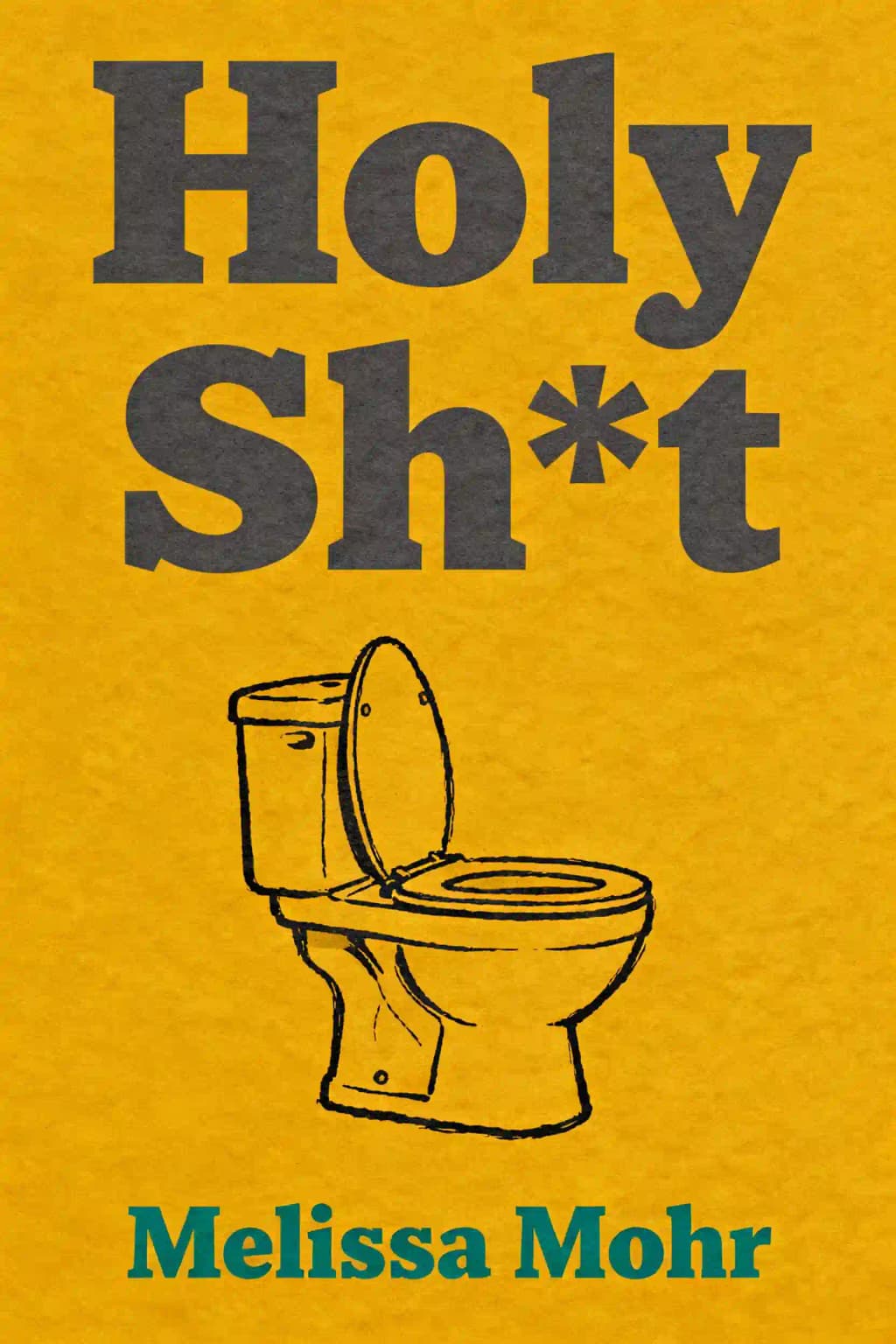
Dive into the taboo with "Holy Sh*t," where Melissa Mohr reveals how swearing evolved from medieval oaths that supposedly mutilated Christ's body to George Carlin's famous routines. Why did Victorians fear body talk more than blasphemy? The answer reshapes how you'll hear every curse word.
Melissa Mohr is the acclaimed author of Holy Sht: A Brief History of Swearing* and a leading expert in linguistic and cultural history. A medieval and Renaissance scholar with a PhD in English literature from Stanford University, Mohr combines academic rigor with wit to explore the evolution of obscenities, oaths, and societal taboos. Her work bridges ancient Roman vulgarities, medieval religious practices, and modern profanity, offering a compelling lens into how language reflects cultural values.
Mohr’s insights have been featured in The Guardian, The Wall Street Journal, and The Washington Post, which hailed her book as “one of the most absorbing and entertaining books on language.”
She has appeared on NPR’s Morning Edition, BBC programs, and international media, discussing the physiological, historical, and social dimensions of swearing. Holy Sht* became a Guardian bestseller, translated into Turkish and Korean, and praised for its blend of scholarly depth and accessible humor. Mohr’s ability to transform niche linguistics into engaging narratives has solidified her reputation as a standout voice in cultural criticism.
Holy Sht: A Brief History of Swearing* traces the evolution of profanity through two categories: religious oaths ("holy") and bodily/sexual obscenities ("shit"). Melissa Mohr explores their roles from ancient Rome and the Bible to modern times, analyzing cultural shifts like Renaissance privacy norms, Victorian censorship, and 20th-century racial slurs. The book blends academic rigor with humor, revealing how societal values shape taboo language and its physiological impacts.
Linguists, cultural historians, and readers curious about language’s societal impact will find this book compelling. It appeals to those interested in how taboo words reflect historical values—from medieval oath-taking to modern FCC regulations—and fans of witty, accessible scholarship. Mohr’s mix of anecdotes and analysis makes it ideal for anyone exploring the intersection of language, power, and identity.
Yes. Critics praise it as "wonderfully witty" (The Sunday Times) and "surprisingly delightful" (The Guardian). Mohr’s insights into class-based swearing and the normalization of the "F-word" stand out, though some note limited coverage of contemporary taboos like racial slurs. It’s a engaging primer on how profanity mirrors cultural priorities.
Mohr argues that swearing oscillates between "holy" (divine oaths) and "shit" (bodily taboos), reflecting societal values. She highlights medieval oaths as life-and-death commitments, Renaissance shifts toward private vulgarity, Victorian euphemisms, and 20th-century racial slurs. The book contends that profanity’s evolution reveals changing priorities, from religious reverence to secular individualism.
"Holy" swearing invokes divine names (e.g., "God damn it"), dominant in devout societies where blasphemy was taboo. "Shit" swearing focuses on bodily functions or sex, rising with secularism and privacy norms. Mohr shows how historical contexts—like medieval religiosity versus Victorian repression—shifted which type was most offensive.
The book spans ancient Rome (sexual vulgarities), the Middle Ages (sacred oaths), Renaissance (privacy’s rise), Victorian euphemisms, and 20th-century racial slurs. It concludes with modern debates over censorship and the "F-word’s" declining shock value, though some desire deeper analysis of digital-age trends.
Mohr discusses the 20th-century rise of racial epithets, the FCC’s role in censorship, and the "F-word’s" normalization in media. She links secularization to declining blasphemy taboos but briefly touches on 21st-century shifts, leaving room for exploration of internet-era profanity.
Swearing can increase pain tolerance and heart rate, triggering primal emotional responses. Mohr ties this to its historical role as a cathartic release, whether in medieval oaths or stubbed toes today. This blend of lexicography and neuroscience underscores profanity’s psychological power.
Unlike niche academic texts, Mohr’s book balances scholarly depth with pop culture references. It uniquely frames swearing through the "holy vs. shit" lens, whereas others focus on linguistics or humor. However, it offers less coverage of non-Western traditions.
Religious oaths (e.g., swearing on the Bible) were once legally binding, with breaking them risking damnation. As societies secularized, blasphemy lost potency, and bodily terms grew taboo. Mohr shows how this mirrors shifts from divine authority to personal privacy.
Some note limited analysis of modern racial slurs beyond the "n-word" and minimal discussion of non-English profanity. Others desire more on digital-age trends. Still, its original framework and engaging tone make it a linguistic anthropology staple.
With a PhD in Medieval/Renaissance literature, Mohr delves into historical texts, from medieval oaths to Shakespearean insults. Her academic rigor enriches analysis of oath-taking’s societal role, while her journalistic style ensures accessibility.
Sinta o livro através da voz do autor
Transforme conhecimento em insights envolventes e ricos em exemplos
Capture ideias-chave em um instante para aprendizado rápido
Aproveite o livro de uma forma divertida e envolvente
Oral sex represented the ultimate degradation, with complex gradations of stigma.
God's covenants with Abraham demonstrate the supreme power of divine swearing.
The third commandment explicitly forbids false oaths, vain oaths sworn to no purpose, and any disrespectful use of God's name.
Do not swear at all, either by heaven... or by the earth... or by Jerusalem.
Divida as ideias-chave de Holy Sh*t em pontos fáceis de entender para compreender como equipes inovadoras criam, colaboram e crescem.
Destile Holy Sh*t em dicas de memória rápidas que destacam os princípios-chave de franqueza, trabalho em equipe e resiliência criativa.

Experimente Holy Sh*t através de narrativas vívidas que transformam lições de inovação em momentos que você lembrará e aplicará.
Pergunte qualquer coisa, escolha a voz e co-crie insights que realmente ressoem com você.

Criado por ex-alunos da Universidade de Columbia em San Francisco
"Instead of endless scrolling, I just hit play on BeFreed. It saves me so much time."
"I never knew where to start with nonfiction—BeFreed’s book lists turned into podcasts gave me a clear path."
"Perfect balance between learning and entertainment. Finished ‘Thinking, Fast and Slow’ on my commute this week."
"Crazy how much I learned while walking the dog. BeFreed = small habits → big gains."
"Reading used to feel like a chore. Now it’s just part of my lifestyle."
"Feels effortless compared to reading. I’ve finished 6 books this month already."
"BeFreed turned my guilty doomscrolling into something that feels productive and inspiring."
"BeFreed turned my commute into learning time. 20-min podcasts are perfect for finishing books I never had time for."
"BeFreed replaced my podcast queue. Imagine Spotify for books — that’s it. 🙌"
"It is great for me to learn something from the book without reading it."
"The themed book list podcasts help me connect ideas across authors—like a guided audio journey."
"Makes me feel smarter every time before going to work"
Criado por ex-alunos da Universidade de Columbia em San Francisco

Obtenha o resumo de Holy Sh*t como PDF ou EPUB gratuito. Imprima ou leia offline a qualquer momento.
What makes certain sounds coming from our mouths feel dangerous? Why does one four-letter word land differently than another, even when they mean the same thing? For over 4,000 years, humans have drawn invisible lines around language, creating words so powerful they could supposedly tear apart divine bodies or destroy reputations. These aren't just words-they're cultural X-rays, revealing what any society holds sacred and what it considers profane. Throughout history, our most forbidden language has always sprung from two wells: the Holy and the Shit. When we track which words get people fired, fined, or ostracized, we're really mapping what terrifies us most-whether that's offending gods, acknowledging our bodies, or confronting social hierarchies we'd rather keep hidden.