Ghost Fleet depicts a terrifyingly plausible World War III where China occupies Hawaii through cyber warfare and drones. Recommended throughout the U.S. Naval Postgraduate School, this techno-thriller earned praise from Game of Thrones co-creator D.B. Weiss for its chilling real-world technologies.
Peter W. Singer is the bestselling co-author of Ghost Fleet: A Novel of the Next World War and a leading expert in defense strategy, future warfare, and emerging technologies. As a New America Senior Fellow and Arizona State University Professor of Practice, Singer brings unparalleled authority to this techno-thriller, which explores great power conflict through the lens of cybersecurity, space warfare, and advanced military systems.
The novel's nearly 400 endnotes reflect years of meticulous research, earning praise from defense analysts and strategists for its startling accuracy in predicting real-world trends.
Singer has authored multiple influential works including Wired for War on military robotics and Cybersecurity and Cyberwar. He has testified before Congress on future warfare, delivered TED Talks, and appeared on major media platforms including The Daily Show. His concept of "useful fiction"—blending rigorous research with narrative storytelling—has reshaped how defense communities explore strategic futures. Ten years after publication, Ghost Fleet continues to be studied at military academies and referenced in national security discussions worldwide.
Ghost Fleet by P.W. Singer and August Cole is a near-future military thriller depicting World War III between the United States, China, and Russia in the Pacific. The novel explores multi-domain warfare across sea, air, land, space, and cyberspace, featuring technologies like autonomous drones, cyberattacks, and space combat. When modern networked systems fail, America's "ghost fleet" of older, pre-digital warships becomes crucial to survival. The story blends realistic emerging military technologies with human drama.
P.W. Singer is a strategist and Senior Fellow at the New America Foundation, named by the Smithsonian as one of America's 100 leading innovators and described by the Wall Street Journal as "the premier futurist in the national-security environment." August Cole was a defense industry reporter for the Wall Street Journal before joining the Atlantic Council, where he focuses on using fiction to explore future warfare. Their combined defense expertise gives Ghost Fleet remarkable technical accuracy.
Ghost Fleet appeals to military professionals, defense analysts, technology enthusiasts, and fans of techno-thrillers like Tom Clancy's Red Storm Rising. It's ideal for readers interested in geopolitical tensions, cyberwarfare, future combat scenarios, and the intersection of technology and national security. The book suits anyone curious about how modern warfare might evolve, particularly concerning U.S.-China relations in the Pacific. With nearly 400 endnotes documenting real technologies, it attracts both fiction readers and strategic thinkers.
Ghost Fleet is worth reading for its frighteningly plausible depiction of future warfare grounded in real emerging technologies and current geopolitical tensions. Defense experts and pundits have lauded its accuracy, while its page-turning narrative makes complex military concepts accessible. Every technology featured—from cyberattacks to space combat—is either real or in development. The book has received unusual attention from the defense analyst community for fiction, making it both entertaining and strategically insightful for understanding tomorrow's conflicts.
The ghost fleet refers to America's National Defense Reserve Fleet, approximately 100 aging vessels maintained by the Maritime Administration as a Ready Reserve Force. In Singer and Cole's novel, these obsolete, pre-digital warships become strategically valuable when modern networked systems are compromised by cyberattacks. The Zumwalt-class destroyers, once cutting-edge but abandoned due to cost overruns and technological risks, are brought back into service because their older systems are immune to the digital warfare crippling newer platforms.
Ghost Fleet portrays cyberwarfare as the opening blow of future conflict, with massive attacks disabling networked military systems, GPS navigation, and sensor networks. The novel shows how modern forces become "relatively helpless" when connections are broken, unable to operate without digital infrastructure. Cyberwarfare intersects with space warfare and electronic warfare simultaneously, creating a global information battlefield. Singer and Cole emphasize that younger military personnel raised entirely in the information age face particular challenges adapting when suddenly deprived of technological advantages.
In Ghost Fleet, China is ruled by a nationalist "Directorate" of billionaire tycoons and military leaders who have overthrown the Communist Party. The Directorate discovers vast natural gas reserves on the Pacific floor in U.S.-controlled areas and launches a Pearl Harbor-style surprise attack to drive America from the Pacific. The novel explores cyber theft of intellectual property, freedom of navigation tensions in the South China Sea, and realistic scenarios being war-gamed by global powers, making China's depicted strategy disturbingly plausible.
Ghost Fleet depicts space as a critical warfighting domain, featuring space pirates and orbital combat scenarios. Published in 2015, the novel presciently anticipated concepts that became reality with the U.S. Space Force's establishment in 2019. Singer and Cole show how satellites, GPS systems, and space-based sensors are vulnerable first-strike targets that can cripple modern military operations. The space combat element prompts thought-provoking discussions about operating in domains where traditional warfare rules don't apply.
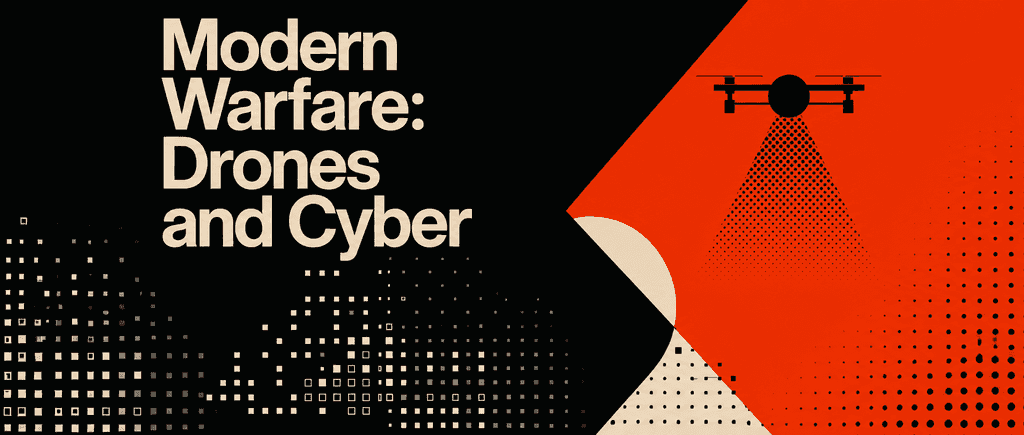
Ghost Fleet showcases autonomous drone warfare, wearable surveillance technology, cyberattacks, space-based weapons systems, electronic warfare countermeasures, and neural augmentation devices. Characters use "stim tabs" to alter alertness, while everyone wears recording devices—eyeglasses, jewelry, watches—that constantly collect intelligence. One character has an antenna embedded under her skin. Every technology depicted is either currently real or in active development, supported by nearly 400 endnotes documenting Singer and Cole's extensive research into emerging defense capabilities.
Ghost Fleet is directly inspired by Tom Clancy's Red Storm Rising, updating the Cold War scenario for 21st-century Pacific tensions between America and China. Both novels excel at explaining why adversaries would go to war and depict global, frenetic military action. However, some reviewers note Ghost Fleet lacks Red Storm Rising's deeply engrossing technical detail and military jargon. Ghost Fleet's unique contribution is incorporating cyberwarfare, space combat, and information warfare—domains barely imagined in Clancy's 1986 classic.
Ghost Fleet's central message warns that modern military over-reliance on networked technology creates dangerous vulnerabilities to cyberattacks and digital warfare. Victory depends on "blending the lessons of the past with the weapons of the future"—combining low-tech resilience with cutting-edge innovation. The novel emphasizes that human intelligence, adaptability, and old-fashioned espionage remain crucial even in high-tech warfare. Singer and Cole demonstrate how America's technological superiority becomes a liability when adversaries can exploit digital dependencies.
Ghost Fleet remains relevant because U.S.-China tensions have intensified since 2015, making its Pacific war scenario more plausible. The novel's depiction of cyberwarfare, AI-driven combat, and space militarization continues reflecting current defense priorities and geopolitical concerns. With the U.S. Space Force now operational and cyber threats proliferating, Singer and Cole's "future warfare" predictions are materializing. The book serves as both cautionary tale and strategic planning tool, explaining why defense communities still study it a decade after publication.
Sinta o livro através da voz do autor
Transforme conhecimento em insights envolventes e ricos em exemplos
Capture ideias-chave em um instante para aprendizado rápido
Aproveite o livro de uma forma divertida e envolvente
America's technological superiority could become its greatest vulnerability.
Neither has the U.S. Navy.
The resulting paranoia and uncertainty prove as damaging as physical attacks.
Societies under threat can turn against their own members.
What happens when the technology we've grown dependent upon becomes a weapon used against us?
Divida as ideias-chave de Hamlet em pontos fáceis de entender para compreender como equipes inovadoras criam, colaboram e crescem.
Destile Hamlet em dicas de memória rápidas que destacam os princípios-chave de franqueza, trabalho em equipe e resiliência criativa.

Experimente Hamlet através de narrativas vívidas que transformam lições de inovação em momentos que você lembrará e aplicará.
Pergunte qualquer coisa, escolha a voz e co-crie insights que realmente ressoem com você.

Criado por ex-alunos da Universidade de Columbia em San Francisco
"Instead of endless scrolling, I just hit play on BeFreed. It saves me so much time."
"I never knew where to start with nonfiction—BeFreed’s book lists turned into podcasts gave me a clear path."
"Perfect balance between learning and entertainment. Finished ‘Thinking, Fast and Slow’ on my commute this week."
"Crazy how much I learned while walking the dog. BeFreed = small habits → big gains."
"Reading used to feel like a chore. Now it’s just part of my lifestyle."
"Feels effortless compared to reading. I’ve finished 6 books this month already."
"BeFreed turned my guilty doomscrolling into something that feels productive and inspiring."
"BeFreed turned my commute into learning time. 20-min podcasts are perfect for finishing books I never had time for."
"BeFreed replaced my podcast queue. Imagine Spotify for books — that’s it. 🙌"
"It is great for me to learn something from the book without reading it."
"The themed book list podcasts help me connect ideas across authors—like a guided audio journey."
"Makes me feel smarter every time before going to work"
Criado por ex-alunos da Universidade de Columbia em San Francisco

Obtenha o resumo de Hamlet como PDF ou EPUB gratuito. Imprima ou leia offline a qualquer momento.
Imagine a world where America's military superiority vanishes overnight. Chinese-planted microchips, some barely larger than sand grains, activate inside critical defense systems. Satellites go blind. Communications collapse. Nuclear submarines, once invisible beneath the waves, are suddenly tracked from space through their reactor radiation. Within hours, Hawaii falls under enemy occupation. This isn't just fiction - it's a meticulously researched scenario that has Pentagon officials losing sleep. "Ghost Fleet" presents a chillingly plausible vision of World War III that begins not with a bang, but with a whisper - an American astronaut abandoned to die in orbit as his Russian crewmates seal the airlock, their apologetic faces the last human contact he'll ever have. This quiet betrayal marks the opening move in warfare's next evolution, where the most technologically advanced nation suddenly finds its greatest strength transformed into its deadliest weakness.