Capítulo 1
The Loneliness Epidemic: Why We Need Each Other More Than Ever
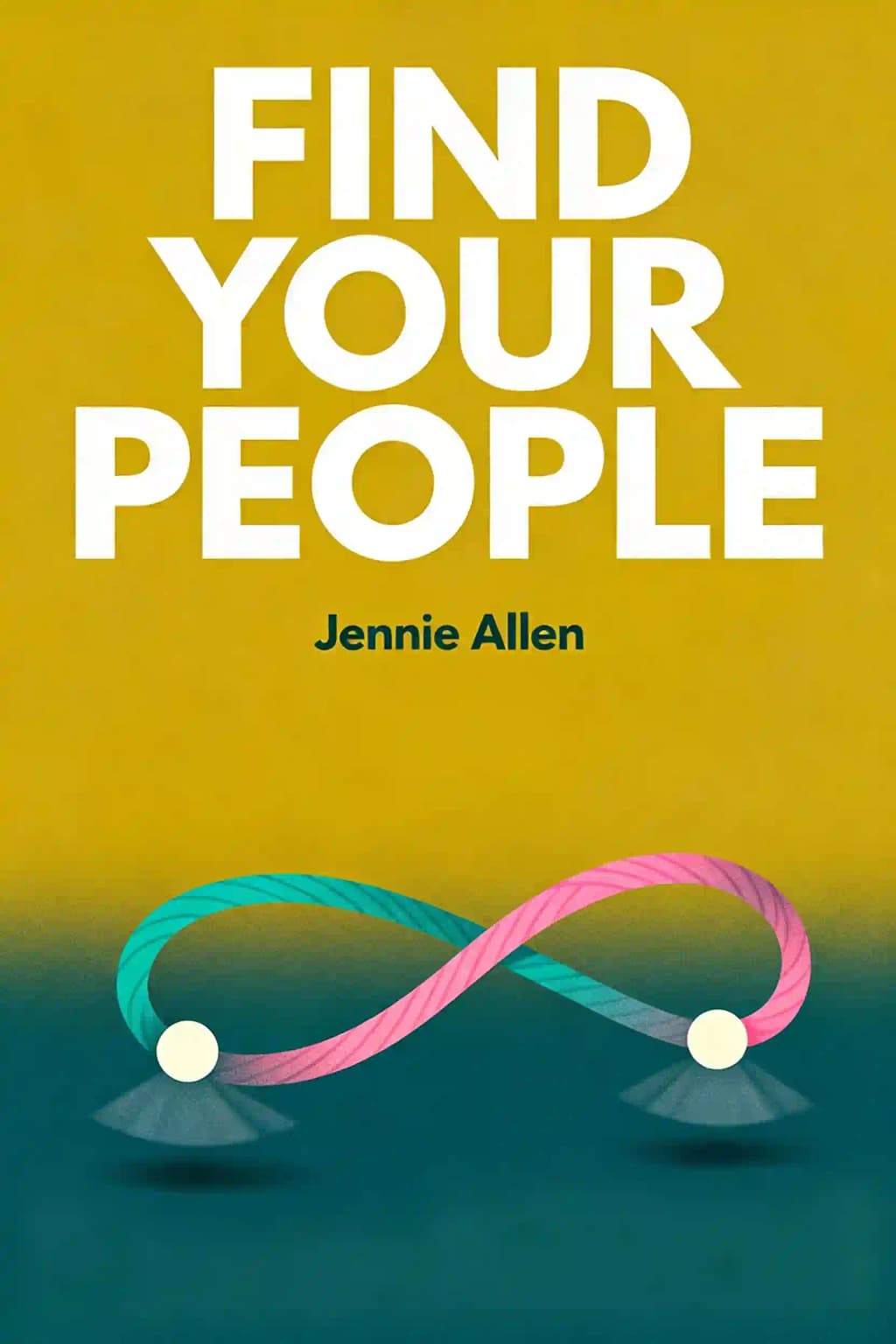
Have you ever found yourself sitting alone on a Friday night, scrolling through social media feeds filled with people seemingly having the time of their lives, while you struggle to name five people you could call in an emergency? You're not alone in feeling alone. According to research, three in five Americans experience daily loneliness-a staggering statistic that author Jennie Allen experienced firsthand while writing her book about connection. Despite being surrounded by people, she found herself having a full-fledged panic attack on her closet floor, overwhelmed by the crushing lie: "I am all alone." This paradox of modern life-being constantly connected yet profoundly isolated-has caught the attention of health experts who now consider loneliness as dangerous as smoking 15 cigarettes daily. In "Find Your People," Allen doesn't just diagnose our epidemic of isolation; she offers a radical prescription for rebuilding the village-style connections humans were designed for. Drawing from historical patterns of community across cultures and biblical principles of relationship, this book has resonated with celebrities like Reese Witherspoon and become a cultural touchstone for those seeking to break free from the prison of individualism that defines Western society.
Capítulo 2
The Primal Human Need for Connection
We're all just waiting for connection to find us, expecting someone else to initiate while we spend hours alone in our noisy, screen-lit worlds. We mistakenly believe our sporadic interactions with acquaintances will magically produce deep friendships. But community is bigger than a few friends-it should be our way of life. Research shows we can manage a network of about 150 people, with only 50 acquaintances, 15 in our village, and capacity for just 5 BFFs. The key factor? Time spent together.
Throughout history, people lived communally-hunting, cooking, and raising children together without locks or doors. They shared resources and talents, held each other accountable, and had each other's backs. Much of the world still lives this way, within small huddles of people in a twenty-mile radius. In Italy, entire towns function as extended families where grocery runs take hours because of meaningful conversations. In Uganda, refugees facing unimaginable hardship come together rather than isolating.
We in America, by contrast, hide in alarmed houses behind fences, guarding ourselves for fear our vulnerability will be used against us. We live alone, eat alone, run errands alone, and suffer alone. This isolation isn't natural-it's a modern aberration that's killing us slowly.
After feeling the hole in my life where community should be, I decided to create intentional connection. I texted friends I didn't know particularly well, explaining my feelings and needs. Several agreed to meet regularly on my back porch to share what was true in our lives. We prioritized these gatherings above almost everything else, meeting consistently for nearly three years-logging over a hundred evenings together, building intimate connection. These meetups became oxygen to my connection-craving soul.
The truth is, relationships are both our greatest earthly gifts and the most difficult part of being alive. Our relational experiences swing between seasons of overflowing connection and wondering if anyone knows we exist. Whether you're a pastor's wife known by many but feeling unknown, newly single in a new town, living alone with concerns about who would help in an emergency, surrounded by surface-level friendships, struggling to find the right small group, or drifting from once-close friends-whatever has left you feeling detached, there is hope.
Capítulo 3
The Divine Design for Community
We all desire a village-a community like the one portrayed in the show Friends, with its coffee-shop second home, never-locked doors, and unique personalities sticking together through everything. We crave that constant connection, that sense of home. Yet ironically, many of us trade this very thing for cool cities, higher-paying jobs, prestigious colleges, and dream homes in "right" neighborhoods-values handed to us by our independent, success-driven culture.
Unlike my childhood friends who settled near their parents, I've moved away. Yet when we reunite, spending hours laughing and reminiscing, we joke about sharing a retirement beach house someday. This vision of communal living makes my heart sing because we were built by God for deep relationships. God Himself has existed in relationship as Trinity-Father, Spirit, and Son-for all eternity, each glorifying the others in mutual self-giving love. We were made in the image of this relational God, which means our longing for healthy, supportive, interdependent relationships isn't just craving something good for us-it's craving our fundamental purpose.
Throughout Scripture, God builds communities-starting with families that grow into people groups, nations, and churches. This is God's pattern: bringing people together for family, community, worship, and mission. Jesus said, "Where two or three are gathered in my name, there am I among them." Scripture was written for people living interconnected lives, with most biblical "you" statements actually being plural-meant for communities, not isolated individuals.
Nearly every generation before ours experienced village existence. In ancient times, schools were established for every twenty-five young people, and families who educated together also worshipped together. Educational, social, religious, vocational and family life all blended. People were deeply involved in each other's lives. But our priorities have shifted from "we" to "me." Individualism has deep roots-from the French Revolution to America's Declaration of Independence. While freedom is valuable, our independent spirit has a dark side. For 250 years, we've increasingly insisted we can handle life alone.
The self-help movement set personal happiness as the ultimate goal, and social media rewards personal branding. Yet God's first words about humanity were "Let us create man in our image" and "It is not good for man to be alone." We're meant for constant community, not occasional connection.
Capítulo 4
Rebuilding the Infrastructure of Connection
After moving to Dallas, I wasted no time finding a church and reaching out to potential friends, including my former camp counselor Michelle. This single decision set in motion a cascade of life-changing events. Michelle invited us to join her "for life" small group at church-a community that takes vulnerability seriously, sharing everything from personal struggles to financial details.
Despite my hesitation and walls that "go up fast" when relationships deepen, my husband and I risked joining. Four years later, these people we didn't intentionally choose have become our closest friends. Though often awkward and difficult, especially at first, that one whispered "yes" to authentic, long-term community changed everything.
Jesus has taught me more about friendship than anyone else. I've always related to Psalm 8:4: "What is man that you are mindful of him?" If God created everything, why would He concern Himself with sinful, broken humans? Yet Ephesians 2 tells us that "God, being rich in mercy, because of the great love with which he loved us, even when we were dead in our trespasses, made us alive together with Christ." Through Christ, because of love, God offers us relationship despite our brokenness.
Jesus not only provides the means to live a full life with each other and God, but He modeled it! He chose twelve disciples, with three He was closest to. His people were often the "wrong" type-prostitutes, tax collectors, children-but they were willing, wanting, and all in.
You and I are unhealthy people with pockets of sin in our lives. You'll never find perfect people to do life with because they don't exist. You will always be doing community with sinners. We must approach this work with humility while using discernment about who we do life with.
Your inner circle can't be huge-no more than five people. These are who you call about fights with your spouse, work difficulties, or sins you're battling. When looking for your inner circle, seek availability (people who show up even with kids in tow or a messy house), humility (people willing to say and receive hard things), and transparency (people who refuse to hide and share what's really happening).
Capítulo 5
The Path to Authentic Connection
When the doorbell rang at 7:30 p.m., I had already eaten dinner, changed into my robe, and begun unwinding. I opened the door to find Lindsey, Kirk, and their three kids, looking perfect after family pictures. They wanted to see our patio furniture, but what started as a quick peek turned into hours by the firepit. I never changed out of my robe, their kids crawled all over us, and we shared whatever snacks we could find.
That unplanned night took our relationship to a deeper level-the kind where friends drop by unannounced, where kids can be themselves, where messy houses don't matter. It was exactly what my new-to-Dallas heart needed.
Since the Stone Age, humans have built fires for practical reasons, but one of the primary benefits has been the ambiance they create. Firepit flames mesmerize us, creating a natural pull to sit, relax, and chat after our busy days of strategizing and working. Research shows that while daytime conversations center on work-related talk, nighttime conversations around fires focus on spirituality, adventures, and dreams. Fires bring us together-real life, face to face, no phones, together.
During our first months in Dallas, we were rarely invited anywhere. One afternoon, driving past a senior-living apartment near our house, I cried thinking, "I'll have no friends to live there with someday." "Five friends in five miles" became my Dallas Friendship Plan. I might not rack up scores of relational wins, but surely I could find five friends who lived close by.
Before you put a For Sale sign in your yard, look for friends who might be right under your nose. The most common explanation I hear from people about why they don't have friends is they're too busy. But what if, instead of scheduling occasional lunch dates, you looked at what you already are doing and who you already are with? We are meant to short-circuit when surrounded by people we aren't engaging with. The truth is: we are meant to be emotionally close to the people we are physically close to.
Connection requires stepping out and being intentional repeatedly. You must be willing to consistently initiate-be the one who reaches out, again and again. It will almost always be awkward, but each time I've chosen to drop the facade of "I'm great, thanks" and initiated real conversations, God has given me life-giving exchanges.
To move beyond shallow conversations, learn to ask intentional questions like "What are you longing for?" or "What is making you anxious?" When someone shares, don't try to fix anything-practice saying "I'm sorry" or "What do you need from me right now?" Most people don't know how to ask good questions or genuinely share their hearts, which is why conversations often drift toward complaining and gossip.
Capítulo 6
Breaking Down Walls of Self-Protection
I've lost friends because I haven't done what I'm about to tell you to do. My friend Jessica once told me what I needed to improve as a friend, and her answer stunned me: "You never need anything. You never need me. I want you to need me more." This wasn't the first time I'd heard this complaint. Eighteen months earlier, my friendship with Courtney had ended for the same reason: "I hate that to know what's really going on with you, I have to read your Instagram. You never need me."
I appear gregarious, extroverted, chatty, inclusive, and caring-until conversations go deep. Then I hedge, distract, or bail. I love going deep about you, but I'm reluctant to divulge my truest self. It feels selfish, greedy, needy. I worry about wasting your time or not being understood. As a young adult, I wore my heart on my sleeve, but repeated hurts changed me. As a pastor's wife, private struggles I shared became church gossip. Over time, I erected tall walls with locked doors around my life, revealing just enough so people felt close without giving anyone ammunition to use against me.
What relational pains have shaped your walls? Have friends used your vulnerability against you? Have you been pushed outside a group you once belonged to? Felt judged for not measuring up? Shared struggles only to receive judgment? Given repeatedly but found no one there when you needed help?
Shame is the enemy's favorite lie because its cost is connection. Like Adam and Eve who hid after sin entered the world, we cover ourselves and hide. But God seeks us out, wanting to restore relationship. Despite His promise that we're free from shame through Christ's sacrifice, we still build walls. This is why we decline social invitations, give superficial answers when asked how we're doing, and hide behind kindness while never letting others truly help us. The root problem of our isolation isn't busyness or technology-it's inside us. The devil uses shame to disconnect us and then whispers it's our fault we're alone.
Only when we let down our guards can we truly love and be loved. Empty platitudes mean nothing-it's the "I know you and I love you" that we crave. The gospel rescues us from hiding, assuring us "there is therefore now no condemnation for those who are in Christ Jesus." Our very wounds become tools God redeems to pull others out of hiding.
Do you share everything? Yes-but only with your inner circle of 3-5 vetted people, not your entire village. If someone doesn't reciprocate with transparency, gently explore why and keep trying-many people need practice. Give explicit permission for others to be real with you.
After my friend Jessica told me I needed to need her more, I realized I was tired of being careful and censored. I wanted to change, though I felt like a relational toddler learning to walk. To be truly close to someone, you must be vulnerable with them. Yes, vulnerable people get hurt, but as C.S. Lewis wrote, "To love at all is to be vulnerable." We can protect ourselves completely, but our hearts become "unbreakable, impenetrable, irredeemable."
Capítulo 7
The Strength of Mutual Accountability
Several weeks ago, my friends Lindsey, Ashley, Callie and Jennie E. came over. During our conversation, Ashley looked at me and said, "Jennie, it seems like you have a hard heart right now." Her comment stunned me. Lindsey agreed with her assessment. I mentally resisted-thinking I was fine, tired, not in the mood to deal with this situation. But I admitted they were probably right about me closing myself off. Instead of leaving me there, they prayed for me. I went to bed with a softened heart and slept better than I had in days.
What makes us squirm about accountability? At its core, accountability calls us to who we were meant to be through truth mixed with grace. Yet our generation's declaration of independence has made us resent being challenged on our behavior. This missing element might be exactly why our relationships don't run deep.
When my family moved to Dallas, our kids gained a new layer of accountability beyond just parents-their grandfather (known as "Coach"), aunts, uncles, and extended family all keeping tabs on them. This accountability network creates natural consequences and guidance that helps them grow.
"As iron sharpens iron, so one person sharpens another." Like my kitchen knives that became dull without regular sharpening, we too become ineffective without the friction of accountability. When you combine accountability with proximity and transparency, you unleash new potency in your life. Choose friends who can make you better, then allow them to do exactly that.
Around the world and throughout history, accountability isn't the exception but the rule. If you follow Christ, your new self longs to be caught-we're never truly comfortable in our sin. Accountability is simply the language of village life.
What makes friendships work? At the top of my list: saying hard things and listening to hard things. Being sharpened like iron involves painful reshaping-flames, pounding, bending-yet we actually crave this growth.
Don't take criticism from just anyone-choose voices you'll listen to carefully. Our culture tells us to prioritize acceptance and tolerance above all else, with mantras like "to each her own" and "you do you." But this is nonsense. The last thing we need are friends who merely cosign our stupidity. If I'm about to careen off a cliff, I don't need acceptance-I need help.
We need people in our lives who aren't carbon copies of ourselves-people of different ethnicities, backgrounds, and perspectives who challenge our presuppositions. When we surround ourselves with diversity, our compassion increases, our racism gets called out, and our materialism gets challenged.
Capítulo 8
Finding Purpose in Shared Mission
What activities fill your days? More importantly, who do you see beside you during these activities? Our lives often feel fractured because our work, home, social, and spiritual lives are disconnected from each other. We're exhausted trying to live in separate realities, bumping into people yet feeling utterly alone. But what if the people already in your schedule could become your deep community?
Historically, people lived and worked within the same community. In the Fertile Crescent, early agricultural societies worked, ate, raised children, and solved problems together. The Industrial Revolution changed this, separating work from community as people chose better jobs over staying with loved ones. Cities grew, commutes lengthened, and suburbanization further isolated families. Add social media's virtual connections, and we're now trying to live simultaneously in separate realities-work lives disconnected from home lives disconnected from social and spiritual lives.
What if you could pull people into the missions you're already accomplishing or join others on theirs? Throughout history, tight-knit communities unified around shared purposes, with everyone playing vital roles. This system feels familiar because it's written into our design as humans. God gave Adam and Eve a shared mission, Jesus told disciples to make more disciples, and Paul described the church as one body with many members. We crave connection through shared purpose because we were built for it.
C.S. Lewis said, "Friendship must be about something, even if it were only an enthusiasm for dominoes or white mice." Those going nowhere have no fellow travelers. Work was meant to bring fulfillment and promote thriving for those we love, not be a hollow pursuit of money. As Tim Keller describes it, work is "rearranging the raw material of God's creation in such a way that it helps the world in general, and people in particular, thrive and flourish."
Every human carries a weight of glory. When we understand this, we love differently and view our daily encounters differently. As my pastor friend from the Middle East explained, "True discipleship doesn't happen out there; it happens in a home. It's not something you do once a week. It's what you do every day because that's when you get to know people." God built in us a longing to be about something greater than individual success. If you want good friends, run a race together, build a house together, cook a meal together-all while working for the greatest mission: giving God away.
Capítulo 9
The Commitment to Stay
If you're actively putting these relational principles into practice, you'll inevitably reach moments when you want to bail on someone. While writing this book, my sister-in-law Ashley called asking to talk. She picked me up, and as we sat in a park, she shared how some things I'd said had hurt her. She didn't want to "quit me," she explained. Those words brought waves of fear-was I about to lose another friend? Shame washed over me as I realized I keep hurting people I love most. Ashley said, "I am staying. This is me fighting for us." Despite my initial fears of needing to walk on eggshells, I realized Ashley was proving her safety and commitment to me. Conflict should make friendships, not break them-if we don't run.
Conflict isn't the enemy to our friendships; it's the fodder that helps them grow. I've never had a truly intimate friendship free of conflict. God asks us to let people into our daily lives, our deepest struggles, our sins and dreams. The Bible commands us to "encourage one another," "bear one another's burdens," "comfort one another," "exhort one another," "confess your sins to one another," and "forgive one another." These instructions require proximity-being close enough to hurt each other and close enough to heal.
My biggest issue with community is that I regularly hurt people or they hurt me-it's a weekly storyline. But the hurt is part of the health. My brother-in-law Tony, who runs a dude ranch with my sister, once told me, "Village life sounds great until you realize you're surrounded by a bunch of cannibals." Yet their ranch has a reputation for building leaders because they've established relational rules: say what you mean, keep short accounts, and speak highly of each other.
Throughout history and cultures, coming to a table and breaking bread together has represented reconciliation and healing. When my family visited our ancestral village in Italy, we were welcomed by distant relatives to a table that seated twenty-five people. Six full courses, lots of laughter, time, people talking over each other, love-and fighting. My uncle's cousin simply said, "No worries. This is how it goes." For generations, this family had lived within blocks of each other, and they'd likely be back at that same table tomorrow. Conflict is safe when you know you won't quit each other.
Research from Oxford psychologist Robin Dunbar shows we can maintain about 150 meaningful relationships, but only 50 are "friends" and just 5 are "intimate friends." Jeffrey Hall's research revealed it takes about 50 hours to move from acquaintance to casual friend, 90 hours to become a friend, and over 200 hours to qualify as a best friend.
The challenge before us is deeper than just conflict resolution. It's choosing to prioritize each other consistently, day in and day out. Throughout history, people stuck together because they were literally stuck together in small villages. Today, we've become experts at quitting each other and hiding while we do it.
Capítulo 10
Rediscovering Family as the Core of Community
Last week, friends gathered at my home-singles from work and young married couples with babies. When family came up in conversation, they spoke not of nuclear families but of families they frequently visit or have lived with. Logan talked about living with the McFarlins before affording her own place, Hannah reminisced about singles who lived with her parents, and Caroline joked about being my "adopted daughter" based on how much time she spends with us.
Family is God's first, best place for us to learn community, but our modern concept differs greatly from His original design. No research will show ancient evidence of a mom, dad, and 2.5 kids living isolated on their own plot of land. Instead, you'll find communal living where "family" included everyone from parents and grandparents to half-siblings, neighbors, and friends who felt like family.
Everything shifted in the 1920s when anthropologist Bronislaw Malinowski coined "nuclear family" to describe a unit of two parents and their children. This concept revolutionized marketing-the fewer things people shared, the more they individually had to buy. While toaster sales soared, our understanding of family shrank, singles became isolated, young mothers felt alone, and elderly people were marginalized.
God created family as His masterpiece-the first, best community. From the beginning, He determined it wasn't good for people to be alone, so He established ready-made community through family. This wasn't meant to be a temporary arrangement but a covenant commitment where we stick together through every season-seeing, knowing, loving, serving.
What if our families drive us crazy? Or worse, are absent or abusive? For those experiencing toxic abuse, boundaries and perhaps estrangement are necessary, and healing should never be faced alone. But for most of us, our family members aren't truly toxic-they're just difficult. They might criticize our parenting, pressure us about life choices, manipulate with money, or overstay their welcome at Christmas. Unlike friendships where we choose people similar to us, with family we don't get to pick our people, which means they won't all be easy to love.
Not every family relationship can be healed. For those with broken family relationships, anthropologists describe "fictive kinship"-strong social ties not established by marriage or blood. Some research suggests the happiest people are those with strong fictive-kinship bonds who formed new families when their biological ones failed them.
One of God's most beautiful attributes is His ability to meet our needs as a loving parent in ways no earthly parent can. Whether you feel like an orphan craving to be "set in a family" or have a healthy family but still feel lonely, God has built His own family for you to join.
Capítulo 11
The Courage to Stay Connected
I want to give you a bigger, more beautiful vision for living neck deep in interconnected, diverse community. I want you to walk away committed to prioritizing that community over better job offers, more square footage, or a cooler city. I want you to see God's vision for healthy relationships and choose that above comfort, shallow conversations, or occasional convenient meetups.
Scripture says, "We do not wrestle against flesh and blood, but against the rulers, against the authorities, against the cosmic powers over this present darkness, against the spiritual forces of evil in the heavenly places." This is the battle we're in.
The enemy hates community. His goal is to divide us, distract us, and separate us to prevent our effectiveness. If every believer was united and of one mind on mission together, the Church would be unbelievably dangerous. We'd see revival everywhere. More kingdom work would happen than we could imagine. So the enemy's most effective strategy is to have us devour each other instead of celebrating, loving, and serving together.
The enemy's tactics to subvert God's plan for our relationships include codependency, independence, busyness, gossip, comparison, laziness, and fear. Codependency develops when we look to people to meet our needs instead of God. It usually begins as people-pleasing-or expecting others to meet all our needs-and grows into unhealthy behaviors.
We know we need each other in countless ways, but those who don't battle codependency often fall into independence. God built us to be fragile, finite, needy creatures so we would come to Him and lean into others' strengths and gifts.
One principle has shaped my recent ministry years: pull people in at every turn. Never do anything alone. Why? Because even God exists in community within Himself. If you want to be effective, ask for help. This makes others feel needed and draws them together in shared purpose.
Deep connection takes more work than we're often willing to invest. Research shows friendship ranks near the bottom of priorities for women juggling work, family, and relationships, yet more than one in three women report feeling lonely. To have deep friendships, we must initiate. Be the friend you want others to be. Quit waiting for people to reach out to you. Assume people want to be your friend. Need things from others and assume they want to help!
We must fight to hold on to our people, recognizing the enemy's traps that divide and distract us from healthy relationships. The battle is worth it!