Capítulo 1
Recognizing and Mobilizing Community Assets
The asset-based community development (ABCD) approach sees communities as both half-empty and half-full. This cornerstone of Public Allies' leadership philosophy recognizes that everyone has both assets and deficits. The approach acknowledges that while some communities are labeled primarily by their deficits, all communities contain rich, often untapped resources.
Being asset-based doesn't mean denying deficits exist-our glasses are indeed half empty and half full. The question is how to build relationships emphasizing fullness. Communities thrive when relationships are built on recognizing strengths, placing residents at the center of community building with three primary assets: individual gifts and talents, associations binding people together, and institutions engaging residents as stakeholders.
The fabric of community is woven from relationships among members and neighbors. Associations-from informal coffee shop gatherings to formal book clubs and church choirs-aggregate individual assets around common interests and can be mobilized for larger community goals. Building "social capital"-connections among individuals and norms of reciprocity-correlates with better employment, safety, longevity, and civic participation.
To be assets, institutions must open doors to the community beyond their specific missions and involve residents as stakeholders. Organizations become true assets when they recognize community strengths, build relationships among residents, facilitate collaboration, and engage community members as partners and experts.
Esteban "Steve" Ramos exemplifies this approach. After joining Public Allies New York in 1999, he revitalized a closing food pantry at Holy Trinity Church, engaging local youth to collect and distribute over 550,000 pounds of food. He built Fresh Youth Initiatives, an organization that views young people as "at-promise" rather than "at-risk," with 80% of participants graduating high school on time and continuing to college.
Capítulo 2
Connecting Across Cultures
Susan Edwards, a Public Allies alumna from suburban Milwaukee, discovered that diversity requires active engagement rather than passive belief. At Public Allies, she experienced diversity through difficult conversations about differences, finding common values, and working through discomfort to build relationships across differences.
Leaders must dismantle oppression and bridge differences to solve problems effectively. At Public Allies, they recognize that diversity at the table requires changing the table itself through inclusion and co-creation. Research shows diverse groups often outperform homogenous "best and brightest" teams. True diversity isn't tokenism-it requires organizational adaptation and learning.
Addressing diversity requires confronting power, privilege, and oppression at individual, institutional, and societal levels. Public Allies helps leaders examine how these forces operate across intersections of racism, sexism, heterosexism, and classism. Oppression exists when prejudice combines with power-including unrecognized privileges that provide greater opportunities.
Public Allies uses exercises like the Privilege Walk to initiate difficult conversations about inequality. Participants begin holding hands in a line, then move forward or backward based on life experiences like receiving food stamps, being followed by security guards, experiencing harassment, navigating physical spaces, or celebrating religious holidays. The joined hands break apart as participants spread across the room, physically demonstrating privilege disparities.
Inclusive leaders recognize everyone's different paths as equally legitimate. They possess personal and social awareness, sense power dynamics, celebrate differences as opportunities, see assets where others don't, ensure diverse representation, listen deeply to what is and isn't being said, know when to push or pull back, invite feedback, and balance confidence with humility.
Effective collaboration begins with deep self-understanding - a thorough recognition of one's strengths, limitations, learning styles, work preferences, needs, and personal mission. This self-awareness forms the foundation of emotional intelligence necessary for managing complex relationships effectively. The principle that everyone is "half full and half empty" serves as a humbling reminder that grounds us in accepting both our assets and limitations, which helps build honest relationships and prevents unrealistic expectations of ourselves and others.
Understanding different work styles is essential for successful collaboration. Public Allies employs various assessment tools like StrengthsQuest and Myers-Briggs Type Indicator to help members understand their natural preferences and tendencies. The Leadership Compass exercise identifies four distinct leadership styles: Visionaries who focus on the big picture and future possibilities; Analysts who excel at systematic problem-solving and data analysis; Mobilizers who drive action and rally others; and Nurturers who build relationships and maintain group harmony. Experience shows that balanced teams need all these perspectives to function effectively, as each style brings unique value to collective work.
Team building is never automatic but requires deliberate, sustained effort and careful attention. Public Allies initiates this process with an intensive core training retreat featuring challenge courses that push participants outside their comfort zones. These exercises encourage calculated risk-taking, emotional vulnerability, active listening, and collaborative problem-solving. Through structured activities and reflection, members learn crucial skills like stepping back to create space for others, amplifying quieter voices, and building authentic community where differences are not just tolerated but celebrated, and where problems are addressed directly rather than avoided.
Public Allies transforms collaboration theory into practical experience through team service projects where diverse groups work together on community initiatives they design and implement from scratch. These projects serve multiple purposes: they build vital neighborhood relationships, develop practical leadership skills, and provide real-world laboratories for learning. Allies learn essential competencies including building trust across different backgrounds, facilitating difficult conversations about race and power, giving and receiving direct feedback, making inclusive collective decisions, and maintaining high standards while being flexible enough to adapt to changing circumstances.
Collaborative leaders must master multiple roles and responsibilities. They need to protect group process while avoiding excessive focus on procedure, identify and engage all relevant stakeholders, realistically evaluate capacity for change, encourage peer-to-peer problem-solving, inspire sustained commitment, and maintain hope even during setbacks. Their primary role evolves between being a convener who brings people together, an energizer who maintains momentum, a facilitator who guides productive dialogue, and a sustainer who ensures long-term success. This requires developing a refined sense of when to step forward with direction and when to step back to let the group find its way.
Capítulo 3
Continuously Learning and Improving
Leadership requires both confidence in what one knows and humility about what one doesn't. Effective leaders ask for help, seek feedback, and value questions over answers. Public Allies teaches the value of continuous learning through creating effective learning environments, providing coaching and critical feedback, and facilitating reflection.
Most conferences and trainings fail to understand adult learning, relying on the ineffective "sage on the stage" model. Public Allies builds effective learning environments based on multiple intelligences, accelerated learning theory, and learning organizations concepts. Their environments focus on individual and group learning using diverse activities, leverage participants' diverse backgrounds as learning assets, establish clear objectives, blend interactive activities connecting information to experience, and facilitate reflection.
Public Allies supports individual learning through a four-step coaching process: Celebration (sharing victories), Discovery (learning from experiences), Intention (prioritizing next steps), and Action (creating SMART goals). Program managers help Allies apply lessons from training, engage supervisors better, work in teams, and pursue career goals.
The humility to ask for help distinguishes successful leaders from those who fail. People who try to do everything themselves often burn out feeling underappreciated. True leadership isn't about individual heroics but about mobilizing all possible resources toward a goal.
Critical reflection gives Allies time to process learning through presentations that demonstrate their growth in the five core values. These fifteen-minute presentations are followed by Q&A sessions with panels and audiences. Allies share profound personal transformations through creative expressions including videos, songs, poetry and scripture.
Capítulo 4
Being Accountable to Ourselves and Others
Integrity is about integrating your purpose, values, relationships, and actions-bringing your whole authentic self to leadership and relationships. Leadership requires a strong inner core-a clear sense of purpose and values that drive decisions and actions. At Public Allies, life stories are emphasized early to help Allies understand their experiences, motivations and purposes.
Leadership requires both personal responsibility (stepping up) and social responsibility (working with others toward shared goals). Leaders must hold themselves accountable rather than waiting to be held accountable. "Responsibility-based management" balances performance coaching with development coaching, helping Allies take ownership of their goals while providing support.
True leadership involves multiplying leadership by empowering others to lead themselves. Leaders like Reggie Moore, Sharlen Bowen Moore, Paul Griffin, and Lisa Sullivan are "leadership multipliers" who expand opportunities for others to develop confidence and initiative. As Kouzes and Posner argue, leadership is inherently collaborative-"a person with no constituents is not a leader" and leaders must inspire rather than command commitment.
When leaders take on too much responsibility while others take too little, they create what Roger Martin calls "the responsibility virus"-a destructive cycle that undermines effective leadership. Heroic leadership that attempts to "go it alone" ultimately produces passivity and alienation in followers.
Taking responsibility means being proactive and solution-focused rather than complaining or blaming. As Peter Block suggests, accountability begins by asking "How have I contributed to creating the current reality?" and thinking of ourselves as the "cause" rather than the "effect" of circumstances.
Leadership is an action many can take, not a position few can hold. It manifests through everyday decisions and behaviors, from organizing community events to mentoring youth or advocating for local causes. It means taking personal and social responsibility to work with others toward common goals while practicing values that engage diverse groups. Our most pressing challenges - from climate change to social inequality - require a new way of thinking about leadership, recognizing that potential leaders already exist in our communities but need guidance, support, and opportunities to develop their capabilities.
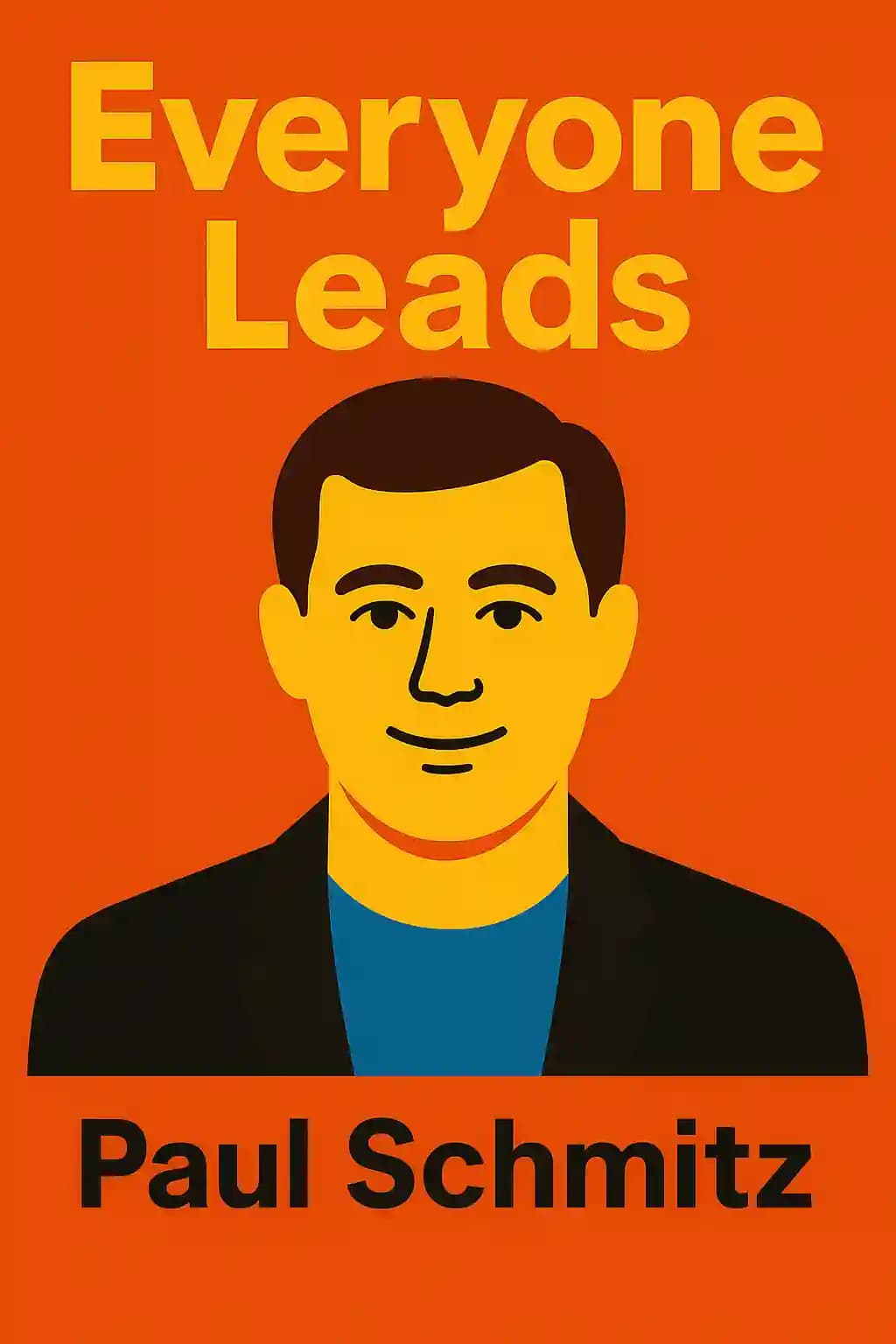
The stories shared throughout "Everyone Leads" represent just a small sample of the thousands of diverse leaders developed through Public Allies. These individuals demonstrate that leadership potential exists everywhere-in struggling schools, low-income neighborhoods, immigrant communities, and among those who have faced significant personal challenges. For example, former gang members who become youth mentors, single mothers who create community support networks, and first-generation college students who return to their communities as educators and advocates. These stories challenge traditional notions of leadership that focus solely on formal positions or titles.
The five core values-recognizing community assets, connecting across cultures, facilitating collaboration, continuous learning, and accountability-are interconnected and mutually reinforcing. Being asset-based improves inclusion by highlighting the strengths and resources already present in communities. Including people enhances collaboration and recognition of diverse assets, bringing new perspectives and skills to the table. Continuous learning helps you understand your fullness and emptiness, encouraging both confidence and humility. Self-awareness improves teamwork and accountability by helping leaders recognize their impact on others and their responsibility to the collective good.
These values can be practiced by anyone regardless of position, making them effective at solving common problems and meeting shared goals. A parent volunteering at their child's school, an employee suggesting improvements in their workplace, or a resident organizing a neighborhood cleanup - all are practicing leadership. The question is not whether you can be a leader, but how you will choose to lead in your sphere of influence. Leadership opportunities exist in every interaction, every decision, and every challenge we face. As Schmitz concludes with his simple yet profound challenge: "How will you lead?" This question invites readers to reflect on their own leadership journey and consider how they can contribute to positive change in their communities, organizations, and broader society.