Capítulo 4
Grit: The Unstoppable Force Behind Entrepreneurial Success
Introducing something entirely new to the market presents significant challenges. With KIND, Lubetzky was creating a whole new product category, requiring him to convince food-store buyers that his products would fill needs consumers didn't even know they had. The company spent years determining how to position their product, initially calling it a "fruit and nut energy bar" before realizing the term "energy bar" carried negative connotations about taste and ingredients.
Perseverance proved essential when running a small, struggling company where every sale determined survival. After launching KIND in the aftermath of losing everything PeaceWorks had invested in importing Australian bars, Lubetzky frequently deferred his modest $24,000 salary to make payroll. Despite having investors to answer to, he honored moral obligations like buying back shares from an unhappy investor, which depleted their cash reserves.
"For years before KIND launched, PeaceWorks barely stayed afloat," Lubetzky remembers. "Late-paying retailers and expiring inventory created constant financial pressure. The desperate circumstances limited my strategic thinking as I focused purely on survival."
His early attempts at selling revealed his inexperience. He meticulously mapped Manhattan by walking every avenue with samples, refusing to leave stores until getting orders. When shipments arrived from the Middle East, he delivered them himself in his battered Cougar with a duct-taped trunk. After establishing accounts, he conducted demos at specialty stores like Zabar's, spending hours engaging customers and selling significant volume.
Lubetzky describes grit as combining attitude, temperament, and staying power forged from character. The entrepreneurial journey requires a two-stage process: first, the research phase where you thoroughly question and test your idea to avoid wasting resources; second, becoming an evangelist with unwavering conviction who refuses to give up.
"While you'll constantly adjust strategy and incorporate feedback, the essence of your pursuit must remain unshakable," he advises. "Entrepreneurship brings both higher highs and lower lows than traditional jobs, with unanticipated setbacks that require resilience to overcome."
One of the most painful early KIND experiences was watching key team members leave because they didn't believe in the company's future. After a decade struggling with PeaceWorks, many couldn't see potential in KIND Fruit & Nut bars. A particularly talented saleswoman quit because Lubetzky wasn't launching enough new products fast enough. Several sales brokers similarly pressed for more varieties.
"Their departures hurt me personally because I believed so strongly in KIND's opportunities," he admits. "I faced a critical dilemma: was I being appropriately disciplined by focusing on our core products, or was I missing expansion opportunities?"
Capítulo 5
Truth and Discipline: Staying True to Your Brand Promise
At KIND, maintaining laser focus on the brand promise became a guiding principle - a lesson Lubetzky learned painfully through earlier failure. Lack of brand discipline nearly killed PeaceWorks' first Moshe & Ali's food line when he made one of entrepreneurship's most common mistakes: unfocused expansion at all costs.
Beyond their initial sundried tomato spread, PeaceWorks expanded into basil pesto and green olive spreads produced through Middle Eastern cooperation. The New York Times praised them as "delicious...and lack the saltiness of other spreads," earning loyal retailers and consumers. Encouraged by modest success, they quickly added more Mediterranean flavors.
Industry experts pushed the simplistic mantra that "more products get more shelf space; more shelf space gets more attention; more attention gets more sales." While initially true for trial purchases, Lubetzky missed the crucial qualifier: to ensure repeat sales, new products must remain true to your brand promise, solve different needs without cannibalizing original products, and maintain the quality consumers expect.
"Maintaining brand consistency is challenging because consumers may not share your perspective of what your brand stands for," Lubetzky explains. To prevent disconnection with consumers, he avoids focus groups which often yield biased results. Instead, he intercepts individuals in public places, asking open-ended questions to understand their genuine perspectives.
With KIND, they created the KIND Advantage program for loyal customers to provide feedback on prototypes. They also invest in creating mock-up packages with actual product to place on store shelves, observing if people pick them up in real retail environments.
"Unlike tech companies that can constantly update their products, consumer goods only get one chance to impress," Lubetzky emphasizes. "Disappointing consumers even once can spread like a virus through your brand."
When starting PeaceWorks, Lubetzky lacked understanding of proper distribution strategy. Instead of following a tailored approach, he desperately tried selling to every store he encountered. His lack of focus extended to rapidly expanding their conflict resolution business model across multiple continents without first building one successful foundation.
"We carried this lack of focus to the extreme," he admits, "rushing from our flagship Middle East efforts into Indonesia with Bali Spice, Sri Lanka with coconut milk, and Mexico with Azteca Trading Company. This was insanely ambitious for our five-person operation."
These early mistakes became the foundation for KIND's success. Rather than hiding failures, Lubetzky learned to wear them proudly as they contain better lessons than any success. At KIND, they encourage "start-up think" - reviewing all practices annually and reinventing systems as needed.
When launching KIND, they strategically invested in leading health food chains like Whole Foods, where adventurous shoppers might try hundreds of bars daily versus just a couple at convenience stores. They defined a careful migration strategy, expanding in concentric circles from their core customers - first to upscale supermarkets, then regional grocery powerhouses, then higher-end stores within national chains.
"Crucially, we paused to support each new partnership before reaching for the next," Lubetzky explains, "proving ourselves at each level rather than aggressively pursuing nationwide distribution prematurely."
Capítulo 6
Keeping It Simple: The Power of Authenticity and Humility
Lubetzky's relatives had fled persecution; they worked enormously hard but considered themselves lucky (not entitled) to have survived and flourished. This perspective instilled in him a profound sense of humility - not just about being agreeable, but preventing catastrophic failures and complacency.
"I constantly remind myself that my company remains just steps from failure," he shares, "a perspective maintained by vivid memories of our near-collapses. This survival mindset provides powerful ongoing motivation."
At KIND, simplicity became a guiding principle. While historically food companies add value by increasing processing steps - moving fruits further from natural form into pastries, or whole grains into sugary cereals - KIND does the opposite. Using natural ingredients with honey as a preservative, they achieve 12-15 month shelf life while letting food keep its soul.
"Paradoxically, making minimally processed products is harder," Lubetzky explains. "Honoring whole nuts and fruits requires careful handling to prevent rancidity. Every KIND bar differs slightly - you can't standardize weight precisely when using whole ingredients, which costs us more but delivers superior consumer experience."
This concept extends beyond food. After the synthetic excesses of the 70s-90s, consumers increasingly crave authenticity and simplicity. While temporary food fads come and go, the broader shift toward simplicity and transparency represents a more sustainable consumer trend.
The frontline evidence of simplicity is a company's name. Lubetzky initially named his company PeaceWorks Inc. to convey how business cooperation creates social and economic harmony, but the products needed brands that spoke to their essence. His early naming attempts were overcomplicated, like "Moshe Pupik and Ali Mishmunken's World-Famous All-Natural Gourmet Foods."
"I learned that Occam's razor applies to business: the simplest answer is usually best," he reflects. For their fruit and nut bars, they wanted a one-word, 3-4 letter name. After months of brainstorming, they settled on KIND - fresh, embodying their purpose to be kind to bodies, taste buds, and world, while maintaining their focus on simplicity.
During the 2007-2008 financial crisis, this focus on simplicity attracted attention from a major food conglomerate interested in acquiring a controlling stake in KIND. When negotiations fell through, followed by another setback when a private equity firm reneged on agreed terms, Lubetzky faced difficult decisions.
"Despite the recession and financial uncertainty with a baby on the way, Michelle supported my decision to walk away from partners I couldn't trust," he recalls. This led him to connect with Vitaminwater founder Darius Bikoff, who introduced him to VMG, a private equity firm specializing in health and wellness brands. They closed a deal valuing KIND at $45 million just days after his son Roman was born in December 2008.
After fifteen years of running his business independently, Lubetzky needed strategic partners who could teach him, though accepting this reality challenged his ego. His investors strongly suggested hiring a head of finance - something he initially resisted, believing it would waste resources that could fuel growth.
"Fortunately, I recognized the gap between our capabilities and future needs," he admits. This led to expanding their team and implementing financial disciplines that became essential as KIND grew.
Capítulo 7
Originality: Breaking the Mold with Creative Thinking
Once KIND Fruit & Nut bars gained traction, they carved out a new competitive space within the nutritional bar category. Their uniqueness meant they had no true competitors - consumers seeking whole nut and fruit bars came to their shelves. A few years later, companies large and small began launching products to compete in their created subcategory, emulating their ingredient combinations, whole nuts and fruits, and clear wrappers.
When faced with competitors claiming "zero sugar" through artificial ingredients, KIND refused to compromise their values. Rather than using sugar alcohols like their competitors, they spent a year developing KIND Nuts & Spices - bars with minimal sugar (5g or less) that maintained their commitment to real, pronounceable ingredients.
"By removing fruit and adding spices for flavor, we changed the conversation to focus on what our bars contain rather than what they lack," Lubetzky explains. This strategy paid off tremendously - their KIND Dark Chocolate Nuts & Sea Salt bar became the #1 performing bar in the entire nutritional bar category.
After five years with their Fruit & Nut bars, they needed to expand beyond their original category. Rather than making the safe move to adjacent products, they took the strategic risk of moving "a couple of squares over" on the checkerboard to establish KIND as more than just a bar company. In October 2011, they launched KIND Healthy Grains Clusters, featuring five super-grains. The line became one of the fastest-growing in the granola category, capturing over 10% of all granola sales within two years.
"No matter your business, you need products or services that distinguish you from the crowd," Lubetzky emphasizes. "In consumer products, 'me-too items' proliferate after innovative products succeed. From a retail buyer's perspective, derivative items don't deserve shelf space as they don't bring in new shoppers."
The AND philosophy drives innovation and creativity, making the world go round and leveling the playing field between startups and big corporations. Lubetzky spends considerable time evaluating the assumptions behind decisions, though this contemplative approach must be balanced with swift leadership.
"Give yourself unstructured thinking time - whether during showers or commutes - to let your mind wander freely without digital distractions," he advises. During these free-form think breaks, he plays with problems by framing questions differently or breaking them into smaller pieces.
At KIND, their brainstorming process follows clear steps: first, identify the ultimate goal; second, list all available assets and tools; third, ideate without limitations. They strictly separate creative brainstorming from analytical evaluation, banning words like "no" or "that won't work" during ideation.
"In brainstorming, every idea must be recorded and celebrated as potential springboards," Lubetzky insists. "Naivete fuels creativity - sometimes it's better not knowing an idea seems impossible."
Their decision to use transparent wrappers challenged conventional wisdom. At the time, nutritional bars used opaque foil with vibrant colors. Clear packaging cost more and required special technology to maintain freshness. They rejected the assumption that consumers didn't want to see the actual product, believing they would appreciate their whole nuts and fruits.
"This seemingly obvious choice now was actually a significant innovation that required challenging industry assumptions," Lubetzky reflects.
Capítulo 8
Transparency and Authenticity: Building Trust Through Honesty
Transparency and authenticity form the core of KIND's identity, extending beyond their literal transparent wrappers to all aspects of their business. These values shape everything from their straightforward product naming to their minimalist design philosophy to their open communication with team members and partners.
"We extend transparency beyond our clear wrappers to every aspect of our business," Lubetzky explains. "We avoid stylized product images in packaging, believing consumers have been conditioned to distrust such representations. Our product names are straightforward descriptions rather than gimmicky marketing terms."
While this directness makes their names harder to trademark, consumers appreciate the honesty. This transparency reflects Lubetzky's own communication style - blunt and frank - which has created a culture that rewards openness with their team, partners and consumers.
Authenticity means accepting who you are rather than trying to be different things to different people. It requires being transparent about strengths and weaknesses and owning your mistakes. Consumers will choose an authentic brand with limitations over a fake brand claiming perfection.
"The more authentic your brand, the further its message carries without having to 'scream so loud,'" Lubetzky observes. Respected brands have defined, credible identities that set clear expectations even for new products.
When addressing social causes, humility is essential. Lubetzky rejected a team member's suggestion to claim "By buying this jar of sundried tomato spread, you will make peace bloom in the Middle East" as disingenuous. Companies like TOMS and Warby Parker understand this balance - making specific, objective claims about their one-for-one donation models without overstating their impact.
Consumer skepticism about food industry claims creates opportunities for transparent companies. The Greek-yogurt trend exemplifies this problem - some brands use "Greek yogurt flavored" coatings with no actual yogurt, creating a deceptive "health halo." When suppliers urged KIND to follow this trend, they declined despite competitive pressure.
"Consumers are sophisticated and can eventually identify deceptive claims," Lubetzky insists. "When we made a technical labeling error, we quickly corrected it after a consumer alerted us."
Creating a culture of fairness builds enduring loyalty with team members and suppliers. At KIND, they share information with strategic partners, consult them on decisions affecting them, and phase in changes to minimize harm. They negotiate firmly but surprise service providers with bonuses when they exceed expectations.
Finding and keeping team members who fit their culture is crucial. At KIND, except in cases of serious misconduct, they coach team members to address shortcomings rather than terminate them with minimal notice. Conversely, they expect team members won't just give two weeks' notice - instead, they have early, open discussions about career plans.
"We maintain an honor code where team members tell their manager if they're job-hunting, which enables transparent career conversations," Lubetzky explains. "We continue investing in people even if they plan to leave in a year or two, and reward those ensuring smooth transitions."
Capítulo 9
Empathy: The Heart of Effective Leadership
Being the son of a Holocaust survivor marks Lubetzky deeply, instilling an acute awareness of human frailty and a burning commitment to build bridges. This commitment stems from a survival instinct: to prevent what happened to his father from happening again. KIND and its social mission were born from this history, conceived during a period of grief that paradoxically coincided with great personal and professional growth.
When Lubetzky's father died in January 2003, he was scheduled to give a talk about OneVoice to five hundred people at the Wilshire Boulevard Temple. Despite feeling paralyzed by grief, he proceeded with the talk, experiencing an anxiety attack beforehand. For the next couple years, he split his time between the Middle East, California, and Texas, launching OneVoice while his company barely survived.
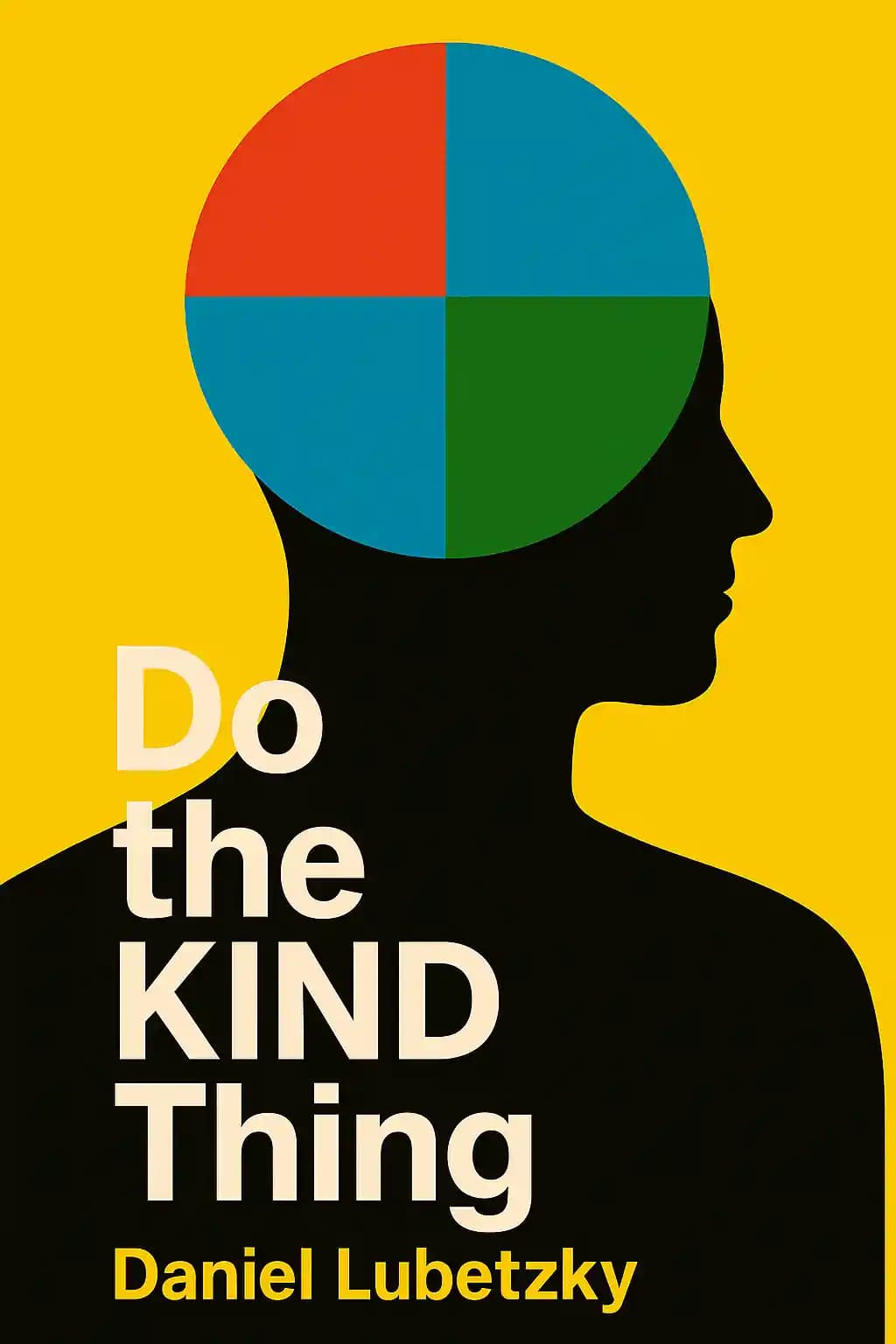
In April 2003, while brainstorming with Sasha Hare about their healthy fruit and nut snack bar, the name KIND resonated most. "It embodied our motto: 'Do the KIND Thing for your body, your taste buds & your world,'" Lubetzky recalls. "The name particularly spoke to me because my dad's essence - the reason he survived the Holocaust and how he lived afterward - was connected to compassion."
Born in Mexico City in 1968, Lubetzky grew up in the sheltered Jewish community there. His father Roman was born in Latvia and raised in Lithuania. His life was defined by empathy - as a child, he once ran barefoot into the snow to find a poor child to give him food.
When the Nazis invaded Lithuania, life quickly worsened. One particularly powerful story demonstrates how kindness saved lives: when Lithuanian paramilitaries and Nazis were killing Jews, a porter who had previously been treated with respect by Lubetzky's grandfather spared their family, saying, "I don't want you to die, because you are a good man."
Lubetzky's marketing team often challenged his idealism about the KIND cards program. While they worried about complexity and scalability, he maintained that "people will 'Do the KIND Thing' for the sake of humanity if we create a meaningful reason." This tension between idealism and pragmatism eventually led to the breakthrough #kindawesome cards.
"These cards work differently - we give them to people we observe doing kind acts," he explains. "Recipients can enter a code online to receive KIND bars and another card to pass forward. What makes this approach special is that we don't interrupt the kindness in the moment - we celebrate it afterward."
After their black-card program, they created KIND Causes to support larger acts of kindness. When they failed to reach their threshold in June 2011, Lubetzky insisted on transparency, sending an email titled "We failed" to their community. This accountability approach worked - the next month's mission drew over 30,000 participants instead of the required 1,200.
"Our ultimate goal is for KIND to become more than a brand - a movement and mindset that makes kindness part of people's identity," Lubetzky shares, "where 'Do the KIND Thing' enters the public lexicon and inspires daily acts of kindness."
Though not traditionally considered a business skill, empathy creates tremendous value. The reflexive cynicism many adopt can destroy potential partnerships when defensive reactions spiral into mutual distrust. By putting yourself in the other party's shoes, you can make better decisions in negotiations and prevent relationships from souring.
Capítulo 10
Trust: The Foundation of Effective Teams
At the Natural Products Expo West in 2013, KIND orchestrated a strategic product launch by privately presenting their new KIND Healthy Grains Bars to their largest retail accounts. While Lubetzky had planned to lead these presentations as founder, he watched with pride as his team delivered a perfectly coordinated presentation that resulted in immediate orders from major retailers like Kroger.
"The success of our product launch revealed how trust operates at multiple levels in business," Lubetzky reflects. "We trusted our loyal retail customers with an exclusive preview, they trusted our data and product integrity, and our team members trusted each other with different presentation segments."
As KIND grew from a small group of overworked generalists to a large organization with specialists, Lubetzky's role evolved. Rather than handling every function himself, he now focuses on providing vision, inspiration, and coaching - nurturing the culture and transmitting their core values.
Building trust with senior executives has become crucial. When they know he's loyal and wants them to succeed, they feel safe contradicting him and voicing opinions without fear of repercussions. Without this trust, people become afraid to take risks, make mistakes, or challenge policies, creating a stifling atmosphere that inhibits healthy debate.
"John Leahy and I have a spectacular relationship because we know we're there for each other with clear roles," Lubetzky explains. "He manages day-to-day operations while I protect the brand. We debate comfortably, knowing disagreements aren't personal."
In group meetings, Lubetzky tends to dominate conversations, but he's working on stepping back to let his management team lead. Creating space for others is crucial - if he shares his perspective first, some may hesitate to argue for different paths. He tries to listen first and play devil's advocate to ensure they debate all sides.
Recognizing his limitations, he assembled an advisory board with experts in different fields - legal, strategic, finance, and food industry specialists. His mentor Fred Schaufeld taught him that ego - the desire for recognition and respect - often trumps financial incentives as a motivator.
"Success can inflate your ego as praise accumulates," Lubetzky warns. "Failing to recognize your team's contributions causes resentment and attrition." Celebrating your team isn't just right - it's smart business that builds loyalty. Never let insecurity prevent you from hiring people more talented than yourself. Their success is your success.
Leadership requires shifting gears like a manual transmission car. When things go well, contribute positive energy while keeping everyone grounded. When things go wrong, inspire your team to look beyond immediate failure toward your vision. Stand by them, share responsibility, and create a supportive environment while learning from mistakes.
Marketing and product development remain Lubetzky's greatest passions and contributions at KIND. As they've hired specialists, he's struggled to relinquish control, particularly with branding - a natural pain point where marketers want fresh concepts while he protects their heritage.
"I've learned to balance protection with trust," he admits. "When our marketing team suggested changing our motto from 'Do the KIND Thing for your body, your taste buds, & the world' to '...& your world,' I was initially skeptical but realized they were right - the change emphasized personal responsibility."
Capítulo 11
Ownership: Creating a Culture of Entrepreneurial Thinking
Building a culture with staying power requires instilling ownership mentality throughout the organization. When you're an underfinanced startup owner, every penny feels like it's coming directly from your pocket. At KIND, they strive to preserve this ownership mindset when allocating resources.
"I'm not a fan of budgets - they're artificial and discourage creative thinking," Lubetzky explains. "Instead, we empower team members to think like owners, using budgets as guidelines they aim to beat."
A culture of resourcefulness differs from one of scarcity. During PeaceWorks' early years, Lubetzky's frugality sometimes misallocated their most valuable resource - team members' time. Once they weren't fighting to make payroll, he shifted from mere frugality to resourcefulness - still avoiding waste but with flexibility to invest strategically.
Ownership demands courage. While it offers greater upside than being just an employee or investor, owners shoulder all downsides too. You become answerable to yourself and your team, responsible for generating all necessary resources when things go wrong.
"We learned how dangerous it was not to control our fate when our Australian supplier changed their formula by adding sulfates and sorbitol," Lubetzky recalls. "We committed never again to place our future in another company's hands."
Ownership carries a commitment to excellence. When it's your baby, you work harder than anyone. That's why KIND gives stock options to all full-time team members - it aligns incentives by giving everyone a direct economic stake in their long-term success.
But financial stakes alone aren't enough. Ownership is fundamentally an attitude. Many public companies issue stock to employees who still think like employees, while some private companies create a collaborative spirit approximating true ownership. Real ownership taps the human spirit, combining personal power with responsibility and recognizing we're part of something bigger than ourselves.
A prerequisite for creating a culture of ownership with no politics or backroom gossip is loyalty. Lubetzky values this above all - someone who makes mistakes with good intentions ranks higher in his book than someone who makes fewer mistakes but isn't loyal to the team.
"Our rule of thumb: say whatever needs saying in front of the people affected," he states. "We don't talk behind backs. If criticism is constructive and helps someone grow, they deserve to hear it. If it doesn't help, it probably shouldn't be said at all."
After thorough research, Lubetzky opted against pursuing an IPO for KIND for several reasons. They didn't need public market cash. He didn't want quarterly distractions, obsessing over stock prices, or managing to Wall Street's expectations. Instead, they found alternative ways to create liquidity - taking on small, manageable debt to pay dividends, creating a loan program for stock option exercises, paying generous bonuses, and establishing a tender offer program.
By 2014, KIND had sold over a billion bars and was defining their international expansion strategy. Lubetzky's ultimate goal is to make KIND synonymous not just with great products and a trusted brand, but with a state of mind that informs their community.
"I want KIND to become a movement that millions feel ownership of," he shares, "touching lives in authentic ways that inspire people to join us in making the world kinder and more delicious every day. When someone says, 'Do the...' I hope people will complete the sentence with 'KIND Thing!' and feel the meaning behind those words."