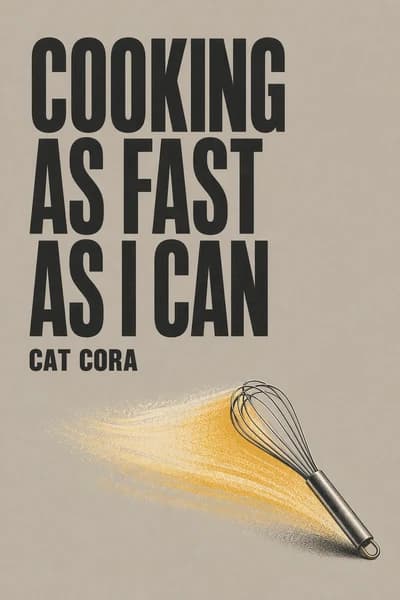
Cooking as Fast as I Can
Visão geral de Cooking as Fast as I Can
In "Cooking as Fast as I Can," Iron Chef pioneer Cat Cora serves up raw truths about breaking barriers as the first female Iron Chef while navigating childhood trauma and Southern homophobia. What culinary wisdom helped her find forgiveness when life turned up the heat?

Temas principais em Cooking as Fast as I Can
- culinary glass ceilings
- greek southern fusion
- adoption reunion stories
- lgbtq identity discovery
- professional kitchen resilience
Citações de Cooking as Fast as I Can
"They all bleed red," my mother would say.
Kissing Jordan made me feel like a human sparkler.
Cooking became my sanctuary.
I already knew I preferred girls.
My parents were remarkably progressive.
Personagens de Cooking as Fast as I Can
- Cat CoraThe author and first female Iron Chef
- Virginia CoraCat's mother, a nursing supervisor
- Spiro CoraCat's father, a history teacher
- JoanneCat's biological mother
- JordanCat's first romantic interest
Baixar resumo de Cooking as Fast as I Can
Obtenha o resumo de Cooking as Fast as I Can como PDF ou EPUB gratuito. Imprima ou leia offline a qualquer momento.
Perguntas Frequentes Sobre Este Livro
Cooking as Fast as I Can is Cat Cora’s candid memoir detailing her journey from a Greek-American upbringing in Mississippi to becoming the first female Iron Chef. It explores her struggles with identity, sexuality, and resilience in the male-dominated culinary world, while highlighting how cooking became her anchor. The book intertwines personal redemption with career milestones, including her Michelin-star training and TV fame.
Food enthusiasts, LGBTQ+ readers, and aspiring chefs will find inspiration in Cora’s story. It resonates with those interested in overcoming adversity, Southern/Greek culinary traditions, or LGBTQ+ representation in media. Fans of chef memoirs like Anthony Bourdain’s Kitchen Confidential will appreciate its raw, introspective tone.
Yes—readers praise its honesty about Cora’s adoption, coming out in the South, and balancing motherhood with a high-pressure career. The memoir offers unique insights into Food Network’s behind-the-scenes dynamics and the grit required to break culinary glass ceilings.
Cora credits her Greek roots for her passion for Mediterranean flavors and family-centric cooking. She shares formative memories of her grandfather’s Mississippi restaurants and connects her heritage to her culinary philosophy of blending tradition with innovation.
Cora details sexism in professional kitchens, the pressure of being the first female Iron Chef, and the physical demands of TV cooking competitions. She also reflects on mentorship from chefs like Georges Blanc and Melissa Kelly.
Cora openly discusses her journey as a gay woman in the conservative South, her marriages, and raising four sons. The memoir highlights her advocacy for LGBTQ+ visibility in the culinary industry and the challenges of maintaining authenticity in the public eye.
While not quoting directly, Cora emphasizes resilience (“Work became my refuge”) and self-acceptance (“I refused to be defined as an outsider”). The book’s title metaphor reflects her fast-paced life balancing career and family.
Unlike Bourdain’s gritty tales or Julia Child’s whimsy, Cora’s memoir focuses on intersectional identity—being a woman, LGBTQ+ icon, and Southern-Greek chef. It uniquely blends culinary triumphs with personal vulnerability.
Some readers noted the memoir prioritizes personal history over culinary techniques. However, most praise its emotional depth and Cora’s willingness to address addiction and family estrangement.
Cora underscores perseverance, advocating for mentorship and adaptability. She shares practical advice from her CIA training and Michelin-stage experiences, proving that “success is about evolving, not perfection”.
As conversations about gender equity and LGBTQ+ rights continue, Cora’s story remains a benchmark for diversity in hospitality. Her insights on work-life balance resonate in today’s fast-paced, burnout-aware culture.
Cora discusses co-founding Chefs for Humanity (disaster relief) and her role as a CARE advocate. The memoir ties her philanthropy to her belief that “food is a catalyst for community change”.


