Capítulo 1
The Reluctant Culinary Revolutionary
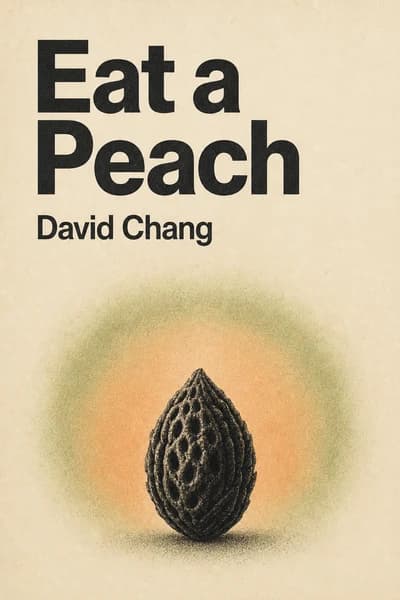
David Chang never intended to write a memoir. As he puts it, "I'm still thinking of this as a textbook on what not to do when starting a business." His self-deprecation feels genuine-he genuinely doesn't understand his appeal or why his word carries weight. Yet his story has become required reading for aspiring chefs and restaurant entrepreneurs worldwide. Through Chang's journey from golf prodigy to culinary innovator, we witness the birth of a revolutionary restaurant empire that redefined American dining while its creator battled demons both internal and external.
Capítulo 2
A Childhood Forged in Fear and Expectation
Growing up Korean-American in Northern Virginia during the 1980s and 1990s, Chang's early life was defined by conditional love and impossible expectations. His father, the archetypal Korean patriarch, exhibited controlling behavior that extended to the smallest details of Chang's development. Most notably, he forced young David to abandon his natural ambidexterity, believing it would interfere with developing a proper golf swing. This wasn't just typical "tiger parenting"-it was often painful and demoralizing, feeding into the broader false perception that all Asian kids were interchangeable academic and athletic overachievers.
Chang's early golf career showed remarkable promise. At age nine, he won back-to-back Virginia state championships, marking him as a potential prodigy. However, the pressure mounted relentlessly. His father's coaching style involved constant comparisons to other young golfers, detailed post-tournament critiques, and an unrelenting focus on technical perfection. These pressures began to take their toll in high school, as Chang's mental game deteriorated. He developed the "yips"-a psychological condition causing loss of fine motor skills-which effectively ended his competitive golf aspirations.
Religion cast another heavy shadow over Chang's childhood. His family's approach to Christianity was intense and all-encompassing, what he later described as "waterboarding with religion." Daily life included mandatory church services, extensive Bible study sessions, and long car rides filled with apocalyptic teachings played on cassette tapes. This religious immersion sparked an early rebellious streak in Chang, who began questioning fundamental doctrines, particularly the concept of eternal damnation for non-believers. This questioning spirit, though initially troublesome for his family, would later become a crucial element in his innovative approach to cooking.
At Georgetown Prep, an elite Jesuit boarding school, Chang experienced profound cultural isolation. As one of few Asian-American students, he struggled to find his place in the predominantly white, wealthy student body. This sense of displacement followed him to Trinity College, where he chose to major in religious studies-not out of devotion, but from a desire to understand different belief systems and to challenge his sister's unwavering faith with well-researched arguments. His college years brought the additional sting of racial discrimination in dating, with white female students openly expressing their disinterest in Asian men. This led to a pattern of casual hookups that left him feeling more isolated than ever.
The cumulative effect of these experiences-relentless parental pressure, religious doubt, social alienation, and racial discrimination-created perfect conditions for the emergence of his bipolar disorder. This condition, though later diagnosed and treated, would become both a source of tremendous suffering and a wellspring of creative energy, driving Chang to push boundaries in his professional life. The constant tension between conformity and rebellion, tradition and innovation, would later become hallmarks of his culinary style and restaurant concepts.
Capítulo 3
From Corporate Drone to Culinary Rebel
After leaving a soul-sucking corporate job where he drunkenly criticized everyone at the holiday party (only to receive a raise), Chang decided to pursue culinary school against everyone's advice. At the French Culinary Institute in Manhattan, he was immediately a disaster compared to his classmates. He fumbled so badly that his cooking partner requested reassignment.
Despite his struggles, Chang became captivated by the industry. Through sheer tenacity, he secured positions at prestigious restaurants like Jean-Georges's Mercer Kitchen and Tom Colicchio's Craft. Under intimidating professionals like Jonathan Benno and Marco Canora, Chang struggled with basic tasks but showed up daily, working for free until finally offered a paid position after six months.
At Cafe Boulud under Andrew Carmellini, Chang endured punishing 18-hour days creating labor-intensive dishes. His station was overwhelming-handling oysters, canapes, daily amuse bouches from scraps, and dreaded sugarcane shrimp skewers he had to whittle by hand. The restaurant delivered extraordinary food to Upper East Siders who might have been satisfied with much less.
Six months in, Chang's tenacity faltered. His mother's cancer had returned amid an ugly business dispute between his father and brother. With his defenses down, he questioned everything: Why cook food he didn't want to eat? Where was this career leading? Through this haze of doubt, one thought surfaced repeatedly: he wanted to die.
What Chang experienced was his first full-blown depressive phase of bipolar disorder. He became fixated on suicide, seeing himself in Mel Gibson's character from Lethal Weapon with his morning Russian roulette ritual. He courted danger-reckless cycling through Manhattan traffic, skiing dangerously close to trees, stepping in front of a backing bus.
Eventually, Chang sought help from psychiatrist Dr. Eliot. In therapy, he unpacked his life-his fear of abandonment, his father's intensity, religious struggles, and persistent feelings of not belonging anywhere. Dr. Eliot's office became the first place Chang actually said aloud that turning everything off seemed like the only solution.
Capítulo 4
The Birth of Momofuku: A Restaurant Born from Depression
With Dr. Eliot, Chang reasoned that if nothing mattered-if his depression wouldn't lift and he couldn't succeed in fine dining-he had nothing to lose. Inspired by Thoreau's idea of "elevation through conscious endeavor," he decided to open a restaurant. If it failed, suicide remained an option.
Finding a location wasn't difficult. Chang gravitated toward the East Village for its character and affordability. He found a tiny 600-square-foot space at 163 First Avenue, paying $6,000 monthly. That same day, he signed a lease on an apartment across the street-a dreary dump furnished like "a sociopath's lair" with just a futon, table, lamp, and TV.
Financing came unexpectedly from his father, who loaned him $100,000 despite having explicitly banned his children from following his restaurant footsteps. With Chang's saved $27,000, it would be enough to open. Their business entity, JCDC LLC (Joe Chang and Dave Chang), created regular check-ins that became the closest thing to therapy father and son ever experienced.
Help arrived when Joaquin "Quino" Baca responded to Chang's Monster.com ad. As one of the few applicants, Quino became Chang's right-hand man. Together, they faced a never-ending catastrophe tour-flooding from upstairs, an oven thermostat breaking and nearly burning the place down, electrical shorts causing fire hazards, sewage backups, and even physical altercations.
Momofuku's early days were a disaster. Customers hated everything from the noodles to the uncomfortable stools and unfriendly service. The turning point came when Chang and Quino spent their dwindling funds on dinner at a trendy new restaurant everyone was raving about. Halfway through, Quino declared, "This really isn't that good," then added the words that changed everything: "Come on, we can smoke these fools."
They returned determined to give Noodle Bar a pulse. Most importantly, they finally faced the critical question: what the hell was this food they were serving? They'd been holding back, putting dumplings on the menu because Chang thought people expected them, not because he wanted to make them. Their only regulars were cooks from high-end restaurants who came after work for their pork buns-the only menu item worth eating.
At the last possible moment, they erased the line between what they thought customers wanted and what they wanted to cook for their friends. Their approach became: Nobody knows anything, so do what you want. Growing up Asian American, Chang had hidden his food preferences to fit in, but that impulse was preventing them from distinguishing themselves.
Capítulo 5
The Momofuku Philosophy: Conflict as Fuel
A year after Noodle Bar's near-death experience, the restaurant was thriving. Media attention followed, but success bred conflict-with industry insiders who dismissed them, with city officials who tried to shut them down over complaints about pork smells, with PETA protesters, with customers who wanted them to change their food. Chang embraced this conflict as fuel, using it to drive the team harder.
Chang led through "fear and fury," with dangerous emotional swings that kept everyone on edge. They fought with everyone-City Hall over their name, the EPA over complaints, PETA over foie gras. They even fought with customers, once sending a waiter after someone who suggested they serve crawfish without shells to tell him "the kitchen kindly asks you to go fuck yourself."
Chang deliberately created internal conflict too, pairing cooks who didn't get along and constantly challenging the team. If he ate somewhere impressive, he'd come back and tell the crew they looked like amateurs. Their anger was palpable the moment you walked through the door-and that's exactly how Chang wanted it.
This approach reflected Chang's struggle with what he calls han-the Korean emotion combining strife, sadness, and resentment from historical injustices. As a "twinkie" (yellow outside, white inside), Chang struggled with his Korean identity, which deepened his experience of han. The kitchen didn't create his rage; it unlocked what was already inside him.
Despite this toxic environment, Momofuku's food was revolutionary. They gathered inspiration from everywhere, recognizing value in all cuisines. They treated the dining room as their classroom, watching diners' reactions and constantly adapting recipes. They learned to forget conventional wisdom and embrace what they saw-like when Chang accidentally discovered a better way to cook pork belly by blasting it at high heat then slow-cooking it in its own fat.
Ultimately, Momofuku became a place where seemingly different worlds merged, replicating the natural evolution that happens when immigrants arrive in a new place and their dishes evolve with new ingredients and interactions. As Allan Benton advised Chang: "You'll always lose when you play someone else's game." So they got rid of everything that wasn't truly theirs and made people play their game instead.
Capítulo 6
Expansion Through Crisis: Ssam Bar and Ko
After Noodle Bar's success, Chang felt pressured to expand but couldn't bring himself to create a facsimile. His vision for Momofuku Ssam Bar was essentially "Asian Chipotle"-bringing higher-quality food to the masses. Despite their creative vision, Ssam Bar flopped initially. People weren't ready for their fast-food concept, seeing it as a cynical cash grab rather than an attempt to elevate everyday dining.
With sixty days of capital left, they abandoned the fast-food dream and started cooking real food again. They began serving a late-night menu of dishes chefs would want after work-uglier, spicier, louder food you devour with beer. They served the off bits nobody else wanted: pig's head fritters with pickled cherries, country ham with coffee-infused mayo, whipped tofu with tapioca topped with uni.
They embraced seemingly bad ideas: charging for bread and butter and intentionally not making enough food for everyone. Their bo ssam pork shoulder, served whole with all the fixings for making wraps, became their signature. They'd drop this monstrosity on a table mid-dinner rush, prompting other diners to ask how they could get it. Their answer-"By reservation, only at 5:30 or 10:30"-cleverly filled their restaurant during off-peak hours.
To capture their successful formula, Chang created "The Roundtable"-a mandatory email chain where staff documented everything after each service. These emails were incredibly detailed, covering everything from prep notes to dish development. The constant back-and-forth (sometimes fifty emails overnight) exemplified their philosophy that there's no idea they won't consider.
Despite the success, Chang felt undeserving of accolades. When nominated for James Beard Awards, he was "scared shitless." Between every triumph, there were five hundred moments of doubt, embarrassments, and mistakes, all with depression constantly thrumming in his skull. When Dana Cowin named him one of Food & Wine's Best New Chefs, he tried to decline. He kept waiting for someone to flip a switch in his brain that would make him think, "You deserve this," but it never came.
Momofuku Ko, their third restaurant, was born from necessity rather than ambition. The Department of Health threatened to shut down Noodle Bar over insufficient hot water-their tiny space simply couldn't support the infrastructure needed. Chang wanted to create a tasting menu format that married European techniques with Momofuku sensibility, maintaining their minimalist aesthetic with cooks serving dishes directly to guests seated at a counter.
To counter accusations of elitism, Chang created an online reservation system for Ko that eliminated favoritism. Every morning at 10am, reservations opened for exactly one week later, with no special requests or backdoors. Despite complications, Ko received glowing reviews and won the James Beard Award for Best New Restaurant. Yet Chang's success was tempered by constant worry, never allowing himself to coast or believe life should get easier.
Capítulo 7
The Price of Success: Mental Health and Relationships
As Chang juggled multiple restaurants, his mental health deteriorated. He had panic attacks at work, developed shingles, and experienced crippling anxiety during any quiet moment. He couldn't separate kitchen failures from personal failures. Momofuku was his identity, born from his depression. Rather than beating his illness, he'd redirected its energy into productivity.
At thirty-five, Chang entered what he describes as "an incredible, unbroken streak of personal and professional horrors." While running Seiobo in Australia, far from his support system, he gave in to his worst impulses. He was a terrible boss, conflating basic human needs with weakness. His personal relationships suffered equally. Then devastating news arrived: his mother had a brain tumor and his father had liver cancer-both diagnosed on the same day.
This period was further darkened by the deaths of friends and the tragic overdose of a young cook Chang had mentored. Despite knowing he wasn't responsible for the cook's death, Chang struggled with overwhelming guilt. He gained fifty pounds and became immobilized by grief. The experience forced him to confront his own mortality-having originally signed only a ten-year lease on his first restaurant because he was "certain I would be dead within a decade," he now found himself alive at thirty-five, needing "to figure out what to do with all this extra life."
Chang's anger issues became his calling card. He describes them as a temporary state of psychosis where he interprets normal human mistakes as deliberate sabotage. During these episodes, he loses all sense of reality and wishes the worst on those he loves most. This happens at work and horrifyingly at home.
Recognition from Dr. Jim Yong Kim, who connected Chang with executive coach Marshall Goldsmith, began a turning point. Unlike therapy, Goldsmith's approach involved "360-degree feedback"-confidential interviews with thirty of Chang's employees, family members, and friends. The feedback was brutally honest: "It's incredible that so many people have stayed by your side for so long when they can't stand you."
Goldsmith's philosophy centered on helping "assholes realize they are assholes" and teaching Chang to "eat shit"-meaning to listen, acknowledge errors, face uncomfortable confrontations, be present, not flee, show gratitude, control himself, and put others before himself. Chang had been operating under the belief that Momofuku existed to serve him, not the other way around.
Capítulo 8
Finding Grace and Purpose
Chang's life changed when he met Grace at an East Village rooftop barbecue. Despite his usual warnings about not wanting anything serious and sharing his messy romantic history, they began dating. As their relationship deepened, Chang felt an unusual calmness. Though his brain warned against commitment, his gut said otherwise.
Like Chang, Grace straddled two cultures as a Korean American raised in a predominantly white Seattle suburb. Their cultural connection felt natural rather than obligatory. Though Chang doesn't believe in soulmates, he can only imagine Grace as his lifelong partner. She supported him through returning to medication, manic episodes, restaurant openings, and countless highs and lows.
When they discovered Grace was pregnant the day after Anthony Bourdain's death, Chang began making amends with people he'd held grudges against. When their son Hugo was born, Chang realized the anger had unknowingly drained away. During Hugo's first illness, his parental instinct was overwhelming. At Hugo's baek-il (100-day celebration), Chang finally confronted his father about not taking him to the hospital when he broke his leg as a child. His father's simple answer-"I don't know what I was thinking... I'm just dumb"-helped Chang see him differently.
Chang thinks about how his success is completely tied to his depression-how nothing he's achieved would have been possible if he hadn't been ready to die from the outset. Despite appearances, no amount of money, fame or logic can fix depression. The stigma around mental illness persists because not enough people truly understand it. Depression isn't something you overcome with willpower, but dealing with it requires choosing to stand up every day and reject your default settings-like being a Jedi resisting the dark side.
Capítulo 9
The Evolution of a Chef and a Human
Chang's journey reflects the evolution not just of a chef but of a human being struggling to find balance in an unforgiving industry. He compares restaurants to lobsters, which show no signs of aging, continuing to grow and reproduce indefinitely. They molt their shells periodically-an exhausting, vulnerable process-and the only sign a lobster is dying is when it stops molting. This biological metaphor perfectly captures the cycle of building, destroying, and rebuilding that Chang has embraced throughout his career, from his early days at Momofuku Noodle Bar to his expanding restaurant empire.
His obsession with growth and improvement frequently conflicts with traditional business metrics and sometimes actively hurts his bottom line. In a particularly tense Fuku board meeting, someone bluntly called him "the worst businessperson they'd ever met" when he suggested slowing down their fast-food concept to focus on hospitality and food quality. At Bang Bar in the Time Warner Center, Chang deliberately ignored conventional business wisdom and profit margins to create labor-intensive, made-to-order flatbreads wrapped around spit-cooked Korean barbecue. He insisted on traditional cooking methods and fresh preparation, even though it meant longer wait times and higher labor costs. This commitment to craft over convenience exemplifies his philosophy that true hospitality cannot be scaled without sacrifice.
Chang's biggest blind spot has been about women in the industry, a realization that came painfully during the #MeToo movement. The revelations forced him to look beyond merely defending his company's record to actually examining systemic issues within restaurant culture. He had friends like Mario Batali whose problematic behavior was documented in books like Heat and widely known within the industry, but he never questioned what he saw or challenged the status quo. In response, Momofuku has implemented comprehensive changes, including third-party reporting hotlines, mandatory leadership training, and revised hiring practices, though Chang openly acknowledges there's much more work to do in creating an equitable workplace.
For Majordomo, Chang's ambitious Los Angeles restaurant, he envisioned something entirely different: a "Korean American Cheesecake Factory" that would challenge fine dining conventions. He created a menu with generously sized portions and accessible dishes that wouldn't overexplain themselves to diners, focusing instead on creating celebratory dining experiences worth fighting notorious LA traffic for. The restaurant became Chang's most explicitly Korean venture to date, incorporating traditional Korean names, family-style service approaches, and authentic design touches throughout the space. This embrace of his heritage reflects his growing comfort with his cultural identity, moving away from the fusion confusion of his early career toward a more confident expression of his Korean American perspective. The restaurant's success has proven that diners are ready for this more authentic approach to Asian American cuisine.
Capítulo 10
A New Deal with Life
Chang initially resisted writing a memoir, convinced he'd produce essays and guides instead. But through the process, he realized that in one sense, he did kill himself-he killed the version of himself that was meek and afraid of dying. Considering his mortality led him to conclude that if death is inevitable, nothing else should scare him-not pain, hard work, embarrassment, failure, or financial ruin.
When struggling after Nishi's poor showing and the collapse of Lucky Peach magazine, Chang reached out to Anthony Bourdain. Over drinks and a ribeye, Bourdain sent Chang an email that cut to the heart of everything: "Be a fool. For love. For yourself. What you think MIGHT possibly make you happy. Even for a little while. Whatever the cost or good sense might dictate."
Chang has become obsessed with Cubism, seeing parallels with his approach to restaurants. Through studying art, he's had an epiphany about Alice Waters, whom he'd previously criticized for her "figs on a plate" California cuisine. He finally recognized her radical innovation: she was like Duchamp with his urinal, declaring "This is cooking, because I am a chef and I said so."
As Chang reflects on the COVID-19 pandemic's impact on the restaurant industry and the racial justice movement following George Floyd's killing, he sees both worst-case and best-case scenarios for the future. In the optimistic vision, a momentous global event awakens humanity to our common bonds, leading to radical changes in policing, prisons, voter rights, immigration, healthcare, education, and environmental policy. Restaurants become hubs for creativity, preserving diverse cultural knowledge while providing better protection for workers.
Chang's journey from suicidal young chef to industry revolutionary to father and mentor reveals that success isn't about accolades or empire-building-it's about finding purpose and connection. His story reminds us that sometimes our greatest strengths emerge from our deepest wounds, and that true growth requires constant molting, no matter how painful the process might be.