Capítulo 4
The Diagnostic Quiz: Confronting the Unthinkable
The supernatural element of Amanda's experience crystallizes when she receives a book mistakenly delivered to her doorstep - "Demon Possession Past and Present" instead of the design book she ordered. The mix-up itself seems almost orchestrated, as if some unseen force engineered this "accident." Out of boredom while waiting for Ed's return, she begins leafing through its pages, eventually discovering a quiz titled "ARE YOU POSSESSED BY A DEMON?" which methodically lists ten warning signs of demonic possession. The questions range from seemingly innocuous phenomena like hearing unexplained noises that only occur in your presence to deeply disturbing urges toward violence and self-harm.
The quiz's warning signs become increasingly specific and unsettling: experiencing time loss, speaking in languages you've never studied, objects moving without explanation, and overwhelming urges to harm loved ones. Each question feels more invasive than the last, probing deeper into the darkness of human experience. Amanda's initial skepticism gives way to growing unease as she recognizes her own experiences in the clinical descriptions.
After taking the quiz, Amanda scores a four out of ten, placing her in the "early stages of possession" category. The clinical tone of the questionnaire creates a disturbing juxtaposition - something as irrational and ancient as demonic possession presented through the modern, rational framework of a diagnostic tool. It's like finding a medical checklist for determining if you're turning into a werewolf, complete with checkbox symptoms and risk categories.
As Amanda's behavior grows increasingly erratic, she finds herself drawn back to the quiz repeatedly, compulsively retaking it as new symptoms emerge. She watches her score climb from four to five, marking each new manifestation with scientific precision - levitation during sleep, unexplained marks on her body, violent outbursts she can't remember. When her score finally reaches seven, placing her in the highest risk category ("You are possessed. Consult with your spiritual counselor immediately"), the clinical language only amplifies the horror of her situation.
What makes this element of the story so effective is how it mirrors our modern tendency to self-diagnose through internet quizzes and symptom checkers. We obsessively Google our symptoms, seeking validation for our fears and frameworks to understand our experiences. The quiz taps into this contemporary behavior while subverting it - instead of finding reassurance, Amanda finds confirmation of her worst nightmares. The familiar format of a diagnostic tool makes the supernatural elements feel more real, more immediate, and ultimately more terrifying.
The quiz becomes Amanda's touchstone - an objective measure of something subjectively horrifying. Each increasing score represents another piece of her autonomy slipping away, another part of her consciousness being colonized by Naamah. The progression from four to seven marks not just an escalation of symptoms but a countdown to complete possession. By the time she reaches seven, the question is no longer whether she's possessed, but whether there's any hope of fighting back against what's already taken hold. The quiz transforms from a curious diversion into a horror story told in checkboxes and point values, each new mark a step closer to complete dissolution of self.
Capítulo 5
Supernatural Abilities and Escalating Violence
As Naamah's presence grows stronger, Amanda develops increasingly disturbing supernatural abilities that fundamentally alter her perception of reality. When she touches people, she experiences visceral, overwhelming visions of their lives - not just surface glimpses, but deep dives into their most private moments and hidden truths. Through a simple handshake with her local butcher, she witnesses years of his family dinners, arguments with his wife, and tender moments with his children. Her regular coffee vendor's cheerful demeanor masks a seething resentment; Amanda sees his nightly ritual of replaying customer interactions, muttering cruel responses he wishes he could voice.
These abilities prove particularly potent when Amanda manipulates Linda Marcello, using intimate knowledge gained through an accidental brush of hands. She leverages details about Linda's deceased mother and childhood traumas - information she couldn't possibly know through normal means - to achieve her desired outcomes. The power fluctuates unpredictably throughout the summer months, sometimes flooding her with unwanted insights into strangers' lives, other times leaving her frustratingly normal, unable to access this sixth sense despite her attempts.
What initially seems like a potential advantage becomes a crushing burden that deepens Amanda's isolation. The weight of carrying others' secrets and sorrows becomes unbearable, especially since she can't share these experiences with anyone. Her husband Ed, ever the pragmatist, would dismiss such supernatural occurrences as delusions or "mumbo jumbo," creating yet another barrier in their increasingly strained relationship. The inability to process these experiences with others forces Amanda to shoulder this psychological burden alone.
The progression toward violence begins subtly but accelerates at an alarming rate. The cigarette incident with Ed marks a crucial turning point - while the physical damage is minimal, the implications are profound. Amanda describes the experience with chilling clarity: her arm moving with precise, deliberate intent, completely divorced from her conscious will. This wasn't a moment of absent-mindedness or poor judgment; it was the first concrete evidence that something else could hijack her motor functions.
The beach incident represents a horrifying escalation in both scale and intent. Finding a young girl swimming alone in deep water, Amanda's body moves with predatory purpose. She grabs the child's hair, repeatedly forcing her underwater with calculated malice. The girl's terrified screams only cease when Amanda fabricates a story about an undertow, playing the role of concerned adult as a bystander arrives. Though the child survives, Amanda's crystal-clear awareness during the attack haunts her - she knew exactly what she was doing and couldn't stop herself.
These episodes are particularly terrifying because Amanda remains fully conscious throughout. Unlike traditional possession narratives where the host blacks out, Amanda experiences every moment with excruciating clarity. She's essentially imprisoned within her own body, forced to watch as her hands and limbs move against her will, performing actions that horrify her moral sensibilities. This creates a uniquely intimate form of psychological torture - being both perpetrator and unwilling witness to increasingly violent acts, unable to prevent them despite desperate internal resistance. The violation of bodily autonomy becomes complete, creating a horror more profound than any external threat could achieve.
Capítulo 6
The Search for Help: Medicine, Religion, and Psychiatry
As her condition deteriorates, Amanda attempts to find help through various channels, each representing different approaches to understanding human suffering. First, she visits Dr. Flynn, who runs extensive tests and questioning about her strange symptoms, ultimately diagnosing low blood pressure and recommending more salt. This medical approach, focused on physical symptoms while missing the supernatural reality, represents science's limitations when confronting phenomena outside its paradigm.
Next, Amanda visits Sister Maria, a spiritual advisor in a rundown neighborhood. Inside a back room with red velveteen walls, Sister Maria immediately senses a presence: "Someone's watching you. She's right next to you. Beautiful, but black. Evil." Maria reveals it's a demon with long black hair and pointy teeth, not a person. She provides Amanda with a special wash labeled "NUMBER #5: DEMON FIGHTING" and instructions for its use. This religious approach acknowledges the supernatural element but offers only symbolic resistance rather than effective intervention.
Finally, Amanda sees psychiatrist Dr. Gerald Fenton, referred by Dr. Flynn. During their session, Amanda selectively describes her recent behavioral changes, omitting the most disturbing incidents. Dr. Fenton dismissively suggests she's simply "coming into her own" as an adult woman. When he reveals knowledge of incidents Amanda never mentioned and correctly states her age without being told, Amanda becomes alarmed. The psychiatric approach is revealed to be compromised-either Dr. Fenton is incompetent or, more terrifyingly, complicit with the demonic forces affecting Amanda.
Each attempt at help fails in its own way, creating a perfect storm of isolation. Medicine can't detect the problem, religion can't solve it, and psychiatry might actually be working against her. This represents the ultimate horror of Amanda's situation-there is nowhere left to turn, no institution capable of understanding or addressing what's happening to her.
The failure of these systems mirrors real-world experiences of those suffering from complex conditions that don't fit neatly into established diagnostic categories. How many people have been told their very real suffering is "just stress" or "all in your head"? Amanda's journey through these failed attempts at help creates a profound loneliness that makes her increasingly vulnerable to Naamah's complete takeover.
Capítulo 7
The Unraveling of Identity: Amanda vs. Naamah
As Naamah's influence grows stronger, Amanda's identity begins to fragment and dissolve in increasingly disturbing ways. The initial signs are subtle - small gaps in memory, moments of confusion, and a growing sense of disconnection from her usual routines. These episodes escalate into full blackouts and significant periods of lost time. Most frighteningly, she discovers a two-hour void in her workday when she thought only one hour had passed. The horror intensifies when she learns that during this precise window, a notoriously rude magazine stand owner was brutally murdered, raising the terrifying possibility that she might have committed the crime while under Naamah's influence.
The physical manifestation of this internal transformation becomes increasingly apparent. Her facial features begin to shift subtly - her cheekbones seem higher, her eyes take on an unusual glint, and her smile becomes unfamiliar even to herself. An acquaintance at work comments on her altered appearance, noting that she looks "different somehow," though they can't quite place what has changed. Amanda notices with growing dread that her appearance increasingly matches the historical descriptions of Naamah from her research - pale skin taking on an alabaster quality, hair developing a distinctive sheen, and her movements becoming more fluid and predatory.
Even animals sense the change. Her neighbor's German shepherd, who once bounded eagerly to greet her and gratefully accepted treats from her hand, now backs away with hackles raised. The dog's rejection is particularly poignant - a pure creature recognizing that the person it once knew has been fundamentally altered, replaced by something ancient and wrong.
The identity dissolution reaches a disturbing climax at the Earmark Hotel reopening party. Though Amanda arrives with firm intentions to make a brief appearance and leave early, Naamah's influence takes hold. She experiences complete dissociation as she finds herself drawn to Tom Earmark, watching helplessly as her body moves of its own accord. "I was watching it all, I could see it, but I wasn't inside of myself," she recalls later. In a dreamlike state that feels both viscerally real and utterly foreign, she follows him to the penthouse suite. The sexual encounter that follows is both passionate and horrifying - Amanda is simultaneously present and absent, observer and unwilling participant. When full awareness suddenly returns, the reality of what has occurred hits her with physical force. She flees the hotel, violently ill, vomiting in the street as her mind struggles to process the violation of her autonomy.
What makes this identity dissolution particularly terrifying is Amanda's persistent awareness throughout the process. Rather than a clean replacement, she experiences a gradual erosion of self while maintaining enough consciousness to witness her own dissolution. She's forced to observe as Naamah systematically dismantles her life - watching helplessly as her relationships crumble, her professional reputation unravels, and her moral boundaries dissolve. In rare moments of clarity, she recognizes the magnitude of these changes with horror, but Naamah's seductive voice invariably returns, whispering that she's still herself, "only better" - more powerful, more alluring, more alive.
This represents the ultimate identity horror - not just losing oneself, but being forced to remain conscious as a passenger in one's own life, watching as an ancient entity commandeers your existence. Like a prisoner in her own mind, Amanda observes as Naamah wears her life like an ill-fitting costume, systematically destroying everything that once defined her while she remains aware but powerless to intervene.
Capítulo 8
The Final Possession: "I Win"
The complete takeover happens gradually, then suddenly. Amanda's possession by Naamah accelerates as their relationship deteriorates into cold formality. With Edward gone, Amanda's consciousness fractures into disconnected episodes-waking in strange places, burning Edward's clothes, trapping someone in the bathroom, vandalizing lingerie in stores. She encounters another possessed girl on a train who shares a black cloud that Naamah eagerly consumes, suggesting a network of possession beyond Amanda's individual experience.
In her dreams, Amanda returns repeatedly to the crimson beach where Naamah declares, "I love you. I'm never letting you go." This twisted declaration reveals Naamah's motivation-not just destruction, but a perverse form of love and possession. She wants Amanda not merely as a vessel but as a companion, trapped forever in supernatural bondage.
During a snowstorm, Edward unexpectedly returns to the apartment, disheveled and crying. Amanda desperately wants to reminisce about their love and explain her situation, but Naamah locks her throat closed. Edward reveals he's filing for divorce to remarry, and as Amanda mentally pleads to communicate, she falls into darkness where Naamah writes in the sand: "I WIN."
The narrative culminates in horror as Amanda awakens to find police in her apartment, blood everywhere, and "I WIN" painted on the bedroom wall in Edward's blood. She's institutionalized after pleading insanity, where Naamah thrives, controlling other patients and staff. In rare moments of consciousness, Amanda tries to remember Edward but can only see the blood-soaked bedroom.
The final tragedy is that Naamah has given Amanda exactly what she unconsciously desired: "someone to love me, and never leave me alone." This perverse fulfillment of Amanda's deepest wish-connection without abandonment-comes at the cost of her autonomy, her identity, and ultimately her humanity. The possession is complete, not just of her body but of her very soul.
In the end, what makes this story so profoundly disturbing isn't just the supernatural horror, but how it mirrors very real human experiences of losing oneself-to addiction, to mental illness, to toxic relationships. We all fear being trapped inside ourselves, watching helplessly as something else controls our actions. Amanda's possession is the ultimate manifestation of that universal fear.
Capítulo 9
The Legacy of Fear: Postscript and Warnings
The book concludes with a chilling postscript from fictional editors on the 20th anniversary of publication. They express profound regret over publishing this book, which has generated more confusion and fear about demonic possession than any other text. They receive constant letters from frightened readers seeking guidance on avoiding supernatural forces, suggesting the book itself might be a vector for spreading demonic influence.
A troubling Q&A section follows, addressing readers concerned about possession. For those with high quiz scores, the editors advise constant self-examination and questioning of every impulse. When readers notice changes in loved ones' behavior, the editors warn this could be evil targeting happiness. Multiple questions about mysterious sounds in homes receive disturbing responses, including an editor's own obsessive search for a nonexistent sparrow in their walls.
This metafictional element extends the horror beyond the narrative itself, suggesting that merely reading about possession might make one vulnerable to it. The final desperate, fragmented question receives only the ominous response: "We are looking for you. We are here to help. Until that day comes, you are in our prayers."
This postscript transforms the book from a contained horror story into a potential contagion-something that might infect the reader through the very act of reading. It's a brilliant narrative device that extends the horror beyond the page and into the reader's life, making us question our own unexplained behaviors and mysterious sounds in our homes.
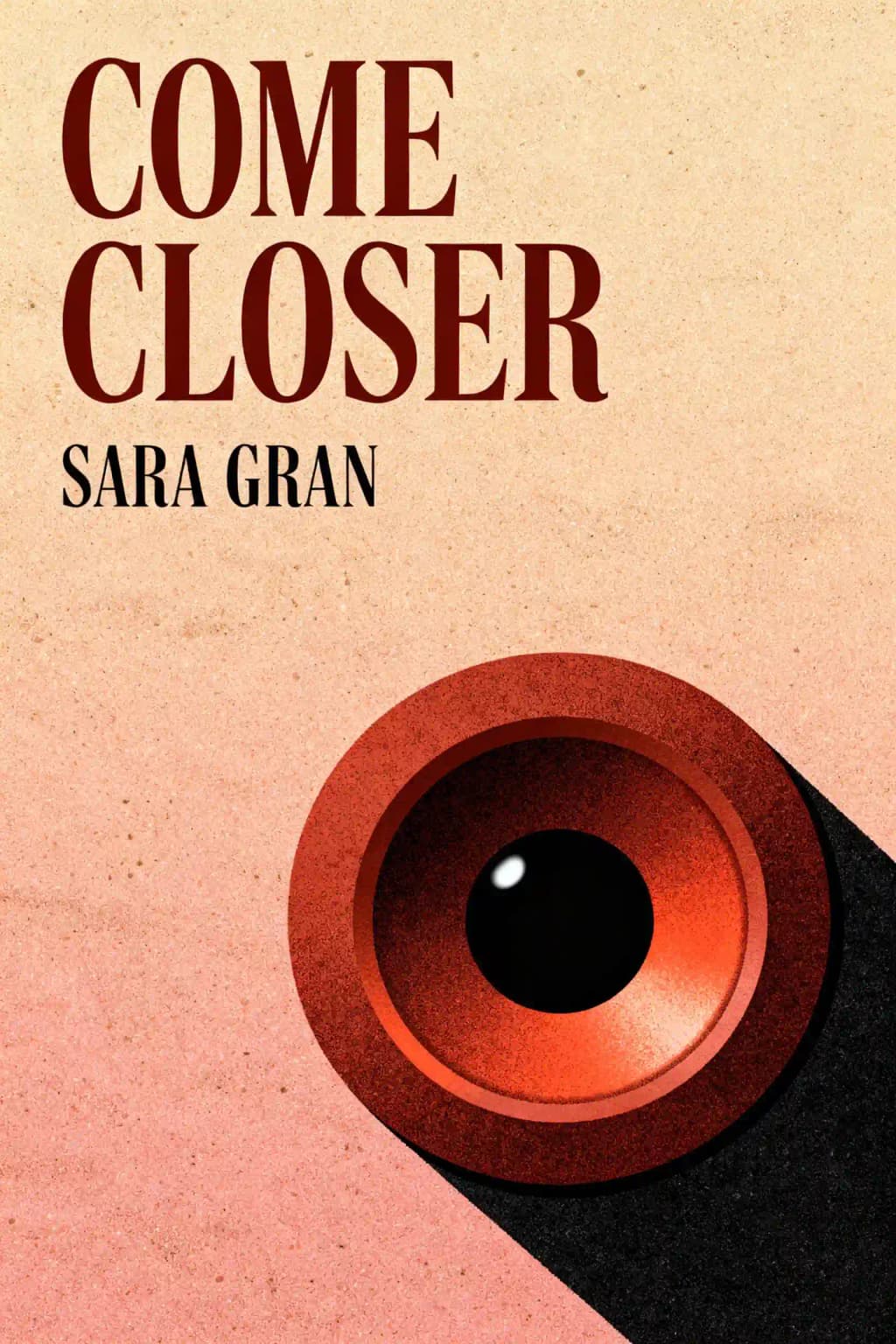
The legacy of "Come Closer" isn't just its portrayal of possession, but how it makes us question the boundaries between mental illness and supernatural influence, between coincidence and malevolence, between our autonomous choices and influences we may not fully understand. In a world increasingly focused on rational explanations, it reminds us of ancient fears that still lurk in our collective unconscious-fears that perhaps exist for good reason.
After all, as the demon quiz warns: if you scored between 4-5 positive answers, you may be in the early stages of possession. What was your score?