Capítulo 4
AI and the Future of Human Work
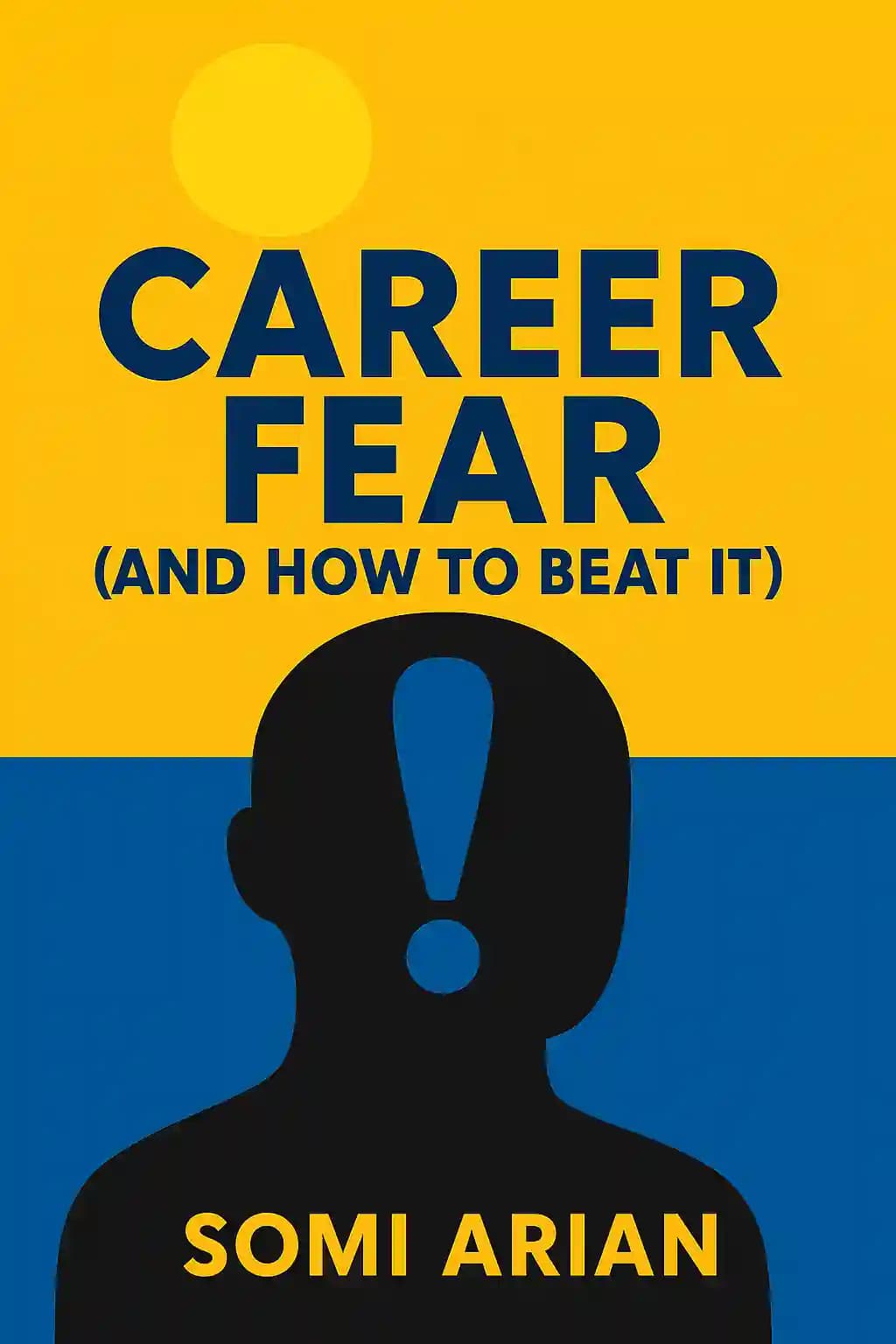
Only humans currently possess general intelligence, though machines might someday develop it too. Oxford professor Nick Bostrom warns about the profound challenges artificial general intelligence (AGI) could pose to society, from economic disruption to existential risks. While some experts predict AGI within 20 years, Bostrom cautions that this timeframe is a convenient "sweet spot" for futurists-close enough to grab attention yet far enough to imagine currently vague breakthroughs. The development timeline remains highly uncertain, with estimates ranging from decades to centuries.
The debate about AI's impact on employment reveals stark divisions among experts. Some predict catastrophic job losses of 40-50%, particularly in sectors like transportation, manufacturing, and routine office work. Others argue that, like previous technological revolutions, AI will create as many jobs as it eliminates. Examples already emerging include AI trainers, ethics officers, and human-AI interaction specialists. Tech leaders present contrasting visions: while some like Ray Kurzweil envision a utopian future of abundance, others including Stephen Hawking, Elon Musk, and Bill Gates warn of potential catastrophic downsides. Universal basic income proposals face fundamental challenges beyond mere logistics-questions of citizenship, residency requirements, and defining "basic" standards across diverse economies and cultures. As historian Yuval Noah Harari suggests, we should build flexible identities like movable tents rather than rigid stone houses with deep foundations, adapting to rapid technological change.
The immediate threat isn't complete job displacement but rather the automation of roughly half the tasks in many professions. Law firms now use AI for document review, while medical diagnostics increasingly rely on machine learning. Some companies are already reducing working hours rather than increasing pay as machines take over certain tasks. While historical technological revolutions have always brought new opportunities alongside disruption, the current AI revolution is unprecedented in both its speed and scope.
Logic formalizes the validity of information but doesn't determine truth-a crucial distinction giving humans an advantage over computers. When searching for "exotic food recipes," Google's algorithm provides logically valid results, but the subjective experience of what counts as "exotic" varies dramatically between cultures and individuals. Human subjective experience, rooted in consciousness and emotion, can't be reduced to pure logic-it's an emergent property of organic life that machines currently can't replicate.
Computers excel at logical processing using if-then statements, performing billions of calculations per second. While simple logical arguments are easy for humans to follow, complex logical computations quickly overwhelm our cognitive capacity. Most humans hit their limit after processing three or four layers of logical operations. Throughout history, we've outsourced difficult tasks-from using fire for digestion to domesticating horses for heavy lifting. The dream of computational assistance has now become reality through AI.
Physicist Max Tegmark describes intelligence as the "ability to achieve complex goals." While AI can achieve specific complex goals through logical processing, the true challenge is threefold: making AI learn our goals, adopt our goals, and retain those goals without deviation. But defining humanity's collective goal remains problematic. At its core, our aim is to increase human happiness and decrease suffering-a subjective, conceptual notion rooted in emotions and consciousness that cannot be reduced to pure logic or algorithms.
Capítulo 5
Reimagining Work in the Age of AI
Rather than focusing on specific job titles that will be in demand, we should think about our roles in society. Three distinct categories of work will emerge in the near future, each requiring both technical and human skills. These aren't simply tasks to be completed but roles to be fulfilled-meaning they can't be mechanized or automated, though they will require more effort and a holistic approach.
As automation increases, companies will either need to reduce employee work hours or create new roles where humans bring value. This requires specialists who help redefine time and productivity-"chief time officers" or "time re-visualizers." These roles demand understanding of human psychology, creativity, emotional intelligence, economic awareness, and analytical skills.
Our current concept of work time dates back to the Industrial Revolution when Taylor measured productivity with stopwatches. This approach forced everyone to achieve faster results regardless of individual differences, harming mental health. With automation growing, we can't continue measuring human input against machine performance.
The coming decades will bring constant technological transformation requiring continuous adaptation. For companies to stay relevant, leaders must develop robust theories of successful transition. Like Harari's analogy of building tents rather than houses for our future identities, transition architecture must help people become more agile and flexible while maintaining essential structural elements.
By 2030, McKinsey estimates 375 million workers globally will need to change jobs or significantly upgrade skills. Companies must lead in helping people transition, requiring specialized talent to map these changes. Transition architects are particularly needed for demographics facing greater challenges, including women who disproportionately carry the "double burden" of paid and unpaid work, with around 50% of their typical job tasks being automatable.
Human-machine relations will be one of society's most challenging areas in coming decades. While previous technological disruptions improved our lives, machine learning represents a fundamental shift from deterministic programming to systems that can learn patterns humans can't explicitly program.
In the age of AI, technical experts must help team members understand what it means to work with machines that learn. Unlike previous "dumb" tools or early computers where IT departments handled all technical aspects, machine learning systems require users to communicate with and train their machines directly.
The ethics of AI presents complex challenges across multiple domains. The classic driverless car dilemma illustrates this perfectly: if a child jumps in front of an autonomous vehicle, should it sacrifice the passenger by crashing into a tree or hit the child to save you? Unlike human split-second reactions based on emotion and instinct, machine decisions could be considered "premeditated" despite lacking subjective experience.
Capítulo 6
The Essential Human Skills for Career Success
In an era of unprecedented technological change, Socrates' ancient advice to "know thyself" has become more crucial than ever. The Five-Factor Model (FFM), developed through decades of psychological research, identifies five main personality traits that form the acronym OCEAN: openness, conscientiousness, extroversion, agreeableness, and neuroticism. These traits exist on a spectrum, with most people falling somewhere between extremes.
Extroversion is considered the most important personality trait as it affects human behavior variability more than any other characteristic. Like saturation in an image, extroverted individuals appear louder and more visible in social and professional settings. They tend to draw energy from social interactions, speak up more in meetings, and naturally build larger professional networks. Introverts, conversely, may need to develop specific strategies to ensure their contributions are recognized while maintaining their energy levels.
Neuroticism relates to how often and intensely someone experiences negative emotions like anxiety, sadness, frustration, fear, and anger. High neuroticism can lead to heightened stress responses in challenging work situations, while lower neuroticism often correlates with greater emotional resilience. Agreeableness determines how positively you feel toward others and how easily you get along with people - crucial for team collaboration and leadership roles. Conscientiousness relates to dependability, responsibility, and attention to detail, often predicting job performance across various fields. Openness refers to intellectual and experiential receptiveness to new ideas and experiences, particularly valuable in rapidly evolving industries and creative roles.
Beyond personality traits, three fundamental motivators drive our behavior and interactions: affiliation (enjoying connection with others), power (seeking influence over others), and achievement (striving toward goals). When our motivations misalign with our personality traits, we may experience frustration and struggle to find suitable environments. For example, a highly achievement-motivated individual in a role with limited growth opportunities may feel stifled, regardless of their personality type.
Career success typically revolves around three dimensions: money, impact, and recognition. To define personal success, one must honestly assess how much money is truly needed for happiness, what scale of positive impact feels fulfilling, and how much recognition is desired. This assessment should consider both short-term goals and long-term aspirations, understanding that these priorities may shift over time.
Finding our place in the world begins with understanding that humans are social beings whose lives gain meaning through their relationships with others and their environment. Our place in the world can be visualized as concentric circles, with ourselves at the center, expanding outward through family, city/country, our species, planet, solar system, galaxy, and finally the universe. This perspective helps frame career decisions within a broader context of personal and social responsibility.
Every choice we make in pursuit of career success affects our planet. As we maximize our options and choices-whether through business travel, food consumption, or other conveniences-we invariably increase disorder in our environment. Our technologies have developed faster than our ability to consider their consequences, creating processes that increase order in our inner circles while negatively impacting our outer circles. This raises important questions about sustainable career paths and responsible professional practices.
Economic uncertainty often overshadows concerns about global problems, making it difficult to worry about outer circles when preoccupied with inner ones. Yet economic empowerment could potentially solve many global challenges, as much human suffering stems from inequality. This understanding suggests that career success, when properly aligned with broader social and environmental consciousness, can contribute to both personal fulfillment and positive global impact.
Capítulo 7
The Four Essential Human Skills
To navigate the digital economy and AI age, four essential human skills will be critical: emotional intelligence, contextual creativity, critical thinking, and mindfulness. The good news is these skills are entirely learnable, not innate talents.
Daniel Goleman describes emotional intelligence as "the ability to motivate oneself and persist in the face of frustrations, to control impulse, and delay gratification; to regulate one's moods and keep distress from swamping the ability to think, to empathize, and to hope." Unlike IQ, which measures logical, spatial and linguistic abilities through established tests, emotional intelligence is harder to measure but crucial for career success.
Emotional intelligence connects to our subjective experience, giving humans an edge since machines likely cannot gain emotional intelligence without subjective experience. Throughout history, humans have relied on three primary abilities: physical, cognitive, and emotional. When steam power disrupted physical labor, we pivoted to cognitive skills. Now that computers are disrupting knowledge work, we must develop our emotional intelligence.
Empathy means putting yourself in another's shoes to see their perspective and feel their emotions alongside them. Sympathy, by contrast, is feeling sorrow or compassion for someone while maintaining distance-which can actually highlight the divide between people. Emotional intelligence involves three components: feeling (identifying emotions), understanding (analyzing why you feel that way), and action (deciding what to do about it).
Self-control is the ability to override impulses to adhere to appropriate standards. This three-part process involves feeling an urge, desiring to override it, and adhering to a standard. The foundation of self-control is surprisingly simple: proper nutrition and adequate sleep. Studies consistently show that well-fed, rested people demonstrate greater persistence and self-control.
Critical thinking, closely related to emotional intelligence, is essential for career decision-making. The term "critical" derives from the Greek "krisis" meaning "to decide or judge"-not necessarily negative but indicating importance. This uniquely human skill combines subjective judgment with logical processing. Unlike computers which excel at algorithmic thinking, humans can evaluate situations from multiple perspectives.
The essence of critical thinking is recognizing our knowledge limitations and understanding how our minds deceive us. Like optical illusions that trick our visual perception, we experience cognitive illusions in daily decision-making. Common cognitive biases include answering the wrong question (substituting difficult questions with simpler ones), overgeneralizing (drawing broad conclusions from limited evidence), being impressionable (having judgments affected by irrelevant "anchoring" data), and seeing causal stories where only randomness exists.
Capítulo 8
Creating Your Future-Proof Career
Contextual creativity represents another area where humans maintain advantage over AI and automation. While AI enthusiasts point to examples like Google's Alpha Go beating champion Lee Sewol with creative moves, this represents only "narrow" creativity. Contextual creativity involves understanding a situation's context and finding creative solutions or experience enhancements, often requiring a multidisciplinary approach.
Context is inherently subjective, allowing us to experience stories or art through our personal lens. Humans can understand not just our own context but others' as well, enabling us to develop creative solutions for problems beyond our immediate experience.
To apply contextual creativity to your career, learn to fail (expect 99% of your ideas to fail), connect the dots (use every bit of knowledge and skill in your toolkit), be an outsider on the inside (contextual creativity thrives at the edge of order and disorder), be open to contradiction (embracing paradoxes helps understand contexts better), improvise (drawing from past experiences to solve new problems), and be present (fully engaged and attentive).
Mindfulness forms the bedrock of emotional intelligence, critical thinking, and contextual creativity. It is the ability to observe the "committee" in our brain-the two "photographers" linked to emotion and logic that constantly chatter with each other. The purpose of mindfulness is to engage and participate fully in life.
According to Harvard professor Ronald D Siegel, mindfulness operates in three distinct modes: focused attention (choosing an object and following it closely without distraction), open monitoring (becoming aware of thoughts without judging them), and acceptance and kindness (treating ourselves with compassion during mental training).
Work defines us and gives our lives purpose-it's how we contribute to society. Despite economists arguing that machines might eliminate our need to work, the value of work goes beyond material needs. Our bodies and brains would atrophy without work. The golden age of work is just beginning, offering opportunities to build truly enjoyable careers by developing the right skills and mindset.
Defining success requires knowing your values and what makes you happy, plus critical thinking to realistically assess what it takes to achieve your goals. Understanding how technology has historically transformed your industry provides crucial insight into its future impact. When choosing a career path, consider which work culture suits you best. Finally, artificial intelligence and machine learning are permanent fixtures in our future-develop at least a conceptual understanding of how they can enhance your work and industry. Understanding both human and technological aspects of AI creates unique career opportunities, as companies increasingly need individuals versed in both areas who can innovate in human-machine relationships.