Capítulo 1
The Burnout Epidemic: How Modern Life Depletes Women's Energy
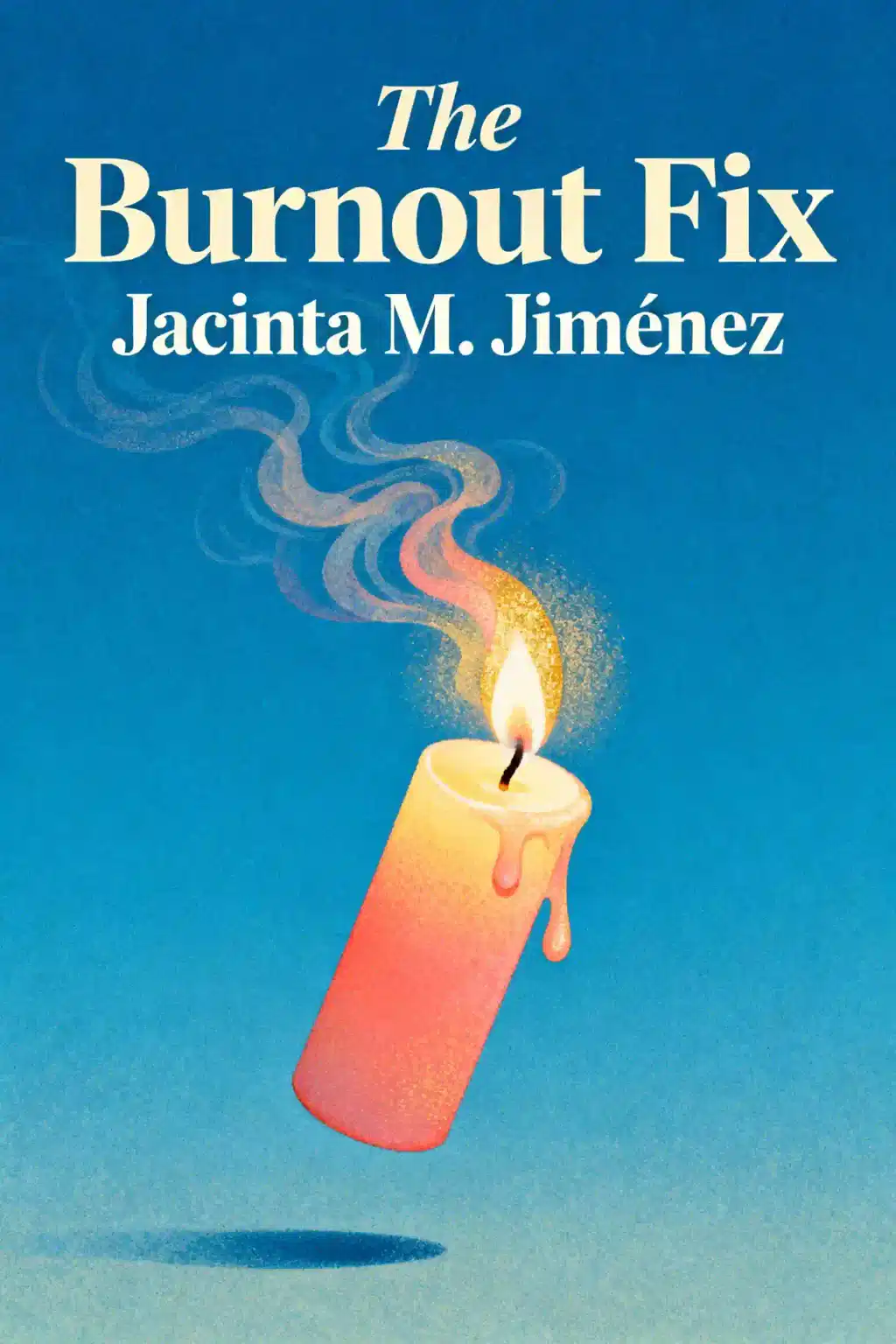
Imagine waking up feeling like you've barely slept, dragging yourself through another day of endless responsibilities, while that nagging voice in your head whispers you're still not doing enough. This isn't just tiredness-it's burnout, and it's reaching epidemic proportions among women. "Burnout" by Emily and Amelia Nagoski has become a cultural phenomenon since its 2019 release, with celebrities like Kristen Bell and Brene Brown championing its message. The twin authors-Emily, a health educator with expertise in human sexuality, and Amelia, a classical music conductor-combine scientific rigor with personal experience to explain why so many women feel overwhelmed despite trying all the usual self-care advice. Their revolutionary insight? The problem isn't that women aren't trying hard enough-it's that the game itself is rigged against them. As burnout rates skyrocket post-pandemic, this book offers a science-backed roadmap for not just surviving but thriving in a world that expects women to give endlessly while taking nothing for themselves.
Capítulo 2
Breaking the Stress Cycle: Why Bubble Baths Aren't Enough
Burnout has become startlingly common, affecting 20-52% of helping professionals and parents-particularly women. Consider Julie, a middle school teacher whose dread of the new school year drove her to day-drinking. Her story illustrates a crucial insight: dealing with your stress is entirely separate from dealing with the things that cause your stress.
When stressors activate your body's stress response-whether external (work, family) or internal (self-criticism)-your heart beats faster, muscles tense, and digestion slows. This response evolved to help us escape physical threats by pumping oxygen and fuel to our muscles. In ancestral environments, we'd run from a predator, escape, and celebrate with our tribe afterward-naturally completing the stress cycle.
But modern life rarely gives us this closure. Crucially, eliminating the stressor (like resolving an issue with a difficult colleague) doesn't automatically complete the stress cycle in your body. When these cycles remain incomplete day after day, chronic activation leads to serious health problems as your body remains in a state it wasn't designed to maintain.
We get stuck in incomplete cycles for three common reasons: Chronic Stressors that never fully disappear; Social Appropriateness that prevents expressing natural responses; and situations where suppression is Safer, like with street harassment. While "fight or flight" responses tell us to DO something, the "freeze" response is a special last-resort when your brain decides you can't outrun or overpower a threat. This explains why people sometimes couldn't fight or run in dangerous situations-their brain chose freeze as the best survival strategy.
Physical activity is the single most efficient way to complete the stress response cycle-20-60 minutes most days signals to your brain that you've survived the threat. Your body doesn't understand "filing taxes," but it understands movement. Beyond exercise, six evidence-based strategies help: deep breathing with long exhalations, positive social interaction, genuine laughter, affection (six-second kisses, twenty-second hugs), crying, and creative expression.
How do you know when you've completed a cycle? It feels like a gear shift-muscles relaxing, breath deepening, tension releasing. Some experience a big sigh as the signal. If you've accumulated stress for years, one session won't release it all. Success means feeling incrementally better-moving from "an eight on the stress scale" to "a four."
Four reliable signs indicate when you need to address stress before tackling stressors: repetitive behaviors, "chandeliering" (sudden emotional eruptions), hiding from life, and physical symptoms like chronic pain or recurring infections. The solution is simple but non-negotiable: find what works for you, then schedule it into your day. Your life literally depends on it.
Capítulo 3
Navigating Life's Traffic Jams: When to Push Through and When to Pivot
Sophie, a Black woman engineer, constantly faces the double burden of doing her job while being expected to educate her white male colleagues about diversity. This scenario illustrates how we manage stressors through what the Nagoskis call "the Monitor"-the brain mechanism that decides whether to persevere or give up.
The Monitor tracks three things: your goal, your effort toward that goal, and your progress. When effort outweighs progress, frustration builds. It's like getting stuck in traffic when you expected a quick trip-green lights feel great, but red lights trigger escalating rage until eventually, if progress seems impossible, you plummet into helplessness.
For stressors you can control, planful problem-solving works best-analyzing problems, making plans, and executing them, like using GPS to navigate around traffic. For stressors beyond your control, positive reappraisal becomes essential. This isn't just "looking on the bright side"-it's recognizing that difficulties genuinely create opportunities for growth. Science confirms this: students reading difficult-to-read fonts remember more; background noise increases creativity; heterogeneous groups generate better solutions.
When progress toward goals is slower than expected, adjust your Monitor's expectations. Like climbing Mount Everest, if you expect a smooth ascent, you'll get frustrated. But if you begin knowing it will be challenging, your Monitor recognizes the struggle as normal. For goals where rejection is inevitable-like creating art or raising teenagers-focus on incremental goals that are soon, certain, positive, concrete, specific, and personal.
Sometimes, though, you need to give up. The Monitor has a pivot point where it reassesses goals from "attainable" to "unattainable," causing oscillation between frustrated rage and helpless despair-what the authors call "Foop." You can decide whether to continue by listing benefits and costs of both options, considering short and long-term impacts. Often, though, knowing when to quit comes from intuition-a quiet voice saying "You've done all you can here."
Women especially struggle with this, having been taught that persistence equals virtue and giving up equals failure. Our tendency to cling to broken things intensifies when we're stressed, just as animals avoid exploring new territory when they sense danger. The quality of life isn't measured by perfection but by the freedom to choose whether to stay or leave what's broken.
Capítulo 4
Finding Your Something Larger: The Power of Meaning
When Julie confides about her marital troubles, she compares her suffering to food poisoning but notes it's worse because she doesn't know why it's happening. This reveals the power of meaning-we can tolerate suffering when we understand its purpose, while not knowing why creates profound suffering itself.
Meaning in life, like art and orgasms, is recognizable yet unique to each person. Research approaches meaning in two ways: as an element promoting happiness in healthy people and as a coping strategy for those recovering from trauma. Both agree that meaning isn't always "fun" but offers positive value to one's life, contributes something to the world, and provides significance beyond the trivial.
Rather than being discovered at the end of a journey, meaning is actively made by engaging with something larger than yourself. Research identifies three primary sources: pursuing ambitious legacy-leaving goals, serving spiritual callings, and forming emotionally intimate connections. Many meaningful pursuits combine all three.
Some people know their Something Larger early, while others discover it after decades. Finding it requires listening to your inner voice-that steady rhythm in your chest or wisdom crowning your skull. Exercises that help identify your Something Larger include writing your own obituary, asking close friends to describe your "real you," or reflecting on moments when you felt intense purpose.
However, Human Giver Syndrome-the belief that women have a moral obligation to be pretty, happy, calm, and attentive to others' needs-functions like a virus infecting us from birth. It tells women they can pursue their Something Larger only after meeting everyone else's needs while remaining pretty and calm. When women violate these expectations by claiming power, society responds with "What's the matter with you? Get back in line."
Engaging with your Something Larger helps heal Human Giver Syndrome in yourself and others. When life becomes turbulent, our connection to Something Larger helps us endure until we reach calmer times. In existential crises, we must repair our connection to meaning by turning inward with kindness and compassion. Studies of trauma survivors show those with PTSD symptoms often experience greater post-traumatic growth, developing stronger appreciation for life.
Like Moana discovering "the call isn't out there at all, it's inside me," our Something Larger resides within us. No external force, whether Human Giver Syndrome or personal loss, can separate us from it. Even when everyone disagrees with our path, we can still hear this inner calling.
Capítulo 5
The Game Is Rigged: Recognizing Systemic Barriers
Sophie presents her corporate talk about workplace diversity using the Star Trek concept of the "Kobayashi Maru"-an unwinnable training scenario designed to test character when facing inevitable defeat. This metaphor perfectly captures how systemic bias operates: people hire those from similar backgrounds, unconscious biases favor those who look like them, and media constantly reinforces that spaces dominated by white men are "normal."
Patriarchy manifests through explicit misogyny (like sexual assault), relationship violence (where men feel entitled to women's bodies), and chronic gendered stressors. These stressors include body image issues starting as early as age six, women struggling to speak as much as men in meetings, and the constant "one damn thing after another" experience of womanhood. Like rats experiencing "chronic, mild stress," women face a constant stream of small but cumulative challenges.
Gaslighting-named after the classic film where a husband manipulates his wife into doubting her sanity-describes how marginalized groups are told they're imagining discrimination. When gaslit, you experience a disorienting mix of doubt, fear, rage, and confusion-sensing something is wrong but unable to articulate why. This creates a trap where you question your own credibility.
Two key factors create "patriarchy blindness": Human Giver Syndrome (the assumption women should give everything to others' care) and the headwinds/tailwinds asymmetry (people notice obstacles they face but not advantages they receive). This cognitive bias leads dominant groups to misinterpret others' struggles. When men see evidence of gender discrimination, they often respond defensively rather than recognizing their tailwinds.
Using a tree metaphor, the authors illustrate how environment shapes our growth. Trees on level fields grow straight while those on hillsides grow at angles toward the sun. Similarly, white men grow on open, level fields while women face steeper terrain and women of color grow on ocean-battered cliffs. When transplanted to level ground, trees that survived harsh conditions look strange and gnarled-explaining why marginalized people develop different coping mechanisms.
To combat burnout from these systemic forces, the authors recommend three steps: First, complete the cycle by processing emotions about patriarchy through movement, singing, or writing. Second, unlearn helplessness by doing something-anything-that proves you're not powerless. Third, "smash the patriarchy" by engaging with your Something Larger in ways that heal Human Giver Syndrome, choosing concrete, specific goals like buying from woman-owned businesses or teaching boys to be human givers.
Capítulo 6
The Bikini Industrial Complex: How Body Standards Fuel Burnout
Julie's story shows how stress manifests physically-her body forcing her to acknowledge what her mind wouldn't through an embarrassing medical emergency requiring hospital care. This introduces the "Bikini Industrial Complex" (BIC)-a hundred-billion-dollar cluster of businesses profiting by setting unachievable body ideals and selling ineffective solutions.
This system begins affecting girls early, with half worried about being "too fat" by age six, and nearly all adolescent girls engaging in weight control behaviors. The authors challenge conventional wisdom about weight and health, citing research showing people labeled "overweight" may live longer than those in other BMI categories. They explain how BMI is a flawed measurement that ignores natural body diversity and how weight stigma itself causes significant harm through discrimination, stress, and medical neglect.
The true costs of the Bikini Industrial Complex include financial drain as people pursue endless "solutions," opportunity costs as women's energy is diverted from meaningful pursuits, chronic stress from navigating impossible standards, workplace and medical discrimination, and actual health damage from yo-yo dieting. Eating disorders have the highest mortality rate of any mental illness, killing 250,000 people annually.
The authors acknowledge that wanting to be thin makes perfect sense in a world where thin privilege is real. Fat people face adversity in everyday situations from shopping to public transportation, experiencing chronic stress from societal judgment. The urge to conform is rational, especially when the BIC falsely promises that anyone could be thin with enough discipline.
This toxic standard originated during the Industrial Revolution, when a fragile, thin wife became a status symbol for wealthy men-contradicting evolutionary advantages of robust female bodies. The authors share Sophie's story of facing public fat-shaming while shopping, illustrating how body discrimination remains socially acceptable despite being deeply harmful.
Instead of focusing on appearance, the authors encourage readers to treat their bodies with the same care they would give to an infant, asking "What do you need?" Julie had to rebuild her relationship with her body according to its needs rather than external standards, discovering that what made her body feel good differed radically from any diet she had followed.
The chapter identifies the Bikini Industrial Complex as the true enemy that convinces us our bodies are the problem, while offering solutions: embrace the mess, see yourself as "the new hotness," practice seeing everyone as "the new hotness," and tune in to your body's needs.
Capítulo 7
The Essential Nutrient: Why Human Connection Matters More Than We Think
Sophie, a self-described "Grown-Ass Woman" who valued her independence, unexpectedly develops butterflies for Bernard despite his complicated life circumstances. This introduces the chapter's focus on our fundamental need for human connection-a form of nourishment without which we literally sicken and die.
Research shows social isolation increases mortality risk by 25-30%, comparable to smoking fifteen cigarettes daily. The authors challenge the "common wisdom" that healthy development means progressing from dependence to complete autonomy, arguing instead that humans need both connection and autonomy in oscillation.
We physically synchronize with others through a phenomenon called "two-person neuroscience"-our brains, emotions, and even heartbeats align when we share space. This synchronization begins in infancy and shapes our neural development. Connection isn't just emotional but pragmatic-we need help from others to manage life's complexities, as Julie discovered when health challenges required her to accept assistance from her mother.
People vary naturally in their need for connection, influenced by introversion/extroversion and individual personality quirks. Research demonstrates significant health benefits from quality connections, particularly in marriage studies where good relationships predict better health outcomes than even smoking status. People in high-quality relationships heal faster, experience less chronic pain interference, and generally take better care of themselves.
The authors introduce the concept of the "Bubble of Love"-energy-creating connections that fuel our bodies like nutritious food, serving as an immune response against Human Giver Syndrome. These connections can occur one-on-one or in groups, with friends, family, or even pets. All effective Bubbles of Love share two essential ingredients: trust and connected knowing.
Trust means believing others will reciprocate proportionally to what we give them. Connected knowing involves understanding ideas within their context by temporarily suspending judgment and trying on another's perspective. Though everyone uses both approaches, women tend to favor connected knowing. This isn't irrational but intensely rational and integrates emotion into understanding.
The authors describe the "Uber-Bubble" as a powerful form of connection created through rhythmic play and synchronized movement. Research shows these synchronized experiences dissolve barriers between people, creating a sense of shared identity that extends beyond our skin. Studies demonstrate that synchronous movement increases cooperation-toddlers who bounce synchronously with others are more likely to help them later, and adults who tap fingers in time with strangers are three times more likely to volunteer assistance.
Capítulo 8
Rest as Radical Resistance: Why Recovery Makes You Stronger
The chapter explores how rest-not just sleep, but all forms of recovery-makes us stronger after stress and challenges. The authors reject Nietzsche's oversimplified "what doesn't kill you makes you stronger," clarifying that it's not the injury or suffering that strengthens us, but the rest and recovery afterward.
Our brains are designed to oscillate between focused work and restorative rest. Research shows that intentional rest between tasks doubles persistence on subsequent challenging work. When we're not actively focused, our "default mode network" activates-not doing nothing, but processing information and planning. This background processing explains why solutions often emerge after stepping away from problems.
Just as muscles need cycles of work and rest to grow stronger, our brains benefit from "active rest"-working one cognitive gear while resting others. This cross-training principle applies beyond physical exercise; when we work our largest muscles, we strengthen our entire body including lungs, liver and brain.
Sleep may seem counterintuitive from an evolutionary perspective-lying unconscious and vulnerable for hours-yet humans are designed to spend a third of our lives in this state because its benefits outweigh the risks. During sleep, our bodies repair physical damage, consolidate memories, integrate learning, and process emotions. Without adequate sleep, physical activity leaves us vulnerable to injury, learning doesn't stick, and emotional regulation suffers.
Science shows our bodies need 42% of our time-about ten hours daily-devoted to rest. This doesn't need to happen every day but should average out over time. The authors warn that if we don't take this time voluntarily, our bodies will eventually force us to rest through illness or collapse. They recommend dividing this time into approximately eight hours of sleep opportunity, thirty minutes of physical activity, thirty minutes of mindful eating, twenty to thirty minutes of stress-reducing conversation, and a thirty-minute "wild card" based on individual needs.
Human Giver Syndrome creates barriers between women and rest. Feeling guilty about sleeping or judging our need for rest acts as a "slow leak" that undermines the effectiveness of the rest we do get. The authors encourage confronting these feelings with kindness and compassion, acknowledging the frustration while recognizing that adequate rest is necessary for optimal functioning.
While rest does make us more productive, the authors argue its true value lies in making us happier, healthier, less irritable, and more creative. They reject the cultural message that treats people as consumable goods whose worth is measured by productivity. Rest becomes a justice issue across race, gender, and class lines. They challenge the activist cliche that "we won't rest until..." by pointing out that depriving ourselves of basic needs leads to burnout and dropout.
Capítulo 9
Befriending Your Inner Critic: The Path to Self-Compassion
The chapter begins with Sophie's story, connecting her character to the Star Trek finale "Turnabout Intruder," which featured Dr. Janice Lester, a woman driven to madness by gender discrimination in Starfleet. Sophie uses this character as inspiration during her relaxation exercises, imagining Lester confronting Kirk about his misogynistic attitudes.
The authors introduce the concept of the "madwoman in the attic"-the inner critic that lives within us. Drawing from literary metaphors like Jane Eyre's madwoman, they explore how this inner voice represents the part of ourselves that tries to bridge the impossible gap between who we are and who Human Giver Syndrome expects us to be. Everyone's madwoman is different-some describe theirs as shadows, spindly creatures, or whiny children-but they all share the uncomfortable task of managing the unbridgeable chasm between reality and expectations.
This inner critic manifests as harsh self-criticism, appearing both in failure and, insidiously, in success-when our madwoman hisses "Who do you think you are?" and demands we get back in line rather than celebrating achievements. The text distinguishes between benign perfectionism (preferring tidiness, being detail-oriented) and toxic perfectionism (believing anything short of perfect is worthless).
Self-compassion is presented as the antidote to harsh self-criticism and toxic perfectionism. The section addresses the common belief that self-criticism is necessary for achievement-that without "the whip," we'd lose all motivation. The authors counter this misconception, explaining that we only whip ourselves because our goals matter so much, not because the whipping itself drives success. Research confirms self-compassion and self-forgiveness improve well-being without diminishing motivation.
Julie discovers her "Perfect Julie" persona was just a defense mechanism protecting her real madwoman-not a woman at all, but a little girl. This sensitive child feared rejection and wore "adulting" as a costume. Once Julie recognized this, she could respond with compassion, addressing her inner critic as she would any child hiding behind a mask.
When we stop beating ourselves up with self-criticism, our emotional wounds can finally begin healing-but healing itself hurts. Like a broken leg that continues to hurt until it's fully mended, this healing pain is different from the familiar pain of self-flagellation. Self-compassion isn't always comfortable, but it helps us grow mightier.
As we heal through self-compassion, we grow increasingly stronger-perhaps stronger than we ever thought possible. This strength can be frightening both because Human Giver Syndrome will fight back against our empowerment, and because we ourselves may fear the responsibility that comes with greater personal power.
The authors recommend three approaches to growing mighty: First, befriend your madwoman by personifying your inner critic, creating separation that allows you to relate to her through connected knowing. Second, develop "observational distance"-noticing what's happening without fighting it. Third, practice evidence-based gratitude-not generic "grateful-for-what-you-have" exercises, but gratitude-for-who-you-have (remembering people who've helped you) and gratitude-for-how-things-happen (documenting positive events, including details, feelings, and how they came to be).
Capítulo 10
The Path Forward: Finding Joy in Connection
Rather than focusing on happiness (which depends on external "happenings"), the Nagoski sisters emphasize joy-arising from internal clarity about purpose when we engage with something larger than ourselves. They reveal that the path to joy isn't found solely within but through connection with others. Feeling "enough" requires both giving and receiving support from others, which is the essential action of wellness. The cure for burnout isn't self-care but mutual care.
The conclusion reiterates the book's core messages: trust your body, be kind to yourself, you are enough, and your joy matters. Dealing with stressors doesn't automatically resolve stress; wellness is an action state allowing free movement through human experiences; Human Giver Syndrome is the false belief that you must sacrifice everything for others; and humans naturally oscillate between connection and autonomy, with connection being as necessary as food and water.
Written between 2015-2018, during significant social and political changes including the rise of #Shepersisted, the Trump presidency, Brexit, and the #MeToo movement, the authors emphasize that the world needs a book about women's survival "more now than it has in decades." Their message resonates even more powerfully today, as we navigate a post-pandemic world where burnout rates have reached unprecedented levels.
By understanding the stress response cycle, managing our Monitor, connecting with our Something Larger, recognizing systemic barriers, rejecting toxic body standards, nurturing human connection, prioritizing rest, and practicing self-compassion, we can not only prevent burnout but build lives of genuine joy and meaning-even in a world that often seems designed to deplete us.