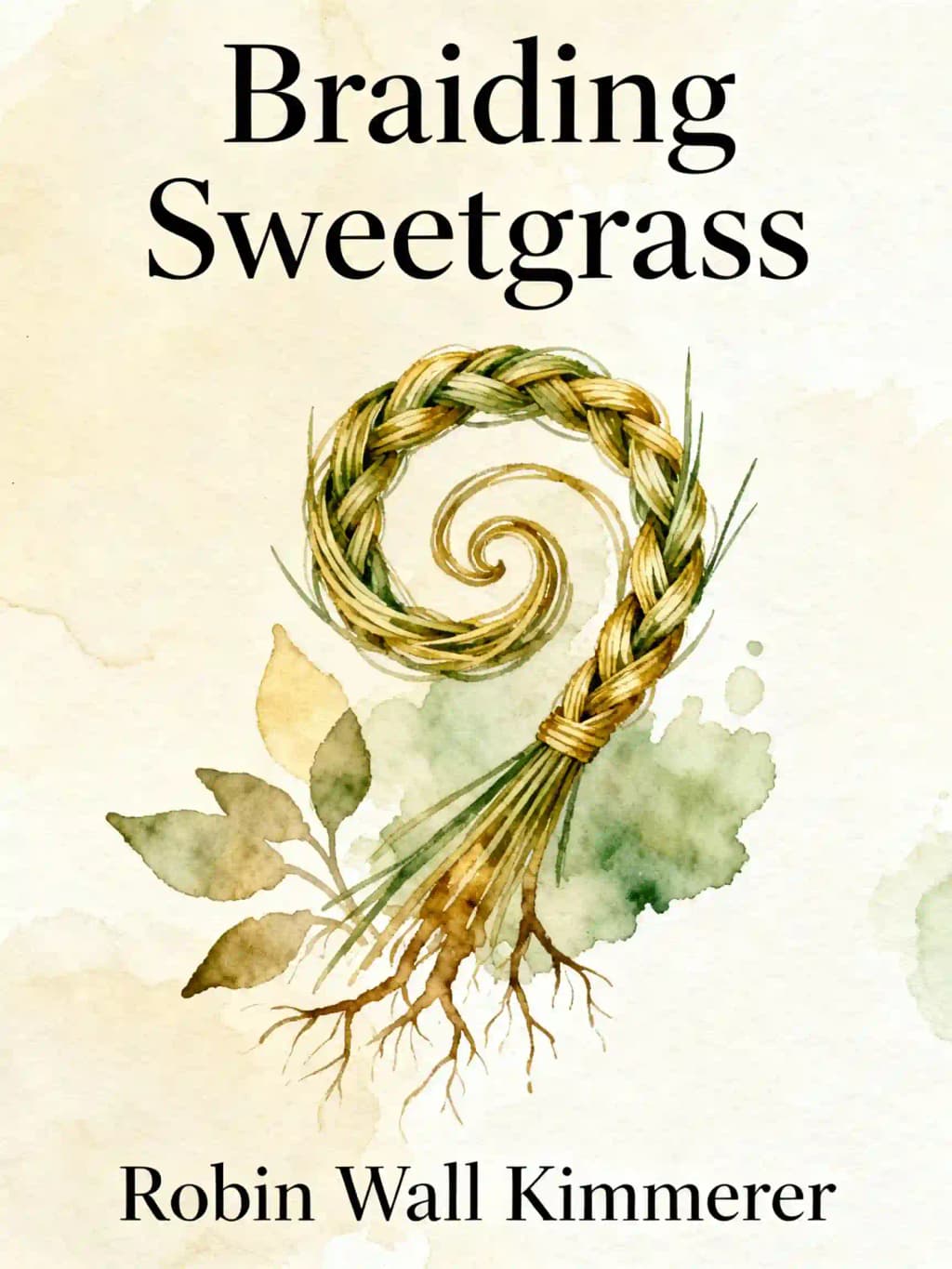
BRAIDING SWEETGRASS
Visão geral de BRAIDING SWEETGRASS
Braiding Sweetgrass weaves indigenous wisdom with scientific knowledge, transforming our relationship with nature. A New York Times bestseller for 181 consecutive weeks, this ecological masterpiece has been described by Pulitzer winner Richard Powers as flowing from "a font of endless knowledge, both mental and spiritual."

Temas principais em BRAIDING SWEETGRASS
- indigenous ecological knowledge
- reciprocal restoration
- gift economy
- grammar of animacy
- botanical storytelling
Citações de BRAIDING SWEETGRASS
Knowing that you love the earth changes you, activates you to defend and protect. But when you feel that the earth loves you in return, that understanding changes everything.
All flourishing is mutual.
The land knows you, even when you are lost.
Wouldn't things be different if nothing was an it?
Personagens de BRAIDING SWEETGRASS
- Robin Wall KimmererAuthor, scientist, and member of Potawatomi Nation
- SkywomanAncestral figure in the indigenous creation story
- WallyCeremonial firekeeper who honors the gift economy
Baixar resumo de BRAIDING SWEETGRASS
Obtenha o resumo de BRAIDING SWEETGRASS como PDF ou EPUB gratuito. Imprima ou leia offline a qualquer momento.
Perguntas Frequentes Sobre Este Livro
Braiding Sweetgrass by Robin Wall Kimmerer intertwines Indigenous wisdom, scientific inquiry, and personal memoir to advocate for a reciprocal relationship with nature. It explores themes like gratitude, ecological responsibility, and the lessons plants offer for healing humanity’s broken bond with the Earth, emphasizing that environmental restoration begins with respect and reciprocity.
This book is ideal for environmentalists, educators, and readers seeking a deeper connection to nature. It resonates with those interested in Indigenous philosophies, sustainable living, or blending scientific and spiritual perspectives. Kimmerer’s lyrical prose also appeals to fans of nature writing and eco-literature.
Yes—it’s a New York Times bestseller praised for its poetic synthesis of science and spirituality. The book challenges readers to rethink humanity’s role in ecology, offering actionable insights for fostering gratitude and sustainability. Its universal themes make it a transformative read for diverse audiences.
Kimmerer frames reciprocity as a mutual exchange where humans give back to the Earth, contrasting it with exploitative market economies. Stories like tending sweetgrass or harvesting pecans illustrate how Indigenous practices sustain ecosystems, arguing that gratitude and responsibility are vital for ecological balance.
The Honorable Harvest is an Indigenous ethic guiding sustainable resource use: take only what is needed, minimize harm, and express gratitude. Kimmerer illustrates this through practices like harvesting sweetgrass, showing how mindful reciprocity ensures both human and ecological thriving.
The Haudenosaunee creation myth of Skywoman falling to Turtle Island establishes the book’s foundational theme—viewing Earth as a gift, not a commodity. This story underscores Indigenous reverence for nature and contrasts with Western exploitation narratives.
As a botanist and Potawatomi member, Kimmerer bridges empirical research with traditional teachings. For example, she uses ecological studies to validate Indigenous practices like controlled burns, demonstrating how science and ancestral wisdom can collaboratively address environmental crises.
The Three Sisters—corn, beans, and squash—symbolize mutualism in Indigenous agriculture. Planted together, they support each other’s growth, embodying reciprocity. Kimmerer uses this metaphor to advocate for collaborative relationships between humans and nature.
Kimmerer argues that climate solutions require reimagining humanity’s relationship with nature. By adopting Indigenous principles like the Honorable Harvest and gift economies, she believes we can shift from exploitation to stewardship, fostering resilience against ecological collapse.
Some critics note the book’s niche appeal, as its blend of spirituality and science may not resonate with all readers. Others suggest its focus on personal transformation overlooks systemic barriers to environmental justice, though most praise its hopeful vision.
Notable quotes include:
- “The land is the real teacher. All we need as students is mindfulness.”
- “Gratitude is a powerful antidote to the capitalist mindset of scarcity.”
These lines encapsulate the book’s call to learn from nature and cultivate thankfulness.
Kimmerer redefines sustainability as active reciprocity—not just reducing harm, but nurturing relationships with the natural world. Practices like maple sugaring or basket weaving exemplify how traditions sustain both ecosystems and cultural heritage.


