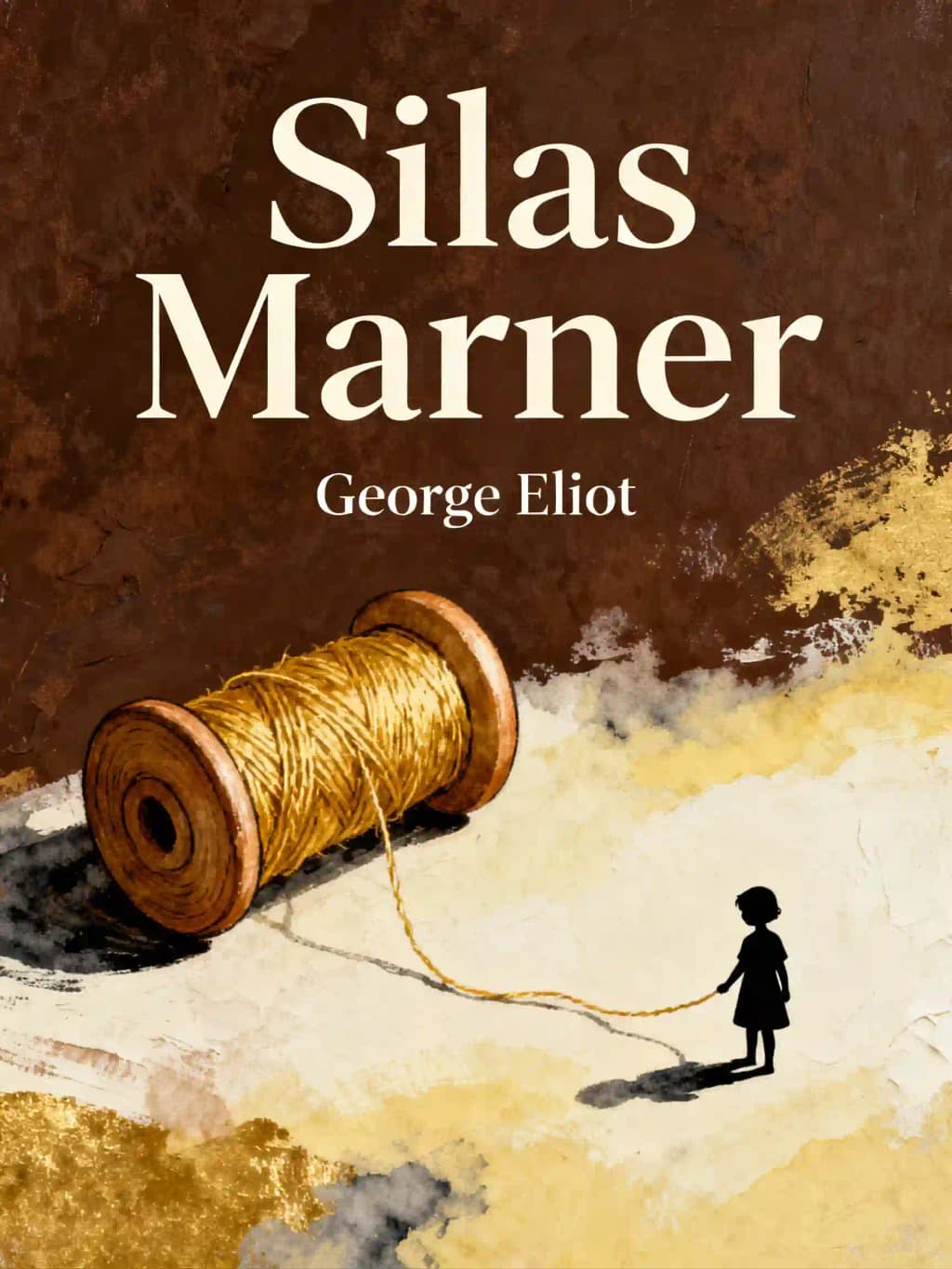
Silas Marner
Visão geral de Silas Marner
In "Silas Marner," a reclusive weaver finds redemption through an abandoned child. This Victorian masterpiece explores faith, industrialization, and community - themes that influenced Henry James and generations of writers. Can a gold-obsessed hermit teach us what truly enriches the human soul?

Temas principais em Silas Marner
- social ostracization
- redemptive power
- betrayal and injustice
- miserly hoarding
- rural class dynamics
Citações de Silas Marner
In the days when the spinning-wheels hummed busily in the farmhouses... that old leisurely, weaving life, now a mere echo of what it had been, was still a respectable and threatened occupation.
The shepherd's dog barked fiercely when one of these alien-looking men appeared on the upland, dark against the early winter sunset; for what dog likes a figure bent under a heavy bag?
When a man turns a blessing from his door, it falls to them as take it.
He loved the child because it was all his own, and the child loved him because he was all that she knew of love.
Personagens de Silas Marner
- Silas MarnerA reclusive weaver who lives in isolation.
- Godfrey CassThe Squire's eldest son with a secret marriage.
- Dunstan CassGodfrey's cunning brother who steals Silas's gold.
- William DaneSilas's former friend who betrayed and framed him.
- Nancy LammeterThe woman Godfrey Cass wishes to marry.
Baixar resumo de Silas Marner
Obtenha o resumo de Silas Marner como PDF ou EPUB gratuito. Imprima ou leia offline a qualquer momento.
Perguntas Frequentes Sobre Este Livro
Silas Marner follows a reclusive weaver who finds redemption after adopting an orphaned girl, Eppie. Set in rural 19th-century England, the novel explores themes of isolation, community, and moral rebirth. Silas’s journey from despair to love highlights George Eliot’s critique of industrialization and her belief in human connection’s transformative power. Key symbols like gold and the loom underscore themes of materialism versus nurturing relationships.
Fans of Victorian literature, students analyzing moral allegories, and readers interested in themes of social class and redemption will find value in this classic. Eliot’s rich symbolism and exploration of human psychology appeal to those studying character-driven narratives or societal critiques. It’s particularly relevant for discussions on how communal bonds counter isolation.
Central themes include:
- Isolation vs. community: Silas’s transformation from ostracized weaver to integrated father.
- Redemption through love: Eppie’s arrival replaces Silas’s obsession with gold.
- Fate and free will: Characters grapple with moral choices amid life’s unpredictability.
- Religion and industrialization: The disappearance of Lantern Yard symbolizes societal shifts.
- The loom: Represents isolation and mechanized labor, contrasting with Raveloe’s agrarian community.
- Gold: Symbolizes materialism’s emptiness, later replaced by Eppie’s love.
- Lantern Yard: Reflects lost faith and industrialization’s erasure of tradition.
Raveloe’s insular village acts as a microcosm of societal norms. Silas’s initial exclusion (due to his trade and “fits”) contrasts with his eventual acceptance through Eppie. Eliot critiques class divides but affirms communal bonds as vital for moral growth, exemplified by the Winthrops’ support.
Silas’s redemption unfolds through Eppie, who replaces his hoarded gold with purpose. His care for her rebuilds trust in humanity, reversing his disillusionment after being framed for theft. Eliot ties redemption to selfless love rather than religious dogma, emphasizing human connection’s healing power.
Lantern Yard, Silas’s former home, symbolizes rigid faith and betrayal. Its later replacement by a factory mirrors industrialization’s destruction of tradition. Silas’s return to find it gone underscores Eliot’s theme of adapting to change while retaining personal integrity.
The loom and Lantern Yard’s fate highlight industrialization’s dehumanizing effects. Silas’s manual weaving contrasts with factory mechanization, while the village’s agrarian rhythms resist urban alienation. Eliot champions rural community values over impersonal progress.
- “Gold is made to be melted, and love to grow.”: Reflects Silas’s shift from materialism to paternal love.
- “Nothing is so good as it seems beforehand.”: Underscores the novel’s realist approach to hope and disappointment.
Like Middlemarch, it examines rural society and moral complexity, but its shorter length and allegorical focus make it more accessible. Eliot’s humanist themes—redemption, community, and empathy—are consistent, though Silas Marner emphasizes personal transformation over broader social networks.
Some critics argue its ending is overly sentimental, with Eppie’s adoption resolving Silas’s struggles too neatly. Others note minor characters (like Godfrey Cass) lack depth. However, its thematic richness and symbolic depth are widely praised.
Its exploration of isolation, materialism, and community resonates in modern discussions about technology’s impact on human connection. The novel’s emphasis on empathy and adaptability offers timeless insights into navigating personal and societal change.


