Capítulo 1
Rewiring Your Mind: The Power of Beliefs in Shaping Our Reality
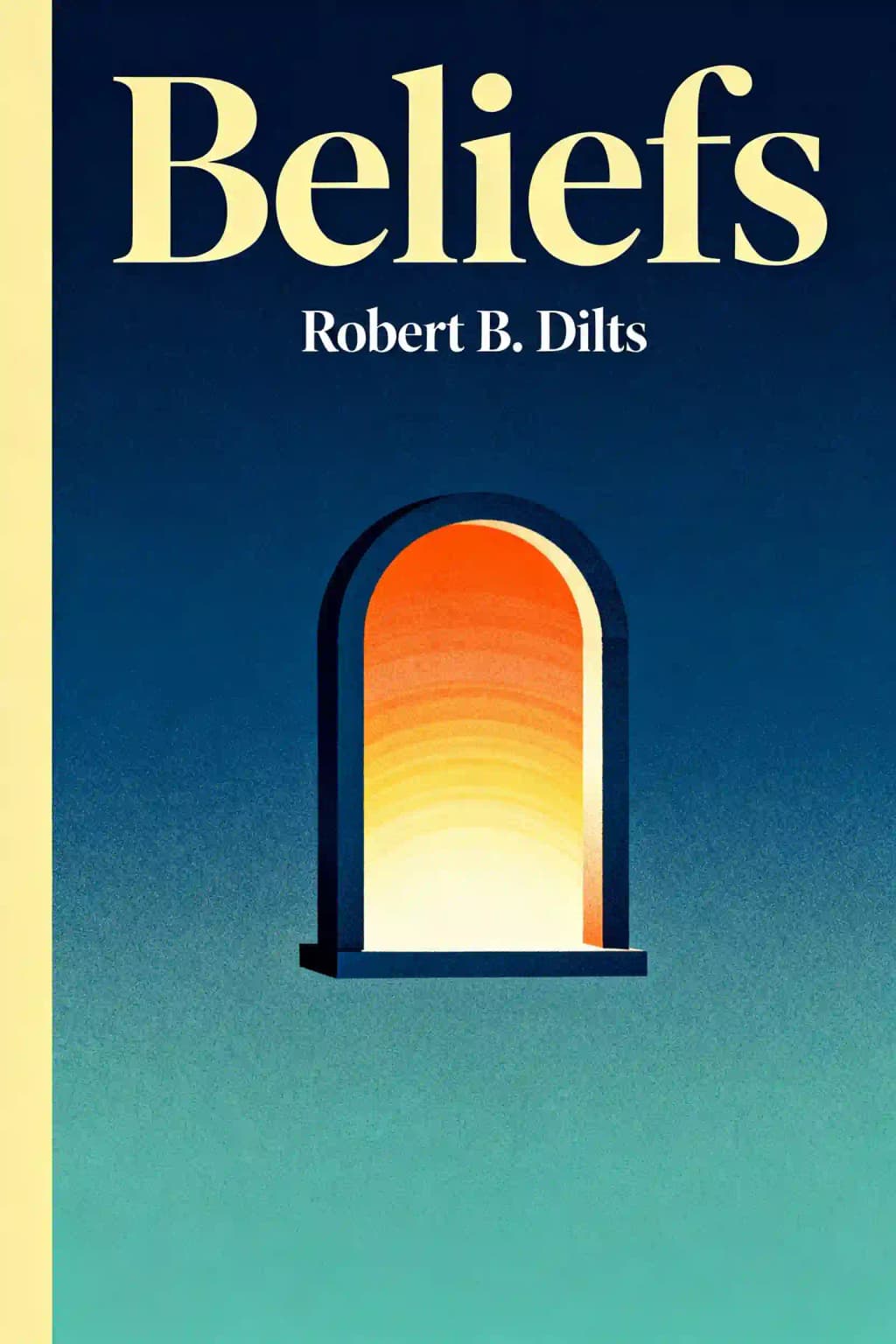
Have you ever wondered why some people can overcome seemingly impossible odds while others remain trapped in limiting patterns? In his groundbreaking work "Beliefs," NLP pioneer Robert Dilts reveals the invisible architecture behind our actions and outcomes. This isn't just another self-help manual-it's the culmination of work that began when Dilts' own mother faced terminal cancer in 1982 and defied medical prognosis through belief transformation. The techniques in this book have influenced everyone from Olympic athletes to Fortune 500 executives seeking peak performance. Even Tony Robbins has incorporated elements of Dilts' belief change work into his seminars, reaching millions worldwide. What makes this approach so powerful is its precision-rather than vague affirmations, Dilts offers specific, reproducible techniques for rewiring the neural pathways that determine what we consider possible.
Capítulo 2
The Multi-Level Framework of Change
Change can occur at various levels-from our environment to our spiritual connections-but beliefs represent the critical fulcrum point where lasting transformation becomes possible. Dilts' model identifies six distinct levels where change can occur: environment (where), behavior (what), capabilities (how), beliefs (why), identity (who), and spiritual (for whom or what purpose).
While changing your environment might temporarily alter your behavior, and learning new capabilities might expand your options, it's at the belief level where true transformation happens. Beliefs act as the gatekeepers of possibility-they determine which capabilities you'll develop and which behaviors you'll consistently perform.
Consider the case of Dilts' mother, who in 1982 faced a critical life transition. Her youngest son had left home, her husband's law firm was splitting up, her kitchen (representing her identity as family caretaker) had burned down, and she was working excessive hours as a nurse while expressing she was "dying to take a vacation." Not coincidentally, her breast cancer returned and metastasized throughout her body. Doctors offered a poor prognosis.
Rather than accepting this verdict, Dilts spent four intensive days working with her beliefs. The results were remarkable-she declined conventional treatments, made dramatic improvements, and seven years later remained cancer-free, swimming regularly and even appearing in television commercials.
This experience demonstrates the NLP formula for change: Present State + Resources = Desired State. However, when interferences (particularly limiting beliefs) exist, they create a division that blocks progress. These "internal terrorists," as Dilts humorously calls them, aren't enemies to be eliminated but parts of ourselves that need integration and understanding.
For lasting change to occur, you must want to change, know how to change, and give yourself permission to change. This seemingly simple formula contains profound wisdom about the nature of personal transformation.
Capítulo 3
The Architecture of Belief Systems
Beliefs aren't random thoughts-they're organized systems with specific structures that determine how we interpret reality and shape our responses to the world around us. These belief architectures function like invisible scaffolding, supporting our worldview and directing our actions through three critical types: beliefs about cause, beliefs about meaning, and beliefs about identity.
Cause beliefs explain why things happen and typically contain the word "because" (stated or implied). These beliefs create our personal theories of causation and consequence. When someone says, "I have a bad temper because I'm Irish" or "Ulcers run in my family," they're expressing cause beliefs that direct their behavior toward either making something happen or preventing it. These beliefs can be particularly powerful in organizational settings. In one fascinating example, a company plagued by widespread illness blamed their ventilation system, investing significant resources in air quality testing and system upgrades. However, consultants discovered the real cause was four major reorganizations in seven months, creating intense stress and uncertainty-showing how different causal beliefs lead to entirely different solutions. Similarly, athletes might attribute their success to talent versus practice, leading to vastly different training approaches.
Meaning beliefs interpret what events signify and provide the emotional context for our experiences. What does having cancer mean-punishment, self-destruction, or a sign to change your lifestyle? What does difficulty quitting smoking indicate-weakness, failure, or unintegrated parts of yourself? These interpretations profoundly shape your response to situations. For instance, two individuals receiving identical medical diagnoses might respond completely differently based on their meaning beliefs - one seeing it as a death sentence, another as a wake-up call for positive life changes. Business setbacks similarly get filtered through meaning beliefs, determining whether they're viewed as learning opportunities or personal failures.
Identity beliefs operate at the deepest level and often prevent change because they function unconsciously as core definitions of self. Unlike phobias, which conflict with one's self-image (making them easier to change), identity beliefs define who you fundamentally are. Clients often resist change with statements like "I can't do that because I wouldn't be me anymore" or "That's just not who I am." One striking example involved an allergist who couldn't accept curing her own allergies because it would challenge her professional identity-who would she be without the very condition she specialized in treating? Similarly, executives might resist delegating because "being in control" has become central to their identity, even when this belief hampers organizational growth.
These belief types don't exist in isolation but form interconnected systems that can either support or sabotage our efforts to change. Cause beliefs influence meaning beliefs, which in turn reinforce identity beliefs, creating self-perpetuating cycles. For instance, someone might believe they fail at relationships because they're unlovable (cause), interpret normal relationship challenges as confirmation of their unworthiness (meaning), and maintain an identity as someone who's "just not good at relationships." The good news is that once we understand their structure, we can systematically transform them by addressing each level of the belief architecture. This understanding allows for targeted interventions that can break self-limiting cycles and create new, more empowering belief systems.
Capítulo 4
Reality Strategies: How We Decide What's Real
Have you ever wondered how you distinguish between something that actually happened versus something you only imagined? This seemingly automatic process actually involves sophisticated mental "reality strategies"-sequences of internal representations that help us determine what's real.
Our brains don't inherently know the difference between imagined experiences and remembered ones-the same neural pathways activate for both. Therefore, we develop unconscious verification procedures that allow us to distinguish between sensory information from actual experiences and information generated internally.
In one demonstration, Dilts worked with a participant named Joe to identify his reality strategy. Joe first created visual images, then contextualized them within a larger memory sequence, and finally used internal dialogue ("hearing himself say it") to confirm reality. By manipulating submodalities-qualities of these internal representations like location, brightness, or size-Dilts could temporarily confuse Joe's reality testing.
This understanding has profound implications for belief change. If we can identify how someone determines what's real for them, we can work within that same structure to help them accept new possibilities as equally real. The process isn't about confusing people about reality but about expanding what they consider possible.
Interestingly, our most successful patterns can become limitations when they're so strongly reinforced that we stop exploring alternatives. As Dilts notes, "Success is as much a limitation to creativity as is failure." The U.S. automobile industry exemplifies how success-based rigidity can lead to stagnation-their dominance made them resistant to innovation until foreign competition forced change.
By understanding our reality strategies, we gain the ability to consciously expand our sense of what's possible rather than being unconsciously limited by habitual patterns of thought.
Capítulo 5
Belief Strategies: The Blueprint of Conviction
Just as we have unconscious strategies for determining what's real, we also have belief strategies-mental patterns that determine what we accept as true versus what we reject. These operate through consistent sequences of internal pictures, sounds, and feelings, but unlike reality strategies, we cannot test them with sensory-based reality checks.
These strategies form our "evidence procedures" for deciding what's believable, typically encoded in submodalities-the qualities of our internal representations. While belief strategies provide stability in our understanding of ourselves and the world, they work just as effectively for limiting beliefs as they do for empowering ones.
In one powerful demonstration, Dilts worked with a woman named Judy on her limiting belief that she "can't lose weight." After identifying her belief strategy patterns, he discovered she visualized a "huge woman" surrounding her when thinking about weight loss. This image created an overwhelming feeling that blocked her progress.
The breakthrough came when Judy learned to step back and see the picture in front of her rather than feeling surrounded by it. This simple shift in perspective-a submodality change-allowed her to separate herself from the limiting image and access her own resources. By the end of the session, her physiology had shifted dramatically, demonstrating she now believed weight loss was possible.
This approach reveals something profound about belief change: often, the most effective interventions don't involve changing the content of our thoughts but altering how we structure those thoughts internally. The same information, organized differently in our minds, can lead to completely different emotional responses and behavioral outcomes.
When working with your own limiting beliefs, compare something you believe you can do with something you believe limits you. Notice the differences in how you represent these beliefs internally-the images, sounds, feelings, and their qualities. Then transform the limiting belief to match the structure of the empowering one. This contrastive analysis approach precisely identifies where change work needs to be applied, saving time and frustration.
Capítulo 6
Re-Imprinting: Transforming Formative Experiences
Some of our most powerful beliefs form during significant emotional experiences called imprints. Unlike simple memories, imprints create clusters of beliefs that shape our identity and behavior for decades afterward.
The concept derives from Konrad Lorenz's work with ducklings, who would "imprint" on the first moving object they saw after hatching (even a ping pong ball) and treat it as their mother. Lorenz believed these imprints, established during critical neurological periods, were permanent. However, Timothy Leary demonstrated that human imprints, unlike those in simpler animals, can be accessed and reprogrammed under proper conditions.
Re-imprinting addresses these formative experiences by providing new choices in how one thinks about the original situation, changing beliefs about oneself, the world, and the role models involved. The process requires adding resources that would have been needed at the time to have more behavioral choices.
Consider the case of a man with fear of flying. When Tim and Suzi anchored his fear and asked him to trace it back, he initially "drew a blank"-a common response when approaching imprint experiences. With patient guidance, he accessed fragmented memories of a childhood incident where another boy got trapped in an abandoned refrigerator. Though the boy was rescued, the client's father warned, "Never get into any place that you can't get out of"-creating a connection between being "trapped" on airplanes and panic. Through re-imprinting, they helped him develop new choices about flying, and he now travels comfortably several times monthly.
The re-imprinting process follows specific steps: identify feelings associated with an impasse; verbalize beliefs formed from that experience; dissociate from the experience (viewing it like watching a movie); find positive intentions behind all behaviors involved; identify resources the person has now that weren't available then; replay the experience with these resources; relive the experience from each perspective; and finally, come back through time to the present, considering how these resources would have changed other experiences.
This process doesn't erase what happened but transforms its meaning and impact, creating new possibilities where limitations once existed.
Capítulo 7
Resolving Internal Conflicts
We all experience being "of two minds" about things-wanting to exercise but sleeping in, helping others reluctantly while wishing to focus on ourselves. These internal conflicts represent incongruence, where different parts of ourselves hold competing beliefs or desires.
Incongruity stems from four main sources: imprint experiences that create internal conflict; modeling contradictory beliefs from different significant people (like one parent who puts others first and another who prioritizes self); conflicts in hierarchy of criteria (wanting a new house versus saving for retirement); and life transitions that challenge our identity (like being promoted from blue-collar to management when your family distrusts management).
These conflicts often manifest as physical asymmetry-gesturing with different hands when expressing competing beliefs. Typically, the right hand (left brain) relates to relationship-oriented intentions, while the left hand (right brain) connects to self-oriented desires.
When dealing with dramatically different conflicting parts, standard NLP techniques often fail, especially when one part judges the other negatively. Integration requires careful dissociation from both parts, finding common intentions, and creating a new identity at a higher logical level.
In one demonstration, Dilts worked with a woman suffering from asthma and allergies. After using Re-imprinting to address childhood experiences of feeling helpless when her parents argued, he discovered a deeper conflict. She experienced a "black hole" that she feared would destroy her-representing her fear of an impulsive, chaotic part of herself. This conflict emerged between her analytical part (visualized in a business suit) and her curious, artistic part, which the analytical side dismissed as "frivolous."
Rather than forcing compromise, Dilts established a feedback loop between them-the creative part generates ideas while the practical part refines them for implementation. Through ideomotor movements, her hands gradually came together as the parts recognized their complementary resources and shared intentions.
The conflict integration process involves identifying conflicting beliefs, representing them in all sensory systems, discovering each part's positive intention, identifying their common goal, recognizing mutual resources, creating a new integrated identity, and testing in future contexts to ensure complete integration.
Capítulo 8
Criteria: The Values Behind Our Choices
Criteria and values represent a special category of beliefs about why something is important or worthwhile. These powerful, individualized beliefs determine satisfaction in areas like work, relationships, and personal development.
We arrange our criteria hierarchically, prioritizing some values over others. Problems occur when this internal hierarchy doesn't serve us well, such as when enjoyment of sweets takes precedence over health. The intensity of criteria also matters-while earning money might typically outrank having fun, an extremely fun activity might win out over a small income opportunity.
Vague criteria definitions create confusion. For example, "being healthy" needs to be broken down into specific sub-criteria like energy levels, weight range, and feelings. Without this clarity, people may feel overwhelmed or uncertain about how to achieve their goals.
When criteria become tied to identity, decisions become more complex. Choosing between a sports car (representing a "new you") and a station wagon (representing family responsibility) involves more than just preferences-it involves who you are. Similarly, quitting smoking can be either a simple behavior change or a fundamental identity shift depending on how it's framed.
Internal conflicts often stem from competing criteria, like wanting both fun activities and financial security. When these are framed as mutually exclusive, you'll feel cheated regardless of which you choose. This conflict explains why people often start changes but don't follow through-competing criteria sabotage their efforts.
When a person experiences strong negative feelings about criteria like appearance or control, these usually trace back to formative experiences where identity beliefs were established. In one demonstration, a woman's weight issues connected to a traumatic childhood experience where her mother forced her to have an enema despite her protests, creating the belief "she would win and I would lose." This intense feeling indicated an imprint experience that explained why certain criteria became so important to her.
The approach involves identifying these imprints, providing resources to all parties involved, and transforming limiting beliefs into empowering ones. By leveraging higher-level criteria or finding ways to achieve goals without violating limiting criteria, we can create sustainable change that honors all parts of ourselves.
Capítulo 9
The Mind-Body Connection: NLP Approaches to Health
When working with health issues through NLP, ecological considerations become paramount. Traditional visualization methods that frame healing as a battle between "good" and "bad" cells can actually intensify internal conflicts rather than resolve them. Instead, more harmonious metaphors like seeing white cells as sheep grazing on overgrown patches (cancer cells) create ecological balance without reinforcing conflict.
After studying visualization for twelve years, Tim and Suzi discovered why some people achieve rapid results while others see no change despite extended practice. Successful visualizers create fully associated experiences (seeing through their own eyes, feeling sensations directly) rather than dissociated images (watching themselves from outside). They also code their internal experience in the submodalities of expectancy rather than hope or doubt.
The effective formula for behavioral change involves five key steps: decide what you truly want; enter a relaxed, receptive state; identify your personal submodalities of expectation; visualize yourself having achieved your outcome using those expectation submodalities; and release attachment while affirming you deserve the outcome.
When working with health issues, pay special attention to metaphorical statements people make about body parts. The unconscious often literally interprets these metaphors, reinforcing physical symptoms. Examples include skin problems ("rash decision," "itching to get on"), stomach issues ("something eating at you"), headaches ("pain in the neck"), and heart problems ("heartache").
A remarkable case involved a woman with leukemia (white cells that "refuse to grow up") and colon cancer. After visualization work, she demonstrated extraordinary control over her white blood cell count, reducing it from 53,000 to 12,000 within 20 minutes-repeatedly-to the astonishment of medical staff. When her surgeon wanted to remove part of her colon, she negotiated a delay to continue her inner work. By the deadline, her tumor had vanished completely.
This work complements rather than opposes medical treatment. Purpose and meaning prove crucial for recovery-having reasons to live beyond simply eliminating illness creates the psychological foundation for healing. When working with terminal patients, the focus shifts to helping them become congruent about their desires rather than deciding whether they should live or die.
Capítulo 10
Revolutionary Approaches to Allergies
After observing how allergic reactions sometimes disappeared when people were asleep, distracted, or after psychological work, Robert Dilts wondered if NLP phobia techniques could address allergies. He developed methods while using biofeedback equipment to measure subtle physical changes, resulting in processes that have helped thousands overcome allergic responses.
The Fast Allergy Process begins by explaining how allergies work: when the immune system mistakes harmless substances as dangerous, it releases histamine causing typical symptoms. After confirming there are no secondary gains from keeping the allergy, the practitioner identifies a counter-example-something similar to the allergen that doesn't trigger reactions-and anchors this positive state.
Using dissociation techniques (like imagining a plexiglass shield), the person visualizes responding appropriately to the allergen. This new response pattern is then integrated and tested. Many describe the change as feeling like "things being rewired" in their nervous system.
For troubleshooting, three common reasons for failure include: inappropriate counter-examples (the closer to the allergen, the better), unaddressed secondary gain issues, or underlying imprints that need resolution first. For life-threatening allergies, medical verification after treatment is essential.
Another technique applies Pavlov's stimulus-response principles to allergies. When a strong stimulus (foreground) is paired with a neutral stimulus (background), inhibiting the response to the background element can neutralize the entire reaction. In one demonstration, Tim worked with a man allergic to cottonwood trees by anchoring his positive response to pine trees and associating it with the sensation in his feet (a background element always present). By creating this association and then triggering it when discussing cottonwoods, the allergic response disappeared completely.
These techniques demonstrate how our immune system responses are influenced by our nervous system and can be reprogrammed through psychological interventions. Since allergies represent "phobias of the immune system," similar principles might extend to other immune system disorders like cancer, AIDS, lupus, and arthritis-opening exciting possibilities for mind-body medicine.
Capítulo 11
The Symphony of Health
The book concludes by reinforcing NLP's core belief that effective thinking strategies can be modeled and utilized by anyone. The principles that help people recover from serious illnesses apply to other areas of human excellence, exemplified by a meditation based on Mozart's compositional process. This modeling of excellence extends beyond health to creativity, leadership, and personal transformation.
This "psychological symphony" guides participants through a carefully orchestrated process of healing awareness. First, they identify healthy parts of their body, experiencing them as musical instruments with distinct sounds and sensations. Some might perceive their heart as a steady drum, their lungs as wind instruments, or their flowing blood as string sections. Then, like a conductor, they learn to harmonize these elements, allowing that vitality to spread throughout their entire being. The process often begins with a single point of wellness-perhaps a healthy hand or foot-and gradually expands to encompass the whole body.
The multisensory experience creates a powerful template for health that continues working even during sleep. Participants report that this internal orchestra plays on in their dreams, creating a continuous healing resonance. This symphony of wellness can radiate outward, influencing those around them through what Dilts calls "fields of coherence"-where one person's balanced state can help regulate another's nervous system.
This approach represents the essence of Dilts' work-recognizing that our beliefs form the invisible architecture behind our experiences. These belief structures operate like musical scores, conducting our responses to life's challenges. By understanding their structure, we gain the power to transform them. For instance, someone with chronic pain might hold beliefs about permanent suffering; by restructuring these beliefs through the symphony process, they can create new neural pathways for comfort and healing.
Whether addressing health challenges, relationship patterns, or professional limitations, the same principles apply: identify limiting beliefs, understand their structure, and transform them using the natural capabilities of your nervous system. This might involve recognizing beliefs like "illness runs in my family" or "recovery is impossible" and recomposing them into empowering alternatives.
The journey of belief change isn't about forcing yourself to think positively. Instead, it's about recognizing that beliefs are neither true nor false-they're either useful or limiting. Like a skilled composer choosing instruments and arrangements, you can select beliefs that create harmony rather than discord in your life. By choosing beliefs that expand your possibilities rather than constrain them, you create a life of greater choice, vitality, and fulfillment. This might mean shifting from "I have to manage my condition" to "I am actively participating in my healing journey."