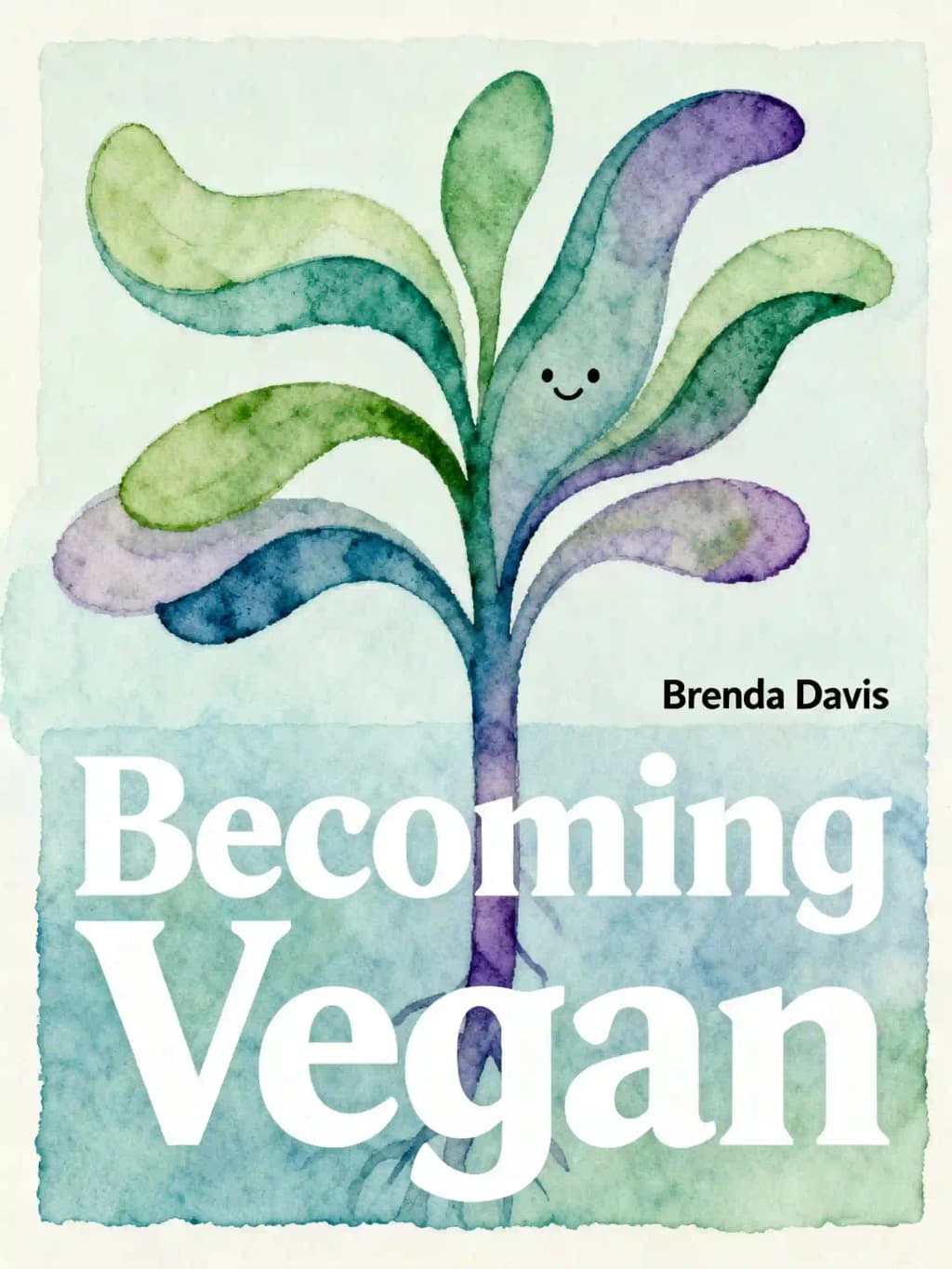
The ultimate guide to plant-based nutrition by acclaimed dietitians Davis and Melina. This comprehensive reference - trusted by health professionals worldwide - reveals how veganism supports every life stage while addressing our planet's environmental crisis. Denise Minger calls it essential reading for anyone considering the vegan path.
Brenda Davis, registered dietitian and internationally acclaimed co-author of Becoming Vegan: The Complete Guide to Adopting a Healthy Plant-Based Diet, is a pioneering authority in plant-based nutrition. A bestselling author and sought-after speaker, Davis combines decades of clinical expertise with a passion for sustainable health. Her work in Becoming Vegan—a definitive resource on vegan nutrition—draws from her transition to veganism in 2000 and her role as former chair of the Vegetarian Nutrition Dietetic Practice Group.
Davis has co-authored 13 books, including Nourish: The Definitive Plant-Based Nutrition Guide for Families (a Nautilus Book Award winner) and Plant-Powered Protein. A globetrotting educator, she has lectured in over 20 countries and consulted for diverse groups, from medical professionals to Saudi Arabian royalty.
Her evidence-based approach bridges scientific rigor with practical guidance, earning Becoming Vegan a starred review from the American Library Association as the “go-to” resource on vegan diets. Translated into 15 languages, Davis’s books have sold nearly a million copies worldwide, solidifying her reputation as the “Godmother of vegan dietitians” (VegNews).
Becoming Vegan by Brenda Davis and Vesanto Melina offers a science-backed guide to adopting a plant-based lifestyle, covering nutritional needs, ethical considerations, and environmental impacts. It provides practical advice for transitioning to veganism, addressing concerns like protein intake, vitamin B12, and meal planning. The book emphasizes holistic wellness, combining dietary guidance with strategies for navigating social challenges and sourcing cruelty-free products.
This book is ideal for new vegans, health professionals, or anyone exploring plant-based diets. It’s particularly valuable for individuals seeking evidence-based nutrition advice, ethical guidance on animal welfare, or strategies to reduce their environmental footprint. Parents, seniors, and athletes will also benefit from tailored dietary recommendations for specific life stages.
Yes—the book is a trusted resource for its thorough research, clear writing, and actionable steps. It debunks myths about vegan diets being restrictive, offers meal-planning templates, and cites studies linking plant-based diets to reduced chronic disease risk. Registered dietitians and long-term vegans praise its balance of scientific rigor and practical tips.
It details how to meet needs for protein, iron, calcium, and omega-3s using plant sources like legumes, leafy greens, and flaxseeds. The authors explain bioavailability differences (e.g., nonheme iron absorption) and provide charts for pairing foods. Vitamin B12 supplementation is strongly emphasized, with dosage guidelines for all ages.
The book critiques industrial animal agriculture’s environmental destruction and animal cruelty, advocating for veganism as a compassionate lifestyle. It encourages readers to extend ethics beyond diet—avoiding leather, wool, and products tested on animals—while highlighting the interconnectedness of personal choices and global sustainability.
Yes. It includes weekly meal templates, shopping lists, and tips for gradual transitions (e.g., "Meatless Mondays"). The authors stress balancing macronutrients and experimenting with global cuisines to maintain variety. Strategies for dining out, handling cravings, and managing social pressures are also covered.
Unlike simplified guides, this book combines peer-reviewed research with real-world application. It’s frequently cited in academic settings for its depth on micronutrients and life-stage adaptations. Competitors often lack its dual focus on health and ethics or its updates on phytonutrient science.
The book links animal agriculture to deforestation, water scarcity, and greenhouse gas emissions. It calculates the ecological footprint reduction achievable through plant-based diets and provides actionable steps for minimizing food waste or choosing local produce.
As a registered dietitian and former chair of the Vegetarian Nutrition Dietetic Practice Group, Davis translates complex nutrition science into accessible advice. Her work on diabetes prevention and international health projects lends authority to the book’s dietary recommendations.
Some readers find the nutritional details overwhelming, suggesting simplified summaries for casual audiences. Others note the 2015 edition lacks newer studies on plant-based meat alternatives. However, its core principles remain widely endorsed by nutrition experts.
These themes reinforce the book’s message of veganism as a joyful, ethical, and health-affirming choice.
Yes. It outlines how high-fiber, low-saturated-fat plant diets aid weight loss and maintenance. The authors caution against over-relying on processed vegan foods and provide portion guides for nuts, seeds, and whole grains to support metabolic health.
Sinta o livro através da voz do autor
Transforme conhecimento em insights envolventes e ricos em exemplos
Capture ideias-chave em um instante para aprendizado rápido
Aproveite o livro de uma forma divertida e envolvente
The pioneers of veganism were courageous individuals who prioritized truth and justice over social acceptance.
Vegan diets naturally align with dietary guidelines from leading health organizations.
The cancer-fighting potential of plant-based diets is particularly impressive.
The first question most vegans hear is "Where do you get your protein?"
The essential amino acids in animal proteins are ultimately derived from plants.
Divida as ideias-chave de Becoming Vegan em pontos fáceis de entender para compreender como equipes inovadoras criam, colaboram e crescem.
Destile Becoming Vegan em dicas de memória rápidas que destacam os princípios-chave de franqueza, trabalho em equipe e resiliência criativa.

Experimente Becoming Vegan através de narrativas vívidas que transformam lições de inovação em momentos que você lembrará e aplicará.
Pergunte qualquer coisa, escolha a voz e co-crie insights que realmente ressoem com você.

Criado por ex-alunos da Universidade de Columbia em San Francisco
"Instead of endless scrolling, I just hit play on BeFreed. It saves me so much time."
"I never knew where to start with nonfiction—BeFreed’s book lists turned into podcasts gave me a clear path."
"Perfect balance between learning and entertainment. Finished ‘Thinking, Fast and Slow’ on my commute this week."
"Crazy how much I learned while walking the dog. BeFreed = small habits → big gains."
"Reading used to feel like a chore. Now it’s just part of my lifestyle."
"Feels effortless compared to reading. I’ve finished 6 books this month already."
"BeFreed turned my guilty doomscrolling into something that feels productive and inspiring."
"BeFreed turned my commute into learning time. 20-min podcasts are perfect for finishing books I never had time for."
"BeFreed replaced my podcast queue. Imagine Spotify for books — that’s it. 🙌"
"It is great for me to learn something from the book without reading it."
"The themed book list podcasts help me connect ideas across authors—like a guided audio journey."
"Makes me feel smarter every time before going to work"
Criado por ex-alunos da Universidade de Columbia em San Francisco

Obtenha o resumo de Becoming Vegan como PDF ou EPUB gratuito. Imprima ou leia offline a qualquer momento.
Imagine a single choice that simultaneously protects your health, preserves the planet, and prevents animal suffering. This is veganism-a lifestyle that's evolved from fringe philosophy to mainstream movement embraced by millions worldwide. What Donald Watson coined as a term in 1944 has become a global phenomenon reshaping our food landscape. The plant-based revolution isn't about restriction-it's about aligning daily choices with deeply held values. Whether you're motivated by health concerns, environmental awareness, or ethical considerations, the vegan path offers remarkable benefits. As the global vegan food market approaches $31.4 billion, more people are discovering that plant-based living represents not just a diet but a more compassionate way of engaging with our world. The science is clear: well-planned vegan diets support optimal health at all life stages while offering significant disease prevention benefits-all while treading more lightly on our planet.