Feeling Tone: Reclaiming Your Life in a Chaotic World by Mark Williams and Danny Penman Summary

Overview of Feeling Tone
Discover the clinically-proven mindfulness program that rivals antidepressants in effectiveness. Endorsed by Jon Kabat-Zinn and recommended by healthcare institutions worldwide, this eight-week journey transforms anxiety into peace with just minutes daily. What could your mind achieve with less overthinking and more presence?
- Mindfulness breaks autopilot by anchoring attention in the present moment.
- Self-compassion trumps self-criticism in dissolving anxiety and depressive patterns.
- The 8-week mindfulness plan reduces stress through gradual cognitive-behavioral shifts.
- Body scan meditation cultivates awareness of physical sensations without judgment.
- Acceptance paradox: embracing discomfort unlocks lasting emotional resilience and growth.
- Daily mindful breathing rewires reactive habits into calm, intentional responses.
- Mark Williams’ MBCT method rivals antidepressants for clinical depression treatment.
- “Doing mode” fuels stress; “being mode” restores peace through presence.
- Loving-kindness meditation strengthens empathy for oneself and others simultaneously.
- Mindful eating transforms routine meals into sensory-rich, gratitude-driven experiences.
- Open awareness practice dissolves negative thought spirals by observing impermanence.
- Week one’s 8-minute breath focus builds foundational present-moment grounding.
About the Author of Feeling Tone
Mark Williams and Danny Penman are the bestselling authors of Mindfulness: A Practical Guide to Finding Peace in a Frantic World, a groundbreaking work in the self-help and mental health genre. Williams, an Oxford University professor and clinical psychologist, co-developed Mindfulness-Based Cognitive Therapy (MBCT), a clinically proven approach to alleviating stress, anxiety, and depression.
Penman, an award-winning journalist and science writer, brings expertise in translating complex psychological concepts into accessible practices. Their collaboration blends rigorous academic research with practical wisdom, offering an eight-week program of 10–20 minute daily meditations designed to foster resilience and emotional balance.
The duo expanded their work with Deeper Mindfulness, which explores neuroscience-backed techniques to address the “feeling tone” underlying mental habits. Their books have sold millions of copies worldwide and been translated into over 30 languages.
Recommended by healthcare professionals and institutions like the UK’s National Institute for Health and Care Excellence, Williams’ academic authority and Penman’s communicative clarity have solidified their status as leading voices in modern mindfulness practice.
FAQs About Feeling Tone
What is Mindfulness: Finding Peace in a Frantic World about?
Mindfulness: Finding Peace in a Frantic World by Mark Williams and Danny Penman outlines an eight-week program rooted in Mindfulness-Based Cognitive Therapy (MBCT) to reduce stress, anxiety, and depression. It combines practical exercises like body scanning and mindful breathing with scientific insights, teaching readers to cultivate present-moment awareness and break cycles of negative thinking.
Who should read Mindfulness: Finding Peace in a Frantic World?
This book is ideal for individuals struggling with stress, chronic fatigue, or recurrent depression, as well as anyone seeking to improve emotional resilience. Healthcare professionals and mindfulness beginners also benefit from its evidence-based, step-by-step approach.
Is Mindfulness: Finding Peace in a Frantic World worth reading?
Yes, it’s a top-rated resource for its clinically proven methods and accessibility. Readers report life-changing results, citing its clear guidance on integrating mindfulness into daily routines like eating or walking. Physicians and institutions like the UK’s National Institute for Health endorse its effectiveness.
What is the “paradox of effort” in mindfulness?
The paradox emphasizes balancing disciplined practice with non-striving acceptance. While mindfulness requires daily effort, true progress comes from releasing the urge to control outcomes and observing thoughts without judgment.
How does the 3-minute “breathing space” exercise work?
This quick practice involves focusing on breath sensations for three minutes to anchor awareness during stressful moments. It’s designed to create mental clarity and interrupt automatic negative thought patterns.
What role does MBCT play in preventing depression relapse?
MBCT, developed by Mark Williams and colleagues, helps individuals recognize early signs of depressive episodes. By fostering mindful detachment from negative thoughts, it reduces relapse risk by up to 50%, outperforming antidepressants in long-term studies.
How is Mindfulness: Finding Peace in a Frantic World structured?
The book divides into three sections:
- Theory: Explains mindfulness science and its mental health benefits.
- Practice: An eight-week plan with daily meditations like body scans and mindful movement.
- Application: Guidance for maintaining mindfulness in everyday activities.
How does this book compare to The Power of Now?
While both teach present-moment awareness, Williams’ book offers a structured, clinical approach with exercises validated by research. It’s more actionable for those seeking tangible stress-reduction tools compared to Tolle’s philosophical style.
What are common criticisms of the book?
Some note the program demands consistent daily practice, which can be challenging for busy readers. Others suggest it oversimplifies trauma-related issues, requiring supplemental therapies in severe cases.
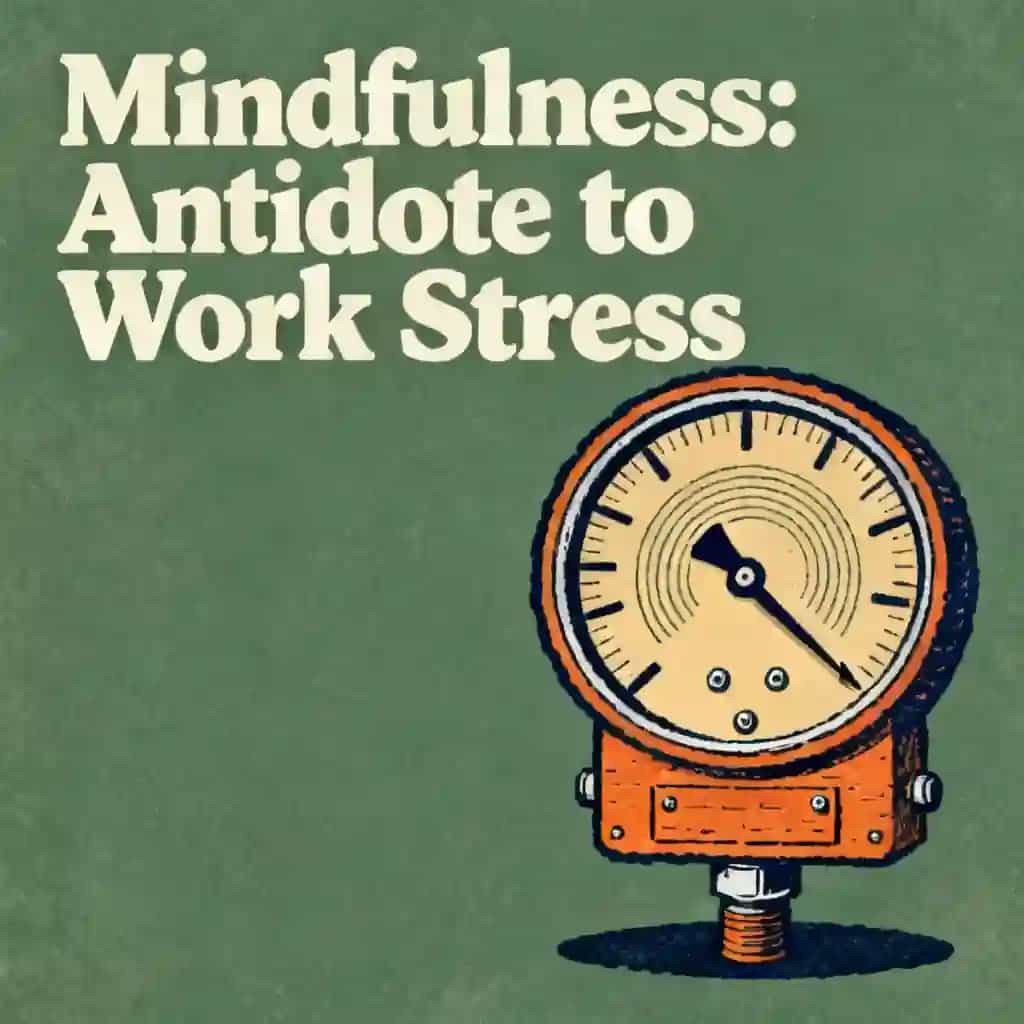
Can Mindfulness: Finding Peace in a Frantic World help with workplace stress?
Yes. Techniques like the breathing space and mindful listening improve focus, reduce burnout, and enhance decision-making by breaking cycles of rumination common in high-pressure environments.
What scientific evidence supports mindfulness in the book?
Williams cites studies showing mindfulness reduces activity in the brain’s “default mode network” (linked to overthinking) and increases gray matter in regions governing emotional regulation. MBCT is endorsed by the NHS for depression prevention.
Why is this book relevant in 2025?
Amid rising global stress levels and AI-driven distractions, its tools for digital detoxing and mental clarity remain critical. The program’s adaptability to hybrid work and social media challenges keeps it widely recommended.
What metaphors simplify mindfulness concepts?
- “The overcrowded inbox”: Symbolizes mental clutter cleared through mindfulness.
- “The mountain and the weather”: Encourages observing emotions like passing storms without attachment.
Are there companion resources for the book?
Yes, the authors provide guided meditation audio tracks and worksheets. The Oxford Mindfulness Centre, co-founded by Williams, also offers courses expanding on the book’s framework.
What books pair well with Mindfulness: Finding Peace in a Frantic World?
- The Mindful Way Through Depression (Williams’ earlier work).
- Wherever You Go, There You Are by Jon Kabat-Zinn.
- Radical Acceptance by Tara Brach for deeper emotional healing.
Feel the book through the author's voice
Turn knowledge into engaging, example-rich insights
Capture key ideas in a flash for fast learning
Enjoy the book in a fun and engaging way
Key Themes in Feeling Tone
Quotes from Feeling Tone
Trying to think our way out of unhappiness typically makes things worse.
We risk ceding too much control to autopilot.
We mistake our thoughts for reality.
Mindfulness can help us see our lives differently.
This simple shift in perspective can break the cycle of suffering.
Characters in Feeling Tone
Quick Summary Mode - Read or listen to Feeling Tone Summary in 11 Minutes

Break down key ideas from Feeling Tone into bite-sized takeaways to understand how innovative teams create, collaborate, and grow.

Flash Card Mode - Top 9 Insights from Feeling Tone in a Nutshell

Distill Feeling Tone into rapid-fire memory cues that highlight key principles of candor, teamwork, and creative resilience.

Fun Mode - Feeling Tone Lessons Told Through 25-Min Stories

Experience Feeling Tone through vivid storytelling that turns innovation lessons into moments you'll remember and apply.
Personalize Mode - Read or listen to Feeling Tone Summary in 0 Minutes

Ask anything, pick the voice, and co-create insights that truly resonate with you.

From Columbia University alumni built in San Francisco
"Instead of endless scrolling, I just hit play on BeFreed. It saves me so much time."


"I never knew where to start with nonfiction—BeFreed’s book lists turned into podcasts gave me a clear path."


"Perfect balance between learning and entertainment. Finished ‘Thinking, Fast and Slow’ on my commute this week."
"Crazy how much I learned while walking the dog. BeFreed = small habits → big gains."
"Reading used to feel like a chore. Now it’s just part of my lifestyle."

"Feels effortless compared to reading. I’ve finished 6 books this month already."
"BeFreed turned my guilty doomscrolling into something that feels productive and inspiring."

"BeFreed turned my commute into learning time. 20-min podcasts are perfect for finishing books I never had time for."
"BeFreed replaced my podcast queue. Imagine Spotify for books — that’s it. 🙌"

"It is great for me to learn something from the book without reading it."
"The themed book list podcasts help me connect ideas across authors—like a guided audio journey."
"Makes me feel smarter every time before going to work"
From Columbia University alumni built in San Francisco
"Instead of endless scrolling, I just hit play on BeFreed. It saves me so much time."
"I never knew where to start with nonfiction—BeFreed’s book lists turned into podcasts gave me a clear path."
"Perfect balance between learning and entertainment. Finished ‘Thinking, Fast and Slow’ on my commute this week."
"Crazy how much I learned while walking the dog. BeFreed = small habits → big gains."
"Reading used to feel like a chore. Now it’s just part of my lifestyle."
"Feels effortless compared to reading. I’ve finished 6 books this month already."
"BeFreed turned my guilty doomscrolling into something that feels productive and inspiring."
"BeFreed turned my commute into learning time. 20-min podcasts are perfect for finishing books I never had time for."
"BeFreed replaced my podcast queue. Imagine Spotify for books — that’s it. 🙌"
"It is great for me to learn something from the book without reading it."
"The themed book list podcasts help me connect ideas across authors—like a guided audio journey."
"Makes me feel smarter every time before going to work"
"Instead of endless scrolling, I just hit play on BeFreed. It saves me so much time."
"I never knew where to start with nonfiction—BeFreed’s book lists turned into podcasts gave me a clear path."
"Perfect balance between learning and entertainment. Finished ‘Thinking, Fast and Slow’ on my commute this week."
"Crazy how much I learned while walking the dog. BeFreed = small habits → big gains."
"Reading used to feel like a chore. Now it’s just part of my lifestyle."
"Feels effortless compared to reading. I’ve finished 6 books this month already."
"BeFreed turned my guilty doomscrolling into something that feels productive and inspiring."
"BeFreed turned my commute into learning time. 20-min podcasts are perfect for finishing books I never had time for."
"BeFreed replaced my podcast queue. Imagine Spotify for books — that’s it. 🙌"
"It is great for me to learn something from the book without reading it."
"The themed book list podcasts help me connect ideas across authors—like a guided audio journey."
"Makes me feel smarter every time before going to work"
"Instead of endless scrolling, I just hit play on BeFreed. It saves me so much time."
"I never knew where to start with nonfiction—BeFreed’s book lists turned into podcasts gave me a clear path."
"Perfect balance between learning and entertainment. Finished ‘Thinking, Fast and Slow’ on my commute this week."
"Crazy how much I learned while walking the dog. BeFreed = small habits → big gains."
"Reading used to feel like a chore. Now it’s just part of my lifestyle."
"Feels effortless compared to reading. I’ve finished 6 books this month already."
"BeFreed turned my guilty doomscrolling into something that feels productive and inspiring."
"BeFreed turned my commute into learning time. 20-min podcasts are perfect for finishing books I never had time for."
"BeFreed replaced my podcast queue. Imagine Spotify for books — that’s it. 🙌"
"It is great for me to learn something from the book without reading it."
"The themed book list podcasts help me connect ideas across authors—like a guided audio journey."
"Makes me feel smarter every time before going to work"

Get the Feeling Tone summary as a free PDF or EPUB. Print it or read offline anytime.