Capítulo 1
The Language of Play: Breaking Down Game Design's Building Blocks
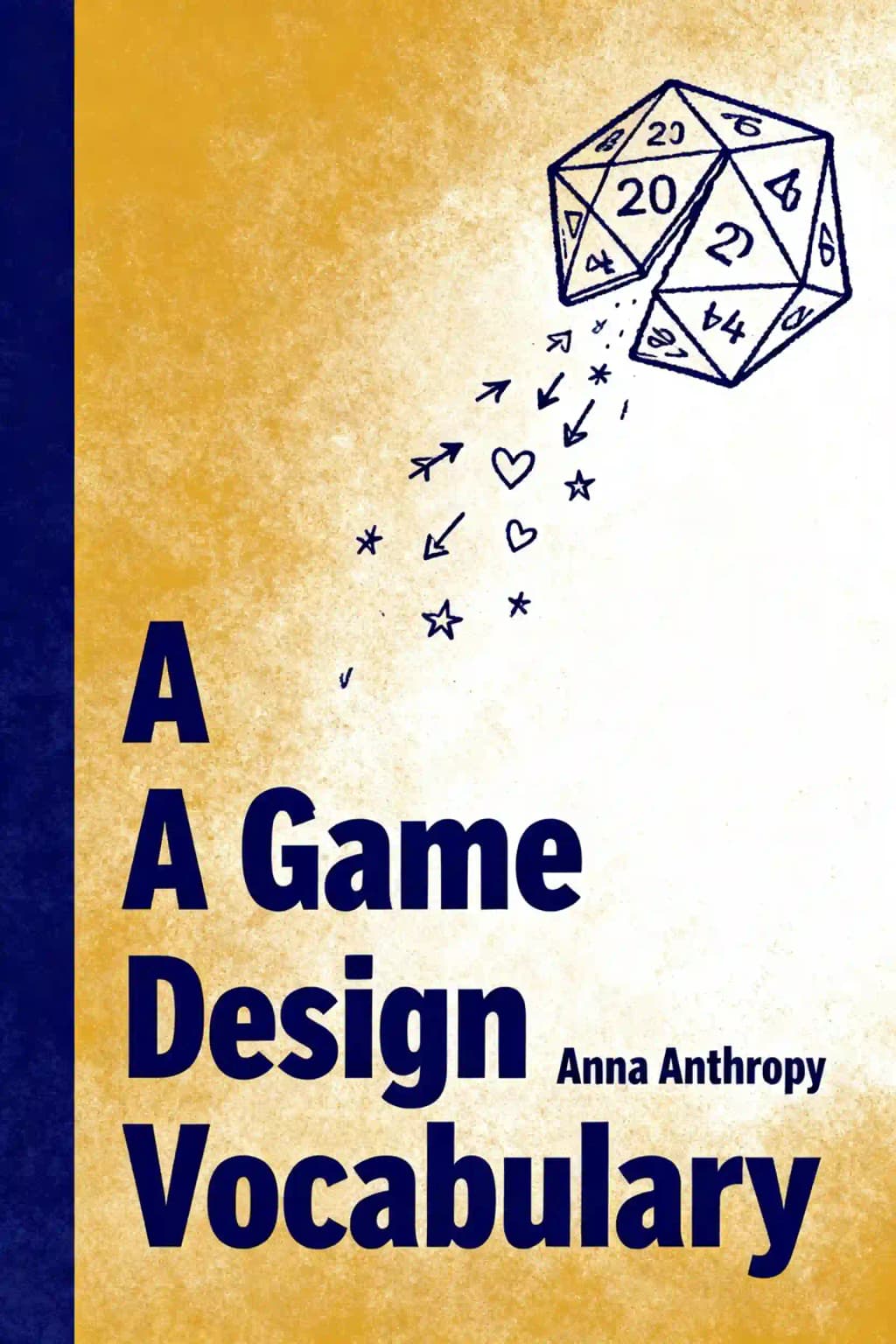
When Anna Anthropy and Naomi Clark published "A Game Design Vocabulary" in 2014, they weren't just adding another technical manual to the shelves. They were addressing a fundamental problem: despite decades of video game development, the industry lacked a coherent language to discuss how games actually work. This absence wasn't just academic-it was actively holding back both creators and critics. The book quickly became essential reading in game design programs worldwide and gained endorsements from luminaries like Frank Lantz (NYU Game Center Director) who recognized its radical potential to democratize game creation. What makes this work particularly valuable is how it strips away marketing jargon and genre classifications to focus on the fundamental elements that make games function as interactive experiences, regardless of their visual style or technological platform.
Capítulo 2
Verbs: The Player's Toolkit for Changing Game States
Games are built from rules, but not all rules are created equal. The most important are verbs-rules that give players agency to change the game state. These fundamental actions form the core vocabulary through which players interact with the game world. When you press a button to make Mario jump, you're using a verb. When you click to place a portal in Portal, that's a verb too. When you press forward to accelerate in Gran Turismo, or select units in StarCraft, these are all verbs that allow players to exert their will upon the game world.
What makes verbs powerful isn't just their existence but their relationships with each other. In Super Mario Bros., the simple verbs of running and jumping create complex gameplay through their interaction. Early levels require basic jumps, while later challenges demand sophisticated coordination between horizontal movement and precisely timed vertical leaps. Players must master techniques like the running jump, the corner jump, and the precise short hop. The relationship between movement speed and jump distance creates countless permutations of challenge. This development of verb relationships creates depth without requiring dozens of different actions.
The physical connection between player input and in-game verbs matters tremendously. This concept, known as kinesthetic harmony, determines how satisfying actions feel to perform. In Tombed, protagonist Danger Jane digs with a quick tap that mirrors the player's key press, creating an immediate sense of responsiveness. Different games require different mappings-Track & Field's alternating button mashing mimics running legs, while Dark Souls uses weighted, deliberate button presses to convey the heft of medieval combat. A slower digging mechanic might use button holds to mirror a shovel's movement. The best designs compress multiple actions into minimal inputs to avoid confusion while maintaining that crucial feeling of embodiment.
Well-designed verbs also communicate clearly even when they fail. When Jane's shovel hits impenetrable metal in Tombed, it bounces off with a distinctive "ting" sound and visual spark effect. When Mario bumps his head on a block, the animation and sound clearly convey the collision. This teaches players about the relationship between verbs and obstacles even through negative interactions. The feedback loop of action and response helps players build an intuitive understanding of the game's rules. Without this feedback, players would waste time and become frustrated trying to determine what actions are possible.
The true mark of elegant game design is focusing on a small set of verbs that can be fully developed rather than overwhelming players with options. Portal exemplifies this approach with just two verbs (placing blue and orange portals) that still allow for inventive solutions and "eureka" moments. Similarly, Journey creates an entire emotional experience with just jumping and singing. By limiting the verb set, these games enable players to experiment and make connections more effectively than games with dozens of possible actions. This "less is more" philosophy allows for deeper exploration of mechanics rather than shallow implementation of many features.
Capítulo 3
Objects: Completing the Sentences That Verbs Begin
If verbs are the actions players perform, objects are what they act upon - the nouns that complete these gameplay sentences. In Tombed, the designer carefully selected four object types: three colors of clay blocks (red, blue, and yellow) and metal blocks. Having three colors (rather than one, two, or four) creates the optimal balance of interesting choices without overwhelming complexity. This "rule of three" appears frequently in game design, from weapon types in shooters to resource types in strategy games, as it provides enough variety for meaningful decisions while remaining cognitively manageable.
The relationships between objects matter as much as the objects themselves. A bomb block that destroys all connected blocks regardless of color creates meaningful interactions with existing mechanics, adding strategic depth through chain reactions and careful positioning. By contrast, adding disconnected switch-and-door mechanics would feel arbitrary and bloat the design. Good design accomplishes gameplay goals using existing verbs and objects through thoughtful level arrangement, creating emergent complexity from simple rules rather than adding new systems.
Context helps players understand abstract game rules through familiar metaphors drawn from real-world experience. While code might represent game elements as coordinates and collision detection, visuals, sounds, and animations explain these mechanics to players intuitively. When a gun needs to cool down, showing it glow white creates a visual metaphor for the reload time rule. Similarly, fire spreading between wooden objects or water flowing downhill leverage players' natural understanding of how these elements behave.
Cohesive context allows players to build expectations about how game elements will behave based on their appearance and previous interactions. The author demonstrates how dissonance between player expectations and game rules creates confusion, using the example of shooting hostages to rescue them versus shooting robot cages to free hostages. The latter makes intuitive sense because it builds on established rules while maintaining logical consistency. Other examples include red barrels that explode when shot, spikes that cause damage on contact, or crystals that can be collected - these visual patterns create a language that players can learn and apply across different games.
When objects clearly communicate their function through visual design, sound effects, and animation, players can focus on strategic decisions rather than remembering arbitrary rules. This principle extends beyond individual objects to entire game systems, where consistent visual language helps players understand new elements based on their similarities to familiar ones.
Capítulo 4
Scenes: The Building Blocks of Game Experiences
Scenes-sometimes called levels, stages, or screens-are where verbs and objects perform and develop. Like chapters in a book, they create pacing and progression through a game's experience. Their most crucial responsibility is properly introducing new rules and objects, as first impressions shape player expectations for all future encounters. These initial encounters establish fundamental patterns that players will recognize and build upon throughout their journey.
Effective scene design guides players through escalating challenges while maintaining agency. In "Ducks," players initially learn movement by collecting food in a safe environment, then face bullets that force defensive play. The scene carefully guides players through progressively difficult situations-first navigating around rocks with gaps at the bottom, then dealing with higher gaps while avoiding bullets from above. This gradual progression allows players to master basic mechanics before facing more complex challenges. Similar principles can be seen in Super Mario Bros., where early levels introduce basic jumping mechanics before combining them with moving platforms and enemies.
Game designers shape player experiences through strategic scene composition. Using Mr. Do! as an example, seemingly simple choices (which direction to dig) multiply into complex decision trees involving tunnel patterns, monster evasion, and trap creation. Players must consider immediate threats while planning future escape routes and opportunities for point scoring. While mapping every possible player choice would be impossible, designers can understand the scene's overall shape and place objects strategically to guide interactions. This careful placement creates "possibility spaces" where players can exercise creativity within controlled parameters.
Scenes gain depth through layering different object behaviors. In Lesbian Spider-Queens of Mars, combining random-moving slaves with queen-seeking gladiators produced more complex situations than either type alone. The unpredictable movement patterns force players to remain vigilant while executing planned strategies. Similarly, DOOM's combination of straight-line attacking imps and circuitous path-finding pinky demons forces players to manage different threat types simultaneously. This layering extends to environmental hazards as well - Portal combines stationary turrets with moving platforms to create intricate spatial puzzles.
Moments of inversion-when background rules suddenly come to the foreground-create dynamic shifts in gameplay. In Wizard of Wor (1981), players defend against monsters until defeating the last one, which triggers the appearance of the Worluk. This creates a dramatic role reversal as players shift from being hunted to becoming hunters, marking scene transitions and releasing built-up tension. Pac-Man employs similar inversions when power pellets temporarily transform ghosts from threats to targets. These reversals not only provide variety but also test players' adaptability and understanding of core mechanics.
The most successful scenes balance multiple elements - teaching mechanics, providing appropriate challenge, maintaining player agency, and creating memorable moments. They must account for different play styles while ensuring core objectives remain achievable. Through careful design of space, object placement, and enemy behavior patterns, scenes become more than just containers for action - they become carefully orchestrated experiences that guide and challenge players in meaningful ways.
Capítulo 5
Visual and Audio Context: The Language of Game Communication
Games communicate through visual design, creating a language players learn to understand. In Super Mario Bros., spiky tops consistently indicate enemies that can't be jumped on. Spyro the Dragon uses gleaming silver metal to indicate objects impervious to fire but potentially responsive to charging. These visual motifs establish consistent rule vocabularies.
Character design with unique silhouettes helps players distinguish between game elements. Leon Arnott's "Silhouette Mario Bros." hack demonstrates this principle by rendering all characters as solid black shapes while maintaining their recognizability. Players can still distinguish jumpable enemies from dangerous ones purely through shape.
Animation differentiates important objects and characterizes them. In Lesbian Spider-Queens, the armored slave's slow, mechanical march with shield forward reinforces that she can only be attacked from behind, while other slaves run more frantically. Even when characters can't move forward, animations like Jane pushing against walls in Tombed communicate that player input is being received.
Scene composition directs player attention through symmetry (suggesting artificiality) or irregularity (suggesting natural landscapes). In Monuments of Mars, horizontal symmetry in the first three scenes points to the entrance of the Martian base, while vertical layout with green electricity guides players downward. Spaces can provide context through their shape, like battlements creating a castle setting.
Sound provides a powerful communication channel that can support or transform visual information. In visually chaotic games like Space Giraffe, audio becomes essential for navigation, with distinct enemy sounds creating an audio map. Games like Lesbian Spider-Queens of Mars and DOOM use unique sounds to alert players to specific threats outside their field of view.
Sound also creates atmospheric texture that shapes the player's relationship with the game world. In Knytt, the protagonist's gentle scampering against the backdrop of wind emphasizes the vastness of the alien world and the smallness of the player's presence. Fotonica uses sound to enhance immersion, muffling music and amplifying movement sounds when the player achieves high speeds, creating an audio representation of "runner's high."
Capítulo 6
Games as Conversation: The Designer-Player Dialogue
Games function as conversations between designers and players, creating a unique form of asynchronous dialogue through interactive systems. Unlike typical conversations where participants can clarify and adjust in real-time, game creators must anticipate player responses and craft their vocabulary of interaction beforehand. This vocabulary consists of mechanics, rules, visual elements, and feedback systems that collectively form the language through which players engage with the designer's vision.
The challenge resembles sending a message in a bottle - designers must create robust systems that maintain their intended meaning while accommodating diverse player approaches. This delicate balance requires careful consideration of how game mechanics and choices will be interpreted. For instance, Journey's wordless multiplayer interactions create profound emotional connections through deliberately limited communication tools, while The Stanley Parable uses narrative contradiction to explore the tension between player agency and authored story.
Playtesting serves as a crucial feedback loop in this conversation, allowing designers to observe how players interpret and respond to their systems. Through iteration, creators can refine their mechanical vocabulary to better convey intended meanings and emotional experiences. While traditional game design often prioritizes "fun" as the primary goal, contemporary works demonstrate that games can express more nuanced themes. Papers, Please exemplifies this by using mundane border-crossing mechanics to explore moral compromise, bureaucratic complicity, and survival under authoritarian regimes. Similarly, This War of Mine shifts from traditional combat-focused war games to instead examine civilian survival and impossible choices during conflict.
Games possess unique power to present meaningful choices or deliberately restrict them, communicating through the presence or absence of player agency. Some experiences, like Spec Ops: The Line, deliberately limit player options to highlight the futility of certain situations, while others like Disco Elysium offer broad choice to explore complex political and philosophical themes through player expression. The questions designers face in crafting these conversations are multifaceted: How do we balance player freedom with authored meaning? When should systems bend to accommodate player creativity versus maintaining thematic consistency? How can we create frameworks that allow players to discover personal meaning while preserving our core message?
This designer-player dialogue continues to evolve as creators experiment with new ways to express ideas through interactive systems. From environmental storytelling in games like What Remains of Edith Finch to the emergent narratives of Rimworld, games offer unique opportunities to explore themes that static media cannot fully capture.
Capítulo 7
Resistance: The Push and Pull of Game Design
Resistance describes how games push back against player actions, creating the core dialogue between player and system. When a player uses verbs to interact with the game, the system responds with appropriate resistance. In Tombed, attempting to dig through metal creates a "ting" sound but no progress-the game pushes back. This fundamental interaction extends across genres: in fighting games, opponents block and counter-attack; in puzzle games, solutions remain elusive until the correct approach is found; in platformers, precise timing and positioning create natural resistance through physics and movement mechanics.
Flow describes the psychological state where players become completely absorbed in an activity, navigating between boredom and frustration. Traditional game design views flow as gradually increasing difficulty as player skill improves, similar to how Super Mario Bros. introduces new obstacles and enemies at a measured pace. However, games like Super Hexagon demonstrate alternative approaches by starting with intense difficulty and short play sessions, allowing players to improve through rapid iteration. Dark Souls similarly embraces this philosophy, throwing players into challenging encounters early while providing clear feedback on why they failed.
Not all games need to follow the traditional flow model. Some maintain consistent difficulty throughout, starting as hard as they'll ever be. Games like Celeste or N++ establish their core mechanical challenge immediately, requiring players to close the skill gap through practice rather than having the game adjust to their abilities. Others like Gone Home, What Remains of Edith Finch, or Dear Esther subvert expectations by focusing on exploration and narrative discovery rather than increasing challenge, finding resistance in emotional and intellectual engagement rather than mechanical difficulty.
While resistance pushes players, rewards pull them forward in the game conversation. Effective rewards aren't just visual spectacle but come at meaningful moments to mark milestones. Opening new verbs or areas to explore serves as a powerful reward that connects past accomplishments to future possibilities. In Metroid games, acquiring new abilities both rewards exploration and enables access to previously impossible areas. Resources like currency, skill points, ammunition, health, and experience points function as enabling rewards that let players access new game elements, creating a satisfying progression loop.
Punishments push players back when they fail, often resetting progress to checkpoints. This creates repetition that can be valuable as practice but potentially boring once mastery is achieved. Modern games often mitigate this through quick respawns or generous checkpoint placement, as seen in Celeste's rapid reset after death. Many games incorporate grinding-repetitive actions performed for resource accumulation-as a form of resistance based on patience rather than skill. MMORPGs like World of Warcraft use this extensively, creating long-term goals through repeated activities, while roguelikes use procedural generation to keep repetition fresh and engaging.
The balance between resistance and reward creates the fundamental rhythm of gameplay, whether in the moment-to-moment combat of action games, the gradual unveiling of narrative in adventure games, or the long-term progression systems of RPGs. Understanding this dynamic helps designers create more engaging and meaningful player experiences.
Capítulo 8
Storytelling Through Systems and Player Agency
Games can carry stories in two primary ways: authored stories deliberately crafted by creators, and emergent stories generated through gameplay. Everything in a game informs its story-from visual and audio context to the underlying systems and mechanics.
Authored stories can appear as cutscenes between gameplay sections, rewards for player effort, optional elements discovered through exploration, or branching narratives affected by player choices. While these approaches can create powerful experiences, games offer unique systemic ways to convey narrative through their mechanics.
Anna's game dys4ia tells her transgender experience not just through words and images, but through mechanics that make players feel her exhaustion through increasing movement resistance, or her dysphoria through Tetris-like pieces that don't fit through gaps. Similarly, Paolo Pedercini's The Best Amendment critiques the NRA's "good guy with a gun" philosophy by revealing that the "bad guys" players shoot are actually recordings of their own previous gameplay actions.
Beyond authored stories, games can open spaces for players to generate their own emergent narratives. Open-world games like The Sims and Minecraft produce unique stories for each player based on how they interact with consistent game systems. Even more authored experiences can invite interpretation-just as Shakespeare's Hamlet generates debate about the ghost's nature or the protagonist's sanity.
Games can create powerful emotional connections through simple visual cues and procedural generation. In X-Com: Enemy Unknown, randomly generated soldiers develop into unique characters with specializations and nicknames based on their actions. When they die permanently, players feel genuine loss-sometimes even reloading saves to prevent a favorite character's death.
The ultimate unpredictability comes from multiplayer interactions, where human opponents inspire creativity and strategic innovation. Players attempt to anticipate each other's thinking while knowing opponents are doing the same, creating what game designer Frank Lantz calls "donkey space"-a beautiful human complexity no computer code can replicate. The emergent stories from multiplayer sessions often become powerful narratives of unexpected turnarounds and clever moves, with players as protagonists experiencing real emotions.
Capítulo 9
Building Your Own Game Design Vocabulary
A Game Design Vocabulary doesn't just provide terminology-it offers a comprehensive framework for thinking about games as intricate systems of interaction rather than mere collections of graphics and sounds. By understanding verbs (core player actions), objects (interactive elements), scenes (discrete gameplay spaces), context (environmental and narrative framing), resistance (challenges and obstacles), and storytelling as deeply interconnected elements, designers can create more intentional and expressive works. For example, in a platformer, the basic verb "jump" combines with objects like platforms and obstacles, within scenes that provide specific challenges, all contextualized by the game's broader narrative.
The book's approach systematically demystifies game development, empowering new creators while helping established ones communicate their ideas more effectively. It breaks down complex games into understandable components - from how Super Mario's jump mechanics create specific emotional responses to how Portal's environmental storytelling enhances its puzzle design. Just as understanding literary techniques like foreshadowing or metaphor deepens one's appreciation for writing, a "literate" player equipped with design knowledge wouldn't necessarily become more jaded but rather more attentive and receptive to innovative ideas in games like Braid or Journey.
Creating an open conversation about game design makes this medium more accessible to everyone, whether they want to create games, critique them, or simply play them with greater understanding. The vocabulary provides tools to analyze why certain design choices work or don't - for instance, how the restricted movement in horror games creates tension, or how the pacing of challenge in roguelikes keeps players engaged. By focusing on timeless design principles rather than specific technologies, the book provides a foundation that remains relevant regardless of platform or genre, from mobile games to virtual reality experiences.
The framework encourages designers to think deeply about their choices - how each element serves the intended player experience. For instance, understanding how "verbs" shape player agency helps creators choose meaningful actions that support their game's themes. Similarly, analyzing "resistance" helps balance challenge and accessibility. This vocabulary enables more nuanced discussions about design intentions, player experience, and the artistic possibilities of games.
Ultimately, the vocabulary Anthropy and Clark provide isn't meant to be the final word on game design but rather the beginning of necessary conversations about how games work and what they can express. It serves as a starting point for analyzing everything from indie experiments to AAA blockbusters, while remaining flexible enough to accommodate new design innovations. In a medium still finding its voice, this framework offers both a common language and an invitation to expand it through continued experimentation and discussion, encouraging designers to push boundaries while understanding the fundamental principles that make games engaging and meaningful.