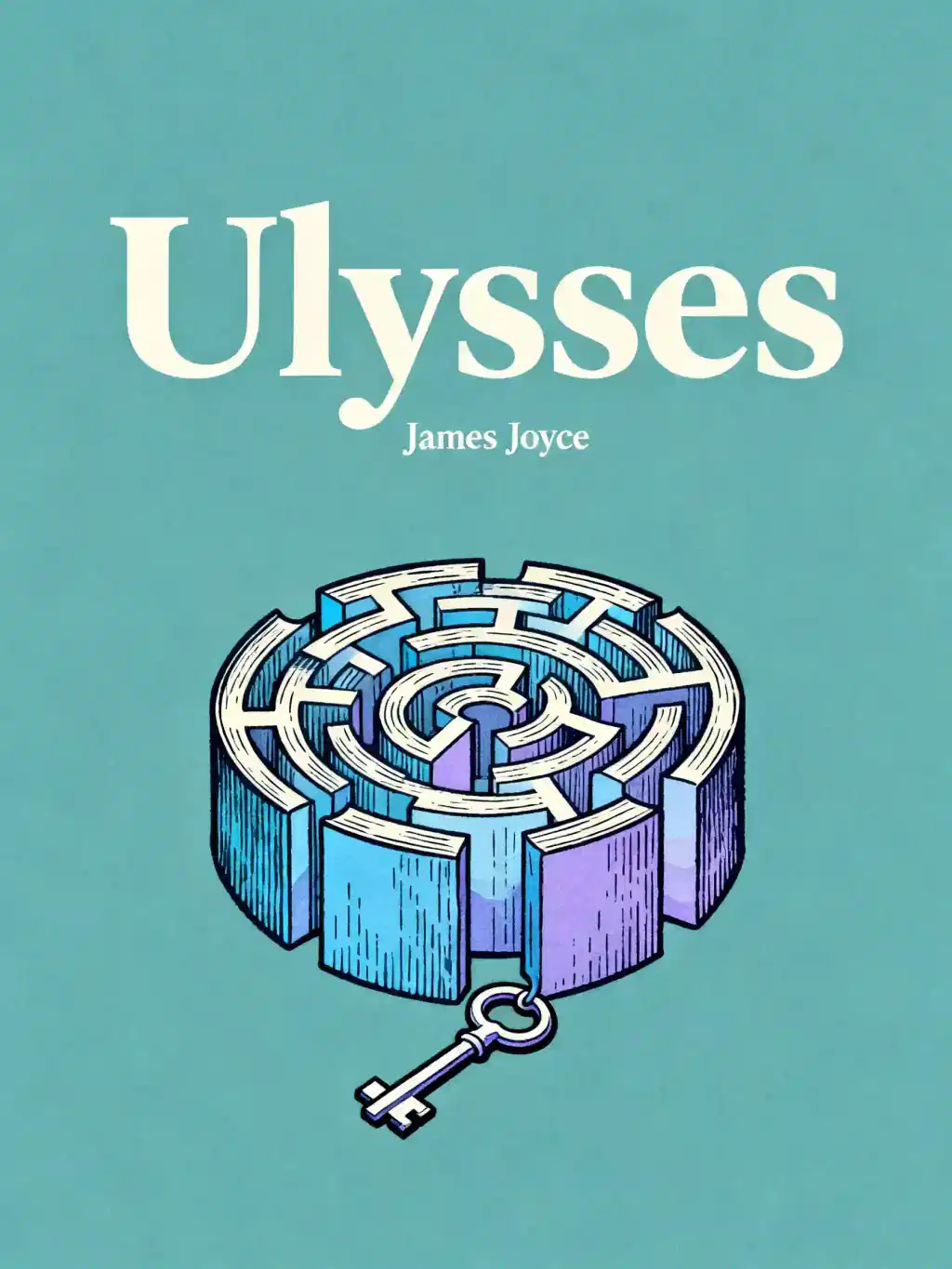
Overview of Ulysses
Step into Joyce's labyrinthine masterpiece - banned yet celebrated, ranked #2 among greatest books ever written. This modernist revolution sparked global "Bloomsday" celebrations and influenced literary giants from Faulkner to Beckett. What controversial brilliance awaits in these 265,222 words?
- Stream of consciousness reveals humanity’s hidden epic in daily routines
- Irish nationalism dissected through pub rhetoric and mythical parallels
- Identity fractures and reforms through urban wandering and memory
- Human sexuality portrayed unflinchingly via inner desires and societal norms
- Modernist experimentation turns Dublin’s streets into Homeric odyssey maps
- Leopold Bloom’s Jewish identity confronts 1904 Dublin’s antisemitism
- Father-son dynamics echo through Stephen Dedalus’s intellectual isolation
- Molly Bloom’s soliloquy redefines female agency and erotic introspection
- Parody and allusion weaponized against religious and colonial power structures
- Single-day structure amplifies life’s profundity in trivial interactions
- Linguistic play dismantles literary conventions to mirror mental chaos
- Joyce’s comic vision elevates human flaws to universal poetry
About the Author of Ulysses
James Augustine Aloysius Joyce (1882–1941) was an Irish modernist literary pioneer renowned for his groundbreaking novel Ulysses, a landmark work of 20th-century fiction.
Blending experimental prose, stream-of-consciousness narrative, and Homeric parallels, Ulysses revolutionized the novel form and cemented Joyce’s reputation as a master of linguistic innovation. Born in Dublin, Joyce drew heavily on his Irish upbringing and self-imposed European exile, infusing his works with themes of identity, religion, and urban alienation. His other seminal works include the short-story collection Dubliners, the autobiographical A Portrait of the Artist as a Young Man, and the linguistically complex Finnegans Wake.
Joyce’s academic background at University College Dublin and his career as an English instructor in Trieste informed his meticulous stylistic precision. Despite initial censorship battles over its explicit content, Ulysses became a modernist classic, praised for its psychological depth and structural ambition. Translated into over 50 languages, it has inspired countless adaptations, including operas, films, and academic studies, and is frequently ranked among the greatest novels ever written.
FAQs About Ulysses
What is Ulysses by James Joyce about?
Ulysses chronicles a single day—June 16, 1904—in Dublin, following Leopold Bloom, Stephen Dedalus, and Molly Bloom. Parallel to Homer’s Odyssey, it reimagines ancient epic themes through modernist techniques like stream-of-consciousness, exploring identity, nationalism, and human experience. The novel’s experimental style and dense allusions make it a landmark of 20th-century literature.
Who should read Ulysses by James Joyce?
Literature scholars, modernism enthusiasts, and readers seeking intellectual challenges will appreciate Ulysses. Its layered narratives and stylistic innovations appeal to those interested in experimental prose, while its exploration of Dublin’s social fabric offers historical insights. Casual readers may find its complexity daunting.
Is Ulysses worth reading?
Yes—Ulysses reshaped modern fiction with its daring structure and psychological depth. While demanding, its humor, linguistic creativity, and existential themes reward patient readers. Joyce’s portrayal of everyday life as epic has influenced countless writers, solidifying its status as a literary milestone.
How does Ulysses relate to Homer’s Odyssey?
Joyce mirrors Homer’s epic: Leopold Bloom embodies Odysseus, Molly parallels Penelope, and Stephen Dedalus represents Telemachus. Each of the 18 episodes corresponds to The Odyssey’s adventures, transforming mythical journeys into inner psychological struggles. This framework elevates mundane events to universal significance.
What is the stream-of-consciousness technique in Ulysses?
Joyce pioneers stream-of-consciousness to depict characters’ unfiltered thoughts, blending memories, sensations, and dialogue. For example, Molly Bloom’s soliloquy uses minimal punctuation to replicate the flow of consciousness. This innovation immerses readers in characters’ minds, breaking traditional narrative norms.
Why was Ulysses controversial?
Banned for obscenity in the 1920s due to explicit themes like sexuality and blasphemy, Ulysses faced legal battles before being recognized as a literary masterpiece. Its candid portrayal of bodily functions and inner desires challenged Victorian-era morals, sparking debates about artistic freedom.
What are the major themes in Ulysses?
Key themes include Irish nationalism under British rule, Jewish identity (through Bloom), Catholicism’s influence, and the search for paternal/maternal bonds. Joyce also critiques social conformity and explores desire, mortality, and artistry through fragmented narratives.
What is Molly Bloom’s soliloquy?
The novel’s final chapter features Molly’s uninterrupted 25,000-word monologue, a radical stream-of-consciousness exploration of her desires, regrets, and memories. Its lack of punctuation and frank sexuality cement it as one of literature’s most daring character studies.
How did James Joyce’s life influence Ulysses?
Joyce drew from his Dublin upbringing, strained family relationships, and self-imposed European exile. Characters like Stephen Dedalus reflect his artistic struggles, while Bloom’s outsider status parallels Joyce’s critiques of Irish society. The novel’s focus on June 16 commemorates his first date with future wife Nora Barnacle.
How does Ulysses reflect modernist literature?
By rejecting linear plots for fragmented narratives, Ulysses epitomizes modernism. Joyce experiments with genres (newspaper headlines, play scripts), layers mythological allusions, and prioritizes subjective experience—aligning with works by Woolf and Eliot. Its focus on urban life and interiority defined 20th-century fiction.
What symbols are central to Ulysses?
Recurring symbols include Stephen’s Hamlet-inspired guilt, Bloom’s potato talisman (symbolizing resilience), and the motif of water as rebirth. Homeric parallels (e.g., Bloom as “wandering Jew”) and Catholic imagery deepen the novel’s exploration of identity and belonging.
What are common criticisms of Ulysses?
Detractors cite its difficulty, fragmented structure, and perceived elitism. Some argue its experimental style overshadows emotional depth, while others find its length and allusions excessive. Despite this, its cultural impact remains undisputed.
Feel the book through the author's voice
Turn knowledge into engaging, example-rich insights
Capture key ideas in a flash for fast learning
Enjoy the book in a fun and engaging way
Key Themes in Ulysses
Quotes from Ulysses
God made food, the devil the cooks.
History, Stephen said, is a nightmare from which I am trying to awake.
Yes I said yes I will Yes.
history is a nightmare from which I am trying to awake
Characters in Ulysses
Quick Summary Mode - Read or listen to Ulysses Summary in 9 Minutes

Break down key ideas from Ulysses into bite-sized takeaways to understand how innovative teams create, collaborate, and grow.

Flash Card Mode - Top 10 Insights from Ulysses in a Nutshell

Distill Ulysses into rapid-fire memory cues that highlight key principles of candor, teamwork, and creative resilience.

Fun Mode - Ulysses Lessons Told Through 21-Min Stories

Experience Ulysses through vivid storytelling that turns innovation lessons into moments you'll remember and apply.
Personalize Mode - Read or listen to Ulysses Summary in 0 Minutes

Ask anything, pick the voice, and co-create insights that truly resonate with you.

From Columbia University alumni built in San Francisco
"Instead of endless scrolling, I just hit play on BeFreed. It saves me so much time."


"I never knew where to start with nonfiction—BeFreed’s book lists turned into podcasts gave me a clear path."


"Perfect balance between learning and entertainment. Finished ‘Thinking, Fast and Slow’ on my commute this week."
"Crazy how much I learned while walking the dog. BeFreed = small habits → big gains."
"Reading used to feel like a chore. Now it’s just part of my lifestyle."

"Feels effortless compared to reading. I’ve finished 6 books this month already."
"BeFreed turned my guilty doomscrolling into something that feels productive and inspiring."

"BeFreed turned my commute into learning time. 20-min podcasts are perfect for finishing books I never had time for."
"BeFreed replaced my podcast queue. Imagine Spotify for books — that’s it. 🙌"

"It is great for me to learn something from the book without reading it."
"The themed book list podcasts help me connect ideas across authors—like a guided audio journey."
"Makes me feel smarter every time before going to work"
From Columbia University alumni built in San Francisco
"Instead of endless scrolling, I just hit play on BeFreed. It saves me so much time."
"I never knew where to start with nonfiction—BeFreed’s book lists turned into podcasts gave me a clear path."
"Perfect balance between learning and entertainment. Finished ‘Thinking, Fast and Slow’ on my commute this week."
"Crazy how much I learned while walking the dog. BeFreed = small habits → big gains."
"Reading used to feel like a chore. Now it’s just part of my lifestyle."
"Feels effortless compared to reading. I’ve finished 6 books this month already."
"BeFreed turned my guilty doomscrolling into something that feels productive and inspiring."
"BeFreed turned my commute into learning time. 20-min podcasts are perfect for finishing books I never had time for."
"BeFreed replaced my podcast queue. Imagine Spotify for books — that’s it. 🙌"
"It is great for me to learn something from the book without reading it."
"The themed book list podcasts help me connect ideas across authors—like a guided audio journey."
"Makes me feel smarter every time before going to work"
"Instead of endless scrolling, I just hit play on BeFreed. It saves me so much time."
"I never knew where to start with nonfiction—BeFreed’s book lists turned into podcasts gave me a clear path."
"Perfect balance between learning and entertainment. Finished ‘Thinking, Fast and Slow’ on my commute this week."
"Crazy how much I learned while walking the dog. BeFreed = small habits → big gains."
"Reading used to feel like a chore. Now it’s just part of my lifestyle."
"Feels effortless compared to reading. I’ve finished 6 books this month already."
"BeFreed turned my guilty doomscrolling into something that feels productive and inspiring."
"BeFreed turned my commute into learning time. 20-min podcasts are perfect for finishing books I never had time for."
"BeFreed replaced my podcast queue. Imagine Spotify for books — that’s it. 🙌"
"It is great for me to learn something from the book without reading it."
"The themed book list podcasts help me connect ideas across authors—like a guided audio journey."
"Makes me feel smarter every time before going to work"
"Instead of endless scrolling, I just hit play on BeFreed. It saves me so much time."
"I never knew where to start with nonfiction—BeFreed’s book lists turned into podcasts gave me a clear path."
"Perfect balance between learning and entertainment. Finished ‘Thinking, Fast and Slow’ on my commute this week."
"Crazy how much I learned while walking the dog. BeFreed = small habits → big gains."
"Reading used to feel like a chore. Now it’s just part of my lifestyle."
"Feels effortless compared to reading. I’ve finished 6 books this month already."
"BeFreed turned my guilty doomscrolling into something that feels productive and inspiring."
"BeFreed turned my commute into learning time. 20-min podcasts are perfect for finishing books I never had time for."
"BeFreed replaced my podcast queue. Imagine Spotify for books — that’s it. 🙌"
"It is great for me to learn something from the book without reading it."
"The themed book list podcasts help me connect ideas across authors—like a guided audio journey."
"Makes me feel smarter every time before going to work"

Get the Ulysses summary as a free PDF or EPUB. Print it or read offline anytime.


![[PDF] Camus: The Myth of Sisyphus - University of Hawaii System](/_next/image?url=https%3A%2F%2Fd1y2du6z1jfm9e.cloudfront.net%2Fassets%2Fpodcast%2Fyellow.png&w=1024&q=50)