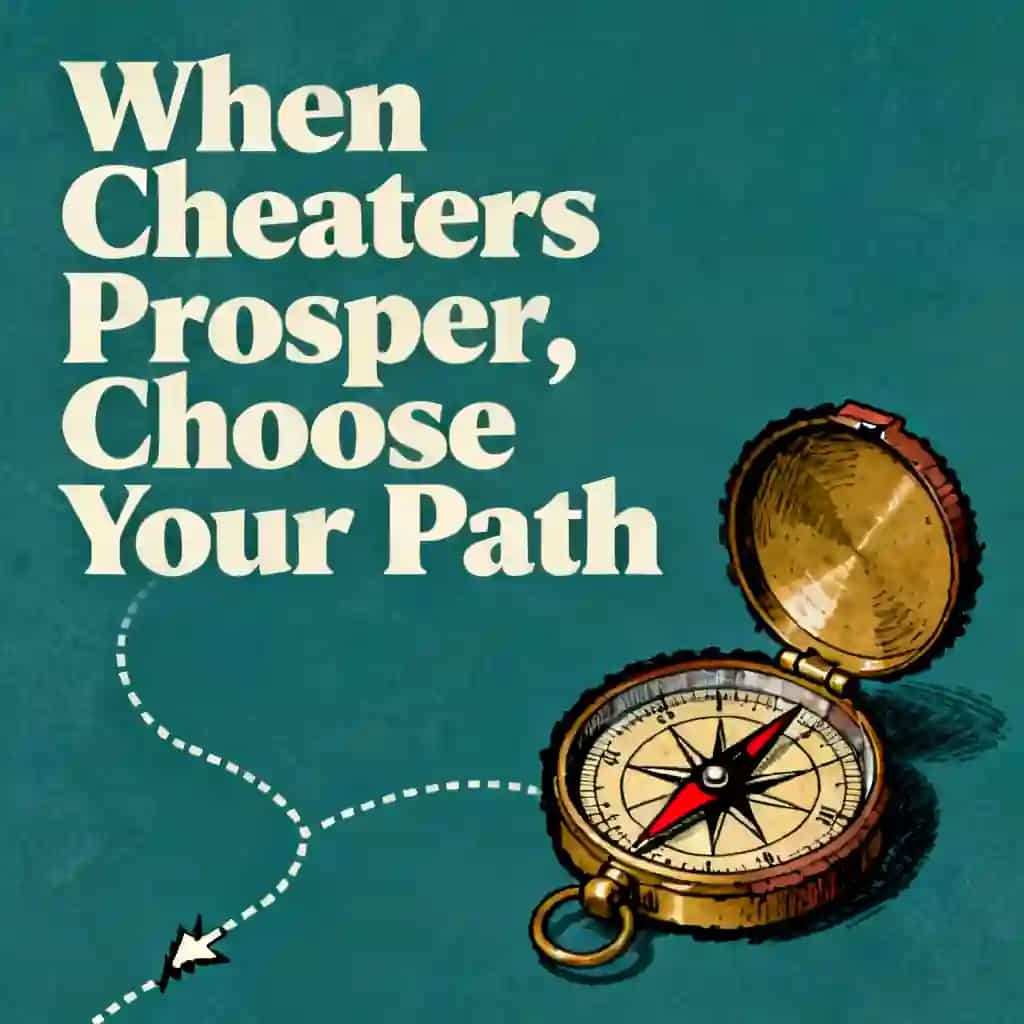
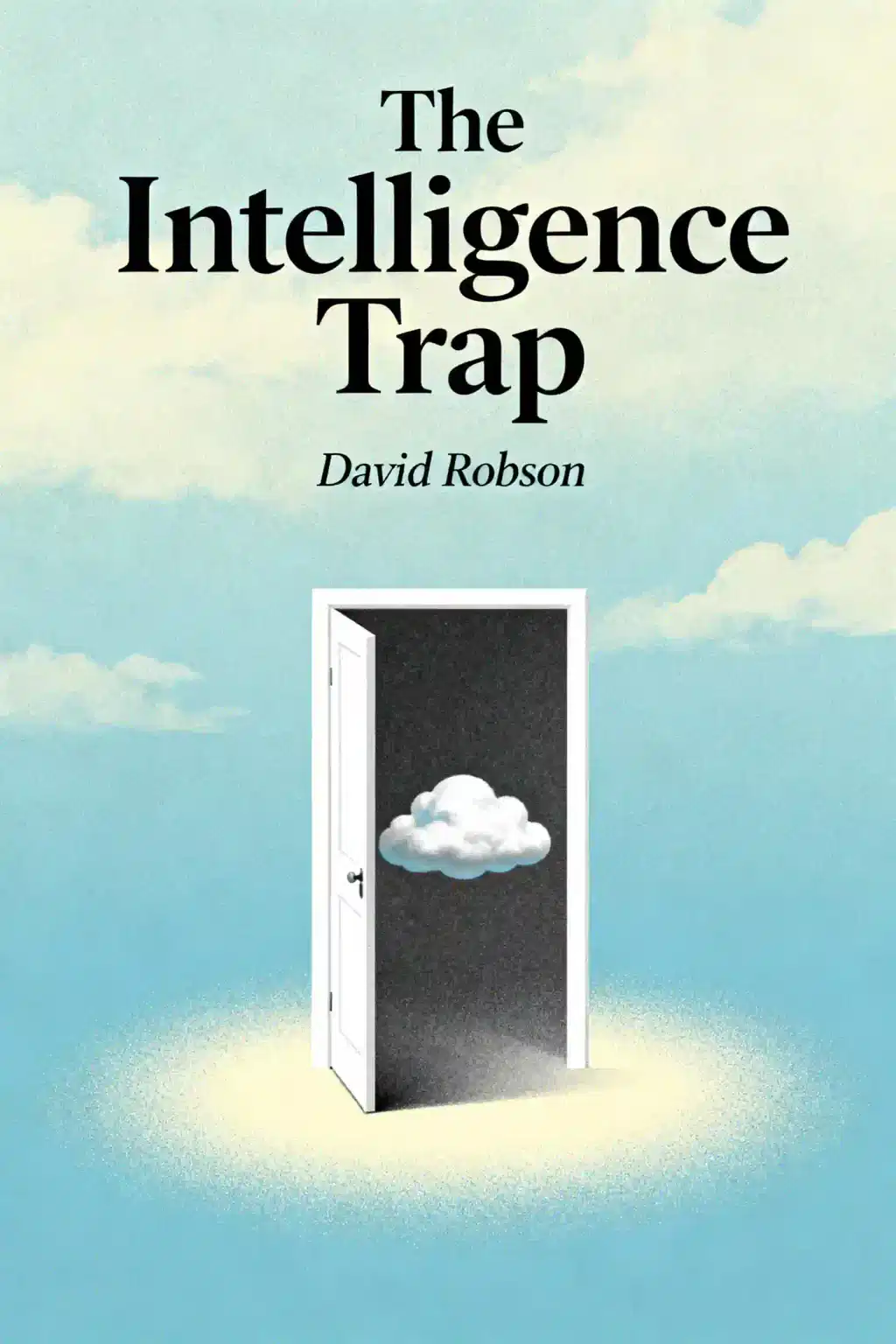
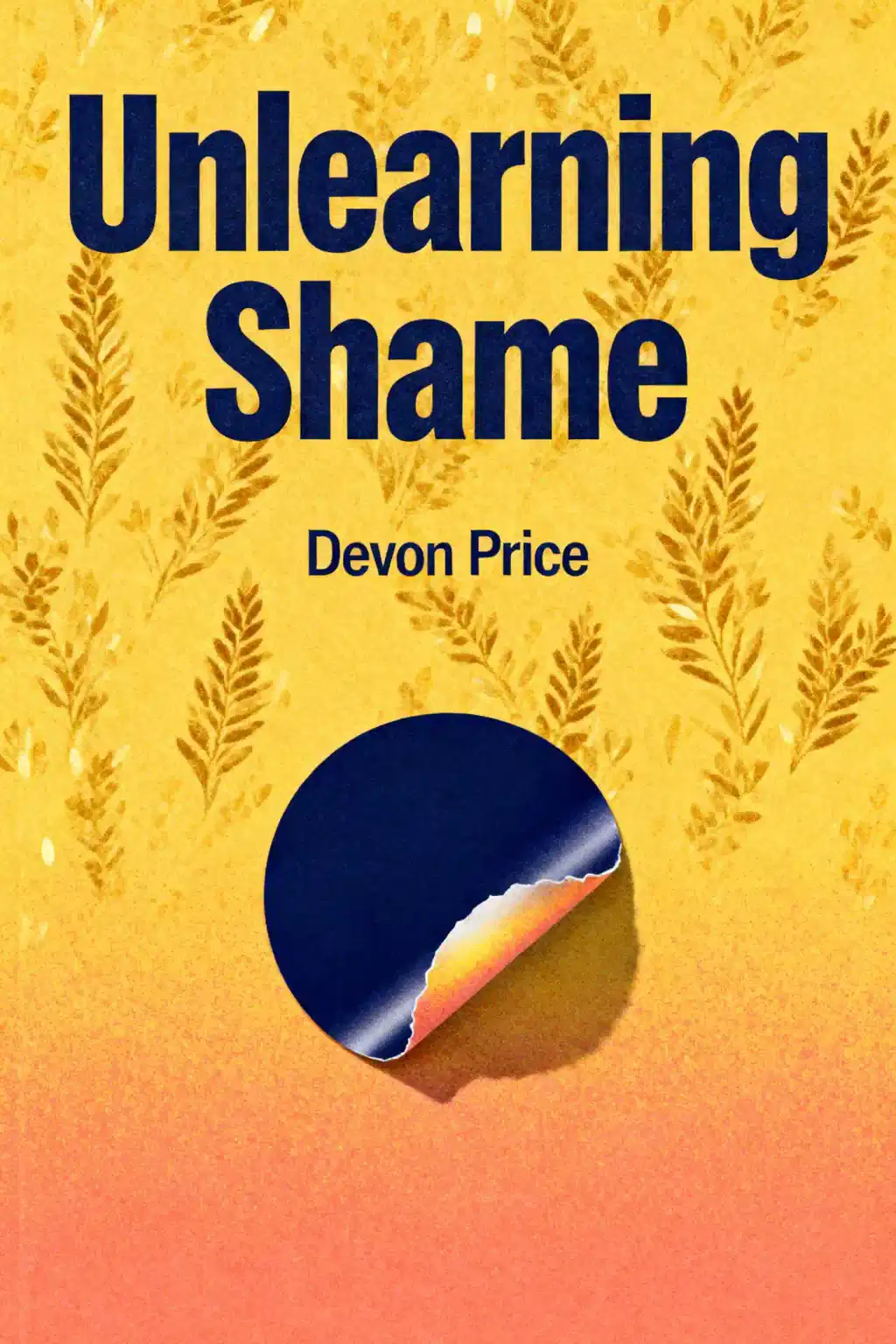
Why Cheating Ruins Your Motivation to Study
When classmates cheat and teachers look away, it’s hard to stay driven. Learn how to protect your integrity and keep your edge when the game feels rigged.

Best quote from Why Cheating Ruins Your Motivation to Study
Your highest score achieved through honesty is a superpower; in a room where cheating is facilitated, it becomes a true test of character that you passed with flying colors.
Generated by Anna
OnFridaywehaveaperiodicaltest.Ireallydon’t likethatmyclassmateischeating.Test two was actually difficult,but I didn’t cheat.It feels like the teacher is giving students a chance to cheat.After checking our notebooks,she gives them,and some test items are there.She could give them after. It makes me irritated and angry.My mind keeps saying “we should check now.” What’s the point of reviewing if others cheat?.I lost motivation,even if she’s my friend.Cheat is cheat.Still, I got the highest score

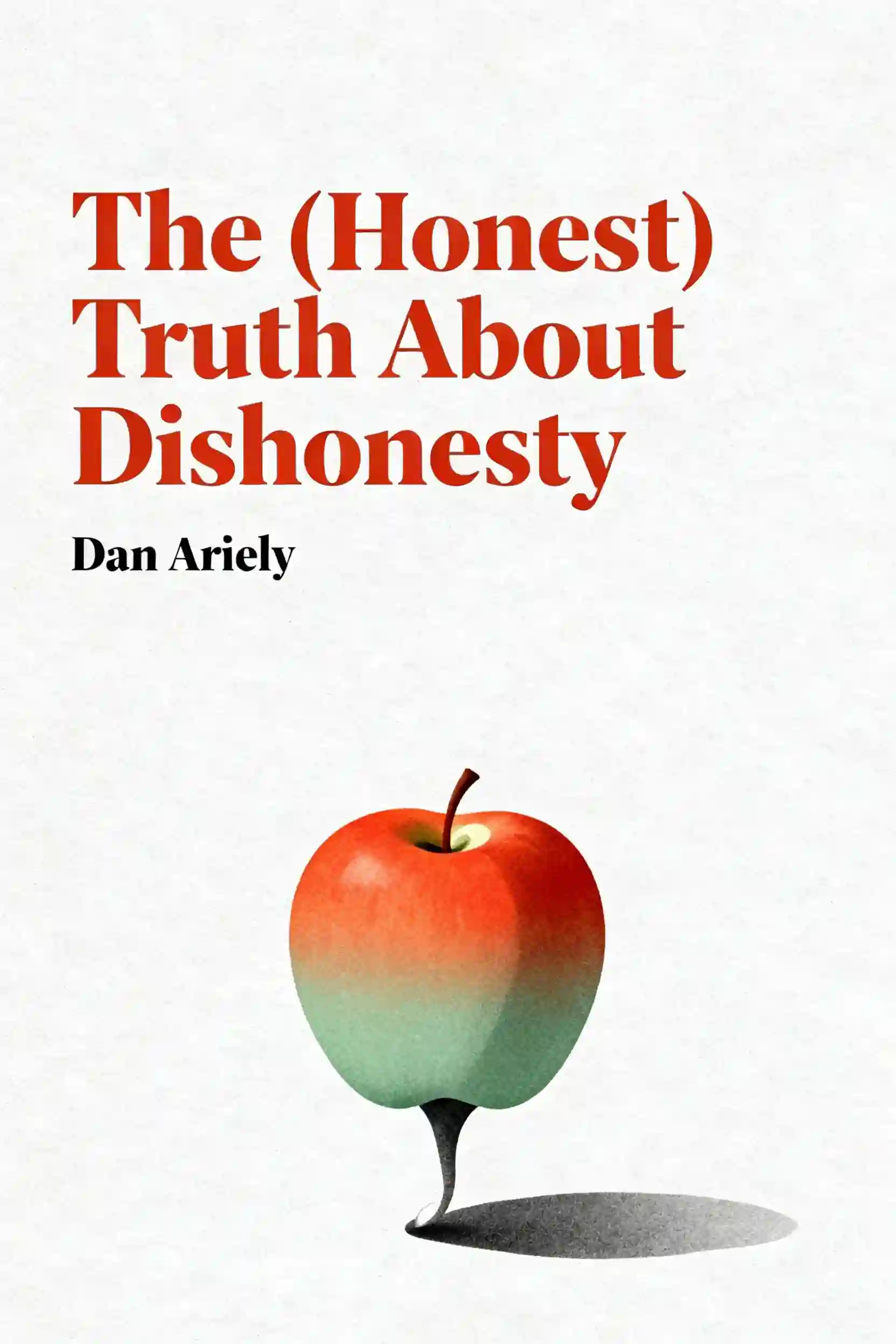

Frequently Asked Questions
This loss of motivation is often driven by a violation of "interpersonal justice" and the "belief in a just world." When a teacher fails to maintain the integrity of an exam, it breaks the unwritten contract that hard work leads to success. This creates a "social learning demand" that acts like a heavy emotional load, leading to academic burnout. When the link between effort and reward is compromised, students may begin to feel that their hard work is pointless because the "game" feels rigged.
Teachers often create these environments through "monitoring fatigue" or by prioritizing logistical efficiency over procedural fairness. For example, returning notebooks while some students are still finishing a test creates a "facilitated cheating" scenario where the cost of dishonesty is low and the reward is high. If the assessment relies on pure recall rather than higher-order thinking, it becomes even easier for students to use these tools to gain an unfair advantage.
The "perceived peer cheating effect" suggests that the strongest predictor of whether a student will cheat is not their own personal ethics, but whether they believe their peers are doing it. This creates a "social contagion" where cheating becomes the perceived norm. For a student with high integrity, this creates massive internal conflict and "role strain," as they must work much harder to maintain their own standards while the surrounding "ethical climate" pulls them toward dishonesty.
Students can protect their motivation by reframing their success as "independent learning" and "human capital" that cheaters aren't actually building. Practical strategies include "protecting your peace" by sitting away from friends who cheat to remove the visual stimulus, or using "gentle agency" by asking the teacher for clarifying rules about notebooks before the test starts. By focusing on the intrinsic value of the knowledge rather than just the grade, an honest student can maintain their sense of accomplishment.
Actually, the script suggests that this anger is a logical and even positive sign of "student agency" and strong "moral identity." It is a signal that the student deeply values justice and integrity. While this anger is "resource-intensive" and can lead to exhaustion, it serves as proof of character. The key is to validate the anger as a reaction to a genuine injustice while ensuring it doesn't turn into "learning apathy" or burnout.
From Columbia University alumni built in San Francisco
"Instead of endless scrolling, I just hit play on BeFreed. It saves me so much time."


"I never knew where to start with nonfiction—BeFreed’s book lists turned into podcasts gave me a clear path."


"Perfect balance between learning and entertainment. Finished ‘Thinking, Fast and Slow’ on my commute this week."
"Crazy how much I learned while walking the dog. BeFreed = small habits → big gains."
"Reading used to feel like a chore. Now it’s just part of my lifestyle."

"Feels effortless compared to reading. I’ve finished 6 books this month already."
"BeFreed turned my guilty doomscrolling into something that feels productive and inspiring."

"BeFreed turned my commute into learning time. 20-min podcasts are perfect for finishing books I never had time for."
"BeFreed replaced my podcast queue. Imagine Spotify for books — that’s it. 🙌"

"It is great for me to learn something from the book without reading it."
"The themed book list podcasts help me connect ideas across authors—like a guided audio journey."
"Makes me feel smarter every time before going to work"
 Ask ChatGPT
 Ask Claude
From Columbia University alumni built in San Francisco
"Instead of endless scrolling, I just hit play on BeFreed. It saves me so much time."
"I never knew where to start with nonfiction—BeFreed’s book lists turned into podcasts gave me a clear path."
"Perfect balance between learning and entertainment. Finished ‘Thinking, Fast and Slow’ on my commute this week."
"Crazy how much I learned while walking the dog. BeFreed = small habits → big gains."
"Reading used to feel like a chore. Now it’s just part of my lifestyle."
"Feels effortless compared to reading. I’ve finished 6 books this month already."
"BeFreed turned my guilty doomscrolling into something that feels productive and inspiring."
"BeFreed turned my commute into learning time. 20-min podcasts are perfect for finishing books I never had time for."
"BeFreed replaced my podcast queue. Imagine Spotify for books — that’s it. 🙌"
"It is great for me to learn something from the book without reading it."
"The themed book list podcasts help me connect ideas across authors—like a guided audio journey."
"Makes me feel smarter every time before going to work"
"Instead of endless scrolling, I just hit play on BeFreed. It saves me so much time."
"I never knew where to start with nonfiction—BeFreed’s book lists turned into podcasts gave me a clear path."
"Perfect balance between learning and entertainment. Finished ‘Thinking, Fast and Slow’ on my commute this week."
"Crazy how much I learned while walking the dog. BeFreed = small habits → big gains."
"Reading used to feel like a chore. Now it’s just part of my lifestyle."
"Feels effortless compared to reading. I’ve finished 6 books this month already."
"BeFreed turned my guilty doomscrolling into something that feels productive and inspiring."
"BeFreed turned my commute into learning time. 20-min podcasts are perfect for finishing books I never had time for."
"BeFreed replaced my podcast queue. Imagine Spotify for books — that’s it. 🙌"
"It is great for me to learn something from the book without reading it."
"The themed book list podcasts help me connect ideas across authors—like a guided audio journey."
"Makes me feel smarter every time before going to work"
"Instead of endless scrolling, I just hit play on BeFreed. It saves me so much time."
"I never knew where to start with nonfiction—BeFreed’s book lists turned into podcasts gave me a clear path."
"Perfect balance between learning and entertainment. Finished ‘Thinking, Fast and Slow’ on my commute this week."
"Crazy how much I learned while walking the dog. BeFreed = small habits → big gains."
"Reading used to feel like a chore. Now it’s just part of my lifestyle."
"Feels effortless compared to reading. I’ve finished 6 books this month already."
"BeFreed turned my guilty doomscrolling into something that feels productive and inspiring."
"BeFreed turned my commute into learning time. 20-min podcasts are perfect for finishing books I never had time for."
"BeFreed replaced my podcast queue. Imagine Spotify for books — that’s it. 🙌"
"It is great for me to learn something from the book without reading it."
"The themed book list podcasts help me connect ideas across authors—like a guided audio journey."
"Makes me feel smarter every time before going to work"