BeFreed
    Categories>Philosophy & Spirituality>What Karl Marx Actually Taught

    What Karl Marx Actually Taught

    38 min
    |
    |
    Mar 25, 2026
    Philosophy & SpiritualityFinance & EconomicsPolitics

    Why does history feel like a constant struggle? Explore Marx’s ideas on class conflict and alienation to see how economic forces still shape our world.

    What Karl Marx Actually Taught
    Choose how it's told

    One episode. Many ways to hear it.

    Same ideas from What Karl Marx Actually Taught. Pick the voice, depth, and pace that fits you. Switch anytime.

    Transcript & chapters

    Chapter 1

    Unmasking the Core of Marx’s Teachings

    Lena: You know, Jackson, I was looking at a list of the most famous economists of all time, and Karl Marx is consistently right there at the top with Adam Smith. But even though everyone knows his name, I feel like his actual teachings are often buried under a lot of complex labels.

    Jackson: It’s true! At its heart, though, Marx’s work is really about one big idea: that history isn't driven by great leaders or new inventions, but by the material struggle between different classes. He actually called this "historical materialism."

    Lena: Right, and it’s fascinating because he argues that the economic "base"—like factories and labor—actually dictates the "superstructure," which is our entire culture, from our laws to our schools.

    Jackson: Exactly. He even believed that under capitalism, workers become "alienated" or disconnected from the very things they create. Let’s dive into how these economic forces supposedly trigger an inevitable revolution.

    Chapter 2

    The Architecture of Society: Exploring the Economic Base

    Jackson: So, building on that idea of the "base" and "superstructure" we just touched on, it is really the starting point for everything Marx taught. To really get what he was saying, we have to look at the "Base" as the foundation of a building. If the foundation is made of a certain material, the rest of the house has to be built to match it, right?

    Lena: Exactly. And in Marx’s view, that foundation—the base—isn't just "the economy" in a vague sense. It’s actually made of two very specific parts: the "forces of production" and the "relations of production." I remember reading that the forces are basically the "how" of making things—the tools, the technology, the raw materials, and even the human labor and skills involved.

    Jackson: You've hit the nail on the head. Think of it this way: if you’re in a society where the main tool is a hand-plow, the "forces" are that plow and the physical strength of the person pushing it. But then you have the "relations of production," which is the "who" part. Who owns the plow? Who does the pushing? In a capitalist setup, those relations are defined by the fact that one group—the capitalists—owns the tools and the factories, while the other group—the workers—sells their labor because they don't own any tools of their own.

    Lena: Right, and Marx’s big claim—which is still pretty mind-blowing when you think about it—is that this relationship, the "who owns what," actually determines the "superstructure." And the superstructure is basically everything else in our lives—our laws, our politics, our religion, even our art and our very way of thinking.

    Jackson: It’s a total reversal of how most people think history works. We usually think that great ideas or new laws change the way we live. But Marx says, "No, it’s the other way around." He argued that the laws and norms in a capitalist society exist primarily to protect the base. For instance, why do we have such strict laws about private property? Marx would say it’s because our economic base is built on private ownership and profit. The legal system is just there to make sure that foundation stays solid.

    Lena: So, if the base changes—say, we go from hand-plows to massive steam-powered factories—the superstructure eventually has to change to keep up. It’s like the house has to be remodeled because the foundation shifted.

    Jackson: That’s a perfect analogy. And this is where his "Historical Materialism" comes in. He believed that throughout history, the forces of production eventually outgrow the relations of production. Imagine the factory technology getting so advanced that the old way of owning things just doesn't work anymore. That creates tension—a "contradiction," as he called it—and that tension is what leads to a social revolution.

    Lena: It’s interesting how he frames it as almost a scientific law. It’s not just that people want change; it’s that the system itself becomes unstable. I was reading a piece from the PolSci Institute that mentions how he saw this playing out in the move from feudalism to capitalism. The merchant class started using new ways of trading and producing that just didn't fit into the old "lords and serfs" model of the Middle Ages.

    Jackson: Absolutely. The old feudal relations were like a shell that the new economic forces eventually cracked open. And Marx believed the exact same thing would happen to capitalism. He saw the "proletariat"—the working class—as the new force that would eventually crack the capitalist shell.

    Lena: It’s such a structured way of looking at the world. It strips away the "great man" theory of history—you know, the idea that history is just a series of biographies of kings and generals—and replaces it with this deep, underlying economic engine.

    Jackson: Exactly. It’s about the material conditions of life. He famously said that it’s not our consciousness that determines our existence, but our social existence that determines our consciousness. In other words, you don't just "decide" to value competition or individualism because they’re good ideas; you value them because you live in a capitalist system where those ideas help the economic base function.

    Lena: That’s a bit unsettling to think about, isn't it? That our deepest beliefs might just be "side effects" of how we produce goods?

    Jackson: It definitely challenges our sense of free will! But for Marx, identifying this was the first step toward changing it. If you understand the engine, you can figure out how to steer the car—or, in his case, how to build a completely new one.

    Keep learning with this episode

    Take the ideas from this episode into a guided learning experience in BeFreed.

    Chapter 3

    The Evolutionary Ladder: Marx’s Five Stages of History

    Lena: So, if history is this engine driven by economic changes, Marx actually mapped out a specific path he thought humanity was taking. He didn't think we just randomly stumbled from one era to the next. He saw it as a logical progression through distinct stages, right?

    Jackson: He did. He proposed that human history moves through several stages, each defined by its own "mode of production." And it all starts with what he called "Primitive Communism." Now, don't let the word "communism" there throw you—he was talking about the very earliest human societies, like hunter-gatherers.

    Lena: Right, where there was no private property because, frankly, there wasn't much to own! Everyone worked together, shared the food they gathered, and there weren't really any "classes" because everyone was in the same boat.

    Jackson: Exactly. But as humans got better at producing things—like when we started farming—we moved into the second stage: "Slavery." This is where you see a clear division for the first time. You have a ruling class that owns other human beings. The "relations of production" here are pretty simple and brutal: one group owns the other, and the owners take everything the slaves produce.

    Lena: And that eventually gives way to "Feudalism," which dominated Europe for centuries. In this stage, the "forces of production" were mainly tied to the land. You had the lords who owned the estates and the peasants, or serfs, who worked the land. It wasn't slavery exactly, but the serfs were tied to the land and had to give a huge chunk of what they grew to the lord in exchange for "protection."

    Jackson: Right, and it’s a great example of how the "superstructure" matches the "base." The whole culture of chivalry, the religious ideas about knowing your place in God’s hierarchy—all of that reinforced the economic reality that the lords were in charge and the peasants were there to work. But then, as trade expanded and towns grew, a new class emerged: the "bourgeoisie," or the merchants and early factory owners. They were the ones who drove the transition to the fourth stage: "Capitalism."

    Lena: And this is the stage Marx spent most of his time analyzing, because he was living right in the middle of it during the Industrial Revolution. In capitalism, the "relations of production" shift again. Instead of lords and serfs, you have the "bourgeoisie" who own the means of production—the factories, the machines—and the "proletariat," the workers who own nothing but their ability to work.

    Jackson: And here is the crucial bit: Marx believed capitalism was just another stage, not the end of the line. He argued that just like feudalism was destroyed by its own internal tensions, capitalism would eventually collapse under the weight of its own "contradictions." This would lead to the fifth and final stage: "Communism."

    Lena: But he didn't think we’d jump straight there, did he? He talked about a transitional phase called "Socialism."

    Jackson: Spot on. Socialism is like the bridge. In this stage, the working class takes over the state and the means of production. Private property is abolished, and the economy is planned to meet people's needs rather than to make a profit for a few owners. Marx saw this as the "Dictatorship of the Proletariat"—which sounds scary today, but he meant it as a period where the workers finally held the power to reorganize society.

    Lena: And then, eventually, socialism would evolve into "Advanced Communism." That’s his ultimate vision: a classless, stateless society. He imagined a world where there’s so much abundance and the work is so shared that the state—the government, the police, the whole coercive apparatus—just "withers away" because it’s no longer needed to keep one class in check.

    Jackson: It’s a very optimistic, almost utopian vision. "From each according to his ability, to each according to his needs." That was his famous slogan for this final stage. He believed that once you get rid of class struggle, you get rid of the root cause of almost all human conflict.

    Lena: It’s fascinating to see how he uses this historical timeline to make his ideas feel inevitable. It’s not just a "good idea" he’s pitching; he’s claiming to have discovered the "laws of motion" for human society. If you believe his theory of historical materialism, then communism isn't just a possibility—it’s the destination we’re all heading toward, whether we like it or not.

    Jackson: Exactly. It gives his followers a sense of historical mission. But of course, as we’ve seen over the last century and a half, the transition from capitalism to something else has been a lot more complicated than he predicted!

    Chapter 4

    The Engine of Unrest: Class Struggle and the Bourgeoisie

    Jackson: So, if we’re looking at why Marx thought capitalism was doomed, we have to talk about "Class Struggle." He famously wrote in the Communist Manifesto that the history of all hitherto existing society is the history of class struggles. For him, conflict isn't a bug in the system; it’s the features.

    Lena: Right, and in the capitalist era, that conflict is narrowed down to two main players: the Bourgeoisie and the Proletariat. I think it’s really helpful to define those clearly, because we use the word "bourgeois" so differently today—usually to mean "middle class" or "boring." But for Marx, it was much more specific.

    Jackson: Yeah, forget the modern "lifestyle" definition. For Marx, the Bourgeoisie are the owners of the "means of production." If you own the factory, the land, the software, or the machinery, you’re the bourgeoisie. You have the capital. And because you own the tools, you have the power to set the rules.

    Lena: And then you have the Proletariat. These are the people who don't own any of those things. They don't have a factory or a farm. All they have is their "labor-power"—their time, their energy, and their skills. So, to survive, they have to sell that labor-power to the bourgeoisie in exchange for a wage.

    Jackson: And this is where the "struggle" part comes in. Marx argued that the interests of these two classes are fundamentally, permanently opposed. It’s a "zero-sum game" in his eyes. The capitalist wants to maximize profit, and the easiest way to do that is to keep wages as low as possible and work the employees as hard as possible.

    Lena: While the worker, obviously, wants the exact opposite—higher wages, shorter hours, and better conditions. But Marx goes deeper than just a simple disagreement over a paycheck. He talks about "exploitation" as a mathematical reality of the system. I was reading about his "Theory of Surplus Value," which is really the "smoking gun" of his critique.

    Jackson: That’s exactly right. Imagine a worker in a factory making, say, a pair of boots. In the first four hours of the day, that worker might produce enough value to cover the cost of their own daily wage. But the workday isn't four hours long; it’s eight, or ten, or twelve. All the value created in those extra hours—the "surplus value"—doesn't go to the worker. It’s "usurped" or taken by the capitalist as profit.

    Lena: So, the capitalist is essentially getting a "free gift" of labor for a huge part of the day?

    Jackson: That’s how Marx saw it. He called it "unpaid labor." And he argued that this isn't just an "unlucky" situation; it’s the only way capitalism can function. Profit is surplus value. Without that gap between what a worker produces and what they get paid, there is no profit, and the whole system stops working.

    Lena: This creates a constant tension. The worker starts to feel that they are being used as a tool to build someone else’s wealth. And Marx believed that over time, this tension would lead to "Class Consciousness."

    Jackson: Right. At first, workers might just be unhappy as individuals. But as they work together in large factories, they start to talk. They realize that they all have the same problems, the same boss, and the same lack of power. They stop seeing themselves as "John" or "Mary" and start seeing themselves as members of the "working class."

    Lena: And once that happens, you get organization. Trade unions, labor movements, political parties. They start to realize that while the capitalist owns the machines, the workers are the production. If they stop working, the whole thing grinds to a halt.

    Jackson: This is the "motor of history" Marx was talking about. He believed that the bourgeoisie, by creating these massive factories and bringing thousands of workers together, were actually "producing their own grave-diggers." They were creating the very force—an organized, conscious working class—that would eventually overthrow them.

    Lena: It’s a very dramatic way of putting it! But he really believed that the internal "contradictions" of capitalism—like the fact that it produces more and more wealth but keeps the workers who produce it in relative poverty—would eventually make the system fly apart.

    Jackson: Exactly. He saw the bourgeoisie as a class that had been revolutionary in its own time—overthrowing the old feudal lords—but had now become a "fetter" or a chain on further human progress. He predicted that the "class war" would eventually reach a boiling point where a revolution was the only possible outcome.

    Keep learning with this episode

    Take the ideas from this episode into a guided learning experience in BeFreed.

    Chapter 5

    The Worker’s Plight: Alienation in the Modern World

    Lena: One of the most famous parts of Marx’s teaching, and maybe the one that people feel most personally today, is his "Theory of Alienation." It’s not just about the money or the exploitation; it’s about what the work does to our souls, isn't it?

    Jackson: It really is. Marx was deeply concerned with the human side of the Industrial Revolution. He saw people moving from creative, varied work in their own homes or small shops into these massive, grey factories where they were just another "input" in a machine. He identified four distinct ways that capitalism "alienates" us.

    Lena: The first one is "Alienation from the Product." This one is so easy to see today. If you work on an assembly line making, say, smartphones, you don't own that phone. You might not even be able to afford the phone you spend all day building! The "fruit of your labor" is taken from you immediately and becomes an "alien" object that belongs to someone else.

    Jackson: Right, and it actually becomes a power over you. The more you produce, the wealthier the capitalist becomes, and the more power they have to control your life. It’s like the more you work, the less you "are." Then there’s "Alienation from the Labor Process." This is about the "how" of work.

    Lena: I think about this whenever I see people in jobs where every single second is tracked by a computer. You don't have any say in how the task is done. You’re just following a script or a set of instructions. Marx argued that because we have no autonomy or creativity in our work, it becomes "forced labor." It’s something we do only to survive, not because it’s a meaningful expression of who we are.

    Jackson: Exactly. He famously said that the worker "only feels himself outside his work, and in his work feels outside himself." We feel most "human" when we’re eating, sleeping, or procreating—the things we share with animals—and we feel like "animals" when we’re doing the thing that should be uniquely human: creating and working.

    Lena: That’s a powerful way to put it. And the third type is "Alienation from our Fellow Workers." Instead of work being a collaborative, social thing, capitalism turns it into a competition. We’re all competing for the same promotions, the same shifts, or just trying not to get fired.

    Jackson: It breaks down that sense of community and solidarity. We start seeing other people as "competitors" or "tools" rather than as humans. And finally, all of this leads to the fourth type: "Alienation from Self," or what he called our "Species-Being."

    Lena: "Species-Being" is such a "Marx" term! What did he actually mean by that?

    Jackson: He believed that what makes humans special is our ability to consciously, creatively transform the world around us. We don't just build nests like birds out of instinct; we imagine a house and then we build it. But under capitalism, that creative spark is snuffed out. We’re just performing repetitive, monotonous tasks. We lose touch with our own potential as creative beings.

    Lena: It’s interesting how modern this feels. We talk about "burnout" or feeling like "just a cog in the machine," and that’s exactly what Marx was describing over 150 years ago. He was saying that the system doesn't just take our time; it takes our humanity.

    Jackson: And he argued that this isn't because the bosses are "mean" people. It’s a structural requirement of capitalism. To be efficient and competitive, the work must be standardized, and the costs must be minimized. Alienation is baked into the recipe.

    Lena: This is why he thought simply getting a "fairer wage" wasn't enough. You could be a very well-paid worker and still be completely alienated from your product, your process, your peers, and yourself. To "cure" alienation, he believed you had to change the entire mode of production—to move to a system where workers collectively own and control the work they do.

    Jackson: Right. He wanted to turn work from a "means to an end"—just a way to get a paycheck—into "life’s prime want." He imagined a society where you could "hunt in the morning, fish in the afternoon, rear cattle in the evening, and criticize after dinner," without ever being just a hunter, a fisherman, a shepherd, or a critic.

    Lena: It’s a vision of a "whole" person, rather than a "fragmented" one. Even for people who don't agree with his solutions, his diagnosis of how modern work can make us feel "hollowed out" still resonates incredibly strongly.

    Chapter 6

    The Ghost in the Machine: Surplus Value and Exploitation

    Jackson: If you really want to understand the "math" of why Marx thought capitalism was inherently unfair, you have to look at the "Theory of Surplus Value." He goes into this in great detail in Das Kapital, and it’s basically his attempt to prove that "profit" is just a polite word for "stolen labor."

    Lena: It’s a bold claim! He starts with the "Labor Theory of Value," right? The idea that the value of any product—whether it’s a pair of boots or a ton of yarn—is determined by the amount of "socially necessary labor time" it took to produce it.

    Jackson: Exactly. If it takes twice as much labor to make a table as it does a chair, then the table is twice as valuable. But here’s the trick: the capitalist doesn't pay the worker for the "value" of the product. They pay the worker for the "value of their labor-power."

    Lena: And those are two very different things! The "value of labor-power" is just what it costs to keep the worker alive and able to work—food, rent, basic clothes.

    Jackson: Right. Now, imagine a worker. Let’s say it takes five hours of work for them to produce enough value to cover the cost of their own daily subsistence—their wages. But the capitalist has hired them for a twelve-hour shift.

    Lena: So, after those first five hours, the worker has "paid for themselves." But they still have seven hours left on the clock!

    Jackson: Exactly. Those seven hours are "surplus labor." And the value produced in those seven hours is "surplus value." Since the capitalist owns the factory and the materials, they own everything produced during those twelve hours. They pay the worker for the value of their labor-power (the five hours’ worth of wages) and keep the surplus value (the other seven hours’ worth of production) for themselves.

    Lena: And that surplus value is the source of all profit. It’s what allows the capitalist to buy more machines, build more factories, and hire more workers to create even more surplus value. Marx calls this "capital accumulation."

    Jackson: He uses a really vivid example in Das Kapital about a spinner making yarn. He walks through the cost of the cotton and the wear and tear on the spindle, and shows that if the worker only worked long enough to cover their own wage, the capitalist wouldn't make a dime. The "trick," as he calls it, is that labor-power is a "special commodity" that can create more value than it costs to buy.

    Lena: It’s like a battery that produces more energy than it takes to charge! And for Marx, this is the "secret" of capitalism. It’s not about "buying low and selling high" in the market—that’s just moving money around. The real growth, the real "new" value, comes from the "hidden abode of production" where workers are performing unpaid labor.

    Jackson: And he argues that this creates a constant pressure on the capitalist to increase the rate of exploitation. They can do this in two ways. One is "Absolute Surplus Value"—basically just making the workday longer. If you can push the shift from twelve hours to fourteen, you get two more hours of pure surplus.

    Lena: But there’s a limit to that—people have to sleep, and they eventually fight back for shorter workdays. So the other way is "Relative Surplus Value." That’s using technology to make the worker more "productive."

    Jackson: Right! If a new machine allows a worker to produce their daily wage in only two hours instead of five, then the "surplus" part of the day suddenly jumps from seven hours to ten! Even if the worker’s shift stays the same length, the capitalist is getting a much bigger slice of the pie.

    Lena: It’s a very cynical view of technology, isn't it? We usually think of machines as things that "save" labor, but Marx saw them as tools to "squeeze" more surplus value out of each hour.
    Jackson: Exactly. And he pointed out that this leads to a massive contradiction. As the gap between what workers produce and what they earn grows, you get "overproduction." The workers can't afford to buy the very things they are making in such huge quantities. This leads to economic crises—the "boom and bust" cycles that Marx thought would eventually destroy the system.

    Lena: It’s a powerful critique. He’s saying that inequality isn't a mistake or a sign of "corruption"—it’s the fundamental logic of the system. You can't have capitalism without surplus value, and you can't have surplus value without what he considers the "exploitation" of the worker.

    Keep learning with this episode

    Take the ideas from this episode into a guided learning experience in BeFreed.

    Chapter 7

    The Inevitable Crisis: Contradictions and the Path to Revolution

    Lena: So we’ve talked about the base, the stages of history, and the way surplus value creates this growing tension. Now, let’s look at how Marx thought this all ends. He didn't think capitalism would just slowly fade away; he believed it would essentially "self-destruct" because of its own internal "contradictions."

    Jackson: He did. And one of the biggest contradictions is what he called the "anarchy of production." In a capitalist system, every business owner is trying to maximize their own profit. They’re all competing, building more factories, and churning out more goods without any central plan.

    Lena: It’s like a race where everyone is trying to go as fast as possible, but no one is looking at where the road is going.

    Jackson: Exactly. And because the workers—who make up the bulk of the population—are being paid as little as possible to maximize "surplus value," they eventually can't afford to buy all the stuff being produced. This leads to a "crisis of overproduction." Suddenly, the market is flooded with goods, prices crash, factories close, and you have massive unemployment.

    Lena: Which is so ironic, right? In pre-capitalist times, people suffered because there wasn't enough food or clothing. In Marx’s view, under capitalism, people suffer because there’s too much—at least, too much to be sold for a profit.

    Jackson: It’s a bizarre situation. "Poverty in the midst of plenty." And Marx argued that these crises would get worse and more frequent over time. Each "bust" would wipe out the smaller businesses, leading to more and more "monopolization." You’d end up with a tiny group of incredibly wealthy "magnates" and a vast, struggling "proletariat."

    Lena: And this is where the "Class Consciousness" we mentioned earlier becomes explosive. As the middle class gets "pauperized"—or pushed down into the working class—the number of people who have "nothing to lose but their chains" grows.

    Jackson: This is the moment of "Revolutionary Change." Marx believed that at a certain point, the working class would become so organized and so aware of their own power that they would rise up and seize the means of production. He didn't think the bourgeoisie would just give up voluntarily; he saw the state—the government and the police—as a "tool of class oppression" that would fight to protect the owners.

    Lena: So, for him, a revolution wasn't just a political choice; it was a historical necessity. It’s like steam building up in a pressure cooker. Eventually, the container just can't hold it anymore.

    Jackson: And the first step after the revolution would be the "Dictatorship of the Proletariat." Now, we have to be careful with that word "dictatorship." In Marx’s time, it didn't necessarily mean one guy in a uniform. He meant that for the first time, the majority class—the workers—would hold the power and use it to dismantle the old system.

    Lena: They’d abolish private property, seize the factories and the land, and start running the economy for "human need" rather than "profit." This is the "Socialist" stage. It’s still a society with a state and some rules, but the "base" has been completely flipped.

    Jackson: And once you get rid of the "profit motive" and the "class struggle," Marx believed that all the things the state was used for—protecting property, controlling workers, fighting wars for resources—would become unnecessary. The state would "wither away," leading to the final stage: "Communism."

    Lena: It’s such a grand, sweeping narrative. It’s almost like a secular version of a religious "end times" prophecy—the struggle, the crisis, the final victory, and then a perfect world.

    Jackson: It definitely has that "prophetic" quality. But it’s all grounded in his "materialist" analysis. He thought he was just describing the "inevitable" result of the economic laws he’d discovered. Whether those laws really work that way is, of course, the big debate that’s been raging ever since.

    Lena: It’s interesting, though, how much of his "crisis" analysis still gets discussed during every major recession. Even people who aren't Marxists often look at his ideas when the market starts to feel "anarchic" or when inequality reaches extreme levels.

    Jackson: Absolutely. He was one of the first to really map out the "instability" that’s built into the capitalist system. He might have been wrong about the "inevitable revolution," but his description of the "inevitable crisis" still feels uncomfortably relevant.

    Chapter 8

    The Blueprint for Tomorrow: From Socialism to the Stateless Society

    Jackson: So, let’s talk about that "end goal"—the "Vision of a Communist Society." Marx is often criticized because he didn't actually write a lot of "recipes for the cook-shops of the future," as he put it. He was much more interested in analyzing the system he lived in. But we can piece together what he thought a post-capitalist world would look like.

    Lena: It sounds like a total "re-imagining" of what it means to be human in a society. The first big pillar is the "Abolition of Private Property." And he didn't mean you couldn't own your own toothbrush or your own shoes! He meant "private property" in the sense of the means of production—the factories, the land, the machines.

    Jackson: Exactly. The stuff that allows one person to hire another and take "surplus value." In a communist society, these things would be "collectively owned." It’s like a community garden, but for the entire economy. Everyone owns it, so no one can be exploited for using it.

    Lena: And this leads to the "Dismantling of Class Structures." If no one owns the "means" and everyone works, the distinction between "boss" and "worker" just disappears. You don't have a "ruling class" because there’s nothing to rule over except the administration of things.

    Jackson: This is where his idea of "Human Potential" really shines. He imagined a world where technology—instead of being used to squeeze out more surplus value—would be used to reduce the workday to a minimum. If a machine can do the work of ten people, then in a communist society, those ten people should just work one-tenth as much!

    Lena: That’s a radical idea! Instead of "efficiency" leading to more profit for the owner, it leads to more "free time" for everyone. And he believed that in that free time, people would finally be able to realize their "species-being." They’d be artists, scientists, athletes, or just spend time with their families—not because they have to "make a living," but because they want to.

    Jackson: "From each according to his ability, to each according to his needs." This is the ultimate "resource distribution" rule. You contribute what you’re good at, and you get what you need to live a flourishing life. He assumed that under communism, there would be such an abundance of goods—because we’ve gotten so good at producing them—that we wouldn't need to "compete" or "hoard" anymore.

    Lena: And then there’s the "Stateless Society." This is the part that many people find the hardest to wrap their heads around. How do you have a society without a government?

    Jackson: Well, Marx defined "the state" as an instrument of one class to oppress another. If there are no classes, he argued, there’s no need for an "oppressive" state. You’d still have "administration"—someone has to make sure the trains run on time or the electricity stays on—but you wouldn't need a standing army or a police force to protect the rich from the poor, because there are no rich and poor!

    Lena: It’s a vision of a world where "the government of people is replaced by the administration of things." It’s incredibly idealistic. It assumes that human nature is almost entirely shaped by our economic conditions—that if you remove greed-inducing structures, you remove greed itself.

    Jackson: That’s the big gamble of Marxian thought. He believed that the "anti-social" behaviors we see today—crime, war, selfishness—are just side effects of living in a "dog-eat-dog" capitalist system. Change the system, and you change the human.

    Lena: It’s interesting to contrast this with the 20th-century experiments that called themselves "communist." They often ended up with more state power, not less.

    Jackson: Right, and Marxists would argue that those countries never actually reached "advanced communism." They got stuck in the "socialist" transition, or even a form of "state capitalism." But for Marx himself, the goal was always the liberation of the individual from the "fetters" of the state and the economy.

    Lena: It’s a powerful "north star" for social movements. Even if you don't think a stateless society is possible, the idea of a world where technology serves the people, where work is meaningful, and where everyone has enough—that’s a vision that has fueled a century and a half of activism.

    Keep learning with this episode

    Take the ideas from this episode into a guided learning experience in BeFreed.

    Chapter 9

    Applying the Lens: Marx’s Relevance in the 21st Century

    Lena: So, Jackson, as we’ve been talking, it’s clear that while Marx was writing in the 1800s, his ideas haven't exactly "withered away." I was looking at how his framework is applied today, like in the Indian context or in the way we talk about global inequality.

    Jackson: It’s true! Even if you don't buy the whole "inevitable revolution" part, his "Analytical Briefing" of how power and money interact is still a incredibly sharp tool. Take the idea of "Global Capitalism and Inequality." We live in a world where the gap between the ultra-wealthy and the rest of the world is wider than it was in Marx’s time.

    Lena: Right! I saw a statistic in one of the articles that a tiny percentage of the population controls the vast majority of the world’s wealth. Marx would look at that and say, "See? This is exactly the 'monopolization' and 'pauperization' I predicted." The "Bourgeoisie" has just gone global.

    Jackson: And his "Historical Materialism" is still used to explain why certain social movements happen. Think about environmental activism or labor strikes. Marxists would say these aren't just "good causes"—they’re the result of material conditions. For example, the fight against climate change is, at its root, a conflict between a mode of production that requires infinite growth and a planet that has finite resources.

    Lena: That’s a fascinating way to frame it. It’s a "contradiction" between our "forces of production" and the "material conditions" of our environment. And then you have the "Gig Economy." That feels like a very modern version of what Marx was talking about with the "Proletariat."

    Jackson: Oh, absolutely. If you’re an app-based driver or a freelance "gig" worker, you don't own the "means of production"—the software, the platform, the massive servers. You’re selling your labor-power in a very precarious way, often without any of the "superstructure" protections like healthcare or job security that workers fought for in the past.

    Lena: It’s almost like we’ve gone back to the "Early Capitalism" Marx was looking at, but with better technology! And he’d definitely have a lot to say about "Alienation" in the digital age—where we’re "connected" to our devices but often feel more isolated than ever from our fellow workers and our own creative potential.

    Jackson: And look at India. The sources mention how Marxist thought has been a huge influence there, especially in states like Kerala and West Bengal. They’ve used his ideas to push for land reforms, better education, and healthcare—basically trying to use the "state" to protect the workers and peasants from the most "exploitative" parts of the base.

    Lena: It’s a reminder that his teachings aren't just "academic." They’ve been a "playbook" for millions of people trying to change their material reality. Whether it’s labor unions in the US or peasant movements in India, the "Class Struggle" is still a very real, lived experience for most of the world.

    Jackson: Even the way we talk about "Ideology" today—the idea that our culture and media are often used to "justify" the status quo—that’s pure Marx. He argued that the "ruling ideas" of any age are the ideas of the "ruling class." We see that in how "individualism" and "competition" are often framed as "natural laws" rather than as parts of a specific economic system.

    Lena: It really forces you to step back and look at the "hidden engine" of society. You don't have to be a "Marxist" to find value in his "Materialist" approach—the idea that if you want to understand why a society is the way it is, you should start by looking at who owns the stuff and how the work gets done.

    Jackson: Exactly. He provided a "framework for social change" that is still one of the most powerful critiques of the world we live in. Even if his "Socialism" and "Communism" haven't been fully realized, his analysis of capitalism’s "flaws" is something that every modern economist and political thinker still has to reckon with.

    Chapter 10

    Wrapping Up: The Living Legacy of a Radical Thinker

    Lena: So, as we wrap things up, Jackson, what’s the "big takeaway" for someone trying to understand what Karl Marx actually taught?

    Jackson: I think the most important thing to remember is that Marx wasn't just "complaining" about poverty or unfairness. He was trying to provide a scientific, materialist explanation for why the world is the way it is and how it will inevitably change.

    Lena: Right. It’s that connection between the "Base" and the "Superstructure." The idea that our entire culture—our laws, our beliefs, our very sense of self—is built on the foundation of how we produce things and who owns those means of production.

    Jackson: And that this foundation is built on a "Class Struggle" that is constantly driving us forward. From slavery to feudalism to capitalism, each stage is just a step on a ladder toward what he believed would be a world without classes, without exploitation, and without alienation.

    Lena: It’s a vision that is both incredibly "grounded"—focused on the hard math of labor and surplus value—and incredibly "lofty"—dreaming of a future where humans can finally be "truly human."

    Jackson: For our listeners, I think a great way to reflect on this is to just look at your own work and your own community through that "Marxist lens" for a moment. Who owns the "means of production" in your life? Do you feel "alienated" from the product or the process of your work? And where do you see those "contradictions" or tensions in the world around you today?

    Lena: It’s a powerful tool for thinking critically about the "natural" world we often take for granted. Whether you see his "Revolution" as a promise or a warning, there’s no denying that Karl Marx’s "Historical Materialism" has shaped the modern world in ways that are still unfolding today.

    Jackson: Absolutely. He wanted us to stop just "interpreting" the world and start "changing" it. And even if we don't agree on the destination, his analysis of the "engine" is a great place to start the conversation.

    Lena: Well, this has been a truly fascinating deep-dive, Jackson. Thank you for walking us through the complex world of Marxian theory. And to everyone listening, thank you for joining us on this journey through history, economics, and the struggle for a more equitable world. Take some time to reflect on how these "material conditions" shape your own life—you might be surprised at what you find.

    Jackson: Thanks for having me, and thanks to everyone for listening!

    ★★★★★

    You made it to the end of What Karl Marx Actually Taught

    “23 days in and I have used it every single day. It is part of my daily habit now.”

    jayallen

    Best quote from What Karl Marx Actually Taught

    “

    Marx famously said that it’s not our consciousness that determines our existence, but our social existence that determines our consciousness; our deepest beliefs and culture are essentially built on the foundation of how we produce goods and who owns the tools of production.

    ”
    R

    Generated by Rick

    Input question

    What did Karl Marx teach?

    Host voices
    Lenaplay
    Jacksonplay
    Knowledge sources
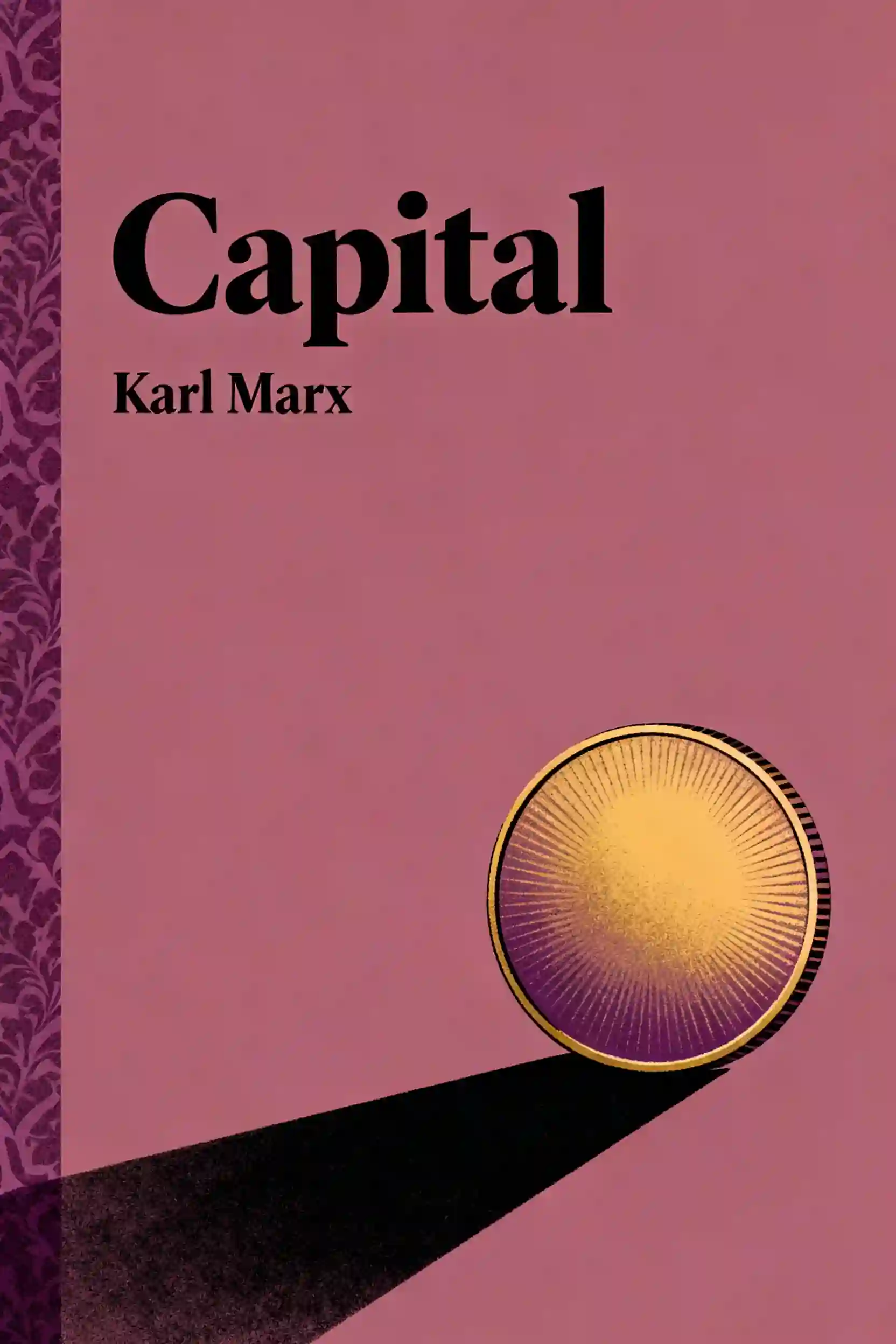
    Capital
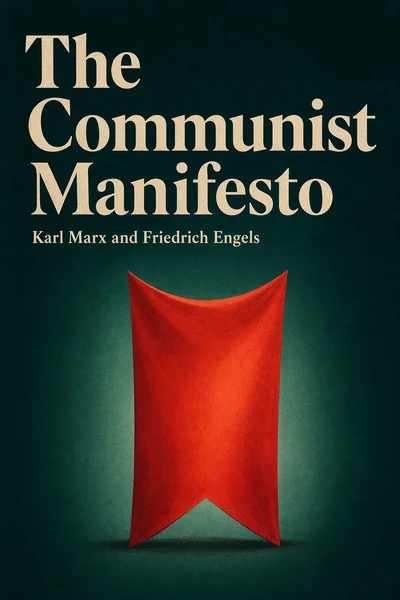
    The Communist Manifesto
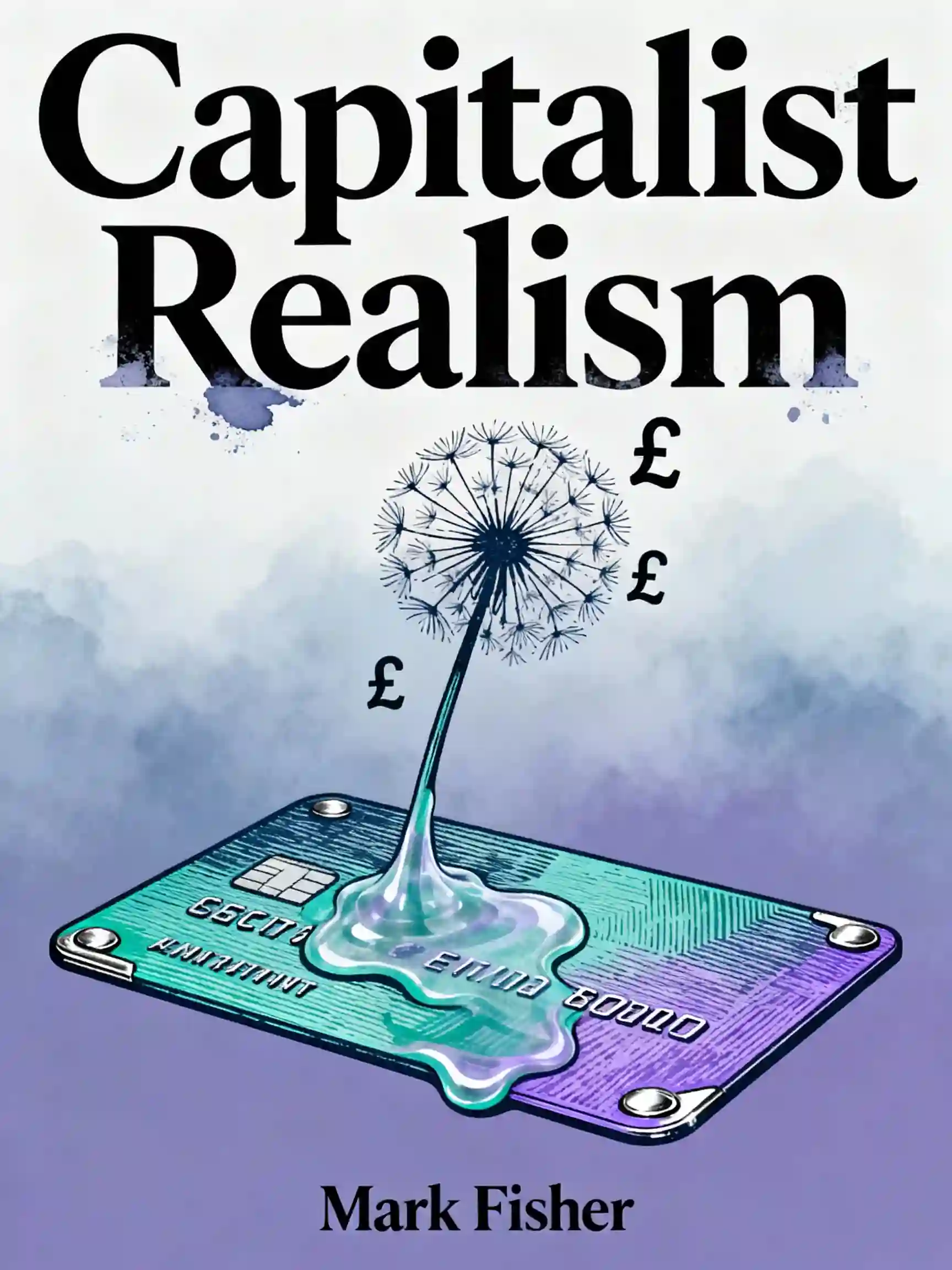
    Capitalist Realism
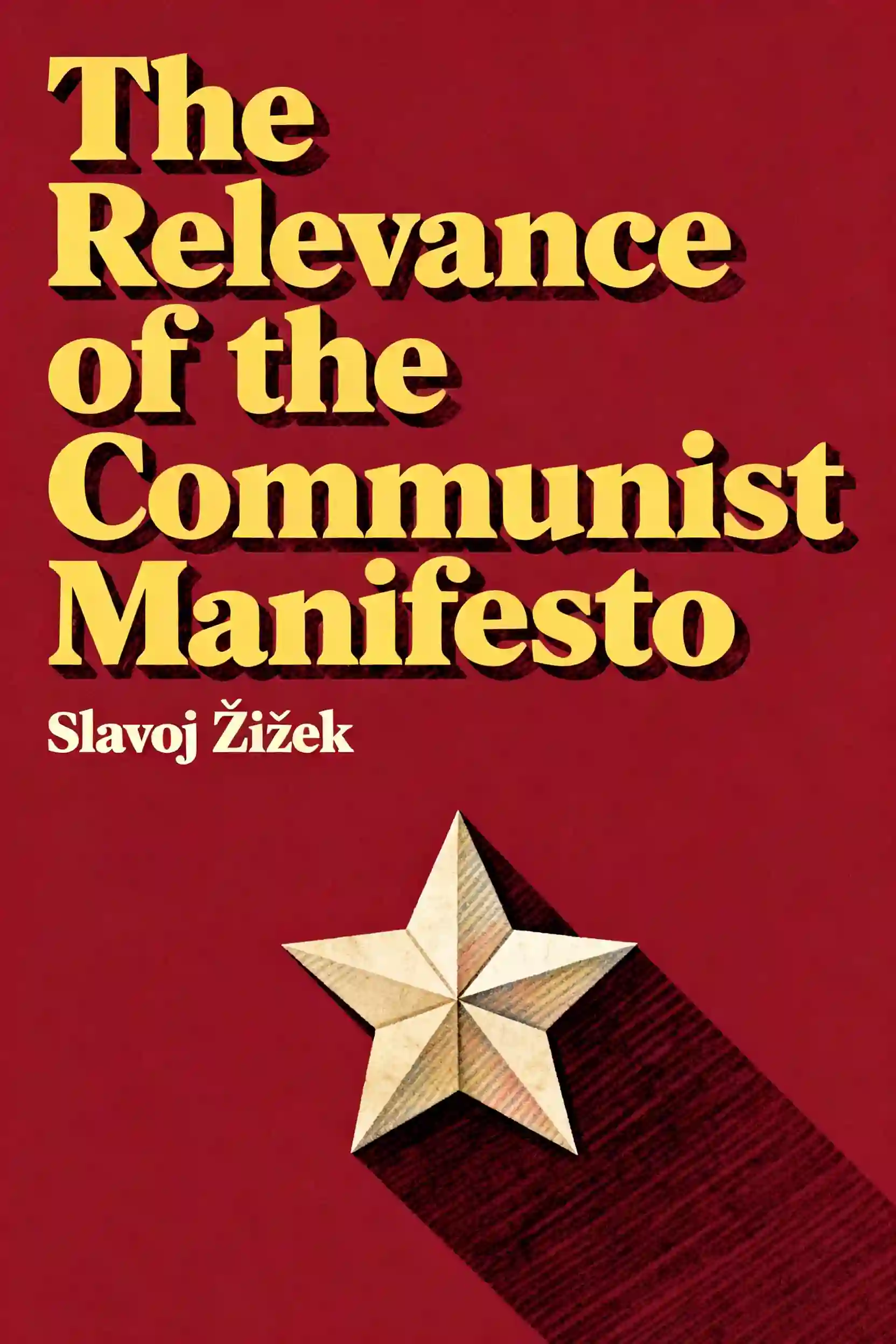
    Relevance of the Communist Manifesto
    The open society and its enemies
    Capitalism, Socialism and Democracy

    Frequently Asked Questions

    Marx argued that society is built like a building where the "Base" is the foundation. The Base consists of the forces of production, such as tools and labor, and the relations of production, which is the "who owns what" aspect of the economy. This economic foundation determines the "Superstructure," which includes everything else in culture—laws, politics, religion, art, and even our way of thinking. According to this theory, the legal and cultural systems of a society exist primarily to protect and maintain the underlying economic base.

    Alienation refers to the disconnection workers feel under capitalism from the things they create and their own human potential. Marx identified four types: alienation from the product (not owning what you make), from the labor process (having no autonomy or creativity in how you work), from fellow workers (viewing others as competition), and from "species-being" (losing the creative spark that makes humans unique). He believed that when work is reduced to repetitive, monotonous tasks for a wage, it becomes "forced labor" that makes people feel like animals at work and only human when they are not working.

    This theory is Marx’s mathematical explanation for profit. He argued that the value of a product is determined by the labor time required to make it, but capitalists only pay workers for the "value of their labor-power," which is the bare minimum needed for the worker to survive. If a worker produces enough value to cover their wages in four hours but works an eight-hour shift, the value produced in the remaining four hours is "surplus value." Marx viewed this surplus as "unpaid labor" that is usurped by the owner, forming the basis of all capitalist profit.

    Marx identified several internal "contradictions" that he believed would lead to the system's self-destruction. One major factor is the "anarchy of production," where businesses compete to produce more goods than workers can afford to buy, leading to "crises of overproduction" and economic busts. He also predicted that wealth would concentrate in the hands of a few "magnates" while the working class became increasingly impoverished and organized. Eventually, this tension would reach a boiling point where the "class-conscious" proletariat would rise up in a necessary revolution to seize the means of production.

    In Marx’s timeline, Socialism is a transitional bridge where the working class takes over the state and abolishes private property to run the economy based on human need. This stage still involves a state apparatus to reorganize society. Advanced Communism is the final destination: a classless, stateless society where there is such an abundance of goods that the state "withers away" because there is no longer a need for one class to oppress another. In this final stage, the guiding principle is "from each according to his ability, to each according to his needs."

    From Columbia University alumni | built in San Francisco

    BeFreed Brings Together A Global Community Of Curious Minds

    4.7

    avg rating

    7.84k+ App Rating

    BeFreed Community

    Seriously I haven’t even explored this app fully yet but from using it the last few days I am so impressed... BeFreed is on a different level from any other learning app I have used. This makes it ultra engaging and can actually improve your concentration which is great for all the doom scrollers!

    @ladyInfinity

    I bought BeFreed exactly 23 days ago, and I have used it every single day since. It has completely embedded itself into my daily workflow and learning habit.

    @jayallen

    The truth is, the app has exceeded all my expectations. I can ask it to generate audio on any topic, whatever it may be, and the result is impressive. My professional field is a specialization in psychotherapy and it is multidisciplinary; however, the answers are very accurate.

    @Raguipa

    What I appreciate most is how much it's reduced my scrolling – I'm spending less time searching and more time absorbing information. The combination of full audiobooks, podcasts, the learning plans are brilliant.

    @colonyofcreatorsNGO

    I have been a PhotoReading Accelerated Learning Instructor for the past 24 years... books and reading and learning are my thing, and BeFreed has done a great job in providing an innovative approach to disseminating and delivering information in an easy to consume way.

    @BeFreed user

    It is not just a book summary app, I have used the 'fun reading' option and it's a much better summary and way to grasp ideas the traditional way, that alone is worth this deal.

    @austinakon

    I love this app. Used it for several days and I cannot stop listening. Such a great way to start.

    @jcrules328

    I really like the program; I have already tested it for around one month, and I feel that it's an amazing gem. It works so well because I can use BeFreed to create my own topics, and the voice is so good with unlimited choice of narrations.

    @DanielCZ

    Seriously I haven’t even explored this app fully yet but from using it the last few days I am so impressed... BeFreed is on a different level from any other learning app I have used. This makes it ultra engaging and can actually improve your concentration which is great for all the doom scrollers!

    @ladyInfinity

    I bought BeFreed exactly 23 days ago, and I have used it every single day since. It has completely embedded itself into my daily workflow and learning habit.

    @jayallen

    The truth is, the app has exceeded all my expectations. I can ask it to generate audio on any topic, whatever it may be, and the result is impressive. My professional field is a specialization in psychotherapy and it is multidisciplinary; however, the answers are very accurate.

    @Raguipa

    What I appreciate most is how much it's reduced my scrolling – I'm spending less time searching and more time absorbing information. The combination of full audiobooks, podcasts, the learning plans are brilliant.

    @colonyofcreatorsNGO

    I have been a PhotoReading Accelerated Learning Instructor for the past 24 years... books and reading and learning are my thing, and BeFreed has done a great job in providing an innovative approach to disseminating and delivering information in an easy to consume way.

    @BeFreed user

    It is not just a book summary app, I have used the 'fun reading' option and it's a much better summary and way to grasp ideas the traditional way, that alone is worth this deal.

    @austinakon

    I love this app. Used it for several days and I cannot stop listening. Such a great way to start.

    @jcrules328

    I really like the program; I have already tested it for around one month, and I feel that it's an amazing gem. It works so well because I can use BeFreed to create my own topics, and the voice is so good with unlimited choice of narrations.

    @DanielCZ

    I love the fact that I can get useful, condensed, information and ideas in a 8 - 15 minute podcast style audio. I'm not a general fan of podcasts because of all the fluff, but this cuts through all that.

    @BeFreed user

    I am finishing up my doctorate, and have to read a lot of unfamiliar material... With BeFreed, you simply enter a prompt, and the app finds source material for you and generates an audio podcast. I find the process in BeFreed to be more streamlined than NotebookLM.

    @Brad

    I often search YouTube for something to listen to whilst making breakfast, when I'm out walking, commuting, etc, and BeFreed has provided an even more targeted approach, without the adverts and the fluff!

    @BeFreed user

    The absolute best part about this platform is its versatility. There is literally no subject that is off-topic. It handles whatever you throw at it... It is rare to find an learning tool with zero limitations that actually delivers on its promises.

    @jayallen

    BeFreed is fantastic. The user-friendly design means I spend less time navigating and more time learning. The mix of audiobooks, podcasts, and learning plans is a genius combo that has completely changed my daily routine.

    @BeFreed user

    At the start I needed a while to understand how to create podcasts in italian language and boom! It is so great! I can ask to explain every argument and it does so well and so smartly!

    @matteo77

    BeFreed has become my daily app for audio books tools... What I like the most is the way you put your text and come with an audio that you can listen on the go.

    @kotanzu1

    I love the fact that I can get useful, condensed, information and ideas in a 8 - 15 minute podcast style audio. I'm not a general fan of podcasts because of all the fluff, but this cuts through all that.

    @BeFreed user

    I am finishing up my doctorate, and have to read a lot of unfamiliar material... With BeFreed, you simply enter a prompt, and the app finds source material for you and generates an audio podcast. I find the process in BeFreed to be more streamlined than NotebookLM.

    @Brad

    I often search YouTube for something to listen to whilst making breakfast, when I'm out walking, commuting, etc, and BeFreed has provided an even more targeted approach, without the adverts and the fluff!

    @BeFreed user

    The absolute best part about this platform is its versatility. There is literally no subject that is off-topic. It handles whatever you throw at it... It is rare to find an learning tool with zero limitations that actually delivers on its promises.

    @jayallen

    BeFreed is fantastic. The user-friendly design means I spend less time navigating and more time learning. The mix of audiobooks, podcasts, and learning plans is a genius combo that has completely changed my daily routine.

    @BeFreed user

    At the start I needed a while to understand how to create podcasts in italian language and boom! It is so great! I can ask to explain every argument and it does so well and so smartly!

    @matteo77

    BeFreed has become my daily app for audio books tools... What I like the most is the way you put your text and come with an audio that you can listen on the go.

    @kotanzu1

    See more on how BeFreed is discussed
    129.7K19.5K
    55.2K19.2K
    154.2K10827355
    48.1K2.5K
    81.2K6.6K
    82.3K1.8K
    Start your learning journey, now
    BeFreed app
    BeFreed

    Learn Anything, Personalized

    DiscordLinkedIn
    Featured book summaries
    Crucial ConversationsThe Perfect MarriageInto the WildNever Split the DifferenceAttachedGood to GreatSay Nothing
    Trending categories
    Self HelpCommunication SkillRelationshipMindfulnessPhilosophyInspirationProductivity
    Celebrities' reading list
    Elon MuskCharlie KirkBill GatesSteve JobsAndrew HubermanJoe RoganJordan Peterson
    Award winning collection
    Pulitzer PrizeNational Book AwardGoodreads Choice AwardsNobel Prize in LiteratureNew York TimesCaldecott MedalNebula Award
    Featured Topics
    ManagementAmerican HistoryWarTradingStoicismAnxietySex
    Best books by Year
    2025 Best Non Fiction Books2024 Best Non Fiction Books2023 Best Non Fiction Books
    Featured authors
    Chimamanda Ngozi AdichieGeorge OrwellO. J. SimpsonBarbara O'NeillWinston ChurchillCharlie Kirk
    BeFreed vs other apps
    BeFreed vs. Other Book Summary AppsBeFreed vs. ElevenReaderBeFreed vs. ReadwiseBeFreed vs. Anki
    Learning tools
    Knowledge VisualizerAI Podcast Generator
    Information
    About Usarrow
    Pricingarrow
    FAQarrow
    Blogarrow
    Careerarrow
    Partnershipsarrow
    Ambassador Programarrow
    Directoryarrow
    BeFreed
    Try now
    © 2026 BeFreed
    Term of UsePrivacy Policy
    BeFreed

    Learn Anything, Personalized

    DiscordLinkedIn
    Featured book summaries
    Crucial ConversationsThe Perfect MarriageInto the WildNever Split the DifferenceAttachedGood to GreatSay Nothing
    Trending categories
    Self HelpCommunication SkillRelationshipMindfulnessPhilosophyInspirationProductivity
    Celebrities' reading list
    Elon MuskCharlie KirkBill GatesSteve JobsAndrew HubermanJoe RoganJordan Peterson
    Award winning collection
    Pulitzer PrizeNational Book AwardGoodreads Choice AwardsNobel Prize in LiteratureNew York TimesCaldecott MedalNebula Award
    Featured Topics
    ManagementAmerican HistoryWarTradingStoicismAnxietySex
    Best books by Year
    2025 Best Non Fiction Books2024 Best Non Fiction Books2023 Best Non Fiction Books
    Learning tools
    Knowledge VisualizerAI Podcast Generator
    Featured authors
    Chimamanda Ngozi AdichieGeorge OrwellO. J. SimpsonBarbara O'NeillWinston ChurchillCharlie Kirk
    BeFreed vs other apps
    BeFreed vs. Other Book Summary AppsBeFreed vs. ElevenReaderBeFreed vs. ReadwiseBeFreed vs. Anki
    Information
    About Usarrow
    Pricingarrow
    FAQarrow
    Blogarrow
    Careerarrow
    Partnershipsarrow
    Ambassador Programarrow
    Directoryarrow
    BeFreed
    Try now
    © 2026 BeFreed
    Term of UsePrivacy Policy

    More like this

    Marx and the Mechanics of Class Struggle book cover
    Karl Marx Historical Materialism & Structure of Society – UPSC SociologySociology Optional Notes — Sociological Thinkers (a to c) — Marx, Durkheim, WeberExamine Karl Marx's views on 'class-in-itself' and 'class-for-itself' with reference to proletarians.(UPSC PYQ) - Master SociologySociology Optional Notes — Sociological Thinkers (a to c) — Marx, Durkheim, Weber
    6 sources
    Marx and the Mechanics of Class Struggle
    Struggling to decode power structures? Explore Marx’s materialist lens to understand how economic foundations drive social change and inequality.
    772 min
    Marx: From Broke Exile to Revolutionary Genius book cover
    CapitalThe Communist ManifestoCapitalist RealismCapital in the Twenty-First Century
    21 sources
    Marx: From Broke Exile to Revolutionary Genius
    Discover how Karl Marx's personal poverty fueled his groundbreaking critique of capitalism, revealing hidden mechanisms of exploitation that still shape our world today.
    26 min
    Socialism and Communism: Ideas That Shaped History book cover
    source 1source 2source 3source 4
    6 sources
    Socialism and Communism: Ideas That Shaped History
    Explore the revolutionary ideas of socialism and communism from Marx to modern movements. Discover how these misunderstood concepts continue to influence debates about inequality, democracy, and the future of society.
    11 min
    Capital book cover
    Capital
    Karl Marx
    29 min
    The Communist Manifesto book cover
    The Communist Manifesto
    Karl Marx and Friedrich Engels
    A revolutionary call to the working class, advocating for the overthrow of capitalism and establishment of a classless society.
    29 min
    Relevance of the Communist Manifesto book cover
    Relevance of the Communist Manifesto
    Slavoj Žižek
    29 min
    Modern Marxism book cover
    Modern Marxism
    Patricia Engler
    25 min
    Great Minds Misunderstood book cover
    The Open Society and Its EnemiesThe Thoughts of Friedrich NietzscheTwilight of the Idols and The Anti-ChristThe Human Condition
    12 sources
    Great Minds Misunderstood
    Explore the true depth of history's revolutionary thinkers beyond popular caricatures. Discover how Marx, Nietzsche, Machiavelli and others continue to shape our world through their enduring insights on power, freedom, and human nature.
    32 min

    Recommended Learning Plans

    Marx, Class, and the Power Struggle
    LEARNING PLAN

    Marx, Class, and the Power Struggle

    This plan is essential for anyone seeking to understand the hidden structures of economic and social power that shape our world. It is ideal for students of sociology, political activists, or curious minds wanting to grasp the complexities of modern inequality and systemic change.

    1 h 36 m•4 Sections
    Understanding marxism
    LEARNING PLAN

    Understanding marxism

    This learning plan provides essential tools for understanding one of the most influential intellectual frameworks for analyzing capitalism, inequality, and social change. It's valuable for students of political economy, philosophy, and social sciences, as well as activists and professionals seeking deeper insight into systemic critiques of contemporary economic arrangements. Whether you're engaging with current debates about wealth inequality, labor rights, or alternative economic models, Marxist analysis remains indispensable for rigorous critical thinking.

    3 h 16 m•4 Sections
    Communism
    LEARNING PLAN

    Communism

    This learning plan provides essential context for understanding one of the most influential political ideologies of the 20th century, whose impact continues to shape global politics, economics, and social movements today. It's valuable for students of history, political science, economics, and anyone seeking to comprehend the ideological conflicts that defined modern geopolitics and continue to influence debates about capitalism, inequality, and alternative economic systems.

    5 h 39 m•4 Sections
    Capitalism destroys humanity and society
    LEARNING PLAN

    Capitalism destroys humanity and society

    This learning plan provides a critical framework for understanding how modern economic structures impact social stability and planetary health. It is essential for activists, students, and citizens seeking to move beyond profit-driven models toward a sustainable and equitable future.

    5 h 14 m•4 Sections
    Art, War, and the Capitalist Soul
    LEARNING PLAN

    Art, War, and the Capitalist Soul

    This interdisciplinary plan bridges the gap between cultural history, geopolitics, and economic evolution. It is ideal for history buffs, political science students, or curious minds looking to understand how the modern world was forged through art and industry.

    1 h 12 m•3 Sections
    Argue against socialism
    LEARNING PLAN

    Argue against socialism

    This learning plan equips individuals with comprehensive knowledge to engage in informed debates about economic systems and political philosophy. It's particularly valuable for students, policy advocates, educators, and anyone seeking to develop well-reasoned positions on capitalism versus socialism grounded in economic theory, historical evidence, and moral philosophy.

    5 h 11 m•4 Sections
    Study modern history
    LEARNING PLAN

    Study modern history

    Understanding modern history provides essential context for our contemporary world and its challenges. This learning plan benefits students, professionals, and lifelong learners seeking to comprehend current geopolitical tensions, economic systems, and social movements through their historical foundations.

    5 h 55 m•4 Sections
    The Unfinished American Revolution
    LEARNING PLAN

    The Unfinished American Revolution

    This learning plan is essential for anyone seeking to understand the ongoing tension between American ideals and historical reality. It is particularly beneficial for educators, civic leaders, and lifelong learners interested in how historical memory shapes our current political landscape.

    1 h 30 m•3 Sections