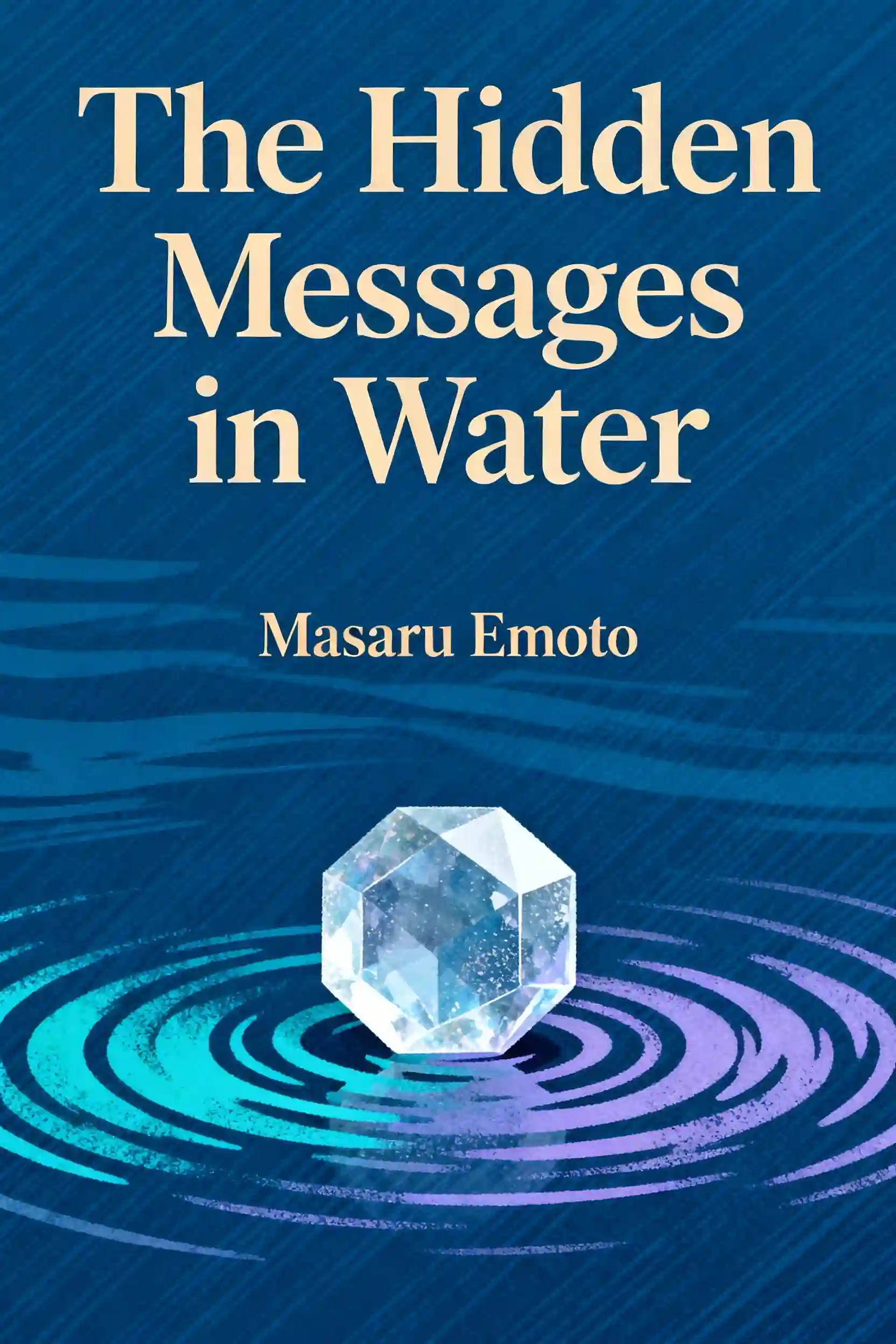
Is water just a background character or a living archive? Explore how its molecular structure stores information and acts as a battery for our health.
Best quote from Water Memory and the Science of Liquid Consciousness
“
Water isn't just a solvent—it’s a communication medium. It’s like the difference between a bucket of loose magnetic letters and a hard drive; one is just a pile of stuff, while the other is organized to hold a narrative.
”
R
Generated by Ruth
Input question
Consciousness in water.
Host voices
Lena
Miles
Knowledge sources
Frequently Asked Questions
The memory of water is the theory that water can store and transmit electromagnetic information from substances even after they have been diluted to the point where no molecules of the original substance remain. Proponents suggest that water molecules form "coherent domains"—tiny regions where molecules oscillate in unison like a laser. These structures are thought to act as a "quantum fingerprint" or a liquid hard drive, mimicking and retaining the electromagnetic frequency of the substance they once held.
The fourth phase of water, also known as Exclusion Zone (EZ) water, is a highly ordered, hexagonal lattice that forms when water sits next to hydrophilic (water-loving) surfaces, such as human cells. Unlike standard liquid water where hydrogen bonds break in a trillionth of a second, EZ water is more stable, viscous, and carries a negative charge. It acts like a biological battery by storing radiant energy from light, providing a structured "scaffold" that researchers believe is capable of holding and processing information.
Minerals act as a physical "scaffold" or "mineral matrix" that allows water to maintain its coherent structures. Specifically, transition minerals like Magnesium, Calcium, and Potassium facilitate "electron-proton coupling," which is essential for the water to function as a charge capacitor. Without these minerals, water is often described as "dead" or "noisy," lacking the necessary components to buffer protons and maintain the electrochemical vitality required for effective biological communication.
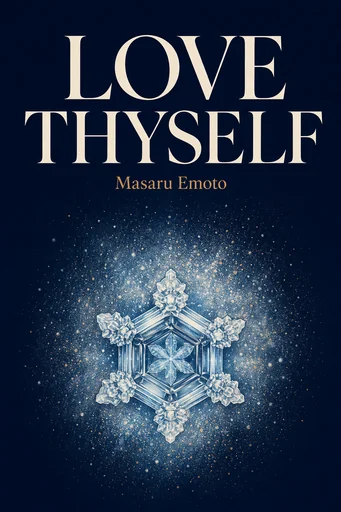
According to the research of Masaru Emoto and subsequent triple-blind studies, water appears to be responsive to human consciousness and "Hado" (vibrational fields). Experiments showed that water exposed to positive intentions, such as "Love and Gratitude," formed symmetrical and aesthetically pleasing ice crystals, while water exposed to negative stimuli formed chaotic, fragmented patterns. This suggests that water may act as an "informational attractor" that manifests physical patterns based on the energetic signals it receives from its environment.
To improve water coherence, the script suggests focusing on both the physical and intentional aspects of hydration. Practically, this includes using glass containers instead of plastic to avoid chemical reactivity, remineralizing filtered water to restore its "informational scaffold," and using "vortexing" or vigorous shaking to mimic nature's self-organizing movement. Additionally, taking a moment of focused gratitude before drinking is recommended to "tune" the water's frequency to a state of biological coherence.
From Columbia University alumni | built in San Francisco
BeFreed Brings Together A Global Community Of Curious Minds
4.7
avg rating
7.84k+ App Rating
BeFreed Community
Seriously I haven’t even explored this app fully yet but from using it the last few days I am so impressed... BeFreed is on a different level from any other learning app I have used. This makes it ultra engaging and can actually improve your concentration which is great for all the doom scrollers!
@ladyInfinity
I bought BeFreed exactly 23 days ago, and I have used it every single day since. It has completely embedded itself into my daily workflow and learning habit.
@jayallen
The truth is, the app has exceeded all my expectations. I can ask it to generate audio on any topic, whatever it may be, and the result is impressive. My professional field is a specialization in psychotherapy and it is multidisciplinary; however, the answers are very accurate.
@Raguipa
What I appreciate most is how much it's reduced my scrolling – I'm spending less time searching and more time absorbing information. The combination of full audiobooks, podcasts, the learning plans are brilliant.
@colonyofcreatorsNGO
I have been a PhotoReading Accelerated Learning Instructor for the past 24 years... books and reading and learning are my thing, and BeFreed has done a great job in providing an innovative approach to disseminating and delivering information in an easy to consume way.
@BeFreed user
It is not just a book summary app, I have used the 'fun reading' option and it's a much better summary and way to grasp ideas the traditional way, that alone is worth this deal.
@austinakon
I love this app. Used it for several days and I cannot stop listening. Such a great way to start.
@jcrules328
I really like the program; I have already tested it for around one month, and I feel that it's an amazing gem. It works so well because I can use BeFreed to create my own topics, and the voice is so good with unlimited choice of narrations.
@DanielCZ
Seriously I haven’t even explored this app fully yet but from using it the last few days I am so impressed... BeFreed is on a different level from any other learning app I have used. This makes it ultra engaging and can actually improve your concentration which is great for all the doom scrollers!
@ladyInfinity
I bought BeFreed exactly 23 days ago, and I have used it every single day since. It has completely embedded itself into my daily workflow and learning habit.
@jayallen
The truth is, the app has exceeded all my expectations. I can ask it to generate audio on any topic, whatever it may be, and the result is impressive. My professional field is a specialization in psychotherapy and it is multidisciplinary; however, the answers are very accurate.
@Raguipa
What I appreciate most is how much it's reduced my scrolling – I'm spending less time searching and more time absorbing information. The combination of full audiobooks, podcasts, the learning plans are brilliant.
@colonyofcreatorsNGO
I have been a PhotoReading Accelerated Learning Instructor for the past 24 years... books and reading and learning are my thing, and BeFreed has done a great job in providing an innovative approach to disseminating and delivering information in an easy to consume way.
@BeFreed user
It is not just a book summary app, I have used the 'fun reading' option and it's a much better summary and way to grasp ideas the traditional way, that alone is worth this deal.
@austinakon
I love this app. Used it for several days and I cannot stop listening. Such a great way to start.
@jcrules328
I really like the program; I have already tested it for around one month, and I feel that it's an amazing gem. It works so well because I can use BeFreed to create my own topics, and the voice is so good with unlimited choice of narrations.
@DanielCZ
I love the fact that I can get useful, condensed, information and ideas in a 8 - 15 minute podcast style audio. I'm not a general fan of podcasts because of all the fluff, but this cuts through all that.
@BeFreed user
I am finishing up my doctorate, and have to read a lot of unfamiliar material... With BeFreed, you simply enter a prompt, and the app finds source material for you and generates an audio podcast. I find the process in BeFreed to be more streamlined than NotebookLM.
@Brad
I often search YouTube for something to listen to whilst making breakfast, when I'm out walking, commuting, etc, and BeFreed has provided an even more targeted approach, without the adverts and the fluff!
@BeFreed user
The absolute best part about this platform is its versatility. There is literally no subject that is off-topic. It handles whatever you throw at it... It is rare to find an learning tool with zero limitations that actually delivers on its promises.
@jayallen
BeFreed is fantastic. The user-friendly design means I spend less time navigating and more time learning. The mix of audiobooks, podcasts, and learning plans is a genius combo that has completely changed my daily routine.
@BeFreed user
At the start I needed a while to understand how to create podcasts in italian language and boom! It is so great! I can ask to explain every argument and it does so well and so smartly!
@matteo77
BeFreed has become my daily app for audio books tools... What I like the most is the way you put your text and come with an audio that you can listen on the go.
@kotanzu1
I love the fact that I can get useful, condensed, information and ideas in a 8 - 15 minute podcast style audio. I'm not a general fan of podcasts because of all the fluff, but this cuts through all that.
@BeFreed user
I am finishing up my doctorate, and have to read a lot of unfamiliar material... With BeFreed, you simply enter a prompt, and the app finds source material for you and generates an audio podcast. I find the process in BeFreed to be more streamlined than NotebookLM.
@Brad
I often search YouTube for something to listen to whilst making breakfast, when I'm out walking, commuting, etc, and BeFreed has provided an even more targeted approach, without the adverts and the fluff!
@BeFreed user
The absolute best part about this platform is its versatility. There is literally no subject that is off-topic. It handles whatever you throw at it... It is rare to find an learning tool with zero limitations that actually delivers on its promises.
@jayallen
BeFreed is fantastic. The user-friendly design means I spend less time navigating and more time learning. The mix of audiobooks, podcasts, and learning plans is a genius combo that has completely changed my daily routine.
@BeFreed user
At the start I needed a while to understand how to create podcasts in italian language and boom! It is so great! I can ask to explain every argument and it does so well and so smartly!
@matteo77
BeFreed has become my daily app for audio books tools... What I like the most is the way you put your text and come with an audio that you can listen on the go.
Being even slightly low on fluids can quickly impair brain function. Discover how electrolytes and produce work together to keep you hydrated and sharp.
Discover how the same water molecules have been cycling through Earth for billions of years, from ancient rivers to your morning shower, in nature's ultimate recycling system.
Explore how chemistry became biology in this fascinating journey from primordial hydrothermal vents to the molecular machinery powering consciousness. Discover the extraordinary chemical processes happening inside you right now.