The Sidewalk Power Struggle
Explore the hidden psychology behind men who walk ahead and why your pace is a silent battleground for relationship dominance.

Best quote from The Sidewalk Power Struggle
The game only works if you play your part—the follower. When you speed up to catch him, you’re coupling your rhythm to his dominance and validating his lead.

This audio lesson was created by a BeFreed community member
Why men walk fast in front of me or just start moving faster after I’ve learned their game or also play it



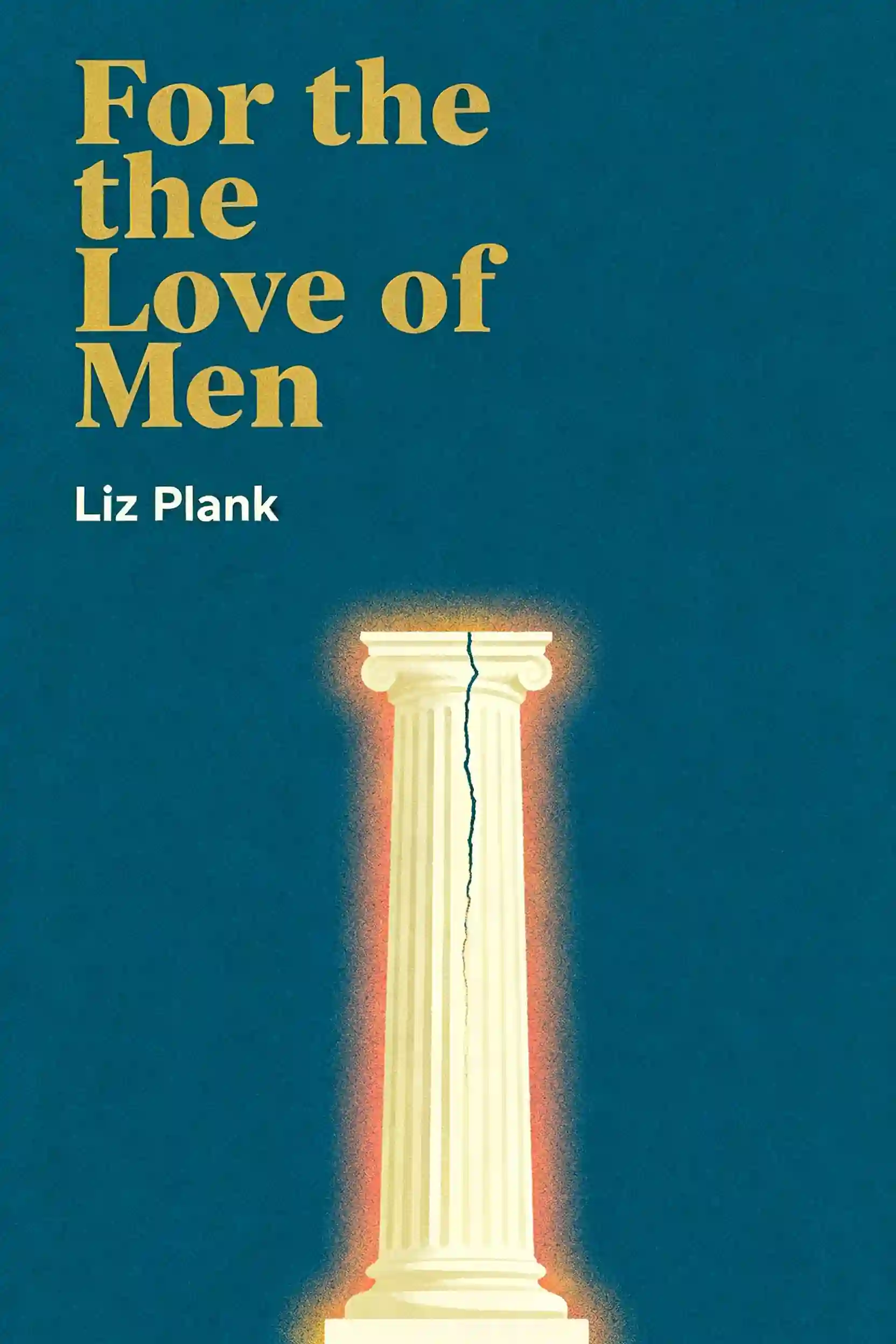
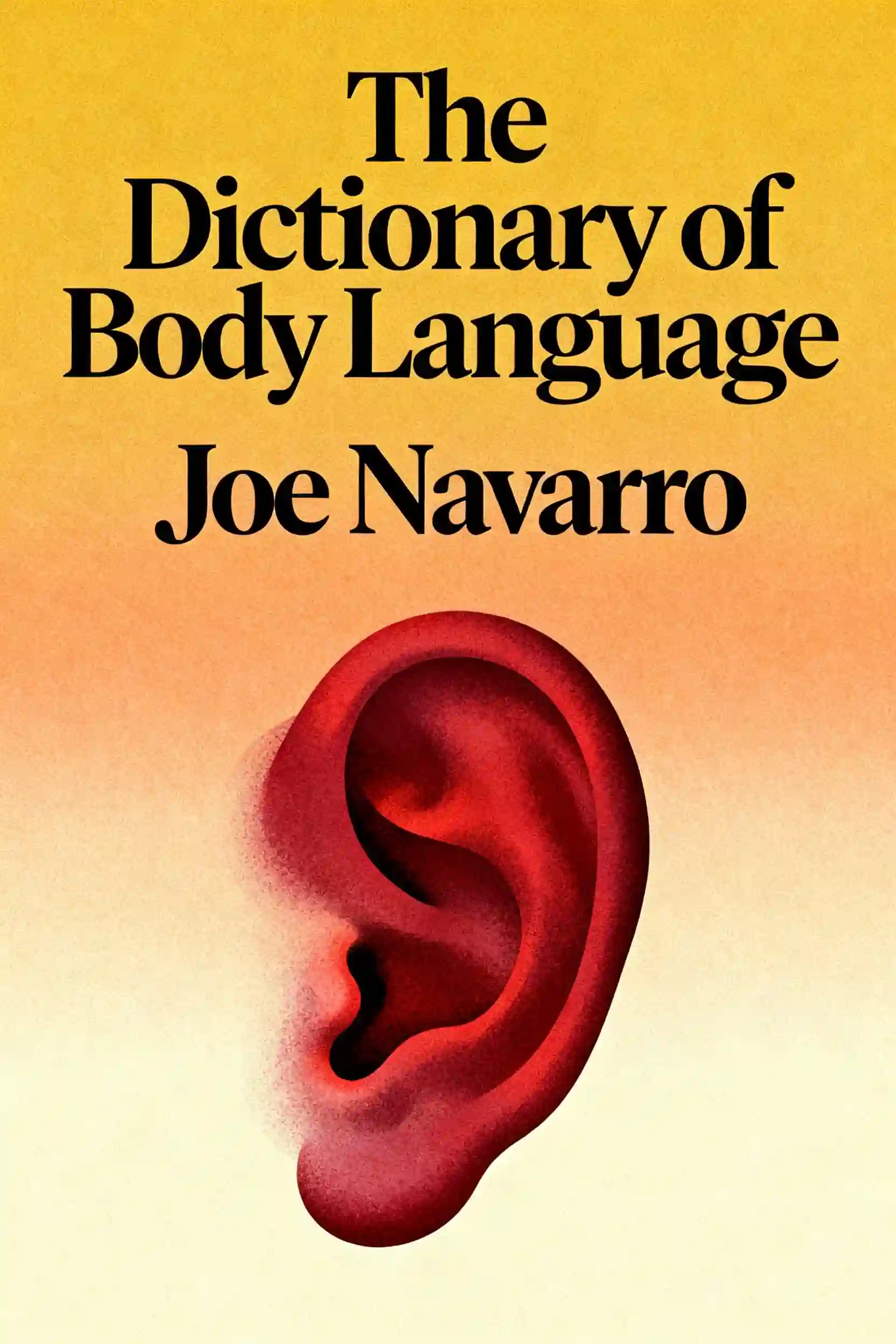
Frequently Asked Questions
This difference is primarily rooted in biological "factory settings" and energy efficiency. Men generally have greater total body mass and longer lower limbs, which results in a faster optimal walking speed. Walking at this natural rhythm allows their bodies to move from point A to point B while spending the least amount of energy possible. When a man slows down to match a slower pace, he actually pays an "energetic penalty," which can feel physically clunky or tiring because he is deviating from his body's natural efficiency.
Walking is considered a "synchronized behavior" or a social dance that signals the state of a relationship. Research indicates that men typically pay a "7% slowdown tax" consistently only for romantic partners. If a man refuses to match his partner's pace and maintains a lead, he may be unconsciously signaling a hierarchy where he leads and the partner follows. This "de-coupling" suggests that he is prioritizing his own energy efficiency or personal "transit" goals over the social bond and synchronization of the pair.
Not necessarily. While faster speeds and specific biomechanical markers—like "swagger" (shoulders wide and elbows out) and "sway" (side-to-side torso movement)—are perceived as dominant, they can be forms of "dishonest signaling." Interestingly, studies show that actual trait aggression is often inversely correlated with swaying; a truly formidable person usually moves with a stable center of mass and focused intent. A flashy, exaggerated fast walk may actually be a sign of insecurity or a "pufferfish" move intended to perform a dominance that the individual does not actually possess.
The most effective way to end the power struggle is to stop the "chasing" rhythm and refuse to be the "follower." Instead of speeding up to catch a partner—which validates their lead and puts the burden of synchronization on the person behind—one should maintain their own "optimal speed." By de-coupling from the other person's pace and letting them walk ahead, the "object" becomes a "subject" with their own agency. Naming the behavior out loud or requesting an "egalitarian formation" (walking side-by-side) can also break the spell of the silent dominance display.
Discover more

Master the Art of Social Power
In a world where influence is the ultimate currency, understanding the mechanics of reputation and dialogue is essential. This plan is designed for ambitious professionals and leaders who want to move from being passive participants to dominant social architects.

Lead Up and Sideways
In modern workplaces, influence is just as important as technical skill. This plan is designed for mid-level professionals and emerging leaders who need to manage their energy and reputation while navigating complex office dynamics.

The Psychology of Hidden Motives
In a world where true intentions are often masked, understanding the underlying mechanics of human behavior is a critical competitive advantage. This plan is ideal for leaders, negotiators, and anyone looking to master social dynamics by reading between the lines of every interaction.

36 Strategies of Power: A War Manual
This course bridges the gap between ancient wisdom and modern survival, offering a deep dive into the mechanics of influence and tactical superiority. It is essential for leaders, entrepreneurs, and strategists who need to navigate high-stakes environments where psychological insight and political acumen are the primary tools for success.
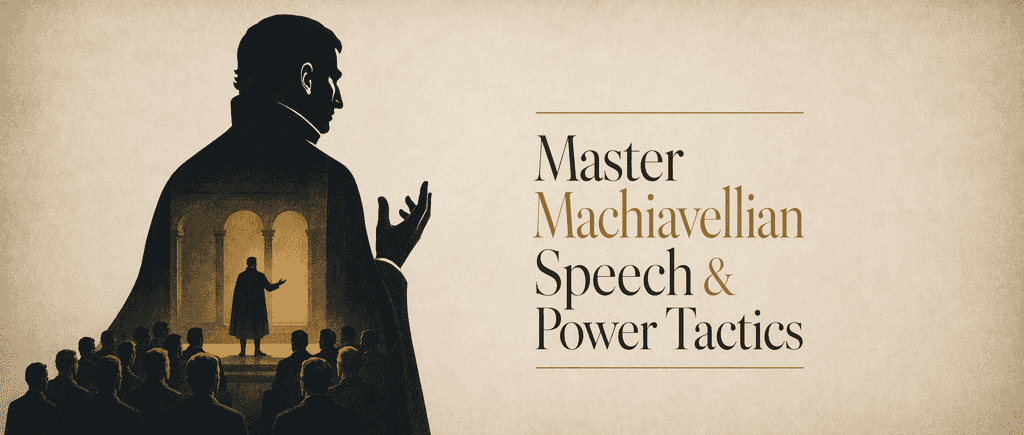
Master Machiavellian Speech & Power Tactics
This plan is designed for ambitious leaders and negotiators who need to navigate high-stakes environments where influence is the primary currency. It bridges classical political philosophy with modern psychological tactics to provide a comprehensive toolkit for social dominance.

Win crush over with psychological tactics
This plan is essential for individuals looking to move beyond surface-level interactions and master the subtle art of attraction. It is ideal for anyone seeking to build self-confidence and use evidence-based psychological strategies to foster meaningful, lasting romantic relationships.

Power and winning
This plan is designed for ambitious professionals and leaders who need to navigate complex competitive landscapes. It provides the psychological tools and strategic framework necessary to command authority and achieve consistent victory in any field.

The Hidden Drivers of Human Behavior
Understanding the unseen psychological forces that dictate our actions is essential for effective leadership and communication. This plan is ideal for professionals, managers, and anyone looking to master social intelligence and group dynamics.
From Columbia University alumni built in San Francisco
"Instead of endless scrolling, I just hit play on BeFreed. It saves me so much time."


"I never knew where to start with nonfiction—BeFreed’s book lists turned into podcasts gave me a clear path."


"Perfect balance between learning and entertainment. Finished ‘Thinking, Fast and Slow’ on my commute this week."
"Crazy how much I learned while walking the dog. BeFreed = small habits → big gains."
"Reading used to feel like a chore. Now it’s just part of my lifestyle."

"Feels effortless compared to reading. I’ve finished 6 books this month already."
"BeFreed turned my guilty doomscrolling into something that feels productive and inspiring."

"BeFreed turned my commute into learning time. 20-min podcasts are perfect for finishing books I never had time for."
"BeFreed replaced my podcast queue. Imagine Spotify for books — that’s it. 🙌"

"It is great for me to learn something from the book without reading it."
"The themed book list podcasts help me connect ideas across authors—like a guided audio journey."
"Makes me feel smarter every time before going to work"
From Columbia University alumni built in San Francisco
"Instead of endless scrolling, I just hit play on BeFreed. It saves me so much time."
"I never knew where to start with nonfiction—BeFreed’s book lists turned into podcasts gave me a clear path."
"Perfect balance between learning and entertainment. Finished ‘Thinking, Fast and Slow’ on my commute this week."
"Crazy how much I learned while walking the dog. BeFreed = small habits → big gains."
"Reading used to feel like a chore. Now it’s just part of my lifestyle."
"Feels effortless compared to reading. I’ve finished 6 books this month already."
"BeFreed turned my guilty doomscrolling into something that feels productive and inspiring."
"BeFreed turned my commute into learning time. 20-min podcasts are perfect for finishing books I never had time for."
"BeFreed replaced my podcast queue. Imagine Spotify for books — that’s it. 🙌"
"It is great for me to learn something from the book without reading it."
"The themed book list podcasts help me connect ideas across authors—like a guided audio journey."
"Makes me feel smarter every time before going to work"
"Instead of endless scrolling, I just hit play on BeFreed. It saves me so much time."
"I never knew where to start with nonfiction—BeFreed’s book lists turned into podcasts gave me a clear path."
"Perfect balance between learning and entertainment. Finished ‘Thinking, Fast and Slow’ on my commute this week."
"Crazy how much I learned while walking the dog. BeFreed = small habits → big gains."
"Reading used to feel like a chore. Now it’s just part of my lifestyle."
"Feels effortless compared to reading. I’ve finished 6 books this month already."
"BeFreed turned my guilty doomscrolling into something that feels productive and inspiring."
"BeFreed turned my commute into learning time. 20-min podcasts are perfect for finishing books I never had time for."
"BeFreed replaced my podcast queue. Imagine Spotify for books — that’s it. 🙌"
"It is great for me to learn something from the book without reading it."
"The themed book list podcasts help me connect ideas across authors—like a guided audio journey."
"Makes me feel smarter every time before going to work"
"Instead of endless scrolling, I just hit play on BeFreed. It saves me so much time."
"I never knew where to start with nonfiction—BeFreed’s book lists turned into podcasts gave me a clear path."
"Perfect balance between learning and entertainment. Finished ‘Thinking, Fast and Slow’ on my commute this week."
"Crazy how much I learned while walking the dog. BeFreed = small habits → big gains."
"Reading used to feel like a chore. Now it’s just part of my lifestyle."
"Feels effortless compared to reading. I’ve finished 6 books this month already."
"BeFreed turned my guilty doomscrolling into something that feels productive and inspiring."
"BeFreed turned my commute into learning time. 20-min podcasts are perfect for finishing books I never had time for."
"BeFreed replaced my podcast queue. Imagine Spotify for books — that’s it. 🙌"
"It is great for me to learn something from the book without reading it."
"The themed book list podcasts help me connect ideas across authors—like a guided audio journey."
"Makes me feel smarter every time before going to work"