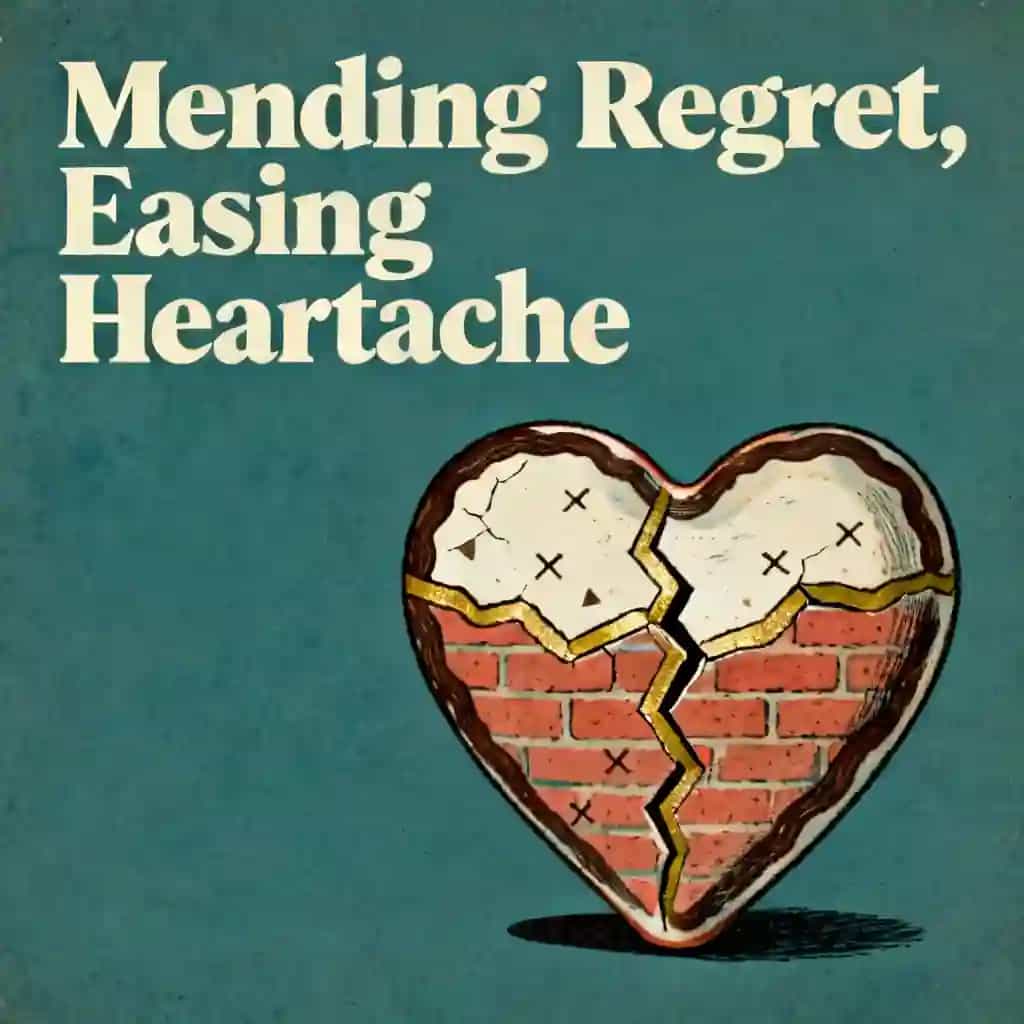
The Paradox of Choice in Cancer Care
Explore the emotional burden of decision regret in cancer treatment and learn practical strategies to navigate complex medical choices with self-compassion and clarity.

Best quote from The Paradox of Choice in Cancer Care
Regret is often about the way the decision was made, not just the medical outcome itself. It’s the difference between feeling like a 'case' and feeling like a 'person.'
Generated by Patrick
Decision regret in cancer

Frequently Asked Questions
This is known as the paradox of choice. When medical outcomes—such as survival rates—are comparable between two different treatments, the "correctness" of the decision shifts from medical facts to the patient's personal responsibility. Patients often stop worrying about what will save them and start obsessing over how they will live with the specific side effects of one path versus another. This internal debate can lead to "decision regret," where patients constantly wonder "what if" they had chosen the alternative, especially if they experience a difficult recovery or long-term side effects.
Research indicates that language barriers and health literacy significantly influence regret levels. For example, studies found that Spanish-speaking Latina women and African American women often report higher levels of regret compared to Caucasian women. This is frequently tied to "disempowerment"—if medical jargon feels like a foreign language or if a patient's culture views the physician as an absolute authority, the patient may not feel they truly participated in the choice. Regret often stems from following an expert's advice without advocating for personal preferences, then having to live with the physical consequences later.
Yes, there is evidence of a "biological echo" where emotional distress can translate into physical health outcomes. Studies on melanoma and breast cancer patients suggest that sustained reduction in stress and the use of active coping strategies can lead to higher "natural killer" (NK) cell activity and lower cortisol levels over time. Conversely, chronic regret acts as a persistent stressor that keeps the body in a "fight or flight" mode. While this doesn't mean regret "causes" poor health, it suggests that self-compassion and social support are critical medical tools that help the immune system function more effectively.
Decisional role congruence refers to whether the level of involvement a patient had in a decision matched the level of involvement they actually wanted. Regret is not necessarily caused by being "active" or "passive" in the process, but by a mismatch between expectation and reality. For instance, if a patient wants the doctor to take the lead but is forced to make the final call, they may feel overwhelmed. Conversely, if a patient wants to be the primary decider but feels shut out by the doctor, they will also feel regret. The "sweet spot" for minimizing future remorse is ensuring the patient's role matches their personal preference.
Counterintuitively, decision regret can actually increase as the years pass. Immediately after treatment, many patients are in "survival mode" and are simply grateful to be alive. However, as the immediate threat of cancer fades and the "survival high" plateaus, the long-term side effects—such as changes to body image, sexuality, or chronic fatigue—become the "new normal." Survivors may then begin to question if such aggressive treatments were truly necessary, causing the "cost" of the decision to feel more expensive as the memory of the initial danger fades.
From Columbia University alumni built in San Francisco
"Instead of endless scrolling, I just hit play on BeFreed. It saves me so much time."


"I never knew where to start with nonfiction—BeFreed’s book lists turned into podcasts gave me a clear path."


"Perfect balance between learning and entertainment. Finished ‘Thinking, Fast and Slow’ on my commute this week."
"Crazy how much I learned while walking the dog. BeFreed = small habits → big gains."
"Reading used to feel like a chore. Now it’s just part of my lifestyle."

"Feels effortless compared to reading. I’ve finished 6 books this month already."
"BeFreed turned my guilty doomscrolling into something that feels productive and inspiring."

"BeFreed turned my commute into learning time. 20-min podcasts are perfect for finishing books I never had time for."
"BeFreed replaced my podcast queue. Imagine Spotify for books — that’s it. 🙌"

"It is great for me to learn something from the book without reading it."
"The themed book list podcasts help me connect ideas across authors—like a guided audio journey."
"Makes me feel smarter every time before going to work"
From Columbia University alumni built in San Francisco
"Instead of endless scrolling, I just hit play on BeFreed. It saves me so much time."
"I never knew where to start with nonfiction—BeFreed’s book lists turned into podcasts gave me a clear path."
"Perfect balance between learning and entertainment. Finished ‘Thinking, Fast and Slow’ on my commute this week."
"Crazy how much I learned while walking the dog. BeFreed = small habits → big gains."
"Reading used to feel like a chore. Now it’s just part of my lifestyle."
"Feels effortless compared to reading. I’ve finished 6 books this month already."
"BeFreed turned my guilty doomscrolling into something that feels productive and inspiring."
"BeFreed turned my commute into learning time. 20-min podcasts are perfect for finishing books I never had time for."
"BeFreed replaced my podcast queue. Imagine Spotify for books — that’s it. 🙌"
"It is great for me to learn something from the book without reading it."
"The themed book list podcasts help me connect ideas across authors—like a guided audio journey."
"Makes me feel smarter every time before going to work"
"Instead of endless scrolling, I just hit play on BeFreed. It saves me so much time."
"I never knew where to start with nonfiction—BeFreed’s book lists turned into podcasts gave me a clear path."
"Perfect balance between learning and entertainment. Finished ‘Thinking, Fast and Slow’ on my commute this week."
"Crazy how much I learned while walking the dog. BeFreed = small habits → big gains."
"Reading used to feel like a chore. Now it’s just part of my lifestyle."
"Feels effortless compared to reading. I’ve finished 6 books this month already."
"BeFreed turned my guilty doomscrolling into something that feels productive and inspiring."
"BeFreed turned my commute into learning time. 20-min podcasts are perfect for finishing books I never had time for."
"BeFreed replaced my podcast queue. Imagine Spotify for books — that’s it. 🙌"
"It is great for me to learn something from the book without reading it."
"The themed book list podcasts help me connect ideas across authors—like a guided audio journey."
"Makes me feel smarter every time before going to work"
"Instead of endless scrolling, I just hit play on BeFreed. It saves me so much time."
"I never knew where to start with nonfiction—BeFreed’s book lists turned into podcasts gave me a clear path."
"Perfect balance between learning and entertainment. Finished ‘Thinking, Fast and Slow’ on my commute this week."
"Crazy how much I learned while walking the dog. BeFreed = small habits → big gains."
"Reading used to feel like a chore. Now it’s just part of my lifestyle."
"Feels effortless compared to reading. I’ve finished 6 books this month already."
"BeFreed turned my guilty doomscrolling into something that feels productive and inspiring."
"BeFreed turned my commute into learning time. 20-min podcasts are perfect for finishing books I never had time for."
"BeFreed replaced my podcast queue. Imagine Spotify for books — that’s it. 🙌"
"It is great for me to learn something from the book without reading it."
"The themed book list podcasts help me connect ideas across authors—like a guided audio journey."
"Makes me feel smarter every time before going to work"