The EBA’s stance is that the default classification should reflect the creditworthiness of the client before the bank stepped in to save them. It’s a 'show your work' approach to risk management.
An audio lesson explaining the technical changes to Article 178 of Regulation (EU) No 575/2013 as detailed in the EBA Final Report 'Amending Guidelines on definition of default' (EBA/GL/2026/05). Focus specifically on the technical amendments to the application of the definition of default.


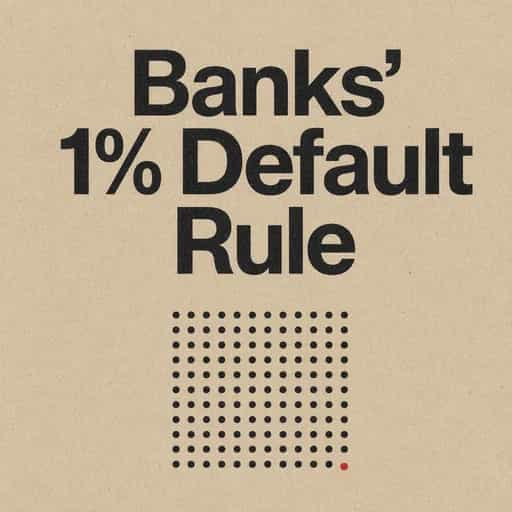
The One Percent Rule refers to the specific net present value (NPV) loss threshold used to determine regulatory default. Under Article 178 of the Capital Requirements Regulation, if a bank restructures a loan for a distressed borrower and the resulting loss exceeds one percent of the loan's value, the borrower is officially classified as being in default. This razor-thin margin serves as a critical threshold for risk managers and regulatory specialists within the European banking system.
The EBA/GL/2026/05 report represents a high-stakes review by the European Banking Authority regarding how banks identify bad loans. Despite potential expectations for loosened regulations to encourage lending, the EBA decided to maintain the strict one percent NPV loss threshold for debt restructurings. This ensures that any significant modification to loan terms for clients in financial trouble results in a formal default status, preserving the integrity of the financial system.
The European Banking Authority (EBA) chose to keep the NPV threshold at one percent to protect the market and ensure the integrity of the financial system. While the rule may seem rigid or punishing for banks and struggling borrowers, regulators argue that this strictness is necessary for accurately identifying when a loan has gone bad. By maintaining this standard, the EBA ensures consistent reporting of regulatory defaults across European banks under the Capital Requirements Regulation.
From Columbia University alumni built in San Francisco
"Instead of endless scrolling, I just hit play on BeFreed. It saves me so much time."
"I never knew where to start with nonfiction—BeFreed’s book lists turned into podcasts gave me a clear path."
"Perfect balance between learning and entertainment. Finished ‘Thinking, Fast and Slow’ on my commute this week."
"Crazy how much I learned while walking the dog. BeFreed = small habits → big gains."
"Reading used to feel like a chore. Now it’s just part of my lifestyle."
"Feels effortless compared to reading. I’ve finished 6 books this month already."
"BeFreed turned my guilty doomscrolling into something that feels productive and inspiring."
"BeFreed turned my commute into learning time. 20-min podcasts are perfect for finishing books I never had time for."
"BeFreed replaced my podcast queue. Imagine Spotify for books — that’s it. 🙌"
"It is great for me to learn something from the book without reading it."
"The themed book list podcasts help me connect ideas across authors—like a guided audio journey."
"Makes me feel smarter every time before going to work"
From Columbia University alumni built in San Francisco