BeFreed
    Categories>Career & Business>Corporate Law Amendments in India: Guide for Accountants

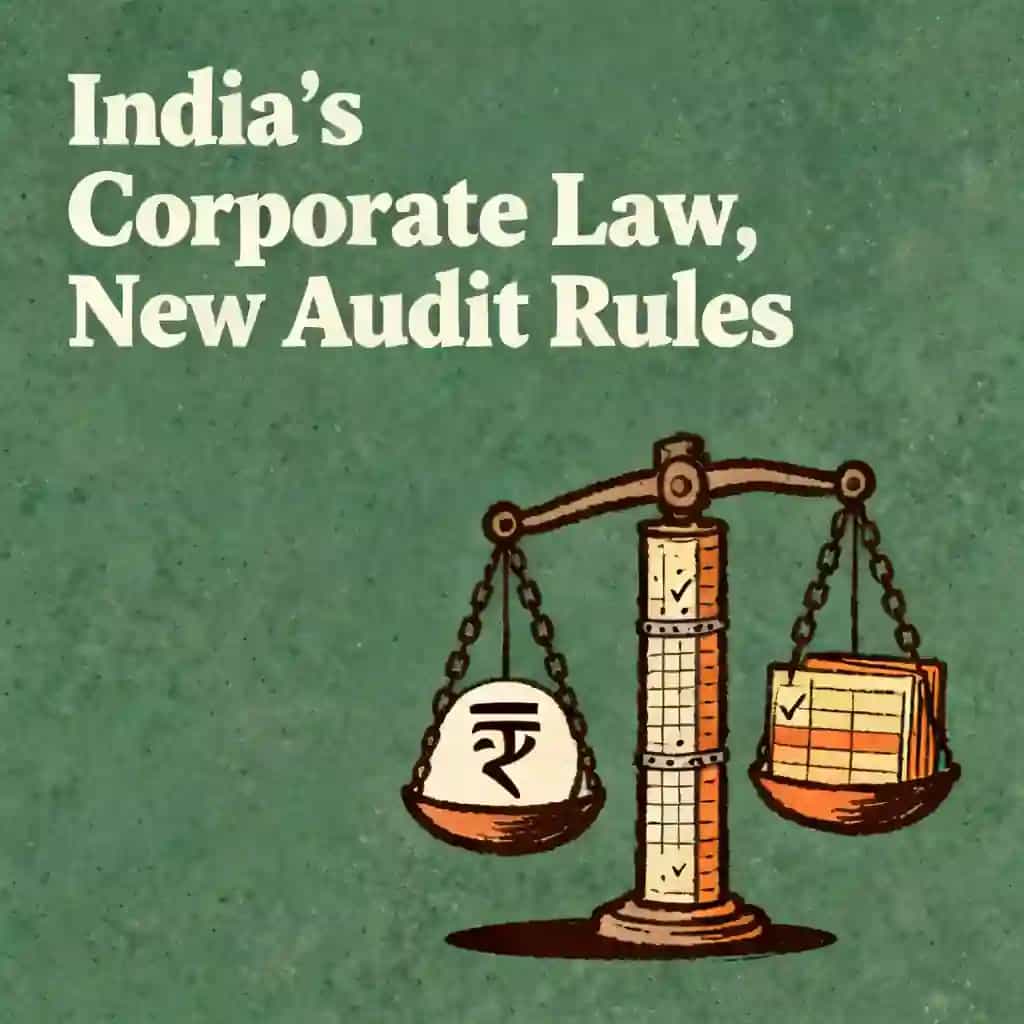
    Corporate Law Amendments in India: Guide for Accountants

    25 min
    |
    |
    Apr 9, 2026
    BusinessFinanceCorp Culture

    Master the latest corporate law amendments in India. Expert insights on company formation, directors' responsibilities, and shareholder rights for accountants.

    Corporate Law Amendments in India: Guide for Accountants

    Best quote from Corporate Law Amendments in India: Guide for Accountants

    “

    The 2026 Bill is basically a structural reset, moving away from a 'culture of fear' where minor paperwork errors could land you in jail toward a 'Responsibility-First' framework that prioritizes ease of doing business while holding professionals to a much higher standard of accountability.

    ”

    This audio lesson was created by a BeFreed community member

    Input question

    Expert insights on the latest corporate law amendments in India, focusing on company formation, directors' responsibilities, and shareholder rights, to help accountants advise their clients effectively


    Host voices
    Jacksonplay
    Niaplay
    Learning style
    Fun
    Knowledge sources
    Two Birds in a Tree
    Fair Pay, Fair Play
    Good Works!
    Prosperity
    Leadership Power Curve
    10 Minute Guide to Accounting for Non-Accountants (10 Minute Guides)

    Frequently Asked Questions

    Discover more

    Learn about business law subject for exam

    Learn about business law subject for exam

    LEARNING PLAN

    Learn about business law subject for exam

    This learning plan provides a comprehensive overview of the legal landscape governing modern commerce, essential for passing business law examinations. It is designed for students and aspiring professionals who need to master the intersection of legal frameworks and corporate operations.

    3 h 37 m•4 Sections
    Learn to audit compliance like an expert

    Learn to audit compliance like an expert

    LEARNING PLAN

    Learn to audit compliance like an expert

    Compliance auditing expertise is increasingly vital as organizations face growing regulatory complexity and scrutiny. This learning plan equips professionals with the technical knowledge and strategic perspective needed to conduct thorough audits, mitigate compliance risks, and advance their careers in audit and compliance roles.

    3 h 2 m•4 Sections
    Safe & Compliant Multi-Platform Reactions

    Safe & Compliant Multi-Platform Reactions

    LEARNING PLAN

    Safe & Compliant Multi-Platform Reactions

    In an era of strict digital regulations, brands must balance engagement with legal and ethical safety. This program is essential for social media managers and compliance officers looking to scale operations without risking their reputation.

    3 h 12 m•4 Sections
    CA & Finance: GST, Tax & Compliance Updates

    CA & Finance: GST, Tax & Compliance Updates

    LEARNING PLAN

    CA & Finance: GST, Tax & Compliance Updates

    This learning plan is essential for finance professionals and business owners navigating India's complex regulatory environment. It bridges the gap between traditional tax compliance and modern, AI-driven financial advisory roles.

    2 h 18 m•4 Sections
    Modern Work Politics: Machiavelli & 48 Laws

    Modern Work Politics: Machiavelli & 48 Laws

    LEARNING PLAN

    Modern Work Politics: Machiavelli & 48 Laws

    In high-stakes corporate environments, technical skill alone rarely guarantees advancement. This plan is designed for ambitious professionals who need to master the unspoken rules of influence and power dynamics to secure their seat at the table.

    2 h 34 m•4 Sections
    Review and Update Drive File Access Settings

    Review and Update Drive File Access Settings

    LEARNING PLAN

    Review and Update Drive File Access Settings

    In an era of increasing data breaches, mastering granular access control is essential for any professional handling sensitive information. This plan is designed for IT administrators and security-conscious managers who need to align their cloud storage habits with enterprise compliance and privacy standards.

    2 h 36 m•4 Sections
    Become legal leader & wellness YouTuber

    Become legal leader & wellness YouTuber

    LEARNING PLAN

    Become legal leader & wellness YouTuber

    This learning plan is designed for ambitious legal professionals who want to maximize their career success while building a meaningful second income stream through wellness content creation. It's perfect for lawyers who are passionate about health and wellness and want to share their knowledge with a broader audience, without sacrificing their legal career trajectory. By combining high-level legal leadership skills with modern content creation strategies, you'll create financial security, professional fulfillment, and lifestyle flexibility.

    2 h 4 m•4 Sections
    law

    law

    LEARNING PLAN

    law

    Legal knowledge is essential not only for aspiring lawyers but for informed citizens who wish to understand their rights and responsibilities. This learning plan provides a comprehensive foundation in legal principles and systems, benefiting those pursuing legal careers as well as professionals in adjacent fields requiring legal literacy.

    2 h 50 m•4 Sections

    From Columbia University alumni built in San Francisco

    BeFreed Brings Together A Global Community Of 1,000,000 Curious Minds
    See more on how BeFreed is discussed across the web

    "Instead of endless scrolling, I just hit play on BeFreed. It saves me so much time."

    @Moemenn
    platform
    star
    star
    star
    star
    star

    "I never knew where to start with nonfiction—BeFreed’s book lists turned into podcasts gave me a clear path."

    @Chloe, Solo founder, LA
    platform
    comments
    12
    likes
    117

    "Perfect balance between learning and entertainment. Finished ‘Thinking, Fast and Slow’ on my commute this week."

    @Raaaaaachelw
    platform
    star
    star
    star
    star
    star

    "Crazy how much I learned while walking the dog. BeFreed = small habits → big gains."

    @Matt, YC alum
    platform
    comments
    12
    likes
    108

    "Reading used to feel like a chore. Now it’s just part of my lifestyle."

    @Erin, Investment Banking Associate , NYC
    platform
    comments
    254
    likes
    17

    "Feels effortless compared to reading. I’ve finished 6 books this month already."

    @djmikemoore
    platform
    star
    star
    star
    star
    star

    "BeFreed turned my guilty doomscrolling into something that feels productive and inspiring."

    @Pitiful
    platform
    comments
    96
    likes
    4.5K

    "BeFreed turned my commute into learning time. 20-min podcasts are perfect for finishing books I never had time for."

    @SofiaP
    platform
    star
    star
    star
    star
    star

    "BeFreed replaced my podcast queue. Imagine Spotify for books — that’s it. 🙌"

    @Jaded_Falcon
    platform
    comments
    201
    thumbsUp
    16

    "It is great for me to learn something from the book without reading it."

    @OojasSalunke
    platform
    star
    star
    star
    star
    star

    "The themed book list podcasts help me connect ideas across authors—like a guided audio journey."

    @Leo, Law Student, UPenn
    platform
    comments
    37
    likes
    483

    "Makes me feel smarter every time before going to work"

    @Cashflowbubu
    platform
    star
    star
    star
    star
    star

    From Columbia University alumni built in San Francisco

    BeFreed Brings Together A Global Community Of 1,000,000 Curious Minds
    See more on how BeFreed is discussed across the web

    "Instead of endless scrolling, I just hit play on BeFreed. It saves me so much time."

    @Moemenn
    platform
    star
    star
    star
    star
    star

    "I never knew where to start with nonfiction—BeFreed’s book lists turned into podcasts gave me a clear path."

    @Chloe, Solo founder, LA
    platform
    comments
    12
    likes
    117

    "Perfect balance between learning and entertainment. Finished ‘Thinking, Fast and Slow’ on my commute this week."

    @Raaaaaachelw
    platform
    star
    star
    star
    star
    star

    "Crazy how much I learned while walking the dog. BeFreed = small habits → big gains."

    @Matt, YC alum
    platform
    comments
    12
    likes
    108

    "Reading used to feel like a chore. Now it’s just part of my lifestyle."

    @Erin, Investment Banking Associate , NYC
    platform
    comments
    254
    likes
    17

    "Feels effortless compared to reading. I’ve finished 6 books this month already."

    @djmikemoore
    platform
    star
    star
    star
    star
    star

    "BeFreed turned my guilty doomscrolling into something that feels productive and inspiring."

    @Pitiful
    platform
    comments
    96
    likes
    4.5K

    "BeFreed turned my commute into learning time. 20-min podcasts are perfect for finishing books I never had time for."

    @SofiaP
    platform
    star
    star
    star
    star
    star

    "BeFreed replaced my podcast queue. Imagine Spotify for books — that’s it. 🙌"

    @Jaded_Falcon
    platform
    comments
    201
    thumbsUp
    16

    "It is great for me to learn something from the book without reading it."

    @OojasSalunke
    platform
    star
    star
    star
    star
    star

    "The themed book list podcasts help me connect ideas across authors—like a guided audio journey."

    @Leo, Law Student, UPenn
    platform
    comments
    37
    likes
    483

    "Makes me feel smarter every time before going to work"

    @Cashflowbubu
    platform
    star
    star
    star
    star
    star

    "Instead of endless scrolling, I just hit play on BeFreed. It saves me so much time."

    @Moemenn
    platform
    star
    star
    star
    star
    star

    "I never knew where to start with nonfiction—BeFreed’s book lists turned into podcasts gave me a clear path."

    @Chloe, Solo founder, LA
    platform
    comments
    12
    likes
    117

    "Perfect balance between learning and entertainment. Finished ‘Thinking, Fast and Slow’ on my commute this week."

    @Raaaaaachelw
    platform
    star
    star
    star
    star
    star

    "Crazy how much I learned while walking the dog. BeFreed = small habits → big gains."

    @Matt, YC alum
    platform
    comments
    12
    likes
    108

    "Reading used to feel like a chore. Now it’s just part of my lifestyle."

    @Erin, Investment Banking Associate , NYC
    platform
    comments
    254
    likes
    17

    "Feels effortless compared to reading. I’ve finished 6 books this month already."

    @djmikemoore
    platform
    star
    star
    star
    star
    star

    "BeFreed turned my guilty doomscrolling into something that feels productive and inspiring."

    @Pitiful
    platform
    comments
    96
    likes
    4.5K

    "BeFreed turned my commute into learning time. 20-min podcasts are perfect for finishing books I never had time for."

    @SofiaP
    platform
    star
    star
    star
    star
    star

    "BeFreed replaced my podcast queue. Imagine Spotify for books — that’s it. 🙌"

    @Jaded_Falcon
    platform
    comments
    201
    thumbsUp
    16

    "It is great for me to learn something from the book without reading it."

    @OojasSalunke
    platform
    star
    star
    star
    star
    star

    "The themed book list podcasts help me connect ideas across authors—like a guided audio journey."

    @Leo, Law Student, UPenn
    platform
    comments
    37
    likes
    483

    "Makes me feel smarter every time before going to work"

    @Cashflowbubu
    platform
    star
    star
    star
    star
    star

    "Instead of endless scrolling, I just hit play on BeFreed. It saves me so much time."

    @Moemenn
    platform
    star
    star
    star
    star
    star

    "I never knew where to start with nonfiction—BeFreed’s book lists turned into podcasts gave me a clear path."

    @Chloe, Solo founder, LA
    platform
    comments
    12
    likes
    117

    "Perfect balance between learning and entertainment. Finished ‘Thinking, Fast and Slow’ on my commute this week."

    @Raaaaaachelw
    platform
    star
    star
    star
    star
    star

    "Crazy how much I learned while walking the dog. BeFreed = small habits → big gains."

    @Matt, YC alum
    platform
    comments
    12
    likes
    108

    "Reading used to feel like a chore. Now it’s just part of my lifestyle."

    @Erin, Investment Banking Associate , NYC
    platform
    comments
    254
    likes
    17

    "Feels effortless compared to reading. I’ve finished 6 books this month already."

    @djmikemoore
    platform
    star
    star
    star
    star
    star

    "BeFreed turned my guilty doomscrolling into something that feels productive and inspiring."

    @Pitiful
    platform
    comments
    96
    likes
    4.5K

    "BeFreed turned my commute into learning time. 20-min podcasts are perfect for finishing books I never had time for."

    @SofiaP
    platform
    star
    star
    star
    star
    star

    "BeFreed replaced my podcast queue. Imagine Spotify for books — that’s it. 🙌"

    @Jaded_Falcon
    platform
    comments
    201
    thumbsUp
    16

    "It is great for me to learn something from the book without reading it."

    @OojasSalunke
    platform
    star
    star
    star
    star
    star

    "The themed book list podcasts help me connect ideas across authors—like a guided audio journey."

    @Leo, Law Student, UPenn
    platform
    comments
    37
    likes
    483

    "Makes me feel smarter every time before going to work"

    @Cashflowbubu
    platform
    star
    star
    star
    star
    star
    1.5K Ratings4.7
    Start your learning journey, now
    BeFreed App
    BeFreed

    Learn Anything, Personalized

    DiscordLinkedIn
    Featured book summaries
    Crucial ConversationsThe Perfect MarriageInto the WildNever Split the DifferenceAttachedGood to GreatSay Nothing
    Trending categories
    Self HelpCommunication SkillRelationshipMindfulnessPhilosophyInspirationProductivity
    Celebrities' reading list
    Elon MuskCharlie KirkBill GatesSteve JobsAndrew HubermanJoe RoganJordan Peterson
    Award winning collection
    Pulitzer PrizeNational Book AwardGoodreads Choice AwardsNobel Prize in LiteratureNew York TimesCaldecott MedalNebula Award
    Featured Topics
    ManagementAmerican HistoryWarTradingStoicismAnxietySex
    Best books by Year
    2025 Best Non Fiction Books2024 Best Non Fiction Books2023 Best Non Fiction Books
    Featured authors
    Chimamanda Ngozi AdichieGeorge OrwellO. J. SimpsonBarbara O'NeillWinston ChurchillCharlie Kirk
    BeFreed vs other apps
    BeFreed vs. Other Book Summary AppsBeFreed vs. ElevenReaderBeFreed vs. ReadwiseBeFreed vs. Anki
    Learning tools
    Knowledge VisualizerAI Podcast Generator
    Information
    About Usarrow
    Pricingarrow
    FAQarrow
    Blogarrow
    Careerarrow
    Partnershipsarrow
    Ambassador Programarrow
    Directoryarrow
    BeFreed
    Try now
    © 2026 BeFreed
    Term of UsePrivacy Policy
    BeFreed

    Learn Anything, Personalized

    DiscordLinkedIn
    Featured book summaries
    Crucial ConversationsThe Perfect MarriageInto the WildNever Split the DifferenceAttachedGood to GreatSay Nothing
    Trending categories
    Self HelpCommunication SkillRelationshipMindfulnessPhilosophyInspirationProductivity
    Celebrities' reading list
    Elon MuskCharlie KirkBill GatesSteve JobsAndrew HubermanJoe RoganJordan Peterson
    Award winning collection
    Pulitzer PrizeNational Book AwardGoodreads Choice AwardsNobel Prize in LiteratureNew York TimesCaldecott MedalNebula Award
    Featured Topics
    ManagementAmerican HistoryWarTradingStoicismAnxietySex
    Best books by Year
    2025 Best Non Fiction Books2024 Best Non Fiction Books2023 Best Non Fiction Books
    Learning tools
    Knowledge VisualizerAI Podcast Generator
    Featured authors
    Chimamanda Ngozi AdichieGeorge OrwellO. J. SimpsonBarbara O'NeillWinston ChurchillCharlie Kirk
    BeFreed vs other apps
    BeFreed vs. Other Book Summary AppsBeFreed vs. ElevenReaderBeFreed vs. ReadwiseBeFreed vs. Anki
    Information
    About Usarrow
    Pricingarrow
    FAQarrow
    Blogarrow
    Careerarrow
    Partnershipsarrow
    Ambassador Programarrow
    Directoryarrow
    BeFreed
    Try now
    © 2026 BeFreed
    Term of UsePrivacy Policy

    Key Takeaways

    1

    The New Playbook for Corporate Law

    0:00

    Jackson: Nia, I was just looking at the new Corporate Laws Amendment Bill and my jaw dropped. Did you know that a director could actually face automatic disqualification now just because they forgot to update their KYC and their DIN lapsed?

    0:14

    Nia: It’s wild, right? The 2026 Bill is basically a structural reset. We’re moving away from the old "culture of fear" where minor paperwork errors could land you in jail. Now, over 40 offences have been decriminalized and replaced with civil penalties. It’s a massive shift toward "Ease of Doing Business," but the stakes for professional oversight have actually never been higher.

    0:36

    Jackson: Exactly, and for accountants, this is a total game-changer for client advisory. We’re talking about the small company turnover threshold doubling to 200 crore rupees and the CSR profit trigger jumping to 10 crore.

    0:50

    Nia: It’s a whole new playbook for 2026. Let’s dive into the "Ease of Doing Business" speed-round and see what’s actually changing on the ground.

    2

    Redefining the Small Company Advantage

    0:59

    Jackson: You know, Nia, starting with that "Ease of Doing Business" speed-round you mentioned—the change to the "small company" definition is probably the biggest headline for our accountant listeners. It’s not just a minor tweak—it’s a massive expansion of who gets to play by simpler rules.

    1:15

    Nia: It really is. By doubling those thresholds—moving the paid-up capital limit to 20 crore and the turnover limit all the way to 200 crore—the government has essentially handed a "compliance discount" to thousands of mid-sized enterprises. Imagine a client who was previously drowning in the requirements of a large company. Suddenly, they’re reclassified as "small." That changes their entire overhead.

    1:38

    Jackson: And it’s not just a label. Being a "small company" in 2026 means you only need one board meeting per calendar year instead of the usual quarterly grind. Plus, if they do mess up, the penalties are halved, capped at just 2 lakh for the company. That’s a huge safety net for a growing business.

    1:55

    Nia: Exactly. And let’s talk about the "Micro Company" category—that’s the new kid on the block. While we’re still waiting for the exact numbers to be notified, the Bill explicitly creates this tier for the tiniest entities. For an accountant, this is a huge advisory win. You can tell your smallest clients that the government is finally recognizing that a two-person startup shouldn't have the same paperwork as a multi-state corporation.

    2:17

    Jackson: Right, and one of the most practical "wins" in this category is the potential exemption from mandatory auditor appointments under Section 139. If a client qualifies, they could save anywhere from fifteen to fifty thousand rupees a year in statutory audit fees. For a micro-business, that’s real money that can go back into operations.

    2:37

    Nia: It’s a policy shift toward reducing the professional cost of compliance. But—and this is a big "but" for our listeners—it puts more pressure on the accountant to ensure the books are pristine. If there’s no mandatory statutory auditor looking over their shoulder, the internal accounting needs to be even more robust to avoid those civil penalties we talked about.

    2:57

    Jackson: That makes total sense. It’s like the government is saying, "We’ll stop breathing down your neck with audits if you’re small, but if you step out of line, the Recovery Officer is coming for the penalty."

    3:06

    Nia: Precisely. And speaking of simplified starts, even the incorporation process is getting a haircut. You no longer need a professional declaration from a CA or CS at the time of incorporation unless that professional was actually engaged to form the company. A declaration from the director named in the Articles is now enough.

    3:23

    Jackson: That’s a subtle but important move. It’s about removing friction. But it also means that as an accountant, if you are involved, your declaration really needs to mean something. You aren't just a rubber stamp anymore—you’re a strategic partner in the formation.

    3:40

    Nia: And it’s not just about getting started—it’s about staying agile. The Bill is leaning hard into the digital era. We’re talking about mandatory websites and email addresses for certain classes of companies. It’s the "Digital Governance" shift. Documents can now be served exclusively through electronic mode. No more piles of registered post if the company meets the criteria.

    4:00

    Jackson: I love that. It’s 2026—it’s about time the law caught up with how we actually work. But it does mean that "checking the company email" is now a legal necessity, not just a daily chore. If a notice is sent electronically, the law considers it served.

    1:55

    Nia: Exactly. It’s about transparency and speed. The notice period for virtual Extraordinary General Meetings has even been slashed from twenty-one days to just seven. If a company needs to make a quick move, the law is finally letting them move at the speed of business.

    3

    The Director’s New Accountability Framework

    4:31

    Jackson: Okay, so while the "Ease of Doing Business" stuff sounds great for the company, I noticed the Bill is actually getting a lot tougher on the people running the show. Specifically, the whole DIN—the Director Identification Number—situation. It seems like the "set it and forget it" days are over.

    4:49

    Nia: Oh, absolutely. This is a major trap for the unwary. Previously, you just needed a valid DIN at the time you were appointed. Now, the 2026 Bill makes it crystal clear—you must have a valid, active DIN throughout your entire tenure. If your DIN is deactivated because you missed your KYC filing, you are effectively disqualified from that moment.

    5:11

    Jackson: And the consequences aren't just a slap on the wrist. If a director continues to function knowing their DIN is deactivated or cancelled, they’re looking at a penalty of 5 lakh for a listed company or 2 lakh for others. That’s a personal liability, not something the company just pays off.

    5:27

    Nia: Right, and it gets even more serious with the new "Fit and Proper" mandate. Boards are now legally required to ensure that every director meets certain qualitative criteria. It’s no longer just about who has the capital or the connections—it’s about character and competence as defined by the government.

    5:44

    Jackson: That feels like a move borrowed from the banking sector. But I’m curious about the independence of directors. I saw that the "cooling-off" period rules have been tightened significantly.

    5:54

    Nia: They have. This is a big one for accountants to watch. If a person wants to be an Independent Director, they can't have been associated with the company—or its holding, subsidiary, or associate companies—in any capacity during the cooling-off period. The Bill explicitly expands this to the entire group structure. You can't just hop from being the auditor of a subsidiary to being an Independent Director on the main board.

    6:17

    Jackson: And that cooling-off period is three years, right?

    1:55

    Nia: Exactly. And here’s a new disqualification ground that will definitely affect our listeners: if you’ve served as an auditor, secretarial auditor, or even a registered valuer for a company in the last three years, you are disqualified from becoming a director there. It’s all about preventing those cozy "gatekeeper to board member" transitions that can compromise oversight.

    6:40

    Jackson: It’s about keeping the lines clear. But what happens if a director actually gets disqualified? I read something about "cascading disqualification" and it sounded pretty intense.

    6:51

    Nia: It is. It’s like a domino effect. If a director is disqualified because their company failed to file returns for just two consecutive financial years—down from three, by the way—that disqualification triggers a vacancy in every single company where that person holds a board seat.

    7:07

    Jackson: Wait, every company? Even the ones that are perfectly compliant?

    7:11

    Nia: Every single one. Now, the Bill does offer a six-month grace period before the office actually becomes vacant in those other companies. That’s the "safety window" to find a replacement. But the message is clear: if you’re a director, you are responsible for the compliance of every board you sit on. You can't just blame a "sleeping" board for your disqualification.

    7:29

    Jackson: That really raises the bar for independent directors who might sit on five or six boards. They need to be checking the filing status of every single one of them.

    3:06

    Nia: Precisely. And it’s not just directors. The Bill finally addresses the "non-director" Key Managerial Personnel—like the CFO or the Company Secretary. There’s now a formal, statutory process for their resignation. They give written notice to the board, and the board has to tell the Registrar.

    7:56

    Jackson: And if the board doesn't? I’ve seen cases where a company "holds onto" a resignation to avoid looking unstable.

    8:03

    Nia: Then the KMP can go directly to the Registrar themselves. They can send a copy of the resignation with their reasons. It’s a huge protection for professionals who want to exit a troubled company without being tied to future defaults. But remember—they remain liable for everything that happened during their tenure. You can't just resign to escape the consequences of a past mistake.

    8:22

    Jackson: It’s about clean exits. And speaking of exits, the Bill also shortens the leash on "Additional Directors." They used to be able to hang around for a while, but now they hold office only until the next general meeting or for three months—whichever is earlier.

    8:39

    Nia: It’s all about keeping the shareholders in the loop. You can't have "temporary" directors running the show indefinitely without a shareholder vote. It’s a tightening of the governance screws across the board.

    4

    The Shift to Civil Penalties and the Recovery Officer

    8:50

    Jackson: So, Nia, we keep talking about these "civil penalties." On the surface, it sounds like a relief—moving away from the threat of jail time for procedural mistakes. But when I look at the new enforcement mechanism, it actually feels like the government is getting much better at collecting.

    9:07

    Nia: You’ve hit the nail on the head. Decriminalization doesn't mean "deregulation." It means the government is swapping a slow, clunky criminal court process for a fast, efficient administrative one. And the "Recovery Officer" is the new enforcer in town.

    9:22

    Jackson: Right, Section 454B. I was reading that this officer has powers similar to an Income Tax officer. They can attach bank accounts, seize movable or immovable property—they can even arrest you if you refuse to pay a penalty.

    9:36

    Nia: It’s serious business. The logic is: "We won't put you in jail for filing your form late, but if we fine you for it and you don't pay, then we’ll come for your assets." It’s a much more effective way to ensure compliance than the old system where criminal cases would just languish in court for a decade.

    9:52

    Jackson: And for our accountant listeners, this means they need to be very clear with their clients. A "civil penalty" isn't something you can just ignore or negotiate away easily. Especially with the new "Specified Authority" for settlement.

    1:55

    Nia: Exactly. The Bill introduces a formal settlement process under Section 454C. It’s like a "fast-track" for fixing mistakes. If a company realizes they’ve messed up, they can apply to settle before the penalty order is even passed. It’s a way to avoid the whole litigation headache, pay a prescribed sum, and move on. But—and this is key—once you settle, you can't appeal. It’s a "one and done" deal.

    10:29

    Jackson: It’s about taking responsibility early. But what if you do want to appeal? I saw there’s a new "pre-deposit" requirement.

    10:36

    Nia: This is going to frustrate some people, but it’s designed to stop frivolous appeals. If you want to appeal an order from the NFRA or a Valuation Authority, you have to deposit ten percent of the penalty amount upfront. It’s very similar to the GST regime. It ensures that only those with a genuine case—and the funds to back it up—clog the appellate system.

    10:56

    Jackson: So, pay to play, essentially. It really emphasizes the need for getting it right the first time. And the "Small Company" protections we talked about earlier—those apply to penalties too, right?

    11:07

    Nia: They do. Small companies, One Person Companies, and startups only pay half the usual penalty. But even "half" of some of these new penalties can be a lot. For example, a violation of Section 26 regarding a prospectus is now a fixed 2 lakh penalty. For a small company, that’s still a 1 lakh hit.

    11:26

    Jackson: And the threshold for fraud is also moving. I saw that Section 447—the "big one" for fraud—is being updated for inflation.

    11:34

    Nia: Right. Serious fraud now has a 1 crore threshold. If the fraud is below 25 lakh—up from 10 lakh—it falls into a "lesser" category. But don't let that fool you. Imprisonment for up to ten years is still very much on the table for the most egregious cases. Decriminalization is for the "whoops, I forgot a form" crowd, not the "I’m siphoning funds" crowd.

    11:55

    Jackson: That’s a very important distinction. The government is being "business-friendly" to law-abiding corporates but keeping the hammer ready for actual criminals.

    12:04

    Nia: And they’re also giving more power to the Regional Directors. They can now compound offences with fines up to 1 crore. That used to be a much lower limit. It means more cases can be resolved at the regional level without having to go to the NCLT. It’s all about clearing the backlog and making the system move faster.

    12:21

    Jackson: Faster resolution, but stricter enforcement of the result. It sounds like accountants are going to be spending a lot more time in "adjudication mode" than "litigation mode."

    12:31

    Nia: Absolutely. Your role as an advisor is shifting from "how do we fight this in court" to "how do we use the settlement framework to minimize the damage and get back to business." It’s a much more strategic, proactive way of handling legal trouble.

    5

    Modernizing Capital and Rewarding Talent

    12:45

    Jackson: Let’s pivot to something a bit more exciting for growth-stage companies—capital structuring. I was fascinated by the recognition of RSUs and SARs. For the longest time, it felt like ESOPs were the only game in town under Indian law.

    12:59

    Nia: It really was a "legal grey zone" for anything other than a traditional ESOP. But the 2026 Bill finally brings the Companies Act into the 21st century by formally recognizing Restricted Stock Units and Stock Appreciation Rights. This is a huge deal for the startup ecosystem.

    13:16

    Jackson: Because it gives them more tools to attract talent, right? Instead of just saying "here’s an option to buy," they can offer something that tracks the actual value of the shares without necessarily requiring the employee to shell out cash for the exercise price.

    1:55

    Nia: Exactly. RSUs give you the full value of the share after a vesting period, and SARs give you a bonus based on the increase in share price. By putting these in the law—specifically under Section 42 and 62—the government is saying, "We see how global tech companies reward people, and we want Indian companies to be able to do the same."

    13:49

    Jackson: And it helps with compliance too, because now there’s a clear framework for how these should be issued and disclosed. No more trying to "fit" an RSU into an ESOP-shaped hole in the regulations.

    11:34

    Nia: Right. And speaking of flexibility, the share buy-back rules are getting a major overhaul. This is something accountants should definitely flag for their clients. If a company is "debt-free"—as prescribed by the rules—they can now do two buy-backs in a single year.

    14:16

    Jackson: Two in a year? I thought the rule was a one-year cooling-off period between buy-backs.

    14:21

    Nia: It was! But now, if you wait six months between the closure of one and the start of another, you can go again. It’s all about returning value to shareholders more efficiently. And they’ve even removed the requirement for a verified affidavit for the declaration of solvency. It’s moving toward a self-declaration format.

    14:38

    Jackson: Less red tape, more speed. I’m also seeing some interesting moves for companies in the IFSC—the International Financial Services Centres, like GIFT City.

    14:48

    Nia: Oh, the IFSC provisions are a total game-changer for global alignment. Under the new Section 43A, companies in an IFSC jurisdiction can actually issue and maintain their share capital in foreign currencies—like USD or Euros. They can even keep their books and financial statements in that currency.

    15:05

    Jackson: That’s massive. It removes that huge operational headache of constantly converting everything back to INR just for the sake of the ROC filing. It makes India a much more attractive hub for global funds and financial entities.

    15:19

    Nia: It really positions GIFT City to compete with places like Dubai or Singapore. And the LLP framework is getting the same treatment. There’s a whole new "Fifth Schedule" for the LLP Act that allows for "Specified IFSC LLPs." They get the same foreign currency benefits.

    15:33

    Jackson: And I saw there’s even a pathway for trusts to convert into LLPs.

    Nia: Yes! This is specifically for SEBI or IFSCA-registered trusts—like many Alternative Investment Funds. Previously, there was no clear statutory way for a trust to become an LLP. Now, they have a clear conversion route. The assets and liabilities transfer automatically, and the trust is deemed dissolved.

    15:57

    Jackson: That’s a huge relief for fund managers who want the limited liability and pass-through taxation of an LLP but started out as a trust because that was the standard at the time.

    16:07

    Nia: It’s about giving businesses the right "vehicle" for their stage of growth. Whether it’s modernizing how they pay employees or how they manage their capital across borders, the 2026 reforms are all about providing structural flexibility.

    6

    The Professional’s New Watchdogs: NFRA and IBBI

    16:21

    Jackson: We can't talk about these reforms without looking at the "gatekeepers." The National Financial Reporting Authority—the NFRA—seems to be transforming from a "watchdog" into a full-blown "enforcer" with some very sharp teeth.

    16:36

    Nia: "Sharp teeth" is an understatement. The Bill turns the NFRA into a body corporate with the power to sue, be sued, and—most importantly—to issue binding directions in the public interest. It’s moving toward a SEBI-style regulatory model for auditors.

    16:52

    Jackson: And I noticed a really striking new power: mandatory registration for auditors.

    16:57

    Nia: Right, Section 132A. If you’re an auditor for a listed company or a large public interest entity, you must register with the NFRA. And they can now levy their own fees and make their own regulations. They’re no longer just an arm of the government; they’re an independent, self-sustaining regulator with their own "NFRA Fund."

    17:17

    Jackson: And the penalties for auditors who step out of line... they’re not just financial anymore, are they?

    Nia: No. The NFRA can now order "mandatory professional training." Imagine being a senior partner at a firm and being legally ordered to go back to school because the NFRA found your audit quality lacking. That’s a huge reputational hit. They can also issue public censures or warnings, which can show up in future empanelment checks.

    17:42

    Jackson: And there’s a real threat of jail time now, too.

    17:45

    Nia: For non-compliance with an NFRA order, yes. Section 132(4A) introduces imprisonment for up to six months for individuals—meaning the signing partners—who fail to comply or pay penalties. It’s a "zero tolerance" approach to audit quality.

    18:01

    Jackson: It’s definitely a new era for CAs. And it’s not just the NFRA. The IBBI—the Insolvency and Bankruptcy Board of India—is now the official "Valuation Authority."

    18:13

    Nia: This is a major consolidation. By putting all "registered valuers" under the IBBI, the government is professionalizing the entire valuation sector. If you’re doing a valuation under the Companies Act—say, for a merger or a share issuance—you must be a "registered valuer" registered with the IBBI.

    18:31

    Jackson: And the stakes for getting a valuation wrong are high. I saw penalties for "fraudulent valuation" can include imprisonment for up to a year and fines up to 25 lakh.

    18:42

    Nia: It’s about ensuring that those "fair value" numbers we see in reports are actually fair. The IBBI will now monitor and enforce valuation standards just like the NFRA does for audit standards. For an accountant, this means you need to be much more careful about whose valuation report you’re relying on. You need to verify their IBBI registration and standing.

    19:02

    Jackson: It’s a theme we keep seeing: "We’ll give you ease of doing business, but we’re going to hold the professionals to a much higher standard of accountability."

    1:55

    Nia: Exactly. Even the "Non-Audit Services" rules are getting stricter. Auditors of certain classes of companies are now barred from providing non-audit services—like consulting or tax advisory—to that company, its holding, or its subsidiaries. And that ban stays in place for three years after their audit tenure ends.

    19:30

    Jackson: Wow, a three-year cooling-off period for consulting? That’s going to fundamentally change the business model for many mid-sized accounting firms. They’ll have to choose: do we want the audit fee or the consulting fee?

    19:43

    Nia: It’s about total independence. The government wants to ensure that an auditor is never "grading their own homework" or pulling their punches on an audit because they want to keep a lucrative consulting contract. It’s a "clean house" approach to corporate governance.

    7

    Practical Playbook: Three Things to Tell Your Clients Tomorrow

    19:58

    Jackson: Nia, we’ve covered a massive amount of ground. From the "Small Company" expansion to the Recovery Officer and the new RSU framework. If you’re an accountant listening to this, you’re probably thinking, "Okay, where do I start?"

    20:12

    Nia: It can be overwhelming, so let’s distill it down. If I were sitting down with a client tomorrow, the first thing I’d do is a "DIN Health Check."

    20:12

    Jackson: Right, because of that "active throughout tenure" rule.

    1:55

    Nia: Exactly. Every single director needs to verify their DIN status on the MCA portal immediately. If they’ve missed their DIR-3 KYC and their DIN is deactivated, they are walking into a legal minefield. They need to fix that before the 2026 Bill’s provisions fully kick in and trigger automatic disqualifications.

    20:33

    Jackson: That’s a great "quick win" for an advisor. What’s number two?

    20:38

    Nia: Re-evaluate their "Small Company" status. With the turnover limit moving to 200 crore, a lot of companies that were previously in the "expensive" compliance bracket are about to get some serious relief. Accountants should map out exactly which of their clients now qualify and what that means for their board meeting schedule and audit requirements.

    20:56

    Jackson: And potentially save them a lot of money in the process.

    1:55

    Nia: Exactly. And the third thing? Audit their CSR obligations. With the profit threshold doubling to 10 crore, many mid-sized clients might find they no longer have a mandatory spend.

    21:09

    Jackson: But you have to be careful with that one, right? Don't just tell them to stop their social programs.

    21:15

    Nia: Right! It’s about "compliance relief," not "social abandonment." If they want to keep their CSR programs going, they should! But they might be able to disband their formal CSR Committee if their spend is under 1 crore, which reduces the administrative burden. It’s about making the program more about the impact and less about the paperwork.

    21:33

    Jackson: I’d add a fourth one for our startup-heavy listeners: start looking at those RSU and SAR plans. If they’ve been holding off on equity-linked compensation because of legal uncertainty, the door is now wide open.

    21:46

    Nia: That’s a fantastic point. It’s a great time to help a client design a modern talent retention strategy that’s fully compliant with the new Section 42 framework. It positions the accountant as a "growth partner," not just a "compliance checker."

    21:58

    Jackson: And for the accountants themselves—they need to be looking at their own independence. If they’re planning on joining a client’s board or providing consulting services to an audit client, they need to map out those new three-year cooling-off periods.

    12:31

    Nia: Absolutely. Your own "business of being an accountant" is changing just as much as your clients' businesses. Staying ahead of the NFRA registration and the new "Professional Misconduct" definitions is going to be your biggest internal priority.

    22:28

    Jackson: It really is a proactive era. You can't just wait for the year-end audit to fix things. With the Recovery Officer and the two-year non-filing disqualification trigger, the margin for error has basically vanished.

    22:41

    Nia: It’s about "Real-Time Compliance." Use those new digital governance tools—the websites, the electronic notices—to keep your clients on track every single month.

    8

    Closing Reflection and the Road Ahead

    22:51

    Jackson: Nia, this has been a fascinating look at the 2026 reforms. It feels like we’re moving toward a more mature, trust-based corporate ecosystem. The government is saying, "We trust you to run your business, and we’ll make it easier for you to do so, but if you break that trust, the consequences will be swift and personal."

    23:11

    Nia: That’s the perfect summary. It’s a "Responsibility-First" framework. By decriminalizing the small stuff, the law is finally distinguishing between an honest mistake and a deliberate fraud. But it puts the onus on the directors and their professional advisors to maintain that standard of ethical governance.

    23:27

    Jackson: And for our listeners—the accountants and advisors—this is your moment to shine. You are the ones who translate these hundreds of pages of legal text into actionable strategy for your clients. You’re the ones who navigate the "twilight phase" of insolvency to protect creditors, and you’re the ones who ensure that a company’s digital governance is actually secure.

    23:48

    Nia: It’s a high-energy, high-stakes time to be in this profession. My final thought for everyone listening is this: the 2026 Bill isn't just a list of rules; it’s a reflection of where India is going. It’s more global, more digital, and much more focused on specialized accountability.

    4:00

    Jackson: I love that. It’s about being part of that "New Era" for the Companies Act. So, to everyone listening, take a look at your client list this afternoon. Who’s your first "DIN Health Check" call? Who’s your first "Small Company" success story?

    24:17

    Nia: Start with one client, one check, and one conversation. The more proactive you are now, the more you’ll be seen as the indispensable advisor your clients need in this new landscape.

    1:55

    Jackson: Exactly. It’s about turning these legal changes into competitive advantages for the businesses you serve.

    24:35

    Nia: Thank you all for joining us for this deep dive into the Corporate Laws Amendment Bill of 2026. It’s been a pleasure exploring these shifts with you.

    24:43

    Jackson: We hope you walk away with at least one or two concrete actions you can take today to help your clients win in this new regulatory environment. Take some time to reflect on how these "Fit and Proper" criteria might change the way you advise boards in the coming year.

    12:31

    Nia: Absolutely. Governance is a journey, not a destination. Thanks again for listening, and for your commitment to keeping India’s corporate heart beating strong and ethical. Reflect on what we’ve discussed and see where you can make the biggest impact tomorrow.

    More like this

    podcast cover
    RewiredPrivacy Is PowerThe Phoenix ProjectThe polyester prince
    27 sources
    India's DPDP Act: Why Compliance Is Harder Than You Think
    With ₹250 crore penalties looming, the DPDP Act 2023 changes how data is handled. Learn the roadmap to meet the 2027 deadline and protect your business.
    20 min
    podcast cover
    The Financial Numbers GameThe Balanced ScorecardProfit FirstThe Grid
    30 sources
    Mastering Financial Governance: From Compliance to Strategy
    Discover how the latest AI-driven GRC tools and integrated platforms are transforming financial governance from a manual burden into a 40% faster strategic powerhouse.
    29 min
    podcast cover
    Fair Pay, Fair PlayHouse of LiesBusiness AdventuresPlain Talk
    15 sources
    Corporate Controls: Safeguard or Burden?
    Explore the sophisticated control systems in Italian corporations that serve as strategic assets rather than mere bureaucratic requirements, potentially preventing financial scandals through proper governance.
    41 min
    podcast cover
    ProsperityGoliathLife without lawyersCurse of Bigness
    16 sources
    Corporate personhood and why it makes accountability hard
    We treat companies like people to protect owners, but this legal shield creates a gap in accountability. Learn how this fiction shapes our economy.
    24 min
    podcast cover
    What To Do When Machines Do EverythingHow to Stay Smart in a Smart WorldBuilding Secure and Reliable SystemsThe Automation Advantage
    21 sources
    AI's Compliance Revolution: Beyond Checkbox GRC
    Discover how AI platforms are transforming compliance from manual spreadsheets to automated 'Systems of Action,' saving teams hours weekly while enabling real-time risk management—though certifications still require time to prove effectiveness.
    30 min
    podcast cover
    The Personal MBAThe Art of the StartThe 22 Immutable Laws of MarketingProfit First
    23 sources
    Navigating Commercial Law Fundamentals
    An exploration of commercial law's evolution from medieval merchant guilds to modern global business regulations, examining how it structures entrepreneurship and business relationships across all scales.
    36 min
    book cover
    Careless People
    Sarah Wynn-Williams
    Banned Meta expose reveals tech giant's darkest corporate secrets
    8 min
    book cover
    Barbarians at the Gate
    Bryan Burrough
    A gripping account of corporate greed and the largest takeover in Wall Street history during the 1980s.
    10 min