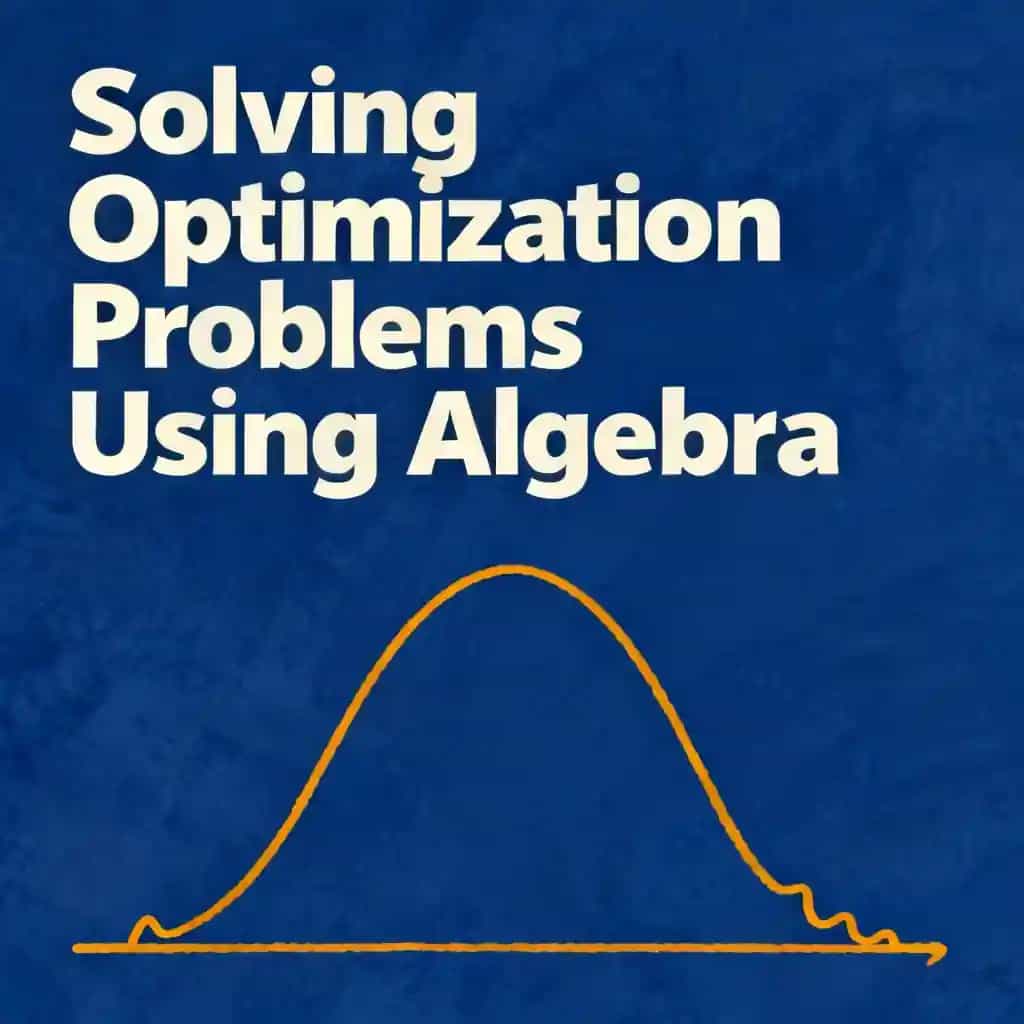
The Calculus of Life: Modeling Biomedical Systems
Discover how multivariable calculus and differential equations decode biological mysteries, from the growth of malignant tumors to the diffusion of nutrients across cell membranes.

Best quote from The Calculus of Life: Modeling Biomedical Systems
The math doesn't simplify the disease; it illuminates it by giving us a way to see the invisible forces—like the pressure pushing drugs out of a tumor or the chemotactic pull that leads a new blood vessel toward a starving cell.
Generated by Freedee_147F5E04
Calculus 2 and 3, biomedical applications

Frequently Asked Questions
This limitation is known as a mathematical bottleneck caused by the limits of diffusion. In the early avascular stage, the rate at which tumor cells consume nutrients like oxygen and glucose is much higher than the rate at which those nutrients can diffuse through the tissue from the outside. As the tumor grows, the center becomes too far from the nutrient source, leading to a "starvation" zone. This creates a three-layer structure consisting of a dividing outer rim, a struggling middle hypoxic zone, and a necrotic core where cells have died due to a lack of life-sustaining nutrients.
The angiogenic switch is the transition where a starving tumor begins recruiting its own blood supply to overcome diffusion limits. Mathematically, this is modeled using reaction-diffusion equations involving Tumor Angiogenic Factors (TAF). When nutrient levels drop below a specific hypoxic threshold, the tumor cells act as a "source term," secreting TAF that creates a concentration gradient. The model uses vector calculus to show how nearby blood vessels sense this gradient and grow toward the highest concentration of the signal to provide the tumor with a private nutrient supply.
This is known as the Dll4 (Delta-like ligand 4) paradox. In a healthy system, Dll4 acts as a "stop sign" to keep blood vessel growth organized. If this signaling is blocked, "hyper-sprouting" occurs, creating a massive, dense forest of capillaries. However, mathematical models show that these networks are non-functional, twisted, and "tortuous," meaning blood does not actually flow through them effectively. Because the functionality of the network drops, the nutrient production rate decreases, leaving the tumor hypoxic despite being surrounded by vessels.
This failure is often a result of "transport physics" rather than biology. Because tumors are dense and their new blood vessels are leaky, fluid builds up inside the mass, creating high interstitial fluid pressure. While the drug tries to move into the tumor based on a concentration gradient, the high pressure creates a "counter-flux" that pushes the fluid and the drug back out. Calculus models this as "porous media flow," illustrating that the pressure gradient can be strong enough to physically block the drug from penetrating the tumor's core.
The Game Theory approach, or Adaptive Therapy, moves away from the goal of killing every cancer cell with a maximum dose, which often inadvertently clears space for drug-resistant cells to take over. Instead, doctors use differential equations to find a "stability point" where a small population of drug-sensitive cells is intentionally left alive. These sensitive cells act as a buffer, out-competing the more aggressive resistant cells for limited nutrients and space, thereby managing and containing the tumor's growth over a longer period.
From Columbia University alumni built in San Francisco
"Instead of endless scrolling, I just hit play on BeFreed. It saves me so much time."


"I never knew where to start with nonfiction—BeFreed’s book lists turned into podcasts gave me a clear path."


"Perfect balance between learning and entertainment. Finished ‘Thinking, Fast and Slow’ on my commute this week."
"Crazy how much I learned while walking the dog. BeFreed = small habits → big gains."
"Reading used to feel like a chore. Now it’s just part of my lifestyle."

"Feels effortless compared to reading. I’ve finished 6 books this month already."
"BeFreed turned my guilty doomscrolling into something that feels productive and inspiring."

"BeFreed turned my commute into learning time. 20-min podcasts are perfect for finishing books I never had time for."
"BeFreed replaced my podcast queue. Imagine Spotify for books — that’s it. 🙌"

"It is great for me to learn something from the book without reading it."
"The themed book list podcasts help me connect ideas across authors—like a guided audio journey."
"Makes me feel smarter every time before going to work"
From Columbia University alumni built in San Francisco
"Instead of endless scrolling, I just hit play on BeFreed. It saves me so much time."
"I never knew where to start with nonfiction—BeFreed’s book lists turned into podcasts gave me a clear path."
"Perfect balance between learning and entertainment. Finished ‘Thinking, Fast and Slow’ on my commute this week."
"Crazy how much I learned while walking the dog. BeFreed = small habits → big gains."
"Reading used to feel like a chore. Now it’s just part of my lifestyle."
"Feels effortless compared to reading. I’ve finished 6 books this month already."
"BeFreed turned my guilty doomscrolling into something that feels productive and inspiring."
"BeFreed turned my commute into learning time. 20-min podcasts are perfect for finishing books I never had time for."
"BeFreed replaced my podcast queue. Imagine Spotify for books — that’s it. 🙌"
"It is great for me to learn something from the book without reading it."
"The themed book list podcasts help me connect ideas across authors—like a guided audio journey."
"Makes me feel smarter every time before going to work"
"Instead of endless scrolling, I just hit play on BeFreed. It saves me so much time."
"I never knew where to start with nonfiction—BeFreed’s book lists turned into podcasts gave me a clear path."
"Perfect balance between learning and entertainment. Finished ‘Thinking, Fast and Slow’ on my commute this week."
"Crazy how much I learned while walking the dog. BeFreed = small habits → big gains."
"Reading used to feel like a chore. Now it’s just part of my lifestyle."
"Feels effortless compared to reading. I’ve finished 6 books this month already."
"BeFreed turned my guilty doomscrolling into something that feels productive and inspiring."
"BeFreed turned my commute into learning time. 20-min podcasts are perfect for finishing books I never had time for."
"BeFreed replaced my podcast queue. Imagine Spotify for books — that’s it. 🙌"
"It is great for me to learn something from the book without reading it."
"The themed book list podcasts help me connect ideas across authors—like a guided audio journey."
"Makes me feel smarter every time before going to work"
"Instead of endless scrolling, I just hit play on BeFreed. It saves me so much time."
"I never knew where to start with nonfiction—BeFreed’s book lists turned into podcasts gave me a clear path."
"Perfect balance between learning and entertainment. Finished ‘Thinking, Fast and Slow’ on my commute this week."
"Crazy how much I learned while walking the dog. BeFreed = small habits → big gains."
"Reading used to feel like a chore. Now it’s just part of my lifestyle."
"Feels effortless compared to reading. I’ve finished 6 books this month already."
"BeFreed turned my guilty doomscrolling into something that feels productive and inspiring."
"BeFreed turned my commute into learning time. 20-min podcasts are perfect for finishing books I never had time for."
"BeFreed replaced my podcast queue. Imagine Spotify for books — that’s it. 🙌"
"It is great for me to learn something from the book without reading it."
"The themed book list podcasts help me connect ideas across authors—like a guided audio journey."
"Makes me feel smarter every time before going to work"