Spanish kingdoms and the rise of Castile
Struggling to track Spain's complex origins? Explore how divided taifas and frontier counties became a unified power through centuries of shifting borders.
Best quote from Spanish kingdoms and the rise of Castile
The history of the Spanish kingdoms teaches us that 'inevitability' is a myth; the outcome was never certain for those living through it. It was a centuries-long process of cultural synthesis where even in conflict, different faiths and cultures were constantly learning from each other to create something stronger.
Generated by Freedee_08C6A32A
History of the kingdoms of Spain, examples: Castile, Leon, Cordova etc

Frequently Asked Questions
The Visigothic Kingdom fell rapidly due to internal decay and a fractured political system based on an elective monarchy, which caused constant infighting among the nobility. When King Wittiza died in 710, the kingdom split between his son Achila and the nobleman Roderic. This internal division led the Wittiza faction to allegedly seek help from external forces, facilitating the crossing of Umayyad commander Ṭāriq ibn Ziyād. The betrayal was finalized at the Battle of Guadalete, where portions of Roderic’s army deserted or joined the invaders, leaving the kingdom leaderless.
These terms describe populations that lived between the Islamic and Christian worlds. Mozarabs were Christians living under Muslim rule in al-Andalus who adopted Arabic language and customs while maintaining their Christian faith and Latin liturgy. Conversely, Mudéjars were Muslims who remained in territories reconquered by Christian kingdoms. The Mudéjars played a vital role in Spanish culture, as their architectural techniques—such as intricate brickwork and tilework—created a distinct artistic style that defines much of historic Spanish architecture.
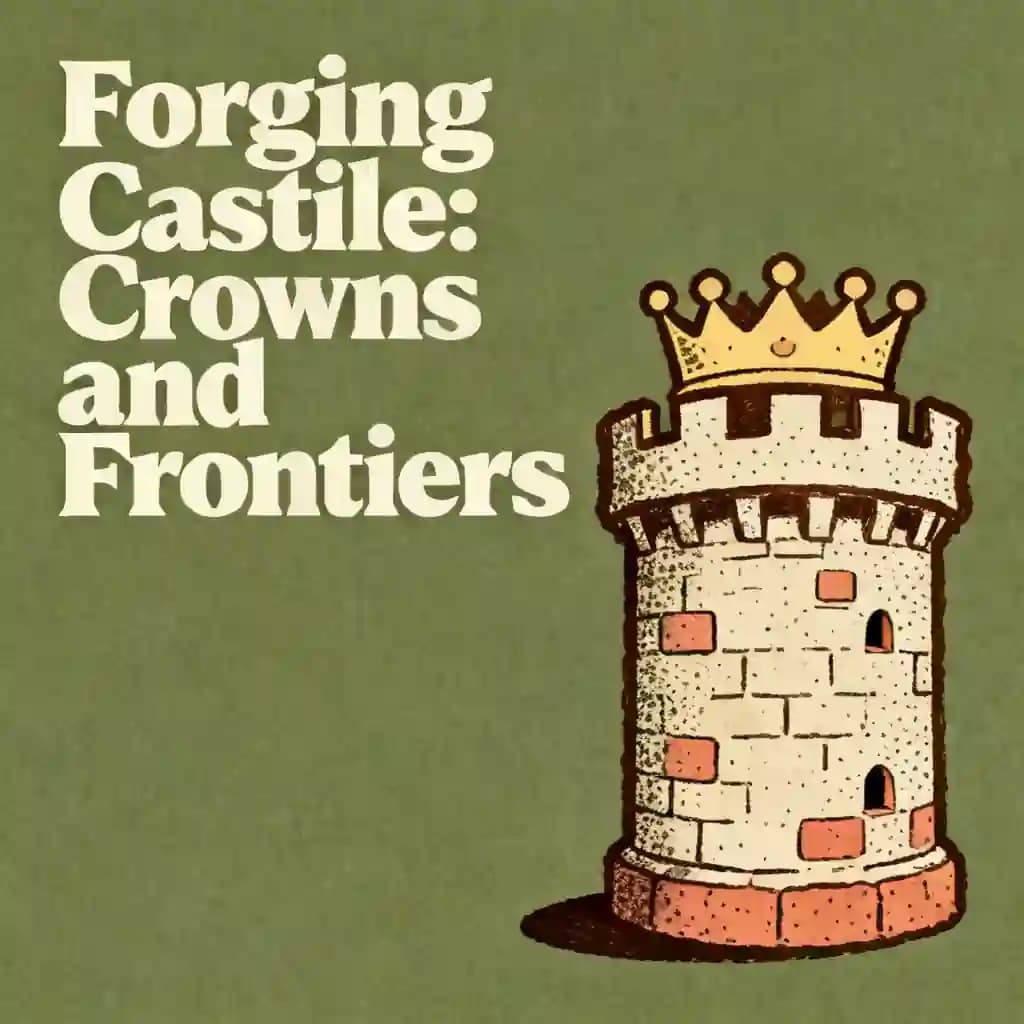
Castile began as a collection of small frontier counties on the edges of the Kingdom of León. Because it was a dangerous "no man's land" subject to frequent raids from the south, the region was heavily fortified with defensive towers, giving it the name "Castella." This environment fostered a gritty, independent society of soldier-farmers who were granted land in exchange for military service. Over time, leaders like Fernán González sought independence from León, and the kingdom eventually grew through the "Reconquista," fueled by "parias" (protection money) paid by weakened Islamic Taifa states.
The Taifa period began after the collapse of the Córdoba Caliphate in 1031, which resulted in the peninsula fracturing into nearly fifty small, independent kingdoms. While this era was a time of immense cultural and artistic brilliance—as rival kings competed to have the grandest palaces and best poets—it was a time of fatal military weakness. The lack of social cohesion, or "asabiyya," made these small states vulnerable to the northern Christian kingdoms, to whom they paid massive tributes in gold, inadvertently funding the very powers that would eventually conquer them.
Granada survived as a lonely outpost primarily through a combination of geography, diplomacy, and internal Christian chaos. As a mountain refuge, it saw an influx of talented artisans and scholars fleeing fallen cities like Seville, which concentrated the region's wealth and skill. The Nasrid kings maintained their independence by paying heavy tributes to Castile and skillfully playing different Christian factions against one another. It was only when Isabella of Castile and Ferdinand of Aragon united their crowns in 1469 that the Christians had the unified resources and stability necessary to launch the final successful campaign against Granada in 1492.
From Columbia University alumni built in San Francisco
BeFreed Brings Together A Global Community Of Curious Minds


"Instead of endless scrolling, I just hit play on BeFreed. It saves me so much time."


"I never knew where to start with nonfiction—BeFreed’s book lists turned into podcasts gave me a clear path."


"Perfect balance between learning and entertainment. Finished ‘Thinking, Fast and Slow’ on my commute this week."
"Crazy how much I learned while walking the dog. BeFreed = small habits → big gains."
"Reading used to feel like a chore. Now it’s just part of my lifestyle."

"Feels effortless compared to reading. I’ve finished 6 books this month already."
"BeFreed turned my guilty doomscrolling into something that feels productive and inspiring."

"BeFreed turned my commute into learning time. 20-min podcasts are perfect for finishing books I never had time for."
"BeFreed replaced my podcast queue. Imagine Spotify for books — that’s it. 🙌"

"It is great for me to learn something from the book without reading it."
"The themed book list podcasts help me connect ideas across authors—like a guided audio journey."
"Makes me feel smarter every time before going to work"
From Columbia University alumni built in San Francisco
BeFreed Brings Together A Global Community Of Curious Minds
"Instead of endless scrolling, I just hit play on BeFreed. It saves me so much time."
"I never knew where to start with nonfiction—BeFreed’s book lists turned into podcasts gave me a clear path."
"Perfect balance between learning and entertainment. Finished ‘Thinking, Fast and Slow’ on my commute this week."
"Crazy how much I learned while walking the dog. BeFreed = small habits → big gains."
"Reading used to feel like a chore. Now it’s just part of my lifestyle."
"Feels effortless compared to reading. I’ve finished 6 books this month already."
"BeFreed turned my guilty doomscrolling into something that feels productive and inspiring."
"BeFreed turned my commute into learning time. 20-min podcasts are perfect for finishing books I never had time for."
"BeFreed replaced my podcast queue. Imagine Spotify for books — that’s it. 🙌"
"It is great for me to learn something from the book without reading it."
"The themed book list podcasts help me connect ideas across authors—like a guided audio journey."
"Makes me feel smarter every time before going to work"
"Instead of endless scrolling, I just hit play on BeFreed. It saves me so much time."
"I never knew where to start with nonfiction—BeFreed’s book lists turned into podcasts gave me a clear path."
"Perfect balance between learning and entertainment. Finished ‘Thinking, Fast and Slow’ on my commute this week."
"Crazy how much I learned while walking the dog. BeFreed = small habits → big gains."
"Reading used to feel like a chore. Now it’s just part of my lifestyle."
"Feels effortless compared to reading. I’ve finished 6 books this month already."
"BeFreed turned my guilty doomscrolling into something that feels productive and inspiring."
"BeFreed turned my commute into learning time. 20-min podcasts are perfect for finishing books I never had time for."
"BeFreed replaced my podcast queue. Imagine Spotify for books — that’s it. 🙌"
"It is great for me to learn something from the book without reading it."
"The themed book list podcasts help me connect ideas across authors—like a guided audio journey."
"Makes me feel smarter every time before going to work"
"Instead of endless scrolling, I just hit play on BeFreed. It saves me so much time."
"I never knew where to start with nonfiction—BeFreed’s book lists turned into podcasts gave me a clear path."
"Perfect balance between learning and entertainment. Finished ‘Thinking, Fast and Slow’ on my commute this week."
"Crazy how much I learned while walking the dog. BeFreed = small habits → big gains."
"Reading used to feel like a chore. Now it’s just part of my lifestyle."
"Feels effortless compared to reading. I’ve finished 6 books this month already."
"BeFreed turned my guilty doomscrolling into something that feels productive and inspiring."
"BeFreed turned my commute into learning time. 20-min podcasts are perfect for finishing books I never had time for."
"BeFreed replaced my podcast queue. Imagine Spotify for books — that’s it. 🙌"
"It is great for me to learn something from the book without reading it."
"The themed book list podcasts help me connect ideas across authors—like a guided audio journey."
"Makes me feel smarter every time before going to work"