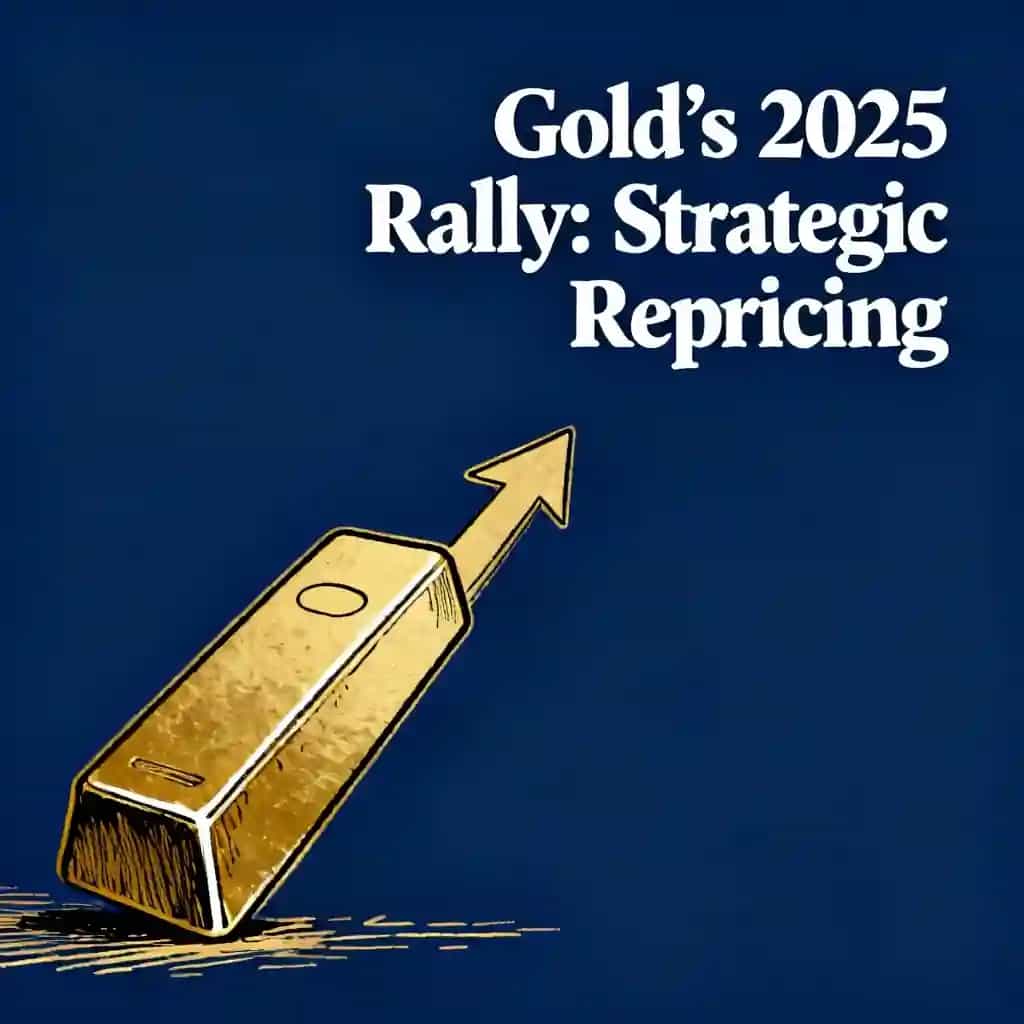
Silver's Perfect Storm: The 2-Year Outlook
Silver's surge to $59/oz isn't just a spike—it's driven by five consecutive years of supply deficits, booming industrial demand, and declining stockpiles. With banks forecasting $65-$75 by 2026, we examine if this perfect storm warrants investment.

Best quote from Silver's Perfect Storm: The 2-Year Outlook
It's a perfect storm of industrial demand, supply constraints, and monetary factors all converging at once, creating a structural shift where we are consuming more silver than we produce for the fifth consecutive year.

This audio lesson was created by a BeFreed community member
Silver price outlook to investors for next 2 years? Should you invest? What are main factors effecting price?



Discover more

Macroeconomics for the Iconic Brand
In an era of fluctuating commodity prices and supply chain uncertainty, luxury leaders must merge financial literacy with creative vision. This plan is essential for jewelry designers and brand strategists looking to turn economic challenges into competitive advantages for the modern market.

Understand us stock market
The US stock market has historically been one of the most reliable paths to building long-term wealth, yet many people miss out due to lack of knowledge and strategy. This learning plan is ideal for beginners who want to invest confidently, as well as intermediate investors looking to refine their approach with proven frameworks for analysis, risk management, and sustainable wealth creation.

Steel, Stealth, and Strategic Gambles
This plan is essential for those seeking to understand how material science and breakthrough engineering dictate the outcome of global conflicts. It is ideal for history buffs, strategic analysts, and technology enthusiasts interested in the intersection of physics and the profession of arms.

Income + protection for profitable stocks
Investors holding profitable stock positions face a critical challenge: how to maintain gains while continuing to generate returns in sideways or declining markets. This learning plan addresses that challenge by teaching practical options strategies that create regular income through premium collection while providing insurance against adverse price movements, making it essential for intermediate to advanced investors seeking to optimize their equity portfolios.

The Modern Economy for Investors
In an era of high volatility, understanding the machinery of credit and cycles is essential for capital preservation. This plan is designed for investors who want to bridge the gap between abstract macroeconomics and practical portfolio management while mastering their own psychological triggers.

Save 100,000 by 2028
This plan is designed for ambitious individuals who want to move beyond basic budgeting and achieve significant capital accumulation in a short timeframe. It combines psychological shifts with practical income-generation and investment strategies to build a comprehensive wealth machine.

The Pulse of Global Markets
Understanding the interconnected nature of inflation, banking crises, and trade wars is essential for navigating today's volatile economy. This plan is designed for investors, policy enthusiasts, and professionals seeking to decode the complex forces shaping global financial stability.

Trade stocks based on global politics
In an increasingly volatile world, understanding the intersection of statecraft and finance is essential for modern investors. This plan is designed for traders and analysts who want to turn global instability into a strategic market advantage.
From Columbia University alumni built in San Francisco
"Instead of endless scrolling, I just hit play on BeFreed. It saves me so much time."


"I never knew where to start with nonfiction—BeFreed’s book lists turned into podcasts gave me a clear path."


"Perfect balance between learning and entertainment. Finished ‘Thinking, Fast and Slow’ on my commute this week."
"Crazy how much I learned while walking the dog. BeFreed = small habits → big gains."
"Reading used to feel like a chore. Now it’s just part of my lifestyle."

"Feels effortless compared to reading. I’ve finished 6 books this month already."
"BeFreed turned my guilty doomscrolling into something that feels productive and inspiring."

"BeFreed turned my commute into learning time. 20-min podcasts are perfect for finishing books I never had time for."
"BeFreed replaced my podcast queue. Imagine Spotify for books — that’s it. 🙌"

"It is great for me to learn something from the book without reading it."
"The themed book list podcasts help me connect ideas across authors—like a guided audio journey."
"Makes me feel smarter every time before going to work"
From Columbia University alumni built in San Francisco
"Instead of endless scrolling, I just hit play on BeFreed. It saves me so much time."
"I never knew where to start with nonfiction—BeFreed’s book lists turned into podcasts gave me a clear path."
"Perfect balance between learning and entertainment. Finished ‘Thinking, Fast and Slow’ on my commute this week."
"Crazy how much I learned while walking the dog. BeFreed = small habits → big gains."
"Reading used to feel like a chore. Now it’s just part of my lifestyle."
"Feels effortless compared to reading. I’ve finished 6 books this month already."
"BeFreed turned my guilty doomscrolling into something that feels productive and inspiring."
"BeFreed turned my commute into learning time. 20-min podcasts are perfect for finishing books I never had time for."
"BeFreed replaced my podcast queue. Imagine Spotify for books — that’s it. 🙌"
"It is great for me to learn something from the book without reading it."
"The themed book list podcasts help me connect ideas across authors—like a guided audio journey."
"Makes me feel smarter every time before going to work"
"Instead of endless scrolling, I just hit play on BeFreed. It saves me so much time."
"I never knew where to start with nonfiction—BeFreed’s book lists turned into podcasts gave me a clear path."
"Perfect balance between learning and entertainment. Finished ‘Thinking, Fast and Slow’ on my commute this week."
"Crazy how much I learned while walking the dog. BeFreed = small habits → big gains."
"Reading used to feel like a chore. Now it’s just part of my lifestyle."
"Feels effortless compared to reading. I’ve finished 6 books this month already."
"BeFreed turned my guilty doomscrolling into something that feels productive and inspiring."
"BeFreed turned my commute into learning time. 20-min podcasts are perfect for finishing books I never had time for."
"BeFreed replaced my podcast queue. Imagine Spotify for books — that’s it. 🙌"
"It is great for me to learn something from the book without reading it."
"The themed book list podcasts help me connect ideas across authors—like a guided audio journey."
"Makes me feel smarter every time before going to work"
"Instead of endless scrolling, I just hit play on BeFreed. It saves me so much time."
"I never knew where to start with nonfiction—BeFreed’s book lists turned into podcasts gave me a clear path."
"Perfect balance between learning and entertainment. Finished ‘Thinking, Fast and Slow’ on my commute this week."
"Crazy how much I learned while walking the dog. BeFreed = small habits → big gains."
"Reading used to feel like a chore. Now it’s just part of my lifestyle."
"Feels effortless compared to reading. I’ve finished 6 books this month already."
"BeFreed turned my guilty doomscrolling into something that feels productive and inspiring."
"BeFreed turned my commute into learning time. 20-min podcasts are perfect for finishing books I never had time for."
"BeFreed replaced my podcast queue. Imagine Spotify for books — that’s it. 🙌"
"It is great for me to learn something from the book without reading it."
"The themed book list podcasts help me connect ideas across authors—like a guided audio journey."
"Makes me feel smarter every time before going to work"