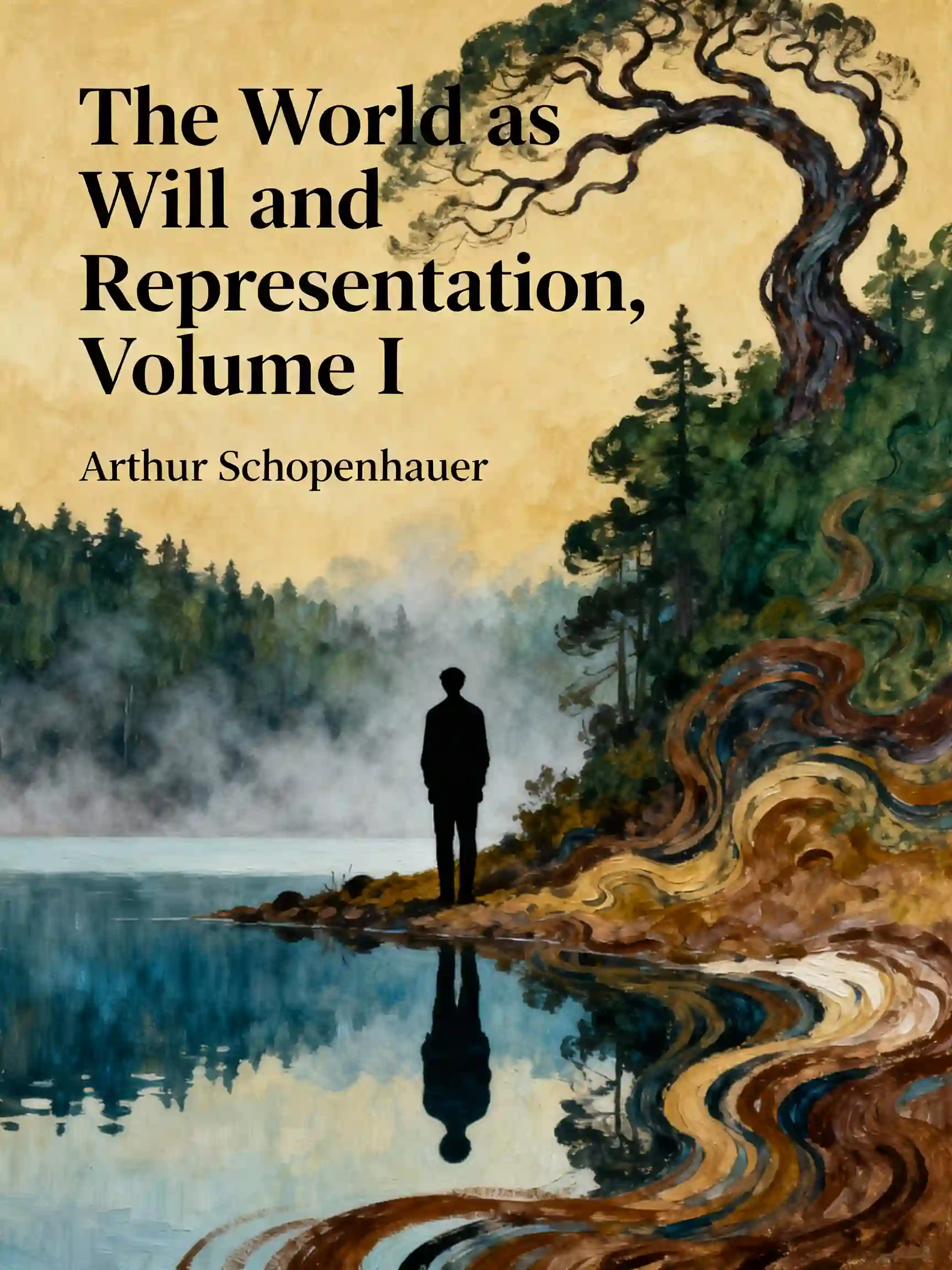
Arthur Schopenhauer: Life and Philosophy of the German Philosopher
If you feel trapped by restless desire, Schopenhauer’s philosophy offers a map. Explore how he bridged Eastern and Western thought to find peace.

Best quote from Arthur Schopenhauer: Life and Philosophy of the German Philosopher
Life oscillates like a pendulum, back and forth between pain and boredom. We are driven by a blind, aimless Will that makes us believe happiness is a destination, when in reality, pleasure is just the temporary absence of suffering.
Generated by Zelimir
Schopenhauer i njegovo djelo






Frequently Asked Questions
Schopenhauer argued that we do not perceive the world as it actually is, but rather through a mental image created by our own cognitive machinery. He compared this to wearing high-tech VR goggles that can never be removed, meaning everything we experience is filtered through the human brain's constructs of space, time, and causality. Because we only know the "phenomena" or appearances of things, the ultimate reality of the "thing-in-itself" remains hidden behind what he called the "veil of Maya."
According to Schopenhauer, the "Will" is a blind, aimless, and irrational force that serves as the underlying reality of the entire universe. In humans, this manifests as a "will to live" and a ceaseless striving that never reaches a final goal. This creates a cycle of structural dissatisfaction where life oscillates between the pain of desire and the dullness of boredom. He believed that pleasure is merely a negative state—the temporary absence of pain—rather than a positive gain, meaning the Will can never be truly satisfied.
While arts like painting or sculpture represent the "Ideas" of things found in the world, Schopenhauer believed music is a direct embodiment of the Will itself. He saw music as a universal language that mirrors the inner drive of the universe, with the melody representing the intellectual life and striving of humanity. By listening to music, people can experience the essence of emotions like sadness or joy without suffering the real-life consequences, providing a temporary "time-out" from the demands of the Will.
Schopenhauer rejected the idea of morality based on rules or "thou shalts," arguing instead that true ethics are grounded in compassion. He believed that a truly moral person is someone who has seen through the illusion of individuality and realizes that, on a metaphysical level, all living beings are manifestations of the same universal Will. When we feel compassion, we are recognizing that the suffering of another is literally our own suffering, leading to the realization that the "tormentor and the tormented are one."
The denial of the will to live is a state of "quietism" or asceticism where an individual becomes so aware of the inseparable connection between life and suffering that they cease to react to worldly motives. Schopenhauer explicitly rejected suicide as a solution because he viewed it as an ultimate act of Will—a person is so frustrated by their desires that they destroy their body, yet the Will itself remains undestroyed. True denial involves staying alive but "tranquillizing" the Will through detachment, poverty, and a blissful, will-less state similar to Nirvana.
From Columbia University alumni built in San Francisco
"Instead of endless scrolling, I just hit play on BeFreed. It saves me so much time."


"I never knew where to start with nonfiction—BeFreed’s book lists turned into podcasts gave me a clear path."


"Perfect balance between learning and entertainment. Finished ‘Thinking, Fast and Slow’ on my commute this week."
"Crazy how much I learned while walking the dog. BeFreed = small habits → big gains."
"Reading used to feel like a chore. Now it’s just part of my lifestyle."

"Feels effortless compared to reading. I’ve finished 6 books this month already."
"BeFreed turned my guilty doomscrolling into something that feels productive and inspiring."

"BeFreed turned my commute into learning time. 20-min podcasts are perfect for finishing books I never had time for."
"BeFreed replaced my podcast queue. Imagine Spotify for books — that’s it. 🙌"

"It is great for me to learn something from the book without reading it."
"The themed book list podcasts help me connect ideas across authors—like a guided audio journey."
"Makes me feel smarter every time before going to work"
From Columbia University alumni built in San Francisco
"Instead of endless scrolling, I just hit play on BeFreed. It saves me so much time."
"I never knew where to start with nonfiction—BeFreed’s book lists turned into podcasts gave me a clear path."
"Perfect balance between learning and entertainment. Finished ‘Thinking, Fast and Slow’ on my commute this week."
"Crazy how much I learned while walking the dog. BeFreed = small habits → big gains."
"Reading used to feel like a chore. Now it’s just part of my lifestyle."
"Feels effortless compared to reading. I’ve finished 6 books this month already."
"BeFreed turned my guilty doomscrolling into something that feels productive and inspiring."
"BeFreed turned my commute into learning time. 20-min podcasts are perfect for finishing books I never had time for."
"BeFreed replaced my podcast queue. Imagine Spotify for books — that’s it. 🙌"
"It is great for me to learn something from the book without reading it."
"The themed book list podcasts help me connect ideas across authors—like a guided audio journey."
"Makes me feel smarter every time before going to work"
"Instead of endless scrolling, I just hit play on BeFreed. It saves me so much time."
"I never knew where to start with nonfiction—BeFreed’s book lists turned into podcasts gave me a clear path."
"Perfect balance between learning and entertainment. Finished ‘Thinking, Fast and Slow’ on my commute this week."
"Crazy how much I learned while walking the dog. BeFreed = small habits → big gains."
"Reading used to feel like a chore. Now it’s just part of my lifestyle."
"Feels effortless compared to reading. I’ve finished 6 books this month already."
"BeFreed turned my guilty doomscrolling into something that feels productive and inspiring."
"BeFreed turned my commute into learning time. 20-min podcasts are perfect for finishing books I never had time for."
"BeFreed replaced my podcast queue. Imagine Spotify for books — that’s it. 🙌"
"It is great for me to learn something from the book without reading it."
"The themed book list podcasts help me connect ideas across authors—like a guided audio journey."
"Makes me feel smarter every time before going to work"
"Instead of endless scrolling, I just hit play on BeFreed. It saves me so much time."
"I never knew where to start with nonfiction—BeFreed’s book lists turned into podcasts gave me a clear path."
"Perfect balance between learning and entertainment. Finished ‘Thinking, Fast and Slow’ on my commute this week."
"Crazy how much I learned while walking the dog. BeFreed = small habits → big gains."
"Reading used to feel like a chore. Now it’s just part of my lifestyle."
"Feels effortless compared to reading. I’ve finished 6 books this month already."
"BeFreed turned my guilty doomscrolling into something that feels productive and inspiring."
"BeFreed turned my commute into learning time. 20-min podcasts are perfect for finishing books I never had time for."
"BeFreed replaced my podcast queue. Imagine Spotify for books — that’s it. 🙌"
"It is great for me to learn something from the book without reading it."
"The themed book list podcasts help me connect ideas across authors—like a guided audio journey."
"Makes me feel smarter every time before going to work"