Stop leaving money on the table. Learn how to use per diem deductions and catch-up contributions to turn your trucking career into a savings machine.
Best quote from Save more as a driver with the per diem hack
“
The goal is to drive your net income down as low as legally possible on paper while keeping the actual cash in your pocket. Every dollar you deduct is a dollar that isn't hit by that 15.3 percent tax or your standard income tax.
”
D
Generated by Dale
Input question
I drive tractor trailer for company I’m 56 wanting save more money tricks hacks
Host voices
Lena
Knowledge sources
Frequently Asked Questions
For 2026, the IRS allows a standard per diem deduction of approximately eighty dollars for every day a driver is away from their tax home. This is considered "found money" because it does not require keeping individual food receipts; you only need to prove you were away overnight using ELD logs or trip sheets. By claiming this deduction on Schedule C, a contractor can shield a significant portion of their gross income from both the 15.3 percent self-employment tax and standard income tax.
The per diem method is a simplified approach that uses a flat daily rate, which is projected to be between sixty-nine and eighty dollars in 2026, requiring no receipts. The actual expense method requires tracking every specific dollar spent on food and keeping all receipts, which may be beneficial if a driver’s healthy dietary needs exceed the standard daily allowance. While most drivers prefer the per diem method for its lack of paperwork, DOT-regulated drivers are eligible to deduct 80 percent of their meal costs under either method, compared to the 50 percent limit for other business owners.
A Solo 401k offers much higher contribution limits than a standard IRA, and for those aged 50 and older, it allows for "catch-up" contributions. In 2026, a driver can contribute a base amount of twenty-four thousand five hundred dollars plus an additional seven thousand five hundred dollar catch-up, totaling thirty-two thousand dollars in employee deferrals alone. This account also offers a "Roth" option for tax-free withdrawals in retirement and allows for participant loans of up to fifty thousand dollars, which can be used for business needs like truck repairs.
Drivers can maximize profit by using "cost-plus" fuel cards that provide wholesale pricing rather than simple cents-per-gallon discounts at the pump. When a driver’s actual fuel cost is lower than the Department of Energy’s national average used to calculate the Fuel Surcharge (FSC), they pocket the difference as a "spread." By combining these discounts with loyalty programs and fuel-efficient driving habits, a driver can turn the fuel surcharge into a significant source of additional income.
W-2 drivers have a steady paycheck but lost most of their ability to deduct unreimbursed business expenses due to the 2017 Tax Cuts and Jobs Act; their primary strategy is ensuring their employer uses an "accountable plan" to keep per diem payments tax-free. In contrast, 1099 contractors are treated as business entities and must pay the full 15.3 percent self-employment tax, but they have the advantage of deducting all "ordinary and necessary" expenses, such as rig maintenance, sleeper berth supplies, and heavy truck depreciation, to lower their taxable income.
From Columbia University alumni | built in San Francisco
BeFreed Brings Together A Global Community Of Curious Minds
4.7
avg rating
7.84k+ App Rating
BeFreed Community
Seriously I haven’t even explored this app fully yet but from using it the last few days I am so impressed... BeFreed is on a different level from any other learning app I have used. This makes it ultra engaging and can actually improve your concentration which is great for all the doom scrollers!
@ladyInfinity
I bought BeFreed exactly 23 days ago, and I have used it every single day since. It has completely embedded itself into my daily workflow and learning habit.
@jayallen
The truth is, the app has exceeded all my expectations. I can ask it to generate audio on any topic, whatever it may be, and the result is impressive. My professional field is a specialization in psychotherapy and it is multidisciplinary; however, the answers are very accurate.
@Raguipa
What I appreciate most is how much it's reduced my scrolling – I'm spending less time searching and more time absorbing information. The combination of full audiobooks, podcasts, the learning plans are brilliant.
@colonyofcreatorsNGO
I have been a PhotoReading Accelerated Learning Instructor for the past 24 years... books and reading and learning are my thing, and BeFreed has done a great job in providing an innovative approach to disseminating and delivering information in an easy to consume way.
@BeFreed user
It is not just a book summary app, I have used the 'fun reading' option and it's a much better summary and way to grasp ideas the traditional way, that alone is worth this deal.
@austinakon
I love this app. Used it for several days and I cannot stop listening. Such a great way to start.
@jcrules328
I really like the program; I have already tested it for around one month, and I feel that it's an amazing gem. It works so well because I can use BeFreed to create my own topics, and the voice is so good with unlimited choice of narrations.
@DanielCZ
Seriously I haven’t even explored this app fully yet but from using it the last few days I am so impressed... BeFreed is on a different level from any other learning app I have used. This makes it ultra engaging and can actually improve your concentration which is great for all the doom scrollers!
@ladyInfinity
I bought BeFreed exactly 23 days ago, and I have used it every single day since. It has completely embedded itself into my daily workflow and learning habit.
@jayallen
The truth is, the app has exceeded all my expectations. I can ask it to generate audio on any topic, whatever it may be, and the result is impressive. My professional field is a specialization in psychotherapy and it is multidisciplinary; however, the answers are very accurate.
@Raguipa
What I appreciate most is how much it's reduced my scrolling – I'm spending less time searching and more time absorbing information. The combination of full audiobooks, podcasts, the learning plans are brilliant.
@colonyofcreatorsNGO
I have been a PhotoReading Accelerated Learning Instructor for the past 24 years... books and reading and learning are my thing, and BeFreed has done a great job in providing an innovative approach to disseminating and delivering information in an easy to consume way.
@BeFreed user
It is not just a book summary app, I have used the 'fun reading' option and it's a much better summary and way to grasp ideas the traditional way, that alone is worth this deal.
@austinakon
I love this app. Used it for several days and I cannot stop listening. Such a great way to start.
@jcrules328
I really like the program; I have already tested it for around one month, and I feel that it's an amazing gem. It works so well because I can use BeFreed to create my own topics, and the voice is so good with unlimited choice of narrations.
@DanielCZ
I love the fact that I can get useful, condensed, information and ideas in a 8 - 15 minute podcast style audio. I'm not a general fan of podcasts because of all the fluff, but this cuts through all that.
@BeFreed user
I am finishing up my doctorate, and have to read a lot of unfamiliar material... With BeFreed, you simply enter a prompt, and the app finds source material for you and generates an audio podcast. I find the process in BeFreed to be more streamlined than NotebookLM.
@Brad
I often search YouTube for something to listen to whilst making breakfast, when I'm out walking, commuting, etc, and BeFreed has provided an even more targeted approach, without the adverts and the fluff!
@BeFreed user
The absolute best part about this platform is its versatility. There is literally no subject that is off-topic. It handles whatever you throw at it... It is rare to find an learning tool with zero limitations that actually delivers on its promises.
@jayallen
BeFreed is fantastic. The user-friendly design means I spend less time navigating and more time learning. The mix of audiobooks, podcasts, and learning plans is a genius combo that has completely changed my daily routine.
@BeFreed user
At the start I needed a while to understand how to create podcasts in italian language and boom! It is so great! I can ask to explain every argument and it does so well and so smartly!
@matteo77
BeFreed has become my daily app for audio books tools... What I like the most is the way you put your text and come with an audio that you can listen on the go.
@kotanzu1
I love the fact that I can get useful, condensed, information and ideas in a 8 - 15 minute podcast style audio. I'm not a general fan of podcasts because of all the fluff, but this cuts through all that.
@BeFreed user
I am finishing up my doctorate, and have to read a lot of unfamiliar material... With BeFreed, you simply enter a prompt, and the app finds source material for you and generates an audio podcast. I find the process in BeFreed to be more streamlined than NotebookLM.
@Brad
I often search YouTube for something to listen to whilst making breakfast, when I'm out walking, commuting, etc, and BeFreed has provided an even more targeted approach, without the adverts and the fluff!
@BeFreed user
The absolute best part about this platform is its versatility. There is literally no subject that is off-topic. It handles whatever you throw at it... It is rare to find an learning tool with zero limitations that actually delivers on its promises.
@jayallen
BeFreed is fantastic. The user-friendly design means I spend less time navigating and more time learning. The mix of audiobooks, podcasts, and learning plans is a genius combo that has completely changed my daily routine.
@BeFreed user
At the start I needed a while to understand how to create podcasts in italian language and boom! It is so great! I can ask to explain every argument and it does so well and so smartly!
@matteo77
BeFreed has become my daily app for audio books tools... What I like the most is the way you put your text and come with an audio that you can listen on the go.
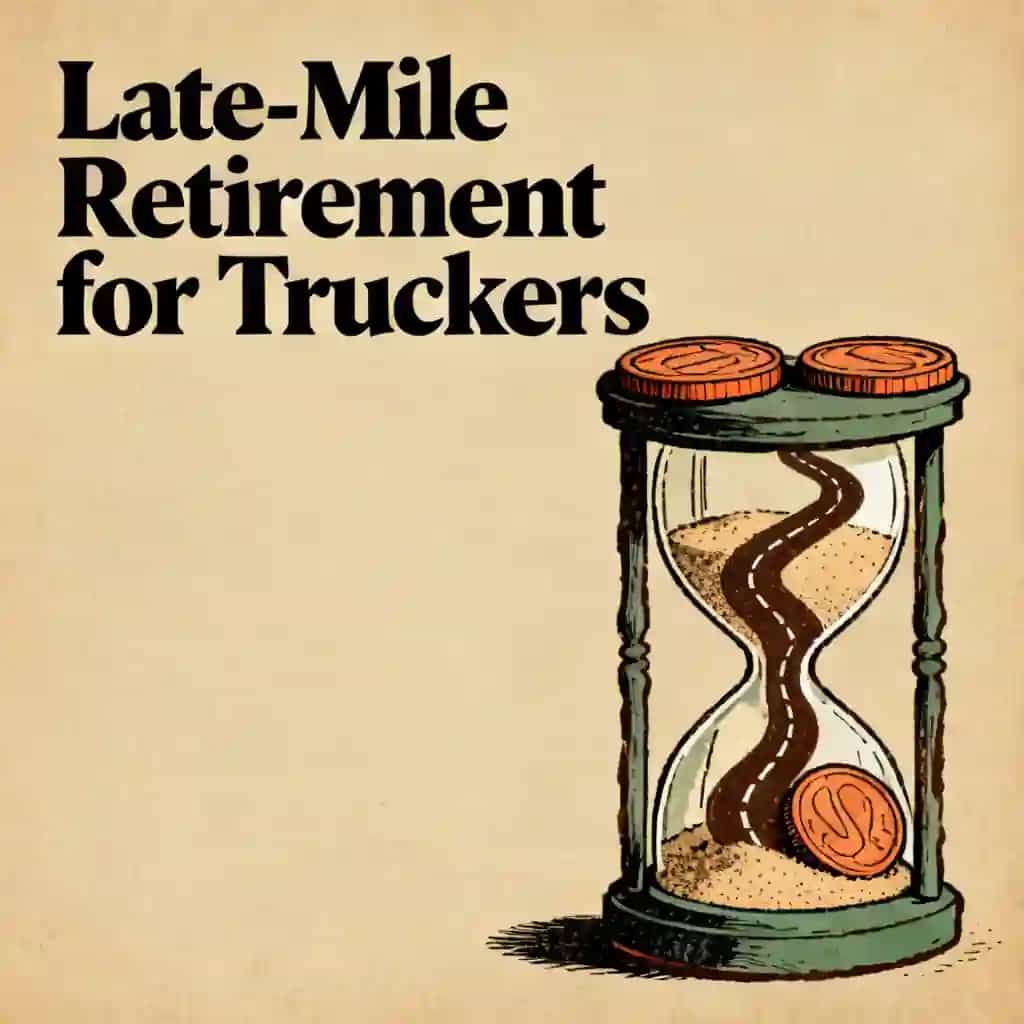
Struggling to save for retirement late in your career? Learn how catch-up contributions and tax deductions help truckers turn miles into a beach house.
Stop running on empty and start fueling like a pro. Learn how to master gas station nutrition, turn your cab into a gym, and build muscle while hauling freight.
Stop mindless snacking and transform your truck cab into a high-performance kitchen. Learn strategic meal prep and hydration secrets to stay sharp, healthy, and energized behind the wheel.
Discover how to crack the $40B roadside assistance market with enterprise-first strategies that build trust with skeptical fleet managers before you even launch your platform.