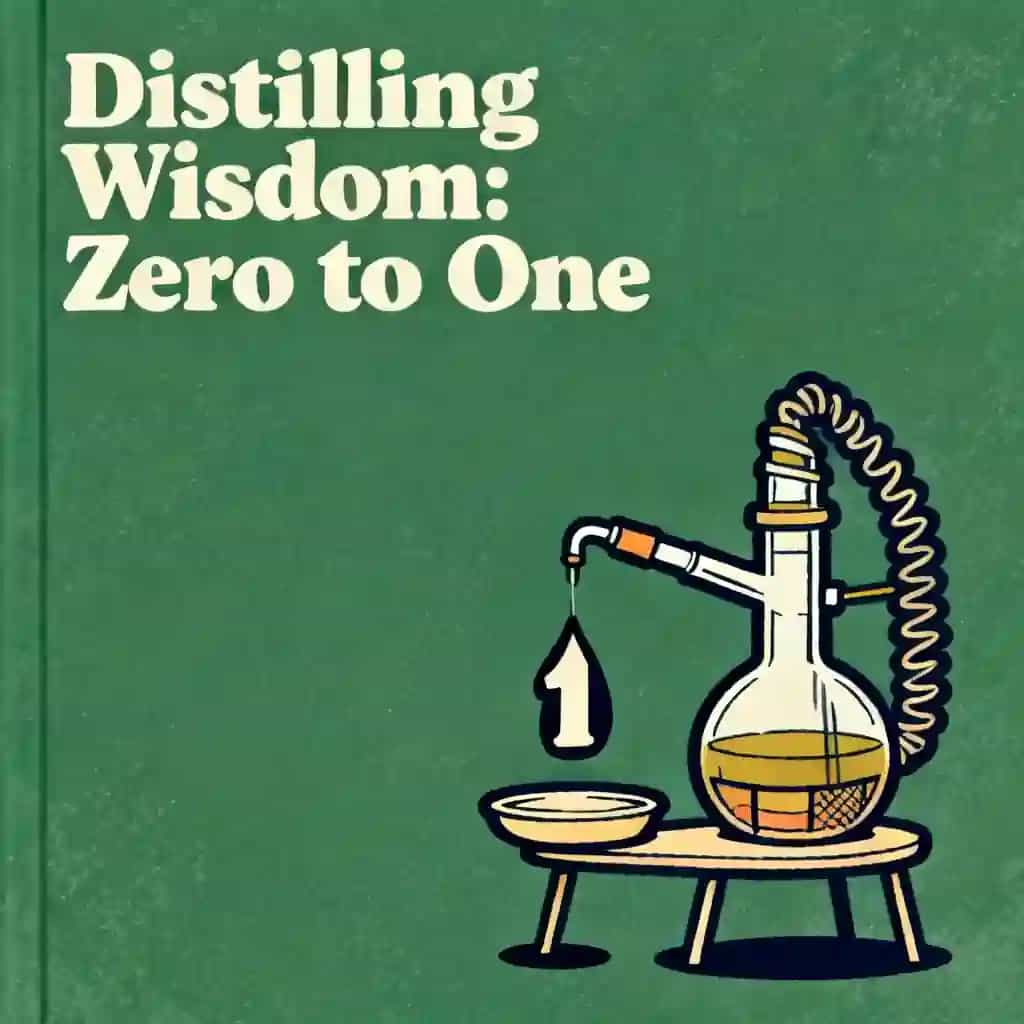
Peter Thiel’s plan to rewrite American politics
Why is a tech billionaire obsessed with the Antichrist? Explore how Peter Thiel uses Palantir and political proteges to challenge global regulation.

Best quote from Peter Thiel’s plan to rewrite American politics
The goal isn't to fix the country you live in; it’s to build 'cloud-native' communities that eventually gain sovereignty. It’s about 'exiting' the democratic nation-state altogether.

This audio lesson was created by a BeFreed community member
The influence of peter theil



Frequently Asked Questions
In private lectures, Peter Thiel has described the Antichrist not as a traditional villain, but as "the most reasonable person in the room," such as a high-level bureaucrat or climate activist. This framing suggests that individuals and entities seeking to save the world through global coordination and regulation are actually the greatest threats to individual freedom. By characterizing government oversight as a demonic or "Antichrist" force, Thiel creates a theological justification for deregulation, where private profit is viewed as a redemptive means of escaping a failing system.
Palantir acts as a central nervous system for government data-mining by breaking down "silos" between different agencies like the FBI and CIA. Its software integrates disparate data points—including phone records, social media, credit card transactions, and health records—to identify patterns using AI. Because this infrastructure is owned by a private company rather than a government agency, it often bypasses traditional democratic oversight and public pushback, effectively moving the "panopticon" into the private sector where it is harder to regulate.
The "Dark Enlightenment," or Neoreactionary (NRX) movement, is a political philosophy championed by figures like Curtis Yarvin that views democracy as a failed, inefficient experiment. It proposes replacing democratic systems with a "CEO-state" or corporate monarchy, where a country is run like a startup and citizens are treated as shareholders rather than voters. This ideology argues that freedom and democracy are incompatible and that society should instead be governed by an unaccountable "innovator class" capable of making vertical technological leaps.
Based on Thiel’s book, the "Zero to One" strategy argues that "competition is for losers" and that true success comes from building a unique monopoly. When applied to politics, this mindset views democratic competition and checks and balances as "inefficient drag." The strategy involves creating a "political monopoly" by making the government technologically dependent on proprietary systems, such as Palantir’s data-mining or SpaceX’s infrastructure, thereby replacing public authority with private, algorithmic rule.
Thiel and Musk complement each other by providing the essential components of a modern state: Thiel provides the "intelligence" and "eyes" through data analysis, while Musk provides the "muscles" and physical infrastructure through SpaceX and Starlink. This partnership creates a form of "Techno-Feudalism" where the government must "rent" the digital and physical rails of society from private billionaires. This gives them quasi-sovereign power, such as the ability to influence global conflicts by controlling satellite connectivity or consolidating federal databases.
Discover more

The Digital Power Grab
In an era where data is the new oil, understanding the intersection of technology and political power is essential for maintaining democratic integrity. This plan is designed for policy advocates, tech ethics students, and concerned citizens who want to understand how surveillance capitalism reshapes our social and political institutions.

The Invisible Empire's Political Echoes
This plan is essential for understanding how historical extremist movements shaped the American political landscape. It is ideal for history students, political science enthusiasts, and anyone seeking to understand the sociological roots of modern partisan divides.

Money, Power, and Human Weirdness
This plan is essential for ambitious individuals who want to master the hidden forces of psychology and strategy that govern success. It is designed for those looking to build lasting wealth while navigating complex social hierarchies and global trends with clarity.

Machiavellian politics
This learning plan provides essential knowledge for anyone seeking to understand how power truly operates in political systems, organizations, and society. It's valuable for political scientists, policy analysts, business leaders, journalists, and informed citizens who want to critically analyze political discourse and recognize manipulation tactics in media and institutions.

The xAI Power Contradiction
This plan investigates the ethical and environmental tensions inherent in the race for AI supremacy. It is essential for environmental advocates, policy makers, and tech ethicists seeking to understand the real-world impact of xAI's infrastructure on local communities.

Study Israel, US Gov, and Jeffrey Epstein
This learning plan is essential for those seeking to understand the hidden mechanics of global influence and domestic governance. It is designed for researchers, political enthusiasts, and truth-seekers who want to connect the dots between historical legacies and modern elite scandals.

Invest in Tech for Financial Freedom
This plan is designed for ambitious investors looking to leverage the high-growth potential of the technology sector to accelerate their path to financial independence. It bridges the gap between basic personal finance and sophisticated tech-focused investment strategies for long-term wealth.

The Anonymous Income Blueprint
This blueprint is essential for creators and entrepreneurs who want to build a digital empire without showing their face. It provides a practical roadmap for leveraging AI and automation to turn viral content into a sustainable business.
From Columbia University alumni built in San Francisco
"Instead of endless scrolling, I just hit play on BeFreed. It saves me so much time."


"I never knew where to start with nonfiction—BeFreed’s book lists turned into podcasts gave me a clear path."


"Perfect balance between learning and entertainment. Finished ‘Thinking, Fast and Slow’ on my commute this week."
"Crazy how much I learned while walking the dog. BeFreed = small habits → big gains."
"Reading used to feel like a chore. Now it’s just part of my lifestyle."

"Feels effortless compared to reading. I’ve finished 6 books this month already."
"BeFreed turned my guilty doomscrolling into something that feels productive and inspiring."

"BeFreed turned my commute into learning time. 20-min podcasts are perfect for finishing books I never had time for."
"BeFreed replaced my podcast queue. Imagine Spotify for books — that’s it. 🙌"

"It is great for me to learn something from the book without reading it."
"The themed book list podcasts help me connect ideas across authors—like a guided audio journey."
"Makes me feel smarter every time before going to work"
From Columbia University alumni built in San Francisco
"Instead of endless scrolling, I just hit play on BeFreed. It saves me so much time."
"I never knew where to start with nonfiction—BeFreed’s book lists turned into podcasts gave me a clear path."
"Perfect balance between learning and entertainment. Finished ‘Thinking, Fast and Slow’ on my commute this week."
"Crazy how much I learned while walking the dog. BeFreed = small habits → big gains."
"Reading used to feel like a chore. Now it’s just part of my lifestyle."
"Feels effortless compared to reading. I’ve finished 6 books this month already."
"BeFreed turned my guilty doomscrolling into something that feels productive and inspiring."
"BeFreed turned my commute into learning time. 20-min podcasts are perfect for finishing books I never had time for."
"BeFreed replaced my podcast queue. Imagine Spotify for books — that’s it. 🙌"
"It is great for me to learn something from the book without reading it."
"The themed book list podcasts help me connect ideas across authors—like a guided audio journey."
"Makes me feel smarter every time before going to work"
"Instead of endless scrolling, I just hit play on BeFreed. It saves me so much time."
"I never knew where to start with nonfiction—BeFreed’s book lists turned into podcasts gave me a clear path."
"Perfect balance between learning and entertainment. Finished ‘Thinking, Fast and Slow’ on my commute this week."
"Crazy how much I learned while walking the dog. BeFreed = small habits → big gains."
"Reading used to feel like a chore. Now it’s just part of my lifestyle."
"Feels effortless compared to reading. I’ve finished 6 books this month already."
"BeFreed turned my guilty doomscrolling into something that feels productive and inspiring."
"BeFreed turned my commute into learning time. 20-min podcasts are perfect for finishing books I never had time for."
"BeFreed replaced my podcast queue. Imagine Spotify for books — that’s it. 🙌"
"It is great for me to learn something from the book without reading it."
"The themed book list podcasts help me connect ideas across authors—like a guided audio journey."
"Makes me feel smarter every time before going to work"
"Instead of endless scrolling, I just hit play on BeFreed. It saves me so much time."
"I never knew where to start with nonfiction—BeFreed’s book lists turned into podcasts gave me a clear path."
"Perfect balance between learning and entertainment. Finished ‘Thinking, Fast and Slow’ on my commute this week."
"Crazy how much I learned while walking the dog. BeFreed = small habits → big gains."
"Reading used to feel like a chore. Now it’s just part of my lifestyle."
"Feels effortless compared to reading. I’ve finished 6 books this month already."
"BeFreed turned my guilty doomscrolling into something that feels productive and inspiring."
"BeFreed turned my commute into learning time. 20-min podcasts are perfect for finishing books I never had time for."
"BeFreed replaced my podcast queue. Imagine Spotify for books — that’s it. 🙌"
"It is great for me to learn something from the book without reading it."
"The themed book list podcasts help me connect ideas across authors—like a guided audio journey."
"Makes me feel smarter every time before going to work"