The Neurobiology of Stress: HPA Axis and the Stress Response Cycle
Explore the neurobiology of stress and the HPA axis. Learn how the hypothalamus and pituitary gland trigger the stress response cycle to manage perceived threats.

Best quote from The Neurobiology of Stress: HPA Axis and the Stress Response Cycle
Chronic stress isn't just a 'state of mind' but a physical state of the brain—with shifting receptors, inflammatory cytokines, and structural changes—that can lead to a vicious cycle where the brain damage itself leads to even more stress activation.
Generated by Freedee_9132C6BD
Provide a detailed review of the neurobiology and pathophysiology of stress for a graduate 'Psychopharmacology for Counselors' lecture. Use the attached PDFs to cover: (1) The normal stress response cycle, including specific brain structures (HPA axis, amygdala, PFC), bodily structures, and chemical messengers (NE, 5HT, GABA, glucocorticoids). (2) Abnormalities from trauma or chronic stress, including brain atrophy (BDNF), epigenetic reprogramming, and allostatic load. (3) Resulting clinical disorders such as mood disorders, bipolar spectrum, and fear-related anxiety/PTSD. Specifically highlight dysregulation in neural circuits interconnecting these regions (e.g., NE regulation of 5HT release, neurotransmitter networks). Use technical but relatable language suitable for counseling professors. Verbatim sources: [6] Mood Disorders (Compressed).pdf, [6] Mood Disorders and the Neurotransmitter Networks-NE and GABA (Compressed).pdf, Introduction to Behavioral Neuroscience (STRESS).pdf, Neurobiology of Fear-Anxiety-Trauma.pdf, Neurobiology of Stress.pdf, Social Stress.pdf

![[6] Mood Disorders (Compressed).pdf](https://d1y2du6z1jfm9e.cloudfront.net/assets/podcast/purple.png)
Frequently Asked Questions
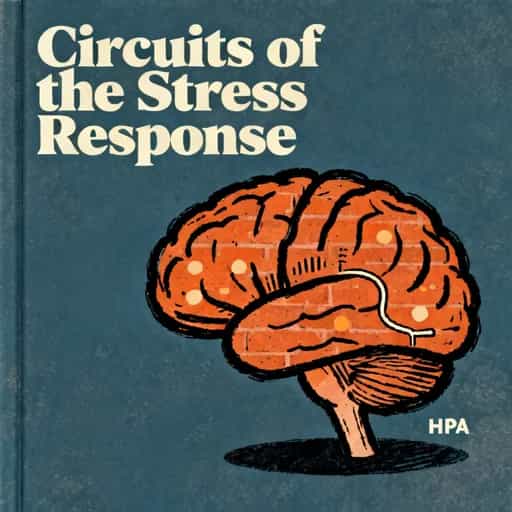
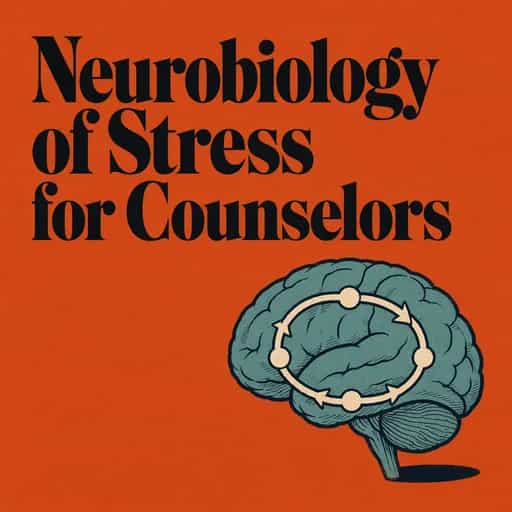
The neurobiology of stress involves a highly coordinated survival program where the brain treats modern pressures, like deadlines, as physical threats. This stress response cycle begins in the hypothalamus, which acts as a command center. When a stressor is detected, the hypothalamus initiates a chemical relay race that signals the rest of the body to prepare for action, often resulting in physical symptoms like a racing heart or memory lapses.
The HPA axis is an intricate sequence of hormonal signals that flows from the brain to the body. It begins when the hypothalamus releases Corticotropin-Releasing Factor (CRF). This chemical travels to the pituitary gland, which then releases Adrenocorticotropic Hormone (ACTH) into the bloodstream. This process serves as a long-distance communication system that coordinates the body's physiological reaction to perceived danger or high-pressure situations.
In the context of the neurobiology of stress, the hypothalamus serves as the primary command center that receives danger signals. It kicks off the stress response by releasing Corticotropin-Releasing Factor. The pituitary gland acts as the next step in the relay, receiving that signal and secreting Adrenocorticotropic Hormone (ACTH). Together, these components of the HPA axis ensure that the body's survival program is activated quickly and efficiently.
From Columbia University alumni built in San Francisco
BeFreed Brings Together A Global Community Of Curious Minds


"Instead of endless scrolling, I just hit play on BeFreed. It saves me so much time."


"I never knew where to start with nonfiction—BeFreed’s book lists turned into podcasts gave me a clear path."


"Perfect balance between learning and entertainment. Finished ‘Thinking, Fast and Slow’ on my commute this week."
"Crazy how much I learned while walking the dog. BeFreed = small habits → big gains."
"Reading used to feel like a chore. Now it’s just part of my lifestyle."

"Feels effortless compared to reading. I’ve finished 6 books this month already."
"BeFreed turned my guilty doomscrolling into something that feels productive and inspiring."

"BeFreed turned my commute into learning time. 20-min podcasts are perfect for finishing books I never had time for."
"BeFreed replaced my podcast queue. Imagine Spotify for books — that’s it. 🙌"

"It is great for me to learn something from the book without reading it."
"The themed book list podcasts help me connect ideas across authors—like a guided audio journey."
"Makes me feel smarter every time before going to work"
From Columbia University alumni built in San Francisco
BeFreed Brings Together A Global Community Of Curious Minds
"Instead of endless scrolling, I just hit play on BeFreed. It saves me so much time."
"I never knew where to start with nonfiction—BeFreed’s book lists turned into podcasts gave me a clear path."
"Perfect balance between learning and entertainment. Finished ‘Thinking, Fast and Slow’ on my commute this week."
"Crazy how much I learned while walking the dog. BeFreed = small habits → big gains."
"Reading used to feel like a chore. Now it’s just part of my lifestyle."
"Feels effortless compared to reading. I’ve finished 6 books this month already."
"BeFreed turned my guilty doomscrolling into something that feels productive and inspiring."
"BeFreed turned my commute into learning time. 20-min podcasts are perfect for finishing books I never had time for."
"BeFreed replaced my podcast queue. Imagine Spotify for books — that’s it. 🙌"
"It is great for me to learn something from the book without reading it."
"The themed book list podcasts help me connect ideas across authors—like a guided audio journey."
"Makes me feel smarter every time before going to work"
"Instead of endless scrolling, I just hit play on BeFreed. It saves me so much time."
"I never knew where to start with nonfiction—BeFreed’s book lists turned into podcasts gave me a clear path."
"Perfect balance between learning and entertainment. Finished ‘Thinking, Fast and Slow’ on my commute this week."
"Crazy how much I learned while walking the dog. BeFreed = small habits → big gains."
"Reading used to feel like a chore. Now it’s just part of my lifestyle."
"Feels effortless compared to reading. I’ve finished 6 books this month already."
"BeFreed turned my guilty doomscrolling into something that feels productive and inspiring."
"BeFreed turned my commute into learning time. 20-min podcasts are perfect for finishing books I never had time for."
"BeFreed replaced my podcast queue. Imagine Spotify for books — that’s it. 🙌"
"It is great for me to learn something from the book without reading it."
"The themed book list podcasts help me connect ideas across authors—like a guided audio journey."
"Makes me feel smarter every time before going to work"
"Instead of endless scrolling, I just hit play on BeFreed. It saves me so much time."
"I never knew where to start with nonfiction—BeFreed’s book lists turned into podcasts gave me a clear path."
"Perfect balance between learning and entertainment. Finished ‘Thinking, Fast and Slow’ on my commute this week."
"Crazy how much I learned while walking the dog. BeFreed = small habits → big gains."
"Reading used to feel like a chore. Now it’s just part of my lifestyle."
"Feels effortless compared to reading. I’ve finished 6 books this month already."
"BeFreed turned my guilty doomscrolling into something that feels productive and inspiring."
"BeFreed turned my commute into learning time. 20-min podcasts are perfect for finishing books I never had time for."
"BeFreed replaced my podcast queue. Imagine Spotify for books — that’s it. 🙌"
"It is great for me to learn something from the book without reading it."
"The themed book list podcasts help me connect ideas across authors—like a guided audio journey."
"Makes me feel smarter every time before going to work"

![[cfcb4192-1fb1-405a-b4b5-8ff318513879:c0000] [6] Mood Disorders and the Neurotransmitter Networks-NE and GABA (Compressed).pdf p1-1](/_next/image?url=https%3A%2F%2Fd1y2du6z1jfm9e.cloudfront.net%2Fassets%2Fpodcast%2Fpurple.png&w=1024&q=50)
![[cfcb4192-1fb1-405a-b4b5-8ff318513879:c0001] [6] Mood Disorders and the Neurotransmitter Networks-NE and GABA (Compressed).pdf p1-1](/_next/image?url=https%3A%2F%2Fd1y2du6z1jfm9e.cloudfront.net%2Fassets%2Fpodcast%2Fyellow.png&w=1024&q=50)
![[f2435294-c0d9-41be-9439-38b154147088:c0000] [6] Mood Disorders (Compressed).pdf p1-1](/_next/image?url=https%3A%2F%2Fd1y2du6z1jfm9e.cloudfront.net%2Fassets%2Fpodcast%2Fgreen.png&w=1024&q=50)