Motorcycle Mechanics: Technical Deep Dive Into Engine Systems

Advanced Motorcycle Mechanics: episode overview
This BeFreed audio learning guide breaks down the complex engineering behind modern motorcycle powertrains. By focusing exclusively on mechanical function and system architecture, the episode explores how individual components—from pistons and valve trains to sequential gearboxes—contribute to overall machine performance. It is designed for those seeking a highly technical understanding of motorcycle engine and transmission dynamics.
Create Your Podcast in a Click
Generated by Diddy
Input question
Advanced motorcycle mechanics: technical deep dive into specific systems and parts. Focus on engine components, transmission systems, suspension mechanics, braking systems, and fuel delivery. Explain how each part contributes to the bike's performance. No fluff, just precise technical knowledge about how motorcycles work at a mechanical level.
Host voices

What you'll learn about advanced engine systems
- 1
Opening & Setting the Stage
 00:0000:00
Lena: Hey everyone, welcome back to your personalized podcast from BeFreed-I'm Lena, and I'm absolutely thrilled to dive into today's technical deep dive with my co-host Eli. Eli: And I'm Eli! Oh man, Lena, I am buzzing with excitement today because we're going full throttle into the mechanical heart of motorcycles. We're talking engine components, transmission systems, suspension mechanics-the works! Lena: Exactly! No philosophical wandering today, folks. We're getting our hands dirty with the precise technical knowledge of how these incredible machines actually work at the mechanical level. Every bolt, every system, every component that makes a motorcycle perform.
- 2
Technical Foundation & Source Material
Eli: You know what's fascinating? I was just reading through our technical materials on motorcycle engine components, and it struck me how each part is like a perfectly choreographed dancer in this mechanical ballet. We've got comprehensive breakdowns of everything from fuel injection systems to braking mechanics. Lena: Right! And what I love is how these technical overviews don't just tell us what parts exist-they explain the why behind each component's function. Like, why does a motorcycle need a specific type of transmission versus what you'd find in a car? Eli: Exactly! And speaking of transmissions, the material on motorcycle transmission systems is absolutely mind-blowing. But before we get there, shouldn't we start with the heart of the machine-the engine itself? Lena: Absolutely. Let's build this from the ground up, just like a mechanic would approach a complete rebuild.
- 3
Engine Components: The Mechanical Heart
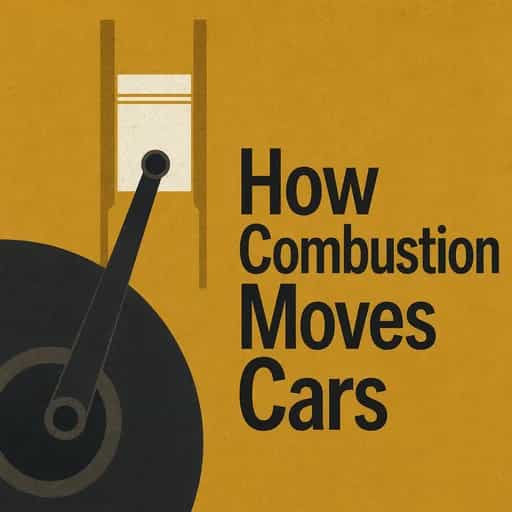
Eli: So picture this-inside every motorcycle engine, you've got this incredible symphony of moving parts. The piston is literally the powerhouse, moving up and down in the cylinder, creating the compression and power strokes that generate all that energy. Lena: And the connecting rod-that's what links the piston to the crankshaft, right? It's converting that linear motion into rotational motion? Eli: You've hit the nail on the head! The connecting rod is like a mechanical translator. It takes that explosive force from combustion pushing the piston down and converts it into the rotating motion that ultimately drives the rear wheel. But here's what's really cool-the crankshaft itself is this precisely balanced component that has to handle enormous forces. Lena: The technical overview mentions something fascinating about valve systems. Can you break that down for our listeners? Eli: Oh, this is where it gets really technical and beautiful! You've got intake valves that let the fuel-air mixture into the cylinder, and exhaust valves that let the burnt gases out. But the timing-Lena, the timing is everything. The camshaft controls when these valves open and close, and it has to be synchronized perfectly with the piston movement. Lena: So we're talking millisecond precision here? Eli: Absolutely! And that's where the cam chain or timing belt comes in. It ensures the camshaft rotates at exactly half the speed of the crankshaft. If that timing is off even slightly, you can have catastrophic engine damage-pistons hitting valves, incomplete combustion, the whole system falls apart.
- Chapter 4
Fuel Delivery Systems: Precision Engineering
**Lena:** Now, I've been diving into the material on fuel injection versus carburetors, and honestly, the engineering differences are staggering. These aren't just different ways to get fuel to the engine-they're completely different philosophies of fuel delivery. **Eli:** You're absolutely right! Carburetors are these beautifully mechanical devices that use vacuum pressure and airflow to draw fuel into the engine. There's something almost romantic about how they work-no electronics, just pure physics and precise mechanical calibration. **Lena:** But fuel injection systems-those are like having a computer brain managing every drop of fuel, aren't they? **Eli:** Exactly! Fuel injection uses electronic sensors to monitor everything-throttle position, air temperature, engine load, oxygen levels in the exhaust. The ECU processes all this data and precisely controls how much fuel gets injected and when. We're talking about fuel delivery accurate to milliseconds and measured in precise volumes. **Lena:** The technical breakdown mentions something about fuel atomization. Why is that so critical? **Eli:** Oh, this is where the science gets really fascinating! Fuel atomization is about breaking the liquid fuel into tiny droplets that can mix properly with air. In carburetors, this happens through venturi effects and carefully sized jets. In fuel injection, high-pressure injectors create this perfect spray pattern. Better atomization means more complete combustion, which translates directly to power and efficiency. **Lena:** So for our listeners who are working on their own bikes, understanding fuel delivery is crucial for performance tuning? **Eli:** Absolutely! Whether you're rejetting a carburetor or tuning an ECU map, you're fundamentally controlling the air-fuel mixture that determines how your engine performs.
Chapter 5Transmission Systems: Power Transfer Mastery
**Lena:** Alright, let's shift gears-literally-and talk about motorcycle transmissions. The technical material on how these systems work is incredibly detailed, and I have to say, motorcycle transmissions are completely different beasts from car transmissions. **Eli:** That's exactly right! Most motorcycles use what's called a sequential gearbox, which means you shift through gears in order-you can't skip from first to fourth like you might in a car. But the mechanical reason for this is brilliant engineering. **Lena:** Break down what's actually happening inside that transmission case when we shift gears. **Eli:** Picture this-you've got multiple sets of gears of different sizes mounted on parallel shafts. When you shift, you're essentially selecting which gear combination connects the input shaft from the engine to the output shaft that drives the rear wheel. Smaller gears driving larger gears give you torque multiplication for acceleration, while larger gears driving smaller ones give you higher top speeds. **Lena:** And the clutch system-that's what allows us to disconnect the engine from the transmission during shifts? **Eli:** Exactly! The clutch is this stack of alternating friction plates and steel plates. When you pull the clutch lever, you're separating these plates, breaking the connection between the engine and transmission. It's like temporarily putting the power in neutral so you can smoothly engage the next gear ratio. **Lena:** The technical overview mentions something about gear dogs and shift forks. Those sound important for understanding how shifting actually works mechanically. **Eli:** Oh, absolutely! Gear dogs are these little projections on the gears that physically lock gears together when they're engaged. The shift forks are what move the gears into and out of engagement when you operate the shift lever. It's this precise mechanical dance-the shift drum rotates, which moves the shift forks, which slide the gears along their shafts to engage or disengage the gear dogs.
Chapter 6Suspension Systems: Controlling Motion
**Lena:** Now let's talk about something that's absolutely critical for both performance and safety-suspension systems. The technical breakdown of how motorcycle suspension works reveals some really sophisticated engineering. **Eli:** You know what's fascinating about motorcycle suspension? Unlike cars with four wheels, motorcycles have to handle forces in multiple directions while maintaining stability with just two contact patches. The front fork assembly and rear shock have to work together to control pitch, dive, squat, and rebound. **Lena:** The material explains something about compression and rebound damping. Can you walk our listeners through what's actually happening inside these components? **Eli:** Absolutely! Inside both forks and shocks, you've got hydraulic fluid and precisely calibrated valving. During compression-when you hit a bump-the suspension compresses, and the hydraulic fluid flows through small orifices that control how fast the compression happens. During rebound, as the suspension extends back out, different valving controls that motion to prevent the bike from bouncing. **Lena:** And spring rates-those determine how much force is needed to compress the suspension initially? **Eli:** Exactly right! Spring rate is measured in pounds per inch or kilograms per millimeter. A higher spring rate means a stiffer suspension that resists compression more. But here's the key-the spring handles the static load and initial compression, while the damping controls the speed of movement. You need both working together for optimal performance. **Lena:** The technical overview mentions preload adjustment. How does that factor into suspension tuning? **Eli:** Preload is brilliant! It's essentially compressing the spring a certain amount before any load is applied. By adjusting preload, you can change the bike's ride height and alter how the suspension responds to different loads without changing the actual spring rate. It's like fine-tuning the suspension's operating range for different riders or riding conditions.
Chapter 7Braking Systems: Engineering Stopping Power
**Lena:** Let's dive into braking systems, because the technical overview of motorcycle braking reveals some really sophisticated hydraulic engineering. These aren't just simple friction devices-they're precision instruments for converting kinetic energy into heat. **Eli:** Absolutely! And what's really cool is how motorcycle braking systems have evolved. You've got the master cylinder that converts the mechanical force from your hand or foot into hydraulic pressure, which then gets transmitted through brake lines to the brake calipers. **Lena:** The hydraulic advantage principle is fascinating here, isn't it? Small movements at the lever create much larger forces at the brake pads? **Eli:** Exactly! It's all about surface area ratios. The master cylinder has a small piston, and when you apply force there, that pressure gets transmitted to much larger pistons in the brake calipers. So relatively light finger pressure can generate enormous clamping force on the brake discs. **Lena:** And speaking of brake discs, the material goes into detail about disc design. Why are most motorcycle brake discs ventilated or have specific patterns? **Eli:** Heat dissipation is everything in braking! When you brake, you're converting kinetic energy into heat energy through friction. Those ventilation channels and patterns help air flow through and around the disc to carry away heat. Overheated brakes fade-they lose effectiveness because the friction materials can't operate properly at extreme temperatures. **Lena:** The technical breakdown mentions something about brake pad compounds. Different materials for different applications? **Eli:** Right! You've got organic compounds that are gentler on discs but may not handle extreme heat as well, semi-metallic compounds that offer better heat resistance and stopping power, and fully metallic or carbon compounds for racing applications. Each material has different friction characteristics, wear rates, and heat tolerance. It's all about matching the brake pad compound to the intended use.
Chapter 8Practical Applications & Performance Integration
**Lena:** So as we bring all these systems together, what becomes clear is how interconnected everything is. You can't just upgrade one component without understanding how it affects the entire machine. **Eli:** That's exactly right! Like, if you increase engine power through modifications, you need to consider whether your clutch can handle the additional torque, whether your transmission gearing is optimized for the new power curve, and whether your braking system can handle the increased performance. **Lena:** And suspension tuning becomes critical when you change the bike's power characteristics, doesn't it? **Eli:** Absolutely! More power means more acceleration forces that can cause rear squat, and more braking forces that can cause front dive. The suspension has to be tuned to control these forces while maintaining tire contact with the road surface. **Lena:** For our listeners who are working on their own bikes, understanding these interconnections is crucial for making intelligent modifications rather than just bolting on parts randomly. **Eli:** Exactly! Every modification should be considered in the context of the entire system. It's like being a mechanical conductor-all the sections of the orchestra need to work together to create the perfect performance.
Chapter 9Wrapping Up: The Complete Mechanical Picture
**Lena:** So as we wrap things up, what we've explored today is really the complete mechanical DNA of motorcycles. From the explosive forces inside engine cylinders to the precise hydraulic control of braking systems, every component serves a specific function in the overall performance equation. **Eli:** And what I find most exciting is how this technical knowledge empowers riders to make informed decisions about maintenance, modifications, and troubleshooting. Understanding how your fuel injection system manages air-fuel ratios helps you diagnose performance issues. Knowing how your suspension damping works helps you tune for different riding conditions. **Lena:** The precision engineering in these machines is absolutely remarkable. We're talking about components that operate under extreme forces, temperatures, and speeds, yet they do it reliably thousands of times per minute. **Eli:** Right! And for everyone listening who's passionate about motorcycle mechanics, this technical foundation is what separates competent maintenance from true mechanical mastery. When you understand not just what to do, but why each component functions the way it does, you can approach any mechanical challenge with confidence. **Lena:** And on that note, keep diving deep into the technical details, stay curious about the engineering behind the performance, and remember-every great mechanic started by understanding exactly what we've covered today. **Eli:** Until next time, keep those engines running smooth and those technical questions coming!
What people search for about advanced motorcycle mechanics
When analyzing advanced motorcycle mechanics, learners frequently focus on the precise operation of internal combustion components and sequential power delivery. Key areas of technical study include:
- The step-by-step mechanical function of motorcycle engine cylinders, pistons, and crankshafts.
- The architecture of constant mesh sequential gearboxes and gear ratio engagement.
- The performance impact of valve train dynamics within the cylinder head.
A technical guide to advanced motorcycle mechanics
Understanding advanced motorcycle mechanics requires isolating the powertrain into two primary systems: power generation (the engine) and power management (the transmission). Power generation relies on the precise synchronization of the piston's stroke within the cylinder block and the valve train's regulation of combustion gases. Power management is handled by the transmission, where fixed, slider, and freewheeling gears interact continuously. The sequential nature of the constant mesh gearbox ensures rapid, reliable shifts under heavy acceleration, translating the crankshaft's rotational force into controlled wheel torque.
Continue learning in BeFreed
Listen to the guided lesson, save it to your learning library, and continue in the BeFreed app.
Best quote from Motorcycle Mechanics: Technical Deep Dive Into Engine Systems
Every great mechanic starts by understanding the mechanical DNA of the machine—how components like the piston, transmission, and suspension work together as a perfectly choreographed ballet of engineering.
Knowledge sources




FAQ
A motorcycle engine functions through an internal combustion cycle. A piston slides up and down within a cylinder block, compressing an air-fuel mixture regulated by the valve train in the cylinder head. Upon ignition, the expanding gases force the piston downward, pushing a connecting rod that rotates the crankshaft, thereby generating mechanical power.
Most motorcycles use a constant mesh sequential gearbox. The gears inside the transmission are always meshed together. The system uses fixed, freewheeling, and slider gears. Riders shift in sequential order, moving slider gears to lock freewheeling gears to the shaft, which engages specific gear ratios to transfer power from the engine to the final drive.
From Columbia University alumni built in San Francisco
"Instead of endless scrolling, I just hit play on BeFreed. It saves me so much time."


"I never knew where to start with nonfiction—BeFreed’s book lists turned into podcasts gave me a clear path."


"Perfect balance between learning and entertainment. Finished ‘Thinking, Fast and Slow’ on my commute this week."
"Crazy how much I learned while walking the dog. BeFreed = small habits → big gains."
"Reading used to feel like a chore. Now it’s just part of my lifestyle."

"Feels effortless compared to reading. I’ve finished 6 books this month already."
"BeFreed turned my guilty doomscrolling into something that feels productive and inspiring."

"BeFreed turned my commute into learning time. 20-min podcasts are perfect for finishing books I never had time for."
"BeFreed replaced my podcast queue. Imagine Spotify for books — that’s it. 🙌"

"It is great for me to learn something from the book without reading it."
"The themed book list podcasts help me connect ideas across authors—like a guided audio journey."
"Makes me feel smarter every time before going to work"
From Columbia University alumni built in San Francisco
"Instead of endless scrolling, I just hit play on BeFreed. It saves me so much time."
"I never knew where to start with nonfiction—BeFreed’s book lists turned into podcasts gave me a clear path."
"Perfect balance between learning and entertainment. Finished ‘Thinking, Fast and Slow’ on my commute this week."
"Crazy how much I learned while walking the dog. BeFreed = small habits → big gains."
"Reading used to feel like a chore. Now it’s just part of my lifestyle."
"Feels effortless compared to reading. I’ve finished 6 books this month already."
"BeFreed turned my guilty doomscrolling into something that feels productive and inspiring."
"BeFreed turned my commute into learning time. 20-min podcasts are perfect for finishing books I never had time for."
"BeFreed replaced my podcast queue. Imagine Spotify for books — that’s it. 🙌"
"It is great for me to learn something from the book without reading it."
"The themed book list podcasts help me connect ideas across authors—like a guided audio journey."
"Makes me feel smarter every time before going to work"
"Instead of endless scrolling, I just hit play on BeFreed. It saves me so much time."
"I never knew where to start with nonfiction—BeFreed’s book lists turned into podcasts gave me a clear path."
"Perfect balance between learning and entertainment. Finished ‘Thinking, Fast and Slow’ on my commute this week."
"Crazy how much I learned while walking the dog. BeFreed = small habits → big gains."
"Reading used to feel like a chore. Now it’s just part of my lifestyle."
"Feels effortless compared to reading. I’ve finished 6 books this month already."
"BeFreed turned my guilty doomscrolling into something that feels productive and inspiring."
"BeFreed turned my commute into learning time. 20-min podcasts are perfect for finishing books I never had time for."
"BeFreed replaced my podcast queue. Imagine Spotify for books — that’s it. 🙌"
"It is great for me to learn something from the book without reading it."
"The themed book list podcasts help me connect ideas across authors—like a guided audio journey."
"Makes me feel smarter every time before going to work"
"Instead of endless scrolling, I just hit play on BeFreed. It saves me so much time."
"I never knew where to start with nonfiction—BeFreed’s book lists turned into podcasts gave me a clear path."
"Perfect balance between learning and entertainment. Finished ‘Thinking, Fast and Slow’ on my commute this week."
"Crazy how much I learned while walking the dog. BeFreed = small habits → big gains."
"Reading used to feel like a chore. Now it’s just part of my lifestyle."
"Feels effortless compared to reading. I’ve finished 6 books this month already."
"BeFreed turned my guilty doomscrolling into something that feels productive and inspiring."
"BeFreed turned my commute into learning time. 20-min podcasts are perfect for finishing books I never had time for."
"BeFreed replaced my podcast queue. Imagine Spotify for books — that’s it. 🙌"
"It is great for me to learn something from the book without reading it."
"The themed book list podcasts help me connect ideas across authors—like a guided audio journey."
"Makes me feel smarter every time before going to work"