The Mechanics of Thought and Memory: Human Cognitive Architecture
Explore the mechanics of thought and human cognitive architecture. Learn how adaptive compression and brain biology shape memory formation and information processing.
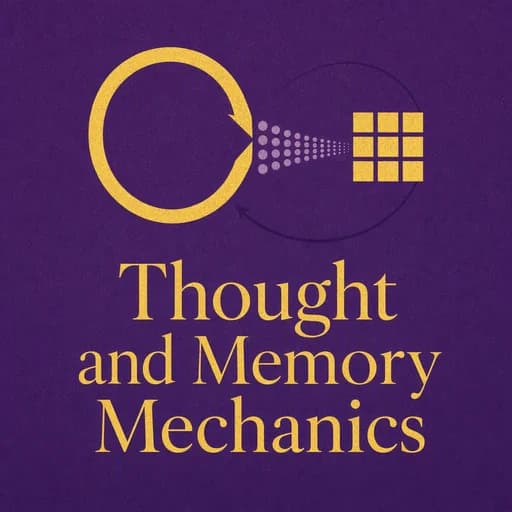
Best quote from The Mechanics of Thought and Memory: Human Cognitive Architecture
The 'complexity' of a task isn't just about the task itself. It’s about the relationship between the task and the person doing it. If you have the right schemas, a 'complex' task becomes simple.
Generated by Malaysia
A comprehensive deep-dive into the mechanics of thought and memory, covering cognitive processes, how the mind forms and retrieves information, and the structural patterns of human thinking, synthesized from a vast range of psychological literature.






Frequently Asked Questions
The mechanics of thought and memory refer to the specific, almost mechanical way the human brain processes information. Rather than acting as a simple recording device, the brain functions like a processor that uses a specific blueprint to handle data. Understanding this cognitive architecture is essential because it prevents you from fighting against your own biology when trying to learn new skills or manage complex tasks.
Adaptive compression is a process where the brain acts as a master editor to manage information. Instead of keeping verbatim copies of every experience, the brain constantly compresses, interprets, and transforms data to ensure you do not drown in noise. This mechanical process focuses on remembering what matters most for survival and utility rather than attempting to store every single detail of your daily life.
Human memory formation is not about creating perfect digital copies of events. According to the mechanics of thought, our brains are constantly transforming experiences into something else entirely through interpretation. This biological process ensures that information processing is efficient, allowing the brain to prioritize meaningful patterns over raw data, which is a fundamental aspect of how our internal machinery handles the heavy lifting of cognition.
From Columbia University alumni built in San Francisco
"Instead of endless scrolling, I just hit play on BeFreed. It saves me so much time."


"I never knew where to start with nonfiction—BeFreed’s book lists turned into podcasts gave me a clear path."


"Perfect balance between learning and entertainment. Finished ‘Thinking, Fast and Slow’ on my commute this week."
"Crazy how much I learned while walking the dog. BeFreed = small habits → big gains."
"Reading used to feel like a chore. Now it’s just part of my lifestyle."

"Feels effortless compared to reading. I’ve finished 6 books this month already."
"BeFreed turned my guilty doomscrolling into something that feels productive and inspiring."

"BeFreed turned my commute into learning time. 20-min podcasts are perfect for finishing books I never had time for."
"BeFreed replaced my podcast queue. Imagine Spotify for books — that’s it. 🙌"

"It is great for me to learn something from the book without reading it."
"The themed book list podcasts help me connect ideas across authors—like a guided audio journey."
"Makes me feel smarter every time before going to work"
 Ask ChatGPT
 Ask Claude
From Columbia University alumni built in San Francisco
"Instead of endless scrolling, I just hit play on BeFreed. It saves me so much time."
"I never knew where to start with nonfiction—BeFreed’s book lists turned into podcasts gave me a clear path."
"Perfect balance between learning and entertainment. Finished ‘Thinking, Fast and Slow’ on my commute this week."
"Crazy how much I learned while walking the dog. BeFreed = small habits → big gains."
"Reading used to feel like a chore. Now it’s just part of my lifestyle."
"Feels effortless compared to reading. I’ve finished 6 books this month already."
"BeFreed turned my guilty doomscrolling into something that feels productive and inspiring."
"BeFreed turned my commute into learning time. 20-min podcasts are perfect for finishing books I never had time for."
"BeFreed replaced my podcast queue. Imagine Spotify for books — that’s it. 🙌"
"It is great for me to learn something from the book without reading it."
"The themed book list podcasts help me connect ideas across authors—like a guided audio journey."
"Makes me feel smarter every time before going to work"
"Instead of endless scrolling, I just hit play on BeFreed. It saves me so much time."
"I never knew where to start with nonfiction—BeFreed’s book lists turned into podcasts gave me a clear path."
"Perfect balance between learning and entertainment. Finished ‘Thinking, Fast and Slow’ on my commute this week."
"Crazy how much I learned while walking the dog. BeFreed = small habits → big gains."
"Reading used to feel like a chore. Now it’s just part of my lifestyle."
"Feels effortless compared to reading. I’ve finished 6 books this month already."
"BeFreed turned my guilty doomscrolling into something that feels productive and inspiring."
"BeFreed turned my commute into learning time. 20-min podcasts are perfect for finishing books I never had time for."
"BeFreed replaced my podcast queue. Imagine Spotify for books — that’s it. 🙌"
"It is great for me to learn something from the book without reading it."
"The themed book list podcasts help me connect ideas across authors—like a guided audio journey."
"Makes me feel smarter every time before going to work"
"Instead of endless scrolling, I just hit play on BeFreed. It saves me so much time."
"I never knew where to start with nonfiction—BeFreed’s book lists turned into podcasts gave me a clear path."
"Perfect balance between learning and entertainment. Finished ‘Thinking, Fast and Slow’ on my commute this week."
"Crazy how much I learned while walking the dog. BeFreed = small habits → big gains."
"Reading used to feel like a chore. Now it’s just part of my lifestyle."
"Feels effortless compared to reading. I’ve finished 6 books this month already."
"BeFreed turned my guilty doomscrolling into something that feels productive and inspiring."
"BeFreed turned my commute into learning time. 20-min podcasts are perfect for finishing books I never had time for."
"BeFreed replaced my podcast queue. Imagine Spotify for books — that’s it. 🙌"
"It is great for me to learn something from the book without reading it."
"The themed book list podcasts help me connect ideas across authors—like a guided audio journey."
"Makes me feel smarter every time before going to work"




![MAKE IT STICK , BROWN, PETER C. [Hardcover] HARVARD UNIVERSITY PRESS](/_next/image?url=https%3A%2F%2Fd3lvzgn0lx7rb2.cloudfront.net%2Fcovers%2Fa3c49b6b-abd7-4c1b-afb2-09b323ee76c0%2Fimage_resized.webp&w=1024&q=50)