The Mechanics of Intrusive Thoughts: Brain Models and Rumination
Explore the neurological spectrum of intrusive thoughts, rumination, and involuntary memories. Learn how your brain's statistical model processes unexpected ideas.

Best quote from The Mechanics of Intrusive Thoughts: Brain Models and Rumination
Your brain maintains an implicit statistical model of your own stream of thought, and when a thought violates this model in both timing and content, it triggers a unique sense of insight and spontaneity.
Generated by Natasha
The neurological and psychological differences between rumination, spontaneous normal memories, and intrusive thoughts, focusing on brain mechanics and how these processes differ in the mind.






Frequently Asked Questions
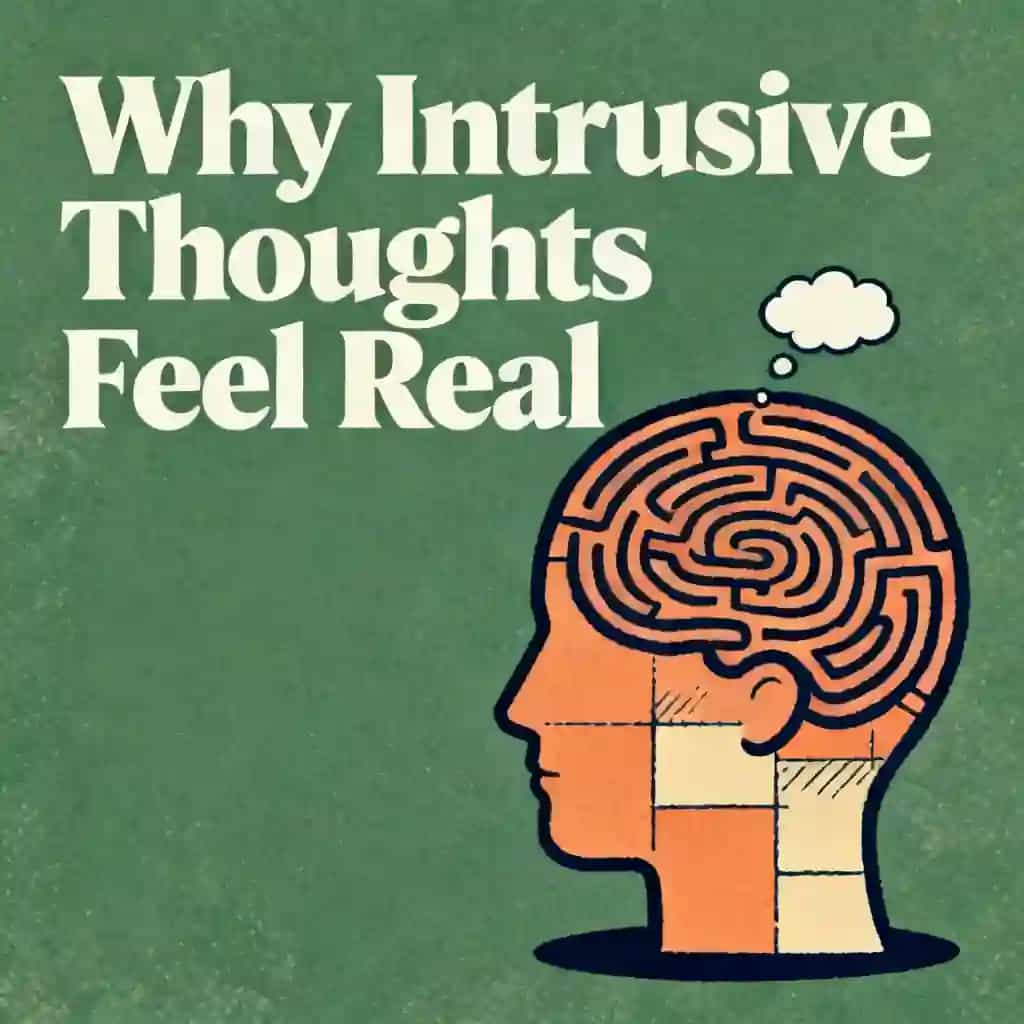
The mechanics of intrusive thoughts are rooted in a neurological spectrum that includes unexpected thoughts, involuntary memories, and rumination. Your brain maintains an implicit statistical model of your thought stream, which sets a baseline for what you expect to think about next. When a thought violates this model in both timing and content, it triggers a unique psychological response. Unlike logical transitions, these thoughts feel unbidden and disconnected from your current activity, appearing as though they dropped into your consciousness from a high altitude.
The brain's statistical model of thought acts as an internal organizational system that predicts the likely progression of your mental stream. This model creates a baseline expectation for the content and timing of your ideas. When a thought occurs that significantly deviates from this predicted path, it results in a sense of surprise or insight. This internal organization helps distinguish between a standard distracted brain and the deeper mechanics that govern how we appraise different mental events, such as random transitions versus repetitive loops.
While rumination and unexpected thoughts both feel like things that happen to you rather than things you do, they are governed by entirely different brain mechanics. Rumination often involves repetitive loops, such as recurring worries about finances, whereas unexpected thoughts are wayward transitions that feel logically disconnected from your present environment. The distinction lies in how the mind appraises these events; an unexpected thought violates the brain's internal statistical model, whereas rumination represents a different part of the neurological spectrum characterized by heavy, recurring patterns.
From Columbia University alumni built in San Francisco
"Instead of endless scrolling, I just hit play on BeFreed. It saves me so much time."


"I never knew where to start with nonfiction—BeFreed’s book lists turned into podcasts gave me a clear path."


"Perfect balance between learning and entertainment. Finished ‘Thinking, Fast and Slow’ on my commute this week."
"Crazy how much I learned while walking the dog. BeFreed = small habits → big gains."
"Reading used to feel like a chore. Now it’s just part of my lifestyle."

"Feels effortless compared to reading. I’ve finished 6 books this month already."
"BeFreed turned my guilty doomscrolling into something that feels productive and inspiring."

"BeFreed turned my commute into learning time. 20-min podcasts are perfect for finishing books I never had time for."
"BeFreed replaced my podcast queue. Imagine Spotify for books — that’s it. 🙌"

"It is great for me to learn something from the book without reading it."
"The themed book list podcasts help me connect ideas across authors—like a guided audio journey."
"Makes me feel smarter every time before going to work"
From Columbia University alumni built in San Francisco
"Instead of endless scrolling, I just hit play on BeFreed. It saves me so much time."
"I never knew where to start with nonfiction—BeFreed’s book lists turned into podcasts gave me a clear path."
"Perfect balance between learning and entertainment. Finished ‘Thinking, Fast and Slow’ on my commute this week."
"Crazy how much I learned while walking the dog. BeFreed = small habits → big gains."
"Reading used to feel like a chore. Now it’s just part of my lifestyle."
"Feels effortless compared to reading. I’ve finished 6 books this month already."
"BeFreed turned my guilty doomscrolling into something that feels productive and inspiring."
"BeFreed turned my commute into learning time. 20-min podcasts are perfect for finishing books I never had time for."
"BeFreed replaced my podcast queue. Imagine Spotify for books — that’s it. 🙌"
"It is great for me to learn something from the book without reading it."
"The themed book list podcasts help me connect ideas across authors—like a guided audio journey."
"Makes me feel smarter every time before going to work"
"Instead of endless scrolling, I just hit play on BeFreed. It saves me so much time."
"I never knew where to start with nonfiction—BeFreed’s book lists turned into podcasts gave me a clear path."
"Perfect balance between learning and entertainment. Finished ‘Thinking, Fast and Slow’ on my commute this week."
"Crazy how much I learned while walking the dog. BeFreed = small habits → big gains."
"Reading used to feel like a chore. Now it’s just part of my lifestyle."
"Feels effortless compared to reading. I’ve finished 6 books this month already."
"BeFreed turned my guilty doomscrolling into something that feels productive and inspiring."
"BeFreed turned my commute into learning time. 20-min podcasts are perfect for finishing books I never had time for."
"BeFreed replaced my podcast queue. Imagine Spotify for books — that’s it. 🙌"
"It is great for me to learn something from the book without reading it."
"The themed book list podcasts help me connect ideas across authors—like a guided audio journey."
"Makes me feel smarter every time before going to work"
"Instead of endless scrolling, I just hit play on BeFreed. It saves me so much time."
"I never knew where to start with nonfiction—BeFreed’s book lists turned into podcasts gave me a clear path."
"Perfect balance between learning and entertainment. Finished ‘Thinking, Fast and Slow’ on my commute this week."
"Crazy how much I learned while walking the dog. BeFreed = small habits → big gains."
"Reading used to feel like a chore. Now it’s just part of my lifestyle."
"Feels effortless compared to reading. I’ve finished 6 books this month already."
"BeFreed turned my guilty doomscrolling into something that feels productive and inspiring."
"BeFreed turned my commute into learning time. 20-min podcasts are perfect for finishing books I never had time for."
"BeFreed replaced my podcast queue. Imagine Spotify for books — that’s it. 🙌"
"It is great for me to learn something from the book without reading it."
"The themed book list podcasts help me connect ideas across authors—like a guided audio journey."
"Makes me feel smarter every time before going to work"