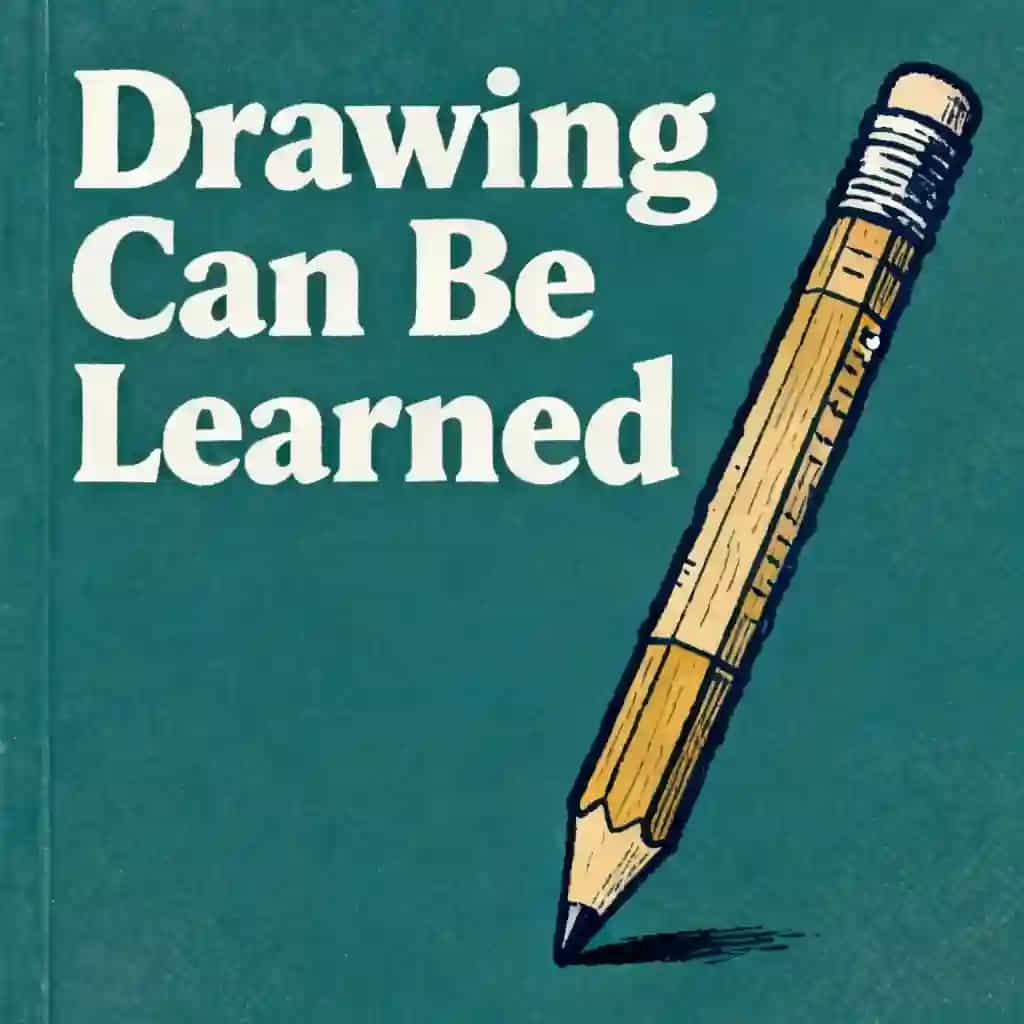
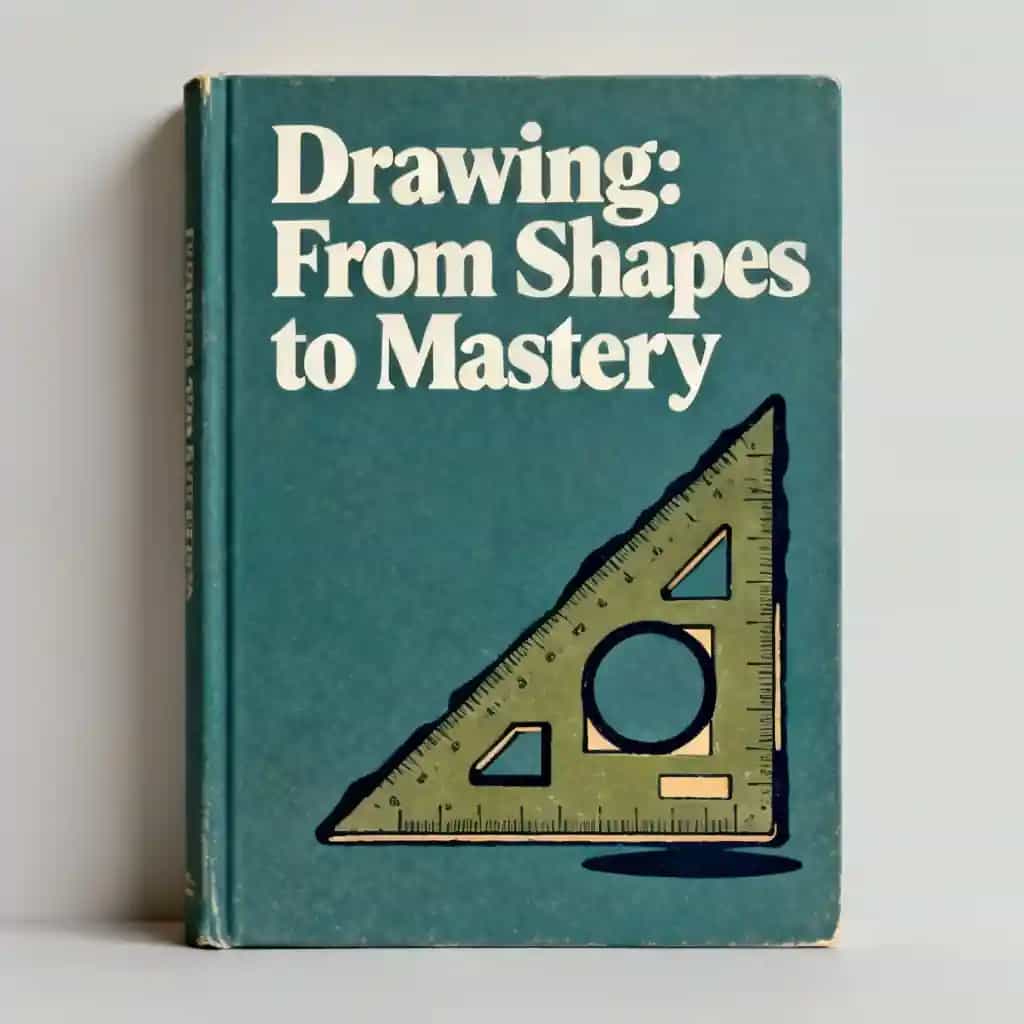
Struggling with a blank page? Learn how to build drawing muscles through perspective and value so you can turn basic sketches into real art.
Best quote from Learning to draw when you have no talent
“
Seeing like an artist means turning off those labels and seeing only shapes, values, and edges. Once you start seeing the world as a collection of building blocks—spheres, cubes, cones—you realize that everything is just those shapes stacked together.
”
A
Generated by Amanda
Input question
I would like to learn how to draw for a complete beginner
Host voices
Nia
Blythe
Knowledge sources
Frequently Asked Questions
Drawing is not a mystical gift, but rather a mechanical skill similar to learning how to drive or type. The script emphasizes that "chicken scratch" handwriting does not determine your potential as an artist. Instead of relying on natural talent, beginners can build "drawing muscles" by practicing fundamental techniques and learning to break the world down into basic shapes and perspectives.
You do not need expensive kits or fancy charcoal to begin. A basic "beginner’s kit" consists of a few graphite pencils in different grades (such as HB for light lines, and 2B or 4B for dark shadows), a 100 gsm sketchbook to prevent paper tearing, and a sharpener. While a regular white plastic eraser works for big mistakes, a kneaded eraser is highly recommended because it can be molded to "lift" graphite and create highlights without scuffing the paper. Some professionals even suggest starting with a simple ballpoint pen to build confidence through un-erasable marks.
Seeing like an artist means bypassing the brain's tendency to use "labels" or symbols for objects. Instead of drawing a mental cartoon of a "mug," an artist looks for the actual shapes, values, edges, and negative space—such as the shape of the air inside a handle. By viewing the world as a collection of building blocks like spheres, cubes, and cones, an artist can deconstruct complex subjects into manageable parts.
Confident lines come from using the "Shoulder Secret," which involves locking the wrist and moving the entire arm from the shoulder joint to achieve a larger range of motion. Using an overhand grip—pinching the pencil barrel with the thumb and index finger while letting it rest across the palm—helps prevent pressing too hard. Additionally, the "ghosting" technique allows you to rehearse a stroke in the air above the paper before committing the pencil to the page.
Creating the illusion of depth requires understanding perspective and the five zones of light. By establishing a horizon line and vanishing points, you can ensure objects look anchored in space. To add solidity, you must apply light and shadow correctly, specifically looking for the highlight, midtone, core shadow, cast shadow, and reflected light. Reflected light is a key professional secret where light bounces off a surface back into the bottom of an object, preventing shadows from looking like flat black holes.
From Columbia University alumni | built in San Francisco
BeFreed Brings Together A Global Community Of Curious Minds
4.7
avg rating
7.84k+ App Rating
BeFreed Community
Seriously I haven’t even explored this app fully yet but from using it the last few days I am so impressed... BeFreed is on a different level from any other learning app I have used. This makes it ultra engaging and can actually improve your concentration which is great for all the doom scrollers!
@ladyInfinity
I bought BeFreed exactly 23 days ago, and I have used it every single day since. It has completely embedded itself into my daily workflow and learning habit.
@jayallen
The truth is, the app has exceeded all my expectations. I can ask it to generate audio on any topic, whatever it may be, and the result is impressive. My professional field is a specialization in psychotherapy and it is multidisciplinary; however, the answers are very accurate.
@Raguipa
What I appreciate most is how much it's reduced my scrolling – I'm spending less time searching and more time absorbing information. The combination of full audiobooks, podcasts, the learning plans are brilliant.
@colonyofcreatorsNGO
I have been a PhotoReading Accelerated Learning Instructor for the past 24 years... books and reading and learning are my thing, and BeFreed has done a great job in providing an innovative approach to disseminating and delivering information in an easy to consume way.
@BeFreed user
It is not just a book summary app, I have used the 'fun reading' option and it's a much better summary and way to grasp ideas the traditional way, that alone is worth this deal.
@austinakon
I love this app. Used it for several days and I cannot stop listening. Such a great way to start.
@jcrules328
I really like the program; I have already tested it for around one month, and I feel that it's an amazing gem. It works so well because I can use BeFreed to create my own topics, and the voice is so good with unlimited choice of narrations.
@DanielCZ
Seriously I haven’t even explored this app fully yet but from using it the last few days I am so impressed... BeFreed is on a different level from any other learning app I have used. This makes it ultra engaging and can actually improve your concentration which is great for all the doom scrollers!
@ladyInfinity
I bought BeFreed exactly 23 days ago, and I have used it every single day since. It has completely embedded itself into my daily workflow and learning habit.
@jayallen
The truth is, the app has exceeded all my expectations. I can ask it to generate audio on any topic, whatever it may be, and the result is impressive. My professional field is a specialization in psychotherapy and it is multidisciplinary; however, the answers are very accurate.
@Raguipa
What I appreciate most is how much it's reduced my scrolling – I'm spending less time searching and more time absorbing information. The combination of full audiobooks, podcasts, the learning plans are brilliant.
@colonyofcreatorsNGO
I have been a PhotoReading Accelerated Learning Instructor for the past 24 years... books and reading and learning are my thing, and BeFreed has done a great job in providing an innovative approach to disseminating and delivering information in an easy to consume way.
@BeFreed user
It is not just a book summary app, I have used the 'fun reading' option and it's a much better summary and way to grasp ideas the traditional way, that alone is worth this deal.
@austinakon
I love this app. Used it for several days and I cannot stop listening. Such a great way to start.
@jcrules328
I really like the program; I have already tested it for around one month, and I feel that it's an amazing gem. It works so well because I can use BeFreed to create my own topics, and the voice is so good with unlimited choice of narrations.
@DanielCZ
I love the fact that I can get useful, condensed, information and ideas in a 8 - 15 minute podcast style audio. I'm not a general fan of podcasts because of all the fluff, but this cuts through all that.
@BeFreed user
I am finishing up my doctorate, and have to read a lot of unfamiliar material... With BeFreed, you simply enter a prompt, and the app finds source material for you and generates an audio podcast. I find the process in BeFreed to be more streamlined than NotebookLM.
@Brad
I often search YouTube for something to listen to whilst making breakfast, when I'm out walking, commuting, etc, and BeFreed has provided an even more targeted approach, without the adverts and the fluff!
@BeFreed user
The absolute best part about this platform is its versatility. There is literally no subject that is off-topic. It handles whatever you throw at it... It is rare to find an learning tool with zero limitations that actually delivers on its promises.
@jayallen
BeFreed is fantastic. The user-friendly design means I spend less time navigating and more time learning. The mix of audiobooks, podcasts, and learning plans is a genius combo that has completely changed my daily routine.
@BeFreed user
At the start I needed a while to understand how to create podcasts in italian language and boom! It is so great! I can ask to explain every argument and it does so well and so smartly!
@matteo77
BeFreed has become my daily app for audio books tools... What I like the most is the way you put your text and come with an audio that you can listen on the go.
@kotanzu1
I love the fact that I can get useful, condensed, information and ideas in a 8 - 15 minute podcast style audio. I'm not a general fan of podcasts because of all the fluff, but this cuts through all that.
@BeFreed user
I am finishing up my doctorate, and have to read a lot of unfamiliar material... With BeFreed, you simply enter a prompt, and the app finds source material for you and generates an audio podcast. I find the process in BeFreed to be more streamlined than NotebookLM.
@Brad
I often search YouTube for something to listen to whilst making breakfast, when I'm out walking, commuting, etc, and BeFreed has provided an even more targeted approach, without the adverts and the fluff!
@BeFreed user
The absolute best part about this platform is its versatility. There is literally no subject that is off-topic. It handles whatever you throw at it... It is rare to find an learning tool with zero limitations that actually delivers on its promises.
@jayallen
BeFreed is fantastic. The user-friendly design means I spend less time navigating and more time learning. The mix of audiobooks, podcasts, and learning plans is a genius combo that has completely changed my daily routine.
@BeFreed user
At the start I needed a while to understand how to create podcasts in italian language and boom! It is so great! I can ask to explain every argument and it does so well and so smartly!
@matteo77
BeFreed has become my daily app for audio books tools... What I like the most is the way you put your text and come with an audio that you can listen on the go.
Contrary to popular belief, drawing isn't about natural talent but a set of fundamental skills anyone can master through structured practice, modern learning approaches, and the right mindset.
Discover how drawing isn't about innate talent but learnable skills like spatial reasoning, confident mark making, and careful observation. Learn how simple shapes become the foundation for creating anything you can imagine.
A month-by-month guide for new artists, starting with simple everyday objects and gradually progressing to complex subjects like human figures, helping you build skills systematically without overwhelm.