How to win happily using neuroscience
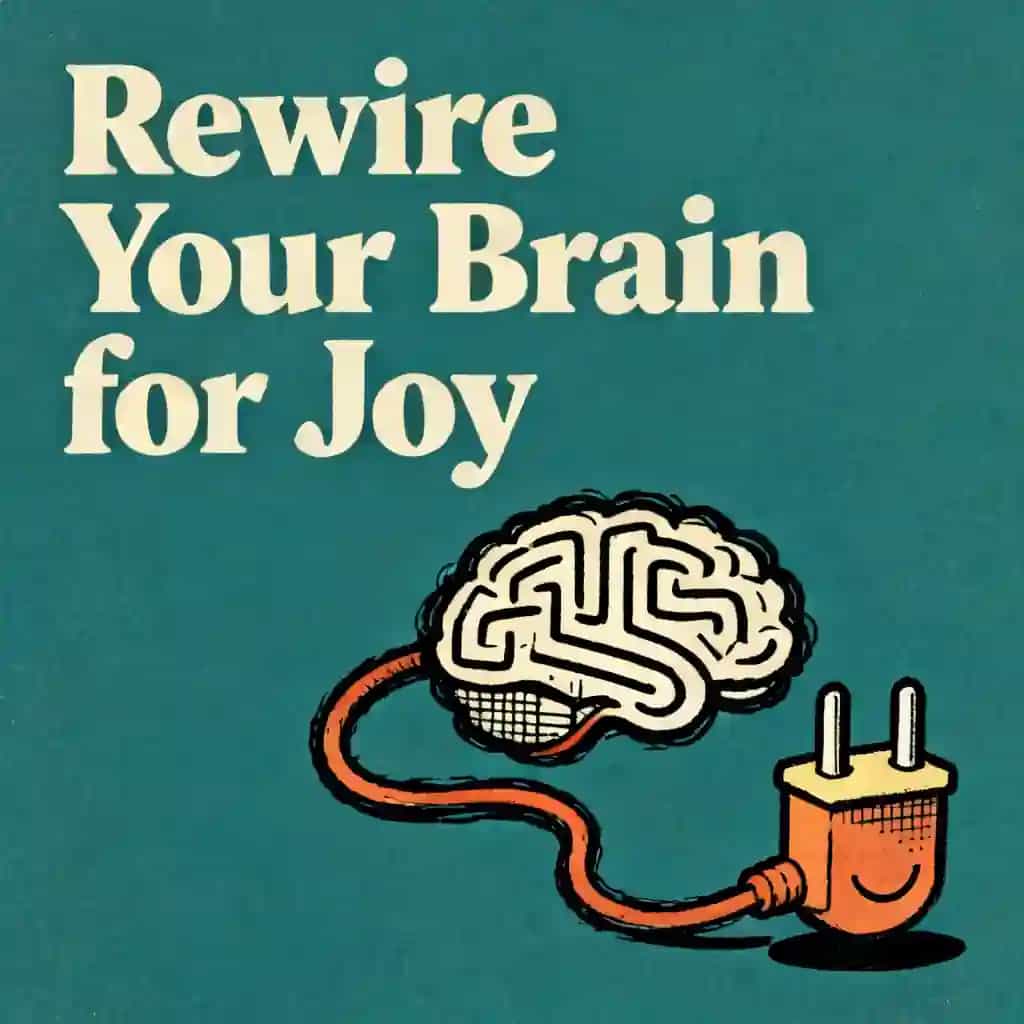
Our brains are wired to fixate on stress, but neuroplasticity lets us rewire that default. Learn how to use real-time resets to build lasting joy.

Best quote from How to win happily using neuroscience
Insight without in-the-moment rewiring is just information; to actually change the physical architecture of the brain, we must intervene right when the old neural pathways are firing.
Generated by Shesha
How to win in life happily neuroscience

Frequently Asked Questions
This gap is known as the "Insight Fallacy." While the neocortex handles logical understanding, your stress responses and habits are governed by the limbic system, specifically the amygdala. These deeper regions of the brain do not change through logic or conversation; they only respond to repetition and physical sensation. To create actual change, you must intervene with new actions during "plasticity windows"—the specific moments when you are actually experiencing stress or high emotion.
A Dopamine Menu is a curated list of activities designed to provide healthy, sustainable rewards rather than the "junk dopamine" found in social media or constant notifications. It is structured into three layers: Micro-Doses (two-to-five-minute resets like deep breathing), Sustainable rewards (ten-to-thirty-minute activities like a brisk walk or journaling), and High-Meaning rewards (deeply satisfying tasks like creative projects or meaningful conversations). Using this menu helps raise your baseline satisfaction so you no longer rely on chaotic hits of stimulation to feel alive.
You can use "real-time resets" like the Oculocardiac Vagus Reset to bypass the thinking brain and signal safety directly to the nervous system. To do this, keep your head still and look as far to the right as possible until you feel a spontaneous yawn, sigh, or swallow, then repeat the process to the left. This stimulates the vagus nerve, acting as a "brake pedal" for stress. Similarly, adopting a "soft gaze" or panoramic vision helps collapse the tunnel vision associated with anxiety.
While not a magic number for perfection, a twenty-one-day cycle is a scientifically solid framework for concentrated neuroplasticity. This window allows you to consistently identify triggers and practice "swaps"—choosing a new response over an old default. This repetition provides the brain with the necessary "proof" and myelination (neural insulation) to make the new pathway faster and more automatic than the old one.
Neuroscience suggests that "neurons that fire together, wire together." When you constantly rehearse grievances or ruminate on failures through venting, you are actually strengthening the neural circuitry of that distress. Instead of releasing the tension, you are myelinating a "victimhood" pathway, essentially practicing how to be upset rather than training the brain to find a resolution or a state of calm.
From Columbia University alumni built in San Francisco
BeFreed Brings Together A Global Community Of Curious Minds


"Instead of endless scrolling, I just hit play on BeFreed. It saves me so much time."


"I never knew where to start with nonfiction—BeFreed’s book lists turned into podcasts gave me a clear path."


"Perfect balance between learning and entertainment. Finished ‘Thinking, Fast and Slow’ on my commute this week."
"Crazy how much I learned while walking the dog. BeFreed = small habits → big gains."
"Reading used to feel like a chore. Now it’s just part of my lifestyle."

"Feels effortless compared to reading. I’ve finished 6 books this month already."
"BeFreed turned my guilty doomscrolling into something that feels productive and inspiring."

"BeFreed turned my commute into learning time. 20-min podcasts are perfect for finishing books I never had time for."
"BeFreed replaced my podcast queue. Imagine Spotify for books — that’s it. 🙌"

"It is great for me to learn something from the book without reading it."
"The themed book list podcasts help me connect ideas across authors—like a guided audio journey."
"Makes me feel smarter every time before going to work"
From Columbia University alumni built in San Francisco
BeFreed Brings Together A Global Community Of Curious Minds
"Instead of endless scrolling, I just hit play on BeFreed. It saves me so much time."
"I never knew where to start with nonfiction—BeFreed’s book lists turned into podcasts gave me a clear path."
"Perfect balance between learning and entertainment. Finished ‘Thinking, Fast and Slow’ on my commute this week."
"Crazy how much I learned while walking the dog. BeFreed = small habits → big gains."
"Reading used to feel like a chore. Now it’s just part of my lifestyle."
"Feels effortless compared to reading. I’ve finished 6 books this month already."
"BeFreed turned my guilty doomscrolling into something that feels productive and inspiring."
"BeFreed turned my commute into learning time. 20-min podcasts are perfect for finishing books I never had time for."
"BeFreed replaced my podcast queue. Imagine Spotify for books — that’s it. 🙌"
"It is great for me to learn something from the book without reading it."
"The themed book list podcasts help me connect ideas across authors—like a guided audio journey."
"Makes me feel smarter every time before going to work"
"Instead of endless scrolling, I just hit play on BeFreed. It saves me so much time."
"I never knew where to start with nonfiction—BeFreed’s book lists turned into podcasts gave me a clear path."
"Perfect balance between learning and entertainment. Finished ‘Thinking, Fast and Slow’ on my commute this week."
"Crazy how much I learned while walking the dog. BeFreed = small habits → big gains."
"Reading used to feel like a chore. Now it’s just part of my lifestyle."
"Feels effortless compared to reading. I’ve finished 6 books this month already."
"BeFreed turned my guilty doomscrolling into something that feels productive and inspiring."
"BeFreed turned my commute into learning time. 20-min podcasts are perfect for finishing books I never had time for."
"BeFreed replaced my podcast queue. Imagine Spotify for books — that’s it. 🙌"
"It is great for me to learn something from the book without reading it."
"The themed book list podcasts help me connect ideas across authors—like a guided audio journey."
"Makes me feel smarter every time before going to work"
"Instead of endless scrolling, I just hit play on BeFreed. It saves me so much time."
"I never knew where to start with nonfiction—BeFreed’s book lists turned into podcasts gave me a clear path."
"Perfect balance between learning and entertainment. Finished ‘Thinking, Fast and Slow’ on my commute this week."
"Crazy how much I learned while walking the dog. BeFreed = small habits → big gains."
"Reading used to feel like a chore. Now it’s just part of my lifestyle."
"Feels effortless compared to reading. I’ve finished 6 books this month already."
"BeFreed turned my guilty doomscrolling into something that feels productive and inspiring."
"BeFreed turned my commute into learning time. 20-min podcasts are perfect for finishing books I never had time for."
"BeFreed replaced my podcast queue. Imagine Spotify for books — that’s it. 🙌"
"It is great for me to learn something from the book without reading it."
"The themed book list podcasts help me connect ideas across authors—like a guided audio journey."
"Makes me feel smarter every time before going to work"