The Geometry of Digital Vision: Neural Networks and Image Vectors
Explore the geometry of digital vision as we discuss how neural networks interpret image vectors, pixel brightness, and the 784-dimensional measurement vector.

Best quote from The Geometry of Digital Vision: Neural Networks and Image Vectors
By turning that grid into a vector, we’re essentially creating a DNA sequence for that specific image, trading the visual 'look' for raw mathematical power.
Generated by Babu
What is it? A 784-dimensional measurement vector is a 28 \times 28 pixel image unrolled into a flat list of 784 numbers. Why a vector? It defines a specific pattern (direction) and intensity (magnitude). This lets standard neural networks use simple, fast vector math to detect shapes by checking if an input image "points" in the same direction. Why not a 2D array? Flattening simplifies the geometry and math, but it destroys spatial context. The CNN alternative: Convolutional Neural Networks

Frequently Asked Questions
Digital vision relies on a coordinate system where machines interpret images as organized lists of numbers. In a standard 28 by 28 grid, there are seven hundred and eighty-four tiny squares, each holding a specific level of pixel brightness. While humans see curves and white space, a neural network processes these values to understand the image. This transformation allows the machine to read the secret values held within each tile of the digital mosaic.
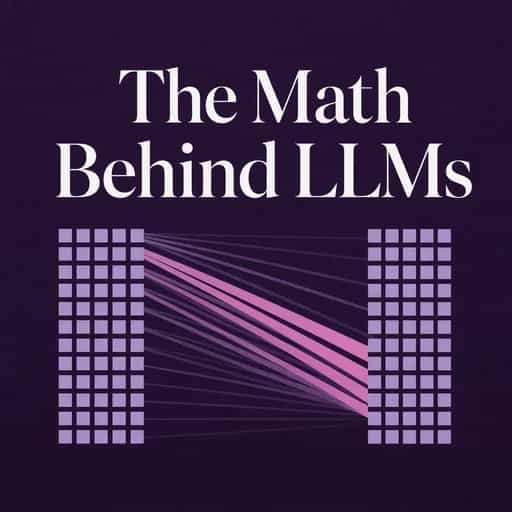
A 784-dimensional measurement vector is created by unrolling a 28 by 28 pixel grid into a single, long line of data. This process takes a square spatial arrangement and pulls it into a straight thread to make the mathematical calculations within neural networks faster and more efficient. By converting the two-dimensional grid into this vector format, the computer can process the specific brightness levels of every individual tile as a single sequence.
Spatial arrangement is a hurdle because a standard neural network does not naturally know that one pixel sits directly on top of another in a grid. To overcome this, the geometry of the image is altered by unrolling the 28 by 28 coordinate system into a linear vector. This allows the machine to handle the data mathematically, even though it sacrifices the immediate visual connection of dots and curves that the human brain perceives instantly.
From Columbia University alumni built in San Francisco
"Instead of endless scrolling, I just hit play on BeFreed. It saves me so much time."


"I never knew where to start with nonfiction—BeFreed’s book lists turned into podcasts gave me a clear path."


"Perfect balance between learning and entertainment. Finished ‘Thinking, Fast and Slow’ on my commute this week."
"Crazy how much I learned while walking the dog. BeFreed = small habits → big gains."
"Reading used to feel like a chore. Now it’s just part of my lifestyle."

"Feels effortless compared to reading. I’ve finished 6 books this month already."
"BeFreed turned my guilty doomscrolling into something that feels productive and inspiring."

"BeFreed turned my commute into learning time. 20-min podcasts are perfect for finishing books I never had time for."
"BeFreed replaced my podcast queue. Imagine Spotify for books — that’s it. 🙌"

"It is great for me to learn something from the book without reading it."
"The themed book list podcasts help me connect ideas across authors—like a guided audio journey."
"Makes me feel smarter every time before going to work"
From Columbia University alumni built in San Francisco
"Instead of endless scrolling, I just hit play on BeFreed. It saves me so much time."
"I never knew where to start with nonfiction—BeFreed’s book lists turned into podcasts gave me a clear path."
"Perfect balance between learning and entertainment. Finished ‘Thinking, Fast and Slow’ on my commute this week."
"Crazy how much I learned while walking the dog. BeFreed = small habits → big gains."
"Reading used to feel like a chore. Now it’s just part of my lifestyle."
"Feels effortless compared to reading. I’ve finished 6 books this month already."
"BeFreed turned my guilty doomscrolling into something that feels productive and inspiring."
"BeFreed turned my commute into learning time. 20-min podcasts are perfect for finishing books I never had time for."
"BeFreed replaced my podcast queue. Imagine Spotify for books — that’s it. 🙌"
"It is great for me to learn something from the book without reading it."
"The themed book list podcasts help me connect ideas across authors—like a guided audio journey."
"Makes me feel smarter every time before going to work"
"Instead of endless scrolling, I just hit play on BeFreed. It saves me so much time."
"I never knew where to start with nonfiction—BeFreed’s book lists turned into podcasts gave me a clear path."
"Perfect balance between learning and entertainment. Finished ‘Thinking, Fast and Slow’ on my commute this week."
"Crazy how much I learned while walking the dog. BeFreed = small habits → big gains."
"Reading used to feel like a chore. Now it’s just part of my lifestyle."
"Feels effortless compared to reading. I’ve finished 6 books this month already."
"BeFreed turned my guilty doomscrolling into something that feels productive and inspiring."
"BeFreed turned my commute into learning time. 20-min podcasts are perfect for finishing books I never had time for."
"BeFreed replaced my podcast queue. Imagine Spotify for books — that’s it. 🙌"
"It is great for me to learn something from the book without reading it."
"The themed book list podcasts help me connect ideas across authors—like a guided audio journey."
"Makes me feel smarter every time before going to work"
"Instead of endless scrolling, I just hit play on BeFreed. It saves me so much time."
"I never knew where to start with nonfiction—BeFreed’s book lists turned into podcasts gave me a clear path."
"Perfect balance between learning and entertainment. Finished ‘Thinking, Fast and Slow’ on my commute this week."
"Crazy how much I learned while walking the dog. BeFreed = small habits → big gains."
"Reading used to feel like a chore. Now it’s just part of my lifestyle."
"Feels effortless compared to reading. I’ve finished 6 books this month already."
"BeFreed turned my guilty doomscrolling into something that feels productive and inspiring."
"BeFreed turned my commute into learning time. 20-min podcasts are perfect for finishing books I never had time for."
"BeFreed replaced my podcast queue. Imagine Spotify for books — that’s it. 🙌"
"It is great for me to learn something from the book without reading it."
"The themed book list podcasts help me connect ideas across authors—like a guided audio journey."
"Makes me feel smarter every time before going to work"