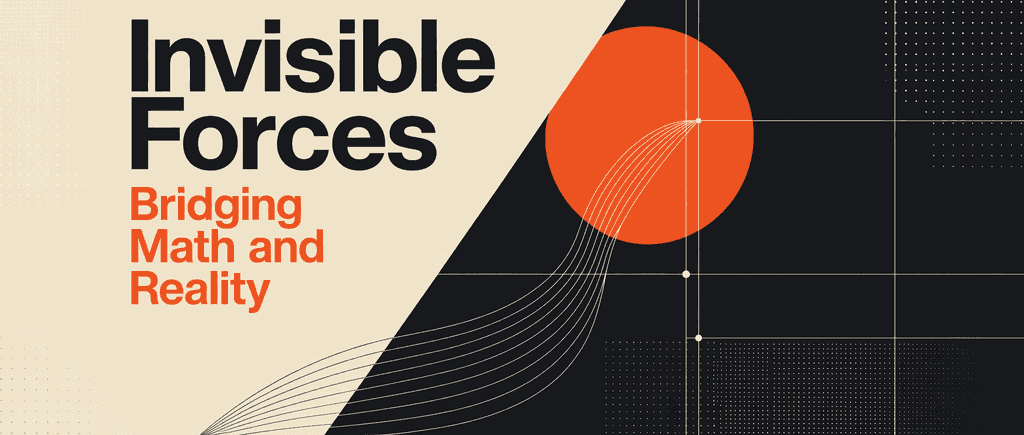
The Invisible Blueprint: Mastering the Logic of Geometry
Discover how simple points and lines form the hidden architecture of our world, from skyscraper symmetry to the mapping of the stars.

Best quote from The Invisible Blueprint: Mastering the Logic of Geometry
Euclidean geometry is the silent language of the eye and the invisible logic of the visible world, providing the blueprint that ensures our physical structures are not just beautiful, but functional and enduring.
Generated by A
Math geomerty

Frequently Asked Questions
Euclidean geometry, often called "plane geometry," deals with shapes on a flat surface where parallel lines never meet and the angles of a triangle always add up to 180 degrees. It is the geometry of our daily physical reality, used for building houses and surveying land. Non-Euclidean geometries, such as elliptic and hyperbolic geometry, describe curved spaces. In these systems, the rules change; for example, on a spherical surface (elliptic geometry), the angles of a triangle add up to more than 180 degrees, and all lines eventually intersect.
Triangles are considered the "workhorses" of structural stability because they do not deform under pressure as easily as other shapes like rectangles. This property is why they are frequently used in roof trusses, bridges, and the steel frameworks of skyscrapers. Architects use a method called "triangulation" to provide added strength to high-rise buildings, allowing them to withstand external forces like wind or earthquakes.
Beauty in design is often rooted in geometric principles like symmetry, balance, and specific proportions such as the Golden Ratio (approximately 1.618). When a building or piece of art follows these ratios and symmetrical divisions, the human brain recognizes the order and predictability. This creates a sense of harmony and aesthetic perfection that feels natural and "safe" to the eye, which is why ancient structures like the Parthenon are still considered masterpieces today.
Even though the Earth is a sphere, GPS technology relies on Euclidean principles to calculate a user's exact location through a process called triangulation. A GPS receiver measures the distance from at least four different satellites at known points in space. By calculating where the spheres of "possible locations" around these satellites intersect, the device can pinpoint a specific coordinate on Earth with incredible mathematical precision.
Euclid’s "Elements" served as the standard textbook for over two thousand years because it taught a rigorous system of logical deduction. It starts with basic, undeniable truths called axioms—such as the idea that a straight line can join any two points—and builds complex proofs step-by-step. This "if, then" logical framework influenced not only mathematics but also the model for scientific inquiry and architectural planning until the late 19th century.
From Columbia University alumni built in San Francisco
"Instead of endless scrolling, I just hit play on BeFreed. It saves me so much time."


"I never knew where to start with nonfiction—BeFreed’s book lists turned into podcasts gave me a clear path."


"Perfect balance between learning and entertainment. Finished ‘Thinking, Fast and Slow’ on my commute this week."
"Crazy how much I learned while walking the dog. BeFreed = small habits → big gains."
"Reading used to feel like a chore. Now it’s just part of my lifestyle."

"Feels effortless compared to reading. I’ve finished 6 books this month already."
"BeFreed turned my guilty doomscrolling into something that feels productive and inspiring."

"BeFreed turned my commute into learning time. 20-min podcasts are perfect for finishing books I never had time for."
"BeFreed replaced my podcast queue. Imagine Spotify for books — that’s it. 🙌"

"It is great for me to learn something from the book without reading it."
"The themed book list podcasts help me connect ideas across authors—like a guided audio journey."
"Makes me feel smarter every time before going to work"
From Columbia University alumni built in San Francisco
"Instead of endless scrolling, I just hit play on BeFreed. It saves me so much time."
"I never knew where to start with nonfiction—BeFreed’s book lists turned into podcasts gave me a clear path."
"Perfect balance between learning and entertainment. Finished ‘Thinking, Fast and Slow’ on my commute this week."
"Crazy how much I learned while walking the dog. BeFreed = small habits → big gains."
"Reading used to feel like a chore. Now it’s just part of my lifestyle."
"Feels effortless compared to reading. I’ve finished 6 books this month already."
"BeFreed turned my guilty doomscrolling into something that feels productive and inspiring."
"BeFreed turned my commute into learning time. 20-min podcasts are perfect for finishing books I never had time for."
"BeFreed replaced my podcast queue. Imagine Spotify for books — that’s it. 🙌"
"It is great for me to learn something from the book without reading it."
"The themed book list podcasts help me connect ideas across authors—like a guided audio journey."
"Makes me feel smarter every time before going to work"
"Instead of endless scrolling, I just hit play on BeFreed. It saves me so much time."
"I never knew where to start with nonfiction—BeFreed’s book lists turned into podcasts gave me a clear path."
"Perfect balance between learning and entertainment. Finished ‘Thinking, Fast and Slow’ on my commute this week."
"Crazy how much I learned while walking the dog. BeFreed = small habits → big gains."
"Reading used to feel like a chore. Now it’s just part of my lifestyle."
"Feels effortless compared to reading. I’ve finished 6 books this month already."
"BeFreed turned my guilty doomscrolling into something that feels productive and inspiring."
"BeFreed turned my commute into learning time. 20-min podcasts are perfect for finishing books I never had time for."
"BeFreed replaced my podcast queue. Imagine Spotify for books — that’s it. 🙌"
"It is great for me to learn something from the book without reading it."
"The themed book list podcasts help me connect ideas across authors—like a guided audio journey."
"Makes me feel smarter every time before going to work"
"Instead of endless scrolling, I just hit play on BeFreed. It saves me so much time."
"I never knew where to start with nonfiction—BeFreed’s book lists turned into podcasts gave me a clear path."
"Perfect balance between learning and entertainment. Finished ‘Thinking, Fast and Slow’ on my commute this week."
"Crazy how much I learned while walking the dog. BeFreed = small habits → big gains."
"Reading used to feel like a chore. Now it’s just part of my lifestyle."
"Feels effortless compared to reading. I’ve finished 6 books this month already."
"BeFreed turned my guilty doomscrolling into something that feels productive and inspiring."
"BeFreed turned my commute into learning time. 20-min podcasts are perfect for finishing books I never had time for."
"BeFreed replaced my podcast queue. Imagine Spotify for books — that’s it. 🙌"
"It is great for me to learn something from the book without reading it."
"The themed book list podcasts help me connect ideas across authors—like a guided audio journey."
"Makes me feel smarter every time before going to work"