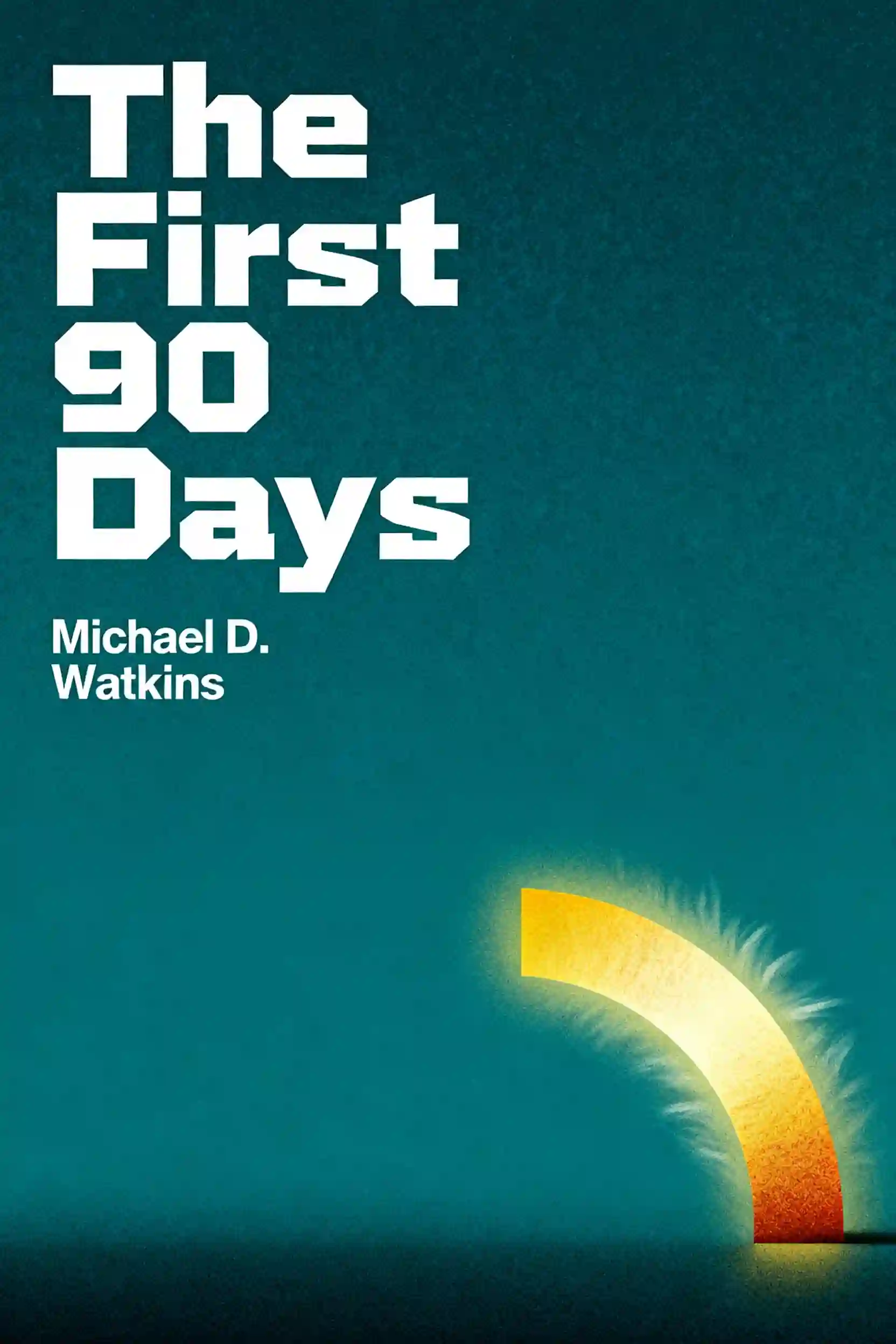
Your First Ninety Days in Charge
Stepping into leadership is a high-stakes transition where your old strengths can become liabilities. Learn to navigate the first three months.
Best quote from Your First Ninety Days in Charge
In those first ninety days, your primary job isn't to fix—it is to understand the system well enough to change it intelligently later. You have to shift your identity from 'the expert' to 'the architect,' moving with intention rather than anxiety.
Generated with BeFreed
Your First Ninety Days in Charge






Frequently Asked Questions
Coming in with a clear agenda or "the answer" too early is a trap known as Action Bias. When a leader makes decisions before understanding the full context, they signal to the team that their minds are already made up, which causes employees to stop sharing vital information. This behavior can make a leader appear superficial and out of touch, potentially damaging their reputation during the fragile first ninety days when the team is still forming an opinion of their leadership style.
The breakeven point is the specific moment in a transition where a new leader begins adding more value to the organization than they are costing it. While it typically takes about six months for a new executive to reach this stage, the goal of a structured ninety-day plan is to pull this point forward. Achieving this requires the leader to shift from a "student" phase of understanding the system to an "architect" phase where they can intelligently change it.
The STARS framework identifies five distinct business environments: Start-up, Turnaround, Accelerated Growth, Realignment, and Sustaining Success. Each situation requires a completely different leadership strategy. For example, a "Turnaround" requires immediate, decisive action to save a failing project, whereas "Sustaining Success" requires a more cautious approach to avoid breaking things that are already working. Misdiagnosing the situation—such as using a Turnaround playbook for a successful team—can lead to unnecessary conflict and failure.
Early wins are small, visible improvements delivered within the first ninety days that address a genuine pain point for the team without being controversial. Examples include simplifying a frustrating workflow or canceling an unproductive meeting. These wins are crucial because they build "political capital" and prove to the team that the leader listens, acts, and delivers. This banked goodwill is necessary for when the leader eventually has to make more difficult or unpopular decisions later on.
By the sixty-day mark, a leader should evaluate team members based on two axes: performance and trust. It is a mistake to keep mediocre performers for too long out of a desire to be "fair," as the rest of the team will notice if a leader tolerates poor performance or toxic behavior. Leaders must also address awkward dynamics directly, such as having private conversations with individuals who were passed over for the leadership role, to ensure everyone is aligned and set up for success.
From Columbia University alumni built in San Francisco
"Instead of endless scrolling, I just hit play on BeFreed. It saves me so much time."


"I never knew where to start with nonfiction—BeFreed’s book lists turned into podcasts gave me a clear path."


"Perfect balance between learning and entertainment. Finished ‘Thinking, Fast and Slow’ on my commute this week."
"Crazy how much I learned while walking the dog. BeFreed = small habits → big gains."
"Reading used to feel like a chore. Now it’s just part of my lifestyle."

"Feels effortless compared to reading. I’ve finished 6 books this month already."
"BeFreed turned my guilty doomscrolling into something that feels productive and inspiring."

"BeFreed turned my commute into learning time. 20-min podcasts are perfect for finishing books I never had time for."
"BeFreed replaced my podcast queue. Imagine Spotify for books — that’s it. 🙌"

"It is great for me to learn something from the book without reading it."
"The themed book list podcasts help me connect ideas across authors—like a guided audio journey."
"Makes me feel smarter every time before going to work"
From Columbia University alumni built in San Francisco
"Instead of endless scrolling, I just hit play on BeFreed. It saves me so much time."
"I never knew where to start with nonfiction—BeFreed’s book lists turned into podcasts gave me a clear path."
"Perfect balance between learning and entertainment. Finished ‘Thinking, Fast and Slow’ on my commute this week."
"Crazy how much I learned while walking the dog. BeFreed = small habits → big gains."
"Reading used to feel like a chore. Now it’s just part of my lifestyle."
"Feels effortless compared to reading. I’ve finished 6 books this month already."
"BeFreed turned my guilty doomscrolling into something that feels productive and inspiring."
"BeFreed turned my commute into learning time. 20-min podcasts are perfect for finishing books I never had time for."
"BeFreed replaced my podcast queue. Imagine Spotify for books — that’s it. 🙌"
"It is great for me to learn something from the book without reading it."
"The themed book list podcasts help me connect ideas across authors—like a guided audio journey."
"Makes me feel smarter every time before going to work"
"Instead of endless scrolling, I just hit play on BeFreed. It saves me so much time."
"I never knew where to start with nonfiction—BeFreed’s book lists turned into podcasts gave me a clear path."
"Perfect balance between learning and entertainment. Finished ‘Thinking, Fast and Slow’ on my commute this week."
"Crazy how much I learned while walking the dog. BeFreed = small habits → big gains."
"Reading used to feel like a chore. Now it’s just part of my lifestyle."
"Feels effortless compared to reading. I’ve finished 6 books this month already."
"BeFreed turned my guilty doomscrolling into something that feels productive and inspiring."
"BeFreed turned my commute into learning time. 20-min podcasts are perfect for finishing books I never had time for."
"BeFreed replaced my podcast queue. Imagine Spotify for books — that’s it. 🙌"
"It is great for me to learn something from the book without reading it."
"The themed book list podcasts help me connect ideas across authors—like a guided audio journey."
"Makes me feel smarter every time before going to work"
"Instead of endless scrolling, I just hit play on BeFreed. It saves me so much time."
"I never knew where to start with nonfiction—BeFreed’s book lists turned into podcasts gave me a clear path."
"Perfect balance between learning and entertainment. Finished ‘Thinking, Fast and Slow’ on my commute this week."
"Crazy how much I learned while walking the dog. BeFreed = small habits → big gains."
"Reading used to feel like a chore. Now it’s just part of my lifestyle."
"Feels effortless compared to reading. I’ve finished 6 books this month already."
"BeFreed turned my guilty doomscrolling into something that feels productive and inspiring."
"BeFreed turned my commute into learning time. 20-min podcasts are perfect for finishing books I never had time for."
"BeFreed replaced my podcast queue. Imagine Spotify for books — that’s it. 🙌"
"It is great for me to learn something from the book without reading it."
"The themed book list podcasts help me connect ideas across authors—like a guided audio journey."
"Makes me feel smarter every time before going to work"


![[the-first-90-days-by-michael-d-watkins:c0000] The First 90 Days p1-1](/_next/image?url=https%3A%2F%2Fd1y2du6z1jfm9e.cloudfront.net%2Fassets%2Fpodcast%2Fpurple.png&w=1024&q=50)
![[the-first-90-days-by-michael-d-watkins:c0001] The First 90 Days p1-1](/_next/image?url=https%3A%2F%2Fd1y2du6z1jfm9e.cloudfront.net%2Fassets%2Fpodcast%2Fyellow.png&w=1024&q=50)
![[the-first-90-days-by-michael-d-watkins:c0002] The First 90 Days p1-1](/_next/image?url=https%3A%2F%2Fd1y2du6z1jfm9e.cloudfront.net%2Fassets%2Fpodcast%2Fgreen.png&w=1024&q=50)