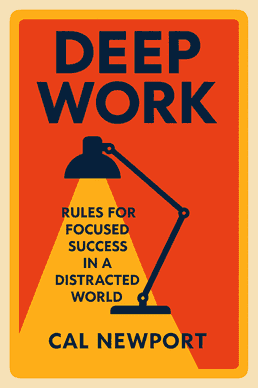
Deep work and the trap of constant connection
Struggling to focus in an always-on culture? Learn how to eliminate distractions and build a deep work protocol to reclaim your high-performance habits.

Best quote from Deep work and the trap of constant connection
The highest performers don’t just manage their time—they ruthlessly protect their cognitive capacity. They realize that their ability to focus is their most valuable asset, yet most of us treat it like a renewable resource that never runs out.

This audio lesson was created by a BeFreed community member
deep work, focus, eliminating distraction, and high performance habits for entrepreneur

Frequently Asked Questions
When you switch tasks, your brain experiences a phenomenon called "attention residue." Even after you return to your original work, a part of your mind remains tethered to the previous distraction, especially if that distraction was high-stakes or left unfinished. Research shows it takes an average of 23 minutes to return to a state of deep focus after checking a single notification, as your prefrontal cortex must physically reload the rules and context for the primary task.
The Rhythmic philosophy involves picking a specific, non-negotiable time every day—such as first thing in the morning—to perform deep work in the same place. This approach is highly effective because it turns focus into a habit rather than a choice, which removes "decision fatigue." By making the deep work block a daily ritual, you no longer have to rely on willpower or wait for "inspiration" to strike; your brain becomes conditioned to enter a flow state at that specific time.
Simply having a smartphone on your desk, even if it is silent and face down, can reduce your cognitive capacity by up to 40%. This is known as "brain drain." Because the phone is a "super-stimulus" representing infinite possibilities like emails and social media, a portion of your prefrontal cortex is constantly working to suppress the urge to check it. This awareness consumes valuable working memory that should be dedicated to the complex problem-solving required for deep work.
A Capture Pad is a physical notepad kept next to your workspace to manage the "Zeigarnik Effect," which is the brain's tendency to loop unfinished thoughts or random reminders. When a distracting thought pops up—like a chore you forgot to do—you write it down immediately. This "mental dump" signals to your brain that the information is recorded and safe to deal with later, allowing your working memory to clear and return to the deep task at hand without the thought lingering in the background.
True recovery for the prefrontal cortex requires "Active Physical Recovery," such as walking, stretching, or looking out a window, which allows the brain's "default mode network" to take over. In contrast, "Shallow Input"—like scrolling through social media or checking news—is not actual rest. These activities provide dopamine hits and keep the nervous system in a state of high alert, preventing the brain from consolidating information and recovering the metabolic energy spent during deep work sessions.
Discover more

The Deep Work Protocol
In an era of constant digital distraction, the ability to protect your attention is a competitive advantage. This plan is designed for knowledge workers and students who need to master their physiological focus and neutralize environmental hijacks to produce high-quality work.

From Drowning to Deep Work
In an era of constant digital noise and increasing workloads, professionals often struggle to move beyond reactive tasks. This plan is designed for high-performers and knowledge workers who need to regain control over their schedules and master the art of sustained focus.

Deep Work for High-Stakes Deadlines
In an era of constant digital noise, the ability to focus on complex tasks is a rare competitive advantage. This plan is designed for professionals facing tight deadlines who need to optimize their mental energy and reclaim control over their schedules.

Systems Over Willpower: Rewiring for Deep Work
In an era of constant distraction, relying on willpower alone is a recipe for burnout. This plan is designed for professionals and creatives who need to transition from reactive busyness to proactive, high-impact deep work by reengineering their environment and mindset.
Stop Distractions & Stay on Track Daily
In an era of constant digital noise, the ability to maintain focus is a competitive advantage. This plan is designed for professionals and students who need to reclaim their attention and build sustainable systems for high-impact productivity.
Improve focus and attention
In an era of constant digital distraction, the ability to control your attention is a competitive advantage. This plan is ideal for professionals and students looking to master deep work, leverage neuroscience, and build sustainable peak performance habits.

系统性重建深度工作能力与专注力恢复指南
In an era of constant digital distraction, the ability to concentrate is becoming a rare and valuable skill. This guide is designed for professionals and students who need to reclaim their cognitive sovereignty and master the art of deep work to achieve peak performance.

Spot hidden habits killing productivity
In an era of constant digital noise, traditional time management is no longer enough to stay effective. This plan is designed for professionals and students who feel busy but unproductive, offering the tools to reclaim focus and master cognitive energy.
From Columbia University alumni built in San Francisco
"Instead of endless scrolling, I just hit play on BeFreed. It saves me so much time."


"I never knew where to start with nonfiction—BeFreed’s book lists turned into podcasts gave me a clear path."


"Perfect balance between learning and entertainment. Finished ‘Thinking, Fast and Slow’ on my commute this week."
"Crazy how much I learned while walking the dog. BeFreed = small habits → big gains."
"Reading used to feel like a chore. Now it’s just part of my lifestyle."

"Feels effortless compared to reading. I’ve finished 6 books this month already."
"BeFreed turned my guilty doomscrolling into something that feels productive and inspiring."

"BeFreed turned my commute into learning time. 20-min podcasts are perfect for finishing books I never had time for."
"BeFreed replaced my podcast queue. Imagine Spotify for books — that’s it. 🙌"

"It is great for me to learn something from the book without reading it."
"The themed book list podcasts help me connect ideas across authors—like a guided audio journey."
"Makes me feel smarter every time before going to work"
From Columbia University alumni built in San Francisco
"Instead of endless scrolling, I just hit play on BeFreed. It saves me so much time."
"I never knew where to start with nonfiction—BeFreed’s book lists turned into podcasts gave me a clear path."
"Perfect balance between learning and entertainment. Finished ‘Thinking, Fast and Slow’ on my commute this week."
"Crazy how much I learned while walking the dog. BeFreed = small habits → big gains."
"Reading used to feel like a chore. Now it’s just part of my lifestyle."
"Feels effortless compared to reading. I’ve finished 6 books this month already."
"BeFreed turned my guilty doomscrolling into something that feels productive and inspiring."
"BeFreed turned my commute into learning time. 20-min podcasts are perfect for finishing books I never had time for."
"BeFreed replaced my podcast queue. Imagine Spotify for books — that’s it. 🙌"
"It is great for me to learn something from the book without reading it."
"The themed book list podcasts help me connect ideas across authors—like a guided audio journey."
"Makes me feel smarter every time before going to work"
"Instead of endless scrolling, I just hit play on BeFreed. It saves me so much time."
"I never knew where to start with nonfiction—BeFreed’s book lists turned into podcasts gave me a clear path."
"Perfect balance between learning and entertainment. Finished ‘Thinking, Fast and Slow’ on my commute this week."
"Crazy how much I learned while walking the dog. BeFreed = small habits → big gains."
"Reading used to feel like a chore. Now it’s just part of my lifestyle."
"Feels effortless compared to reading. I’ve finished 6 books this month already."
"BeFreed turned my guilty doomscrolling into something that feels productive and inspiring."
"BeFreed turned my commute into learning time. 20-min podcasts are perfect for finishing books I never had time for."
"BeFreed replaced my podcast queue. Imagine Spotify for books — that’s it. 🙌"
"It is great for me to learn something from the book without reading it."
"The themed book list podcasts help me connect ideas across authors—like a guided audio journey."
"Makes me feel smarter every time before going to work"
"Instead of endless scrolling, I just hit play on BeFreed. It saves me so much time."
"I never knew where to start with nonfiction—BeFreed’s book lists turned into podcasts gave me a clear path."
"Perfect balance between learning and entertainment. Finished ‘Thinking, Fast and Slow’ on my commute this week."
"Crazy how much I learned while walking the dog. BeFreed = small habits → big gains."
"Reading used to feel like a chore. Now it’s just part of my lifestyle."
"Feels effortless compared to reading. I’ve finished 6 books this month already."
"BeFreed turned my guilty doomscrolling into something that feels productive and inspiring."
"BeFreed turned my commute into learning time. 20-min podcasts are perfect for finishing books I never had time for."
"BeFreed replaced my podcast queue. Imagine Spotify for books — that’s it. 🙌"
"It is great for me to learn something from the book without reading it."
"The themed book list podcasts help me connect ideas across authors—like a guided audio journey."
"Makes me feel smarter every time before going to work"





![Deep Work: Meaning, Benefits, and 7 Ways to Focus Today [2025] • Asana](/_next/image?url=https%3A%2F%2Fd1y2du6z1jfm9e.cloudfront.net%2Fassets%2Fpodcast%2Fyellow.png&w=1024&q=50)