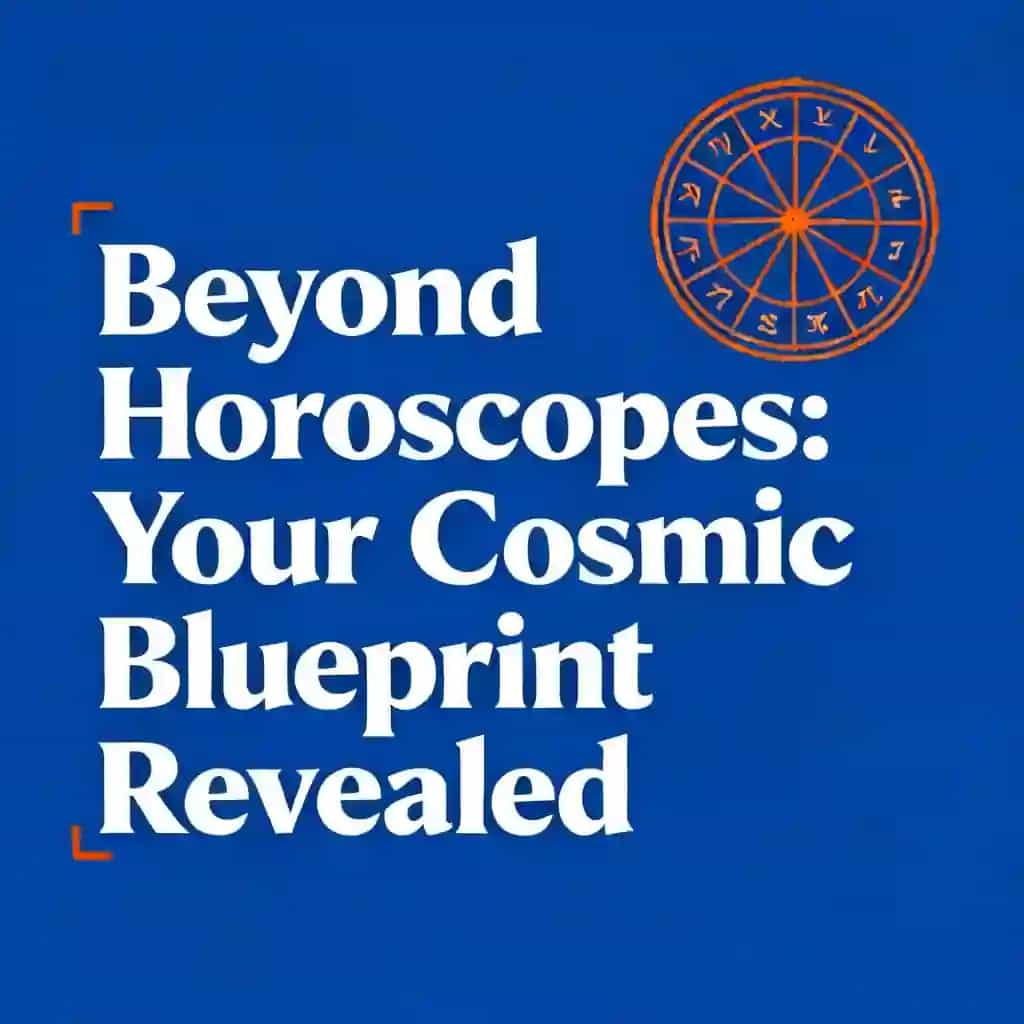
Dane Rudhyar and the Meaning of Your Birth Chart
Stop viewing your birth chart as a fixed snapshot. Learn how Dane Rudhyar’s humanistic astrology turns the zodiac into a dynamic tool for personal growth.

Best quote from Dane Rudhyar and the Meaning of Your Birth Chart
The birth chart is not a fixed destiny; it is a dynamic mandala of the psyche and a living, breathing blueprint for growth. It reveals meaningful patterns rather than mechanical causes, showing us how universal processes are reflected in our individual lives.
Generated by Kai
I want to learn everything from and about Dane rudhyar


Frequently Asked Questions
Traditional astrology often focuses on external forces and predicting fixed events, whereas Rudhyar’s humanistic approach views the birth chart as a "dynamic mandala of the psyche." Instead of seeing the stars as mechanical causes of luck or misfortune, Rudhyar saw them as a symbolic language that reflects a person's potential for growth. In this view, the chart is a blueprint for personal transformation, shifting the focus from what will happen to the individual to what the individual can become through conscious integration of their inner archetypes.
Rudhyar organized the birth chart into a three-level hierarchy that reflects how life manifests. The first level consists of the Zodiac signs, which he called the "Universal Archetypal Foundation" or the "alphabet" of potential. The second level is the Planets, described as "Focalizing and Dynamizing Forces" that act as the tools or actors to move that potential. Finally, the third level is the Houses, which represent the "Fields of Concrete Experience." This final layer brings the cosmic energy down to earth, providing the specific real-world context or "stage" where an individual's life actually unfolds.
Rudhyar rejected the idea that difficult life events or challenging planetary aspects, like T-squares or quincunxes, are "bad luck." Instead, he viewed them as "structural angles of adjustment" or "developmental pressure points." From this perspective, a crisis is a necessary phase in a cycle of growth that forces an individual to mature or reassess their life. It shifts the internal dialogue from "Why is this happening to me?" to "What is this tension asking me to become?", treating the challenge as a catalyst for achieving psychological wholeness.
Rudhyar bridged the gap between ancient stars and modern psychology by integrating the work of Carl Jung. He mapped Jungian archetypes onto planetary symbols—for example, seeing Mars as the drive for assertion and Saturn as the drive for structure. He viewed the birth chart as a map for "individuation," the lifelong process of integrating unconscious parts of the self into a conscious whole. By using astrology as a "symbolic language of the psyche," Rudhyar provided a vocabulary for people to recognize and interrupt their own psychological patterns and habituated behaviors.
From Columbia University alumni built in San Francisco
"Instead of endless scrolling, I just hit play on BeFreed. It saves me so much time."


"I never knew where to start with nonfiction—BeFreed’s book lists turned into podcasts gave me a clear path."


"Perfect balance between learning and entertainment. Finished ‘Thinking, Fast and Slow’ on my commute this week."
"Crazy how much I learned while walking the dog. BeFreed = small habits → big gains."
"Reading used to feel like a chore. Now it’s just part of my lifestyle."

"Feels effortless compared to reading. I’ve finished 6 books this month already."
"BeFreed turned my guilty doomscrolling into something that feels productive and inspiring."

"BeFreed turned my commute into learning time. 20-min podcasts are perfect for finishing books I never had time for."
"BeFreed replaced my podcast queue. Imagine Spotify for books — that’s it. 🙌"

"It is great for me to learn something from the book without reading it."
"The themed book list podcasts help me connect ideas across authors—like a guided audio journey."
"Makes me feel smarter every time before going to work"
From Columbia University alumni built in San Francisco
"Instead of endless scrolling, I just hit play on BeFreed. It saves me so much time."
"I never knew where to start with nonfiction—BeFreed’s book lists turned into podcasts gave me a clear path."
"Perfect balance between learning and entertainment. Finished ‘Thinking, Fast and Slow’ on my commute this week."
"Crazy how much I learned while walking the dog. BeFreed = small habits → big gains."
"Reading used to feel like a chore. Now it’s just part of my lifestyle."
"Feels effortless compared to reading. I’ve finished 6 books this month already."
"BeFreed turned my guilty doomscrolling into something that feels productive and inspiring."
"BeFreed turned my commute into learning time. 20-min podcasts are perfect for finishing books I never had time for."
"BeFreed replaced my podcast queue. Imagine Spotify for books — that’s it. 🙌"
"It is great for me to learn something from the book without reading it."
"The themed book list podcasts help me connect ideas across authors—like a guided audio journey."
"Makes me feel smarter every time before going to work"
"Instead of endless scrolling, I just hit play on BeFreed. It saves me so much time."
"I never knew where to start with nonfiction—BeFreed’s book lists turned into podcasts gave me a clear path."
"Perfect balance between learning and entertainment. Finished ‘Thinking, Fast and Slow’ on my commute this week."
"Crazy how much I learned while walking the dog. BeFreed = small habits → big gains."
"Reading used to feel like a chore. Now it’s just part of my lifestyle."
"Feels effortless compared to reading. I’ve finished 6 books this month already."
"BeFreed turned my guilty doomscrolling into something that feels productive and inspiring."
"BeFreed turned my commute into learning time. 20-min podcasts are perfect for finishing books I never had time for."
"BeFreed replaced my podcast queue. Imagine Spotify for books — that’s it. 🙌"
"It is great for me to learn something from the book without reading it."
"The themed book list podcasts help me connect ideas across authors—like a guided audio journey."
"Makes me feel smarter every time before going to work"
"Instead of endless scrolling, I just hit play on BeFreed. It saves me so much time."
"I never knew where to start with nonfiction—BeFreed’s book lists turned into podcasts gave me a clear path."
"Perfect balance between learning and entertainment. Finished ‘Thinking, Fast and Slow’ on my commute this week."
"Crazy how much I learned while walking the dog. BeFreed = small habits → big gains."
"Reading used to feel like a chore. Now it’s just part of my lifestyle."
"Feels effortless compared to reading. I’ve finished 6 books this month already."
"BeFreed turned my guilty doomscrolling into something that feels productive and inspiring."
"BeFreed turned my commute into learning time. 20-min podcasts are perfect for finishing books I never had time for."
"BeFreed replaced my podcast queue. Imagine Spotify for books — that’s it. 🙌"
"It is great for me to learn something from the book without reading it."
"The themed book list podcasts help me connect ideas across authors—like a guided audio journey."
"Makes me feel smarter every time before going to work"