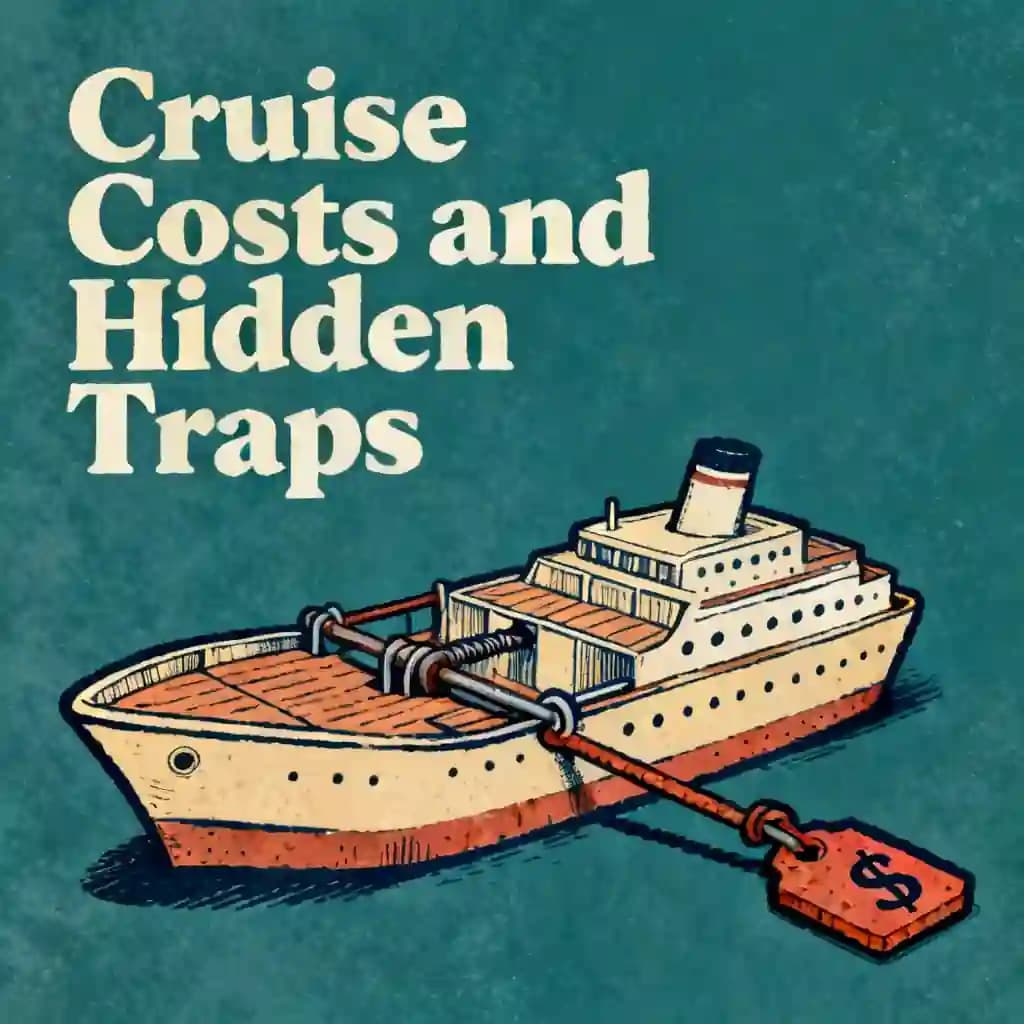
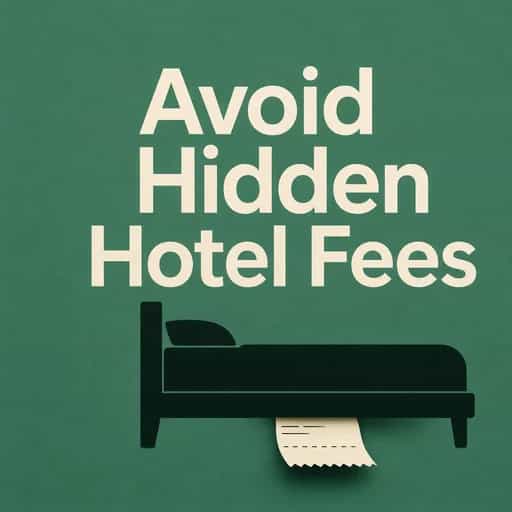
Think your cruise is all-inclusive? Learn how to spot hidden fees and pricing scams so you can enjoy your vacation without a surprise bill at the end.
Best quote from Cruise ship costs and hidden traps to avoid
“
The cruise industry is masterfully designed to provide a sense of total relaxation while simultaneously extracting every possible dollar through 'drip pricing' and 'convenience fees.' You have to be more disciplined than the cruise line is persuasive.
”
J
Generated by Jacob
Input question
What a consumer needs to know about cruise ships, the risks, how to choose the right one, and the hidden traps, and pricing scams
Host voices
Eli
Nia
Knowledge sources
Frequently Asked Questions
Cruise lines frequently use a "loss leader" pricing model, where they sell base tickets at a loss—sometimes as low as ninety-nine dollars—to get passengers on board. Once you are on the ship, the environment is engineered to generate revenue through "drip pricing." Approximately thirty-one percent of a cruise line's total revenue comes from onboard spending, including high-markup items like thirty-dollar-a-day Wi-Fi, automatic daily gratuities, and port fees that are often excluded from the initial teaser price.
For most travelers, the beverage package is an "expensive cage" rather than a deal. To break even on a package that can cost up to $136 per day, an individual must consume between eight and twelve alcoholic drinks every single day of the trip. Furthermore, most lines employ a "forced revenue multiplication" rule, requiring every adult in a cabin to purchase the package if one person does. Most "normal" drinkers would save significant money by paying for drinks individually as they go.
Cruise lines often operate a monopoly on your time in port, marking up local tours by two hundred to three hundred percent. While they use "fear tactics" suggesting the ship will leave you behind if you aren't on an official tour, data shows that over ninety-nine percent of independent tour participants return on time. By booking directly with local operators via research on sites like TripAdvisor, a family can often save over a thousand dollars while enjoying the exact same experience.
Standard travel insurance or credit card policies are often insufficient for cruises, which carry high risks for medical evacuations that can cost up to $100,000. To get the most comprehensive coverage—specifically "pre-existing condition waivers"—you generally must purchase a cruise-specific policy within fifteen days of making your initial deposit. Waiting until closer to the sail date can result in denied claims for flare-ups of old injuries or illnesses.
The onboard casino is a high-risk zone because cruise ships allow passengers to charge gambling losses directly to their room accounts with no immediate alerts or limits. To stay in control, you should follow the "Key in the Cabin" rule: decide on a cash budget for the night, take only that amount to the casino, and leave your room key behind so you cannot impulsively charge more to your account. Additionally, be aware that sea-based casinos are not regulated like those in Las Vegas and often feature much worse payout odds.
From Columbia University alumni | built in San Francisco
BeFreed Brings Together A Global Community Of Curious Minds
4.7
avg rating
7.84k+ App Rating
BeFreed Community
Seriously I haven’t even explored this app fully yet but from using it the last few days I am so impressed... BeFreed is on a different level from any other learning app I have used. This makes it ultra engaging and can actually improve your concentration which is great for all the doom scrollers!
@ladyInfinity
I bought BeFreed exactly 23 days ago, and I have used it every single day since. It has completely embedded itself into my daily workflow and learning habit.
@jayallen
The truth is, the app has exceeded all my expectations. I can ask it to generate audio on any topic, whatever it may be, and the result is impressive. My professional field is a specialization in psychotherapy and it is multidisciplinary; however, the answers are very accurate.
@Raguipa
What I appreciate most is how much it's reduced my scrolling – I'm spending less time searching and more time absorbing information. The combination of full audiobooks, podcasts, the learning plans are brilliant.
@colonyofcreatorsNGO
I have been a PhotoReading Accelerated Learning Instructor for the past 24 years... books and reading and learning are my thing, and BeFreed has done a great job in providing an innovative approach to disseminating and delivering information in an easy to consume way.
@BeFreed user
It is not just a book summary app, I have used the 'fun reading' option and it's a much better summary and way to grasp ideas the traditional way, that alone is worth this deal.
@austinakon
I love this app. Used it for several days and I cannot stop listening. Such a great way to start.
@jcrules328
I really like the program; I have already tested it for around one month, and I feel that it's an amazing gem. It works so well because I can use BeFreed to create my own topics, and the voice is so good with unlimited choice of narrations.
@DanielCZ
Seriously I haven’t even explored this app fully yet but from using it the last few days I am so impressed... BeFreed is on a different level from any other learning app I have used. This makes it ultra engaging and can actually improve your concentration which is great for all the doom scrollers!
@ladyInfinity
I bought BeFreed exactly 23 days ago, and I have used it every single day since. It has completely embedded itself into my daily workflow and learning habit.
@jayallen
The truth is, the app has exceeded all my expectations. I can ask it to generate audio on any topic, whatever it may be, and the result is impressive. My professional field is a specialization in psychotherapy and it is multidisciplinary; however, the answers are very accurate.
@Raguipa
What I appreciate most is how much it's reduced my scrolling – I'm spending less time searching and more time absorbing information. The combination of full audiobooks, podcasts, the learning plans are brilliant.
@colonyofcreatorsNGO
I have been a PhotoReading Accelerated Learning Instructor for the past 24 years... books and reading and learning are my thing, and BeFreed has done a great job in providing an innovative approach to disseminating and delivering information in an easy to consume way.
@BeFreed user
It is not just a book summary app, I have used the 'fun reading' option and it's a much better summary and way to grasp ideas the traditional way, that alone is worth this deal.
@austinakon
I love this app. Used it for several days and I cannot stop listening. Such a great way to start.
@jcrules328
I really like the program; I have already tested it for around one month, and I feel that it's an amazing gem. It works so well because I can use BeFreed to create my own topics, and the voice is so good with unlimited choice of narrations.
@DanielCZ
I love the fact that I can get useful, condensed, information and ideas in a 8 - 15 minute podcast style audio. I'm not a general fan of podcasts because of all the fluff, but this cuts through all that.
@BeFreed user
I am finishing up my doctorate, and have to read a lot of unfamiliar material... With BeFreed, you simply enter a prompt, and the app finds source material for you and generates an audio podcast. I find the process in BeFreed to be more streamlined than NotebookLM.
@Brad
I often search YouTube for something to listen to whilst making breakfast, when I'm out walking, commuting, etc, and BeFreed has provided an even more targeted approach, without the adverts and the fluff!
@BeFreed user
The absolute best part about this platform is its versatility. There is literally no subject that is off-topic. It handles whatever you throw at it... It is rare to find an learning tool with zero limitations that actually delivers on its promises.
@jayallen
BeFreed is fantastic. The user-friendly design means I spend less time navigating and more time learning. The mix of audiobooks, podcasts, and learning plans is a genius combo that has completely changed my daily routine.
@BeFreed user
At the start I needed a while to understand how to create podcasts in italian language and boom! It is so great! I can ask to explain every argument and it does so well and so smartly!
@matteo77
BeFreed has become my daily app for audio books tools... What I like the most is the way you put your text and come with an audio that you can listen on the go.
@kotanzu1
I love the fact that I can get useful, condensed, information and ideas in a 8 - 15 minute podcast style audio. I'm not a general fan of podcasts because of all the fluff, but this cuts through all that.
@BeFreed user
I am finishing up my doctorate, and have to read a lot of unfamiliar material... With BeFreed, you simply enter a prompt, and the app finds source material for you and generates an audio podcast. I find the process in BeFreed to be more streamlined than NotebookLM.
@Brad
I often search YouTube for something to listen to whilst making breakfast, when I'm out walking, commuting, etc, and BeFreed has provided an even more targeted approach, without the adverts and the fluff!
@BeFreed user
The absolute best part about this platform is its versatility. There is literally no subject that is off-topic. It handles whatever you throw at it... It is rare to find an learning tool with zero limitations that actually delivers on its promises.
@jayallen
BeFreed is fantastic. The user-friendly design means I spend less time navigating and more time learning. The mix of audiobooks, podcasts, and learning plans is a genius combo that has completely changed my daily routine.
@BeFreed user
At the start I needed a while to understand how to create podcasts in italian language and boom! It is so great! I can ask to explain every argument and it does so well and so smartly!
@matteo77
BeFreed has become my daily app for audio books tools... What I like the most is the way you put your text and come with an audio that you can listen on the go.
Invasive species are reshaping our environment and costing households billions. Learn how they travel the globe and what you can do to protect your land.