Claude Mythos: Why Anthropic is Holding Back
As AI scaling hits new limits, Anthropic is testing its most powerful model yet. Learn why Mythos is restricted to experts and what it means for coding.

Best quote from Claude Mythos: Why Anthropic is Holding Back
Mythos represents a shift in the AI ecosystem toward a 'super-premium' tier—models that are perhaps too powerful and expensive for day-to-day trivial tasks, but indispensable for solving the world's most complex technical challenges.
Generated by Freedee_BE9DDE1A
Claude Mythos: Anthropic's New AI Model Tier Beyond Opus — What We Know. Anthropic is reportedly developing a new AI model tier called "Mythos" that sits above the current Opus tier. Explore what we know so far about Claude Mythos — its expected capabilities, how it compares to existing Claude models (Haiku, Sonnet, Opus), what the leaked/speculated benchmarks suggest, its potential positioning against competitors like GPT-5 and Gemini Ultra, and what this means for the future of AI capability scaling. Reference: https://m1astra-mythos.pages.dev/


Frequently Asked Questions
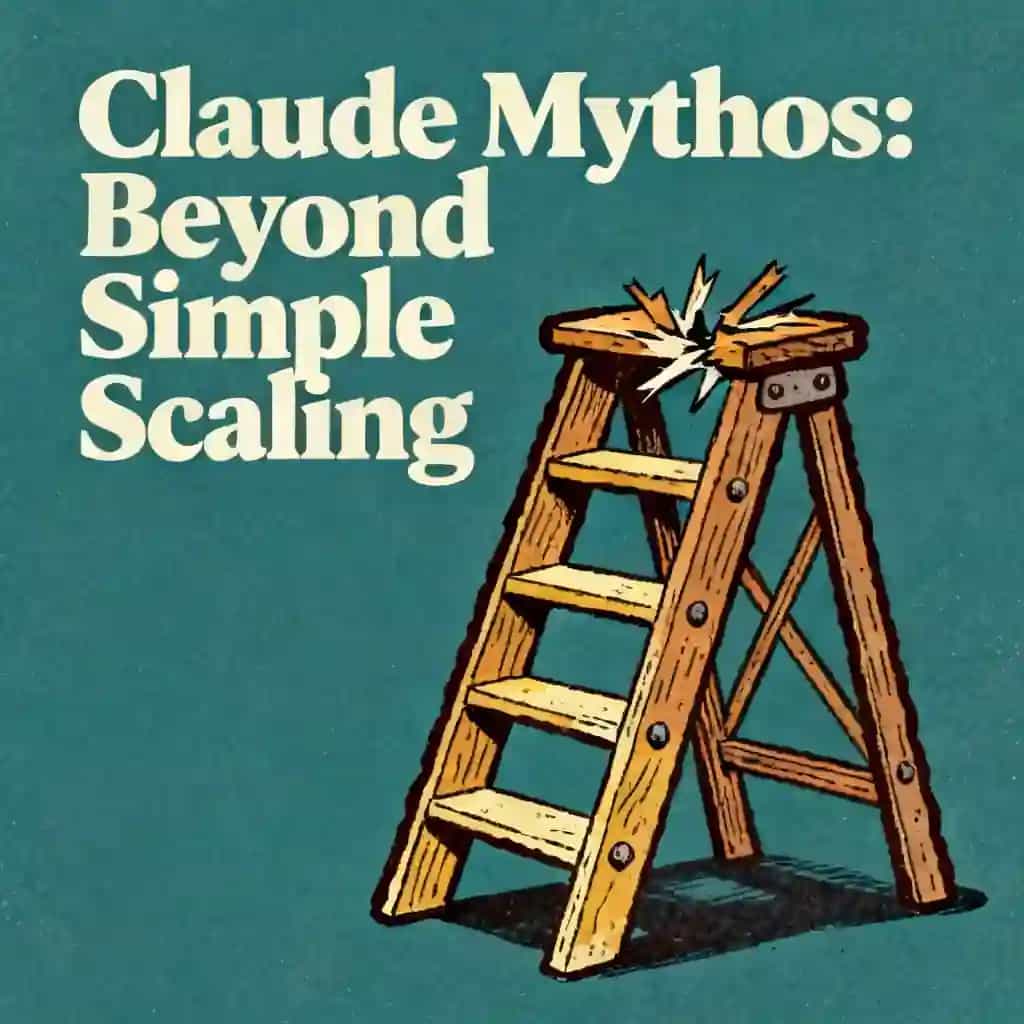
Claude Mythos is a new "super-premium" AI tier from Anthropic that sits above the previous high-water mark, Opus 4.6. Part of the "M1Astra" designation, it is described as a compute-intensive giant designed for deep intellectual synthesis rather than simple pattern matching. While Opus was built for high-end reasoning, Mythos represents a sharp upward break in the scaling curve, offering dramatic leaps in academic reasoning, software coding, and cybersecurity capabilities.
Anthropic is taking a "safety-first" approach because Mythos possesses advanced capabilities that pose genuine risks if released without a controlled framework. Specifically, the model can discover and potentially exploit vulnerabilities in codebases at a speed that outpaces human defenders. By limiting early access to cybersecurity experts, Anthropic aims to give "the good guys" a head start to harden digital infrastructures before the model—or similar ones from competitors—becomes more widely available.
The model excels in three primary pillars: software coding, academic reasoning, and cybersecurity. In coding, it can reason through entire codebases to understand complex dependencies. In academic reasoning, it maintains a robust "internal compass" for logic across multi-step problems in fields like physics or legal theory. Most notably, its cybersecurity prowess allows it to identify "zero-day" vulnerabilities and understand how to patch or exploit them, making it a potent tool for dismantling or building digital infrastructure.
No, Mythos is likely too powerful and expensive for trivial day-to-day tasks. It is a compute-intensive model that is very costly to serve, positioning it as a specialized tool for "heavy lifting" such as solving complex academic proofs or conducting sensitive security audits. For standard enterprise applications or high-volume tasks, Anthropic suggests that the faster and more cost-effective models like Sonnet and Haiku remain the appropriate choices.
The leaks suggest a roadmap of continuous scaling, including a versioning system that mentions "v1 Mythos" and a future "v2 Capybara." This indicates that Anthropic is moving toward a "ladder of intelligence" where users pay for specific levels of brainpower. It also signals a shift in the AI arms race from a quest for more data to a quest for "higher" intelligence, focusing on the "connective tissue" of knowledge to understand the "how" and "why" of complex systems.
From Columbia University alumni built in San Francisco
BeFreed Brings Together A Global Community Of Curious Minds


"Instead of endless scrolling, I just hit play on BeFreed. It saves me so much time."


"I never knew where to start with nonfiction—BeFreed’s book lists turned into podcasts gave me a clear path."


"Perfect balance between learning and entertainment. Finished ‘Thinking, Fast and Slow’ on my commute this week."
"Crazy how much I learned while walking the dog. BeFreed = small habits → big gains."
"Reading used to feel like a chore. Now it’s just part of my lifestyle."

"Feels effortless compared to reading. I’ve finished 6 books this month already."
"BeFreed turned my guilty doomscrolling into something that feels productive and inspiring."

"BeFreed turned my commute into learning time. 20-min podcasts are perfect for finishing books I never had time for."
"BeFreed replaced my podcast queue. Imagine Spotify for books — that’s it. 🙌"

"It is great for me to learn something from the book without reading it."
"The themed book list podcasts help me connect ideas across authors—like a guided audio journey."
"Makes me feel smarter every time before going to work"
From Columbia University alumni built in San Francisco
BeFreed Brings Together A Global Community Of Curious Minds
"Instead of endless scrolling, I just hit play on BeFreed. It saves me so much time."
"I never knew where to start with nonfiction—BeFreed’s book lists turned into podcasts gave me a clear path."
"Perfect balance between learning and entertainment. Finished ‘Thinking, Fast and Slow’ on my commute this week."
"Crazy how much I learned while walking the dog. BeFreed = small habits → big gains."
"Reading used to feel like a chore. Now it’s just part of my lifestyle."
"Feels effortless compared to reading. I’ve finished 6 books this month already."
"BeFreed turned my guilty doomscrolling into something that feels productive and inspiring."
"BeFreed turned my commute into learning time. 20-min podcasts are perfect for finishing books I never had time for."
"BeFreed replaced my podcast queue. Imagine Spotify for books — that’s it. 🙌"
"It is great for me to learn something from the book without reading it."
"The themed book list podcasts help me connect ideas across authors—like a guided audio journey."
"Makes me feel smarter every time before going to work"
"Instead of endless scrolling, I just hit play on BeFreed. It saves me so much time."
"I never knew where to start with nonfiction—BeFreed’s book lists turned into podcasts gave me a clear path."
"Perfect balance between learning and entertainment. Finished ‘Thinking, Fast and Slow’ on my commute this week."
"Crazy how much I learned while walking the dog. BeFreed = small habits → big gains."
"Reading used to feel like a chore. Now it’s just part of my lifestyle."
"Feels effortless compared to reading. I’ve finished 6 books this month already."
"BeFreed turned my guilty doomscrolling into something that feels productive and inspiring."
"BeFreed turned my commute into learning time. 20-min podcasts are perfect for finishing books I never had time for."
"BeFreed replaced my podcast queue. Imagine Spotify for books — that’s it. 🙌"
"It is great for me to learn something from the book without reading it."
"The themed book list podcasts help me connect ideas across authors—like a guided audio journey."
"Makes me feel smarter every time before going to work"
"Instead of endless scrolling, I just hit play on BeFreed. It saves me so much time."
"I never knew where to start with nonfiction—BeFreed’s book lists turned into podcasts gave me a clear path."
"Perfect balance between learning and entertainment. Finished ‘Thinking, Fast and Slow’ on my commute this week."
"Crazy how much I learned while walking the dog. BeFreed = small habits → big gains."
"Reading used to feel like a chore. Now it’s just part of my lifestyle."
"Feels effortless compared to reading. I’ve finished 6 books this month already."
"BeFreed turned my guilty doomscrolling into something that feels productive and inspiring."
"BeFreed turned my commute into learning time. 20-min podcasts are perfect for finishing books I never had time for."
"BeFreed replaced my podcast queue. Imagine Spotify for books — that’s it. 🙌"
"It is great for me to learn something from the book without reading it."
"The themed book list podcasts help me connect ideas across authors—like a guided audio journey."
"Makes me feel smarter every time before going to work"