
Apple: The Ecosystem Flywheel and Hardware Monetization Strategy
Explore how Apple uses its ecosystem flywheel to turn premium hardware into a recurring revenue engine with high retention and massive services growth.

Best quote from Apple: The Ecosystem Flywheel and Hardware Monetization Strategy
Apple isn't trying to sell a phone to everyone on Earth; they are trying to sell a premium 'gate pass' to an ecosystem that becomes more valuable the longer you stay inside it.

This audio lesson was created by a BeFreed community member
This lesson is part of the learning plan: 'Apple: The Ecosystem Flywheel'. Lesson topic: Apple: The Ecosystem Flywheel Overview: Is Apple still just a hardware company? Discover how a massive user base and high-margin services have transformed Apple into a recurring revenue engine. Key insights to cover in order: 1. Apple's business model has shifted from selling standalone devices to managing a global platform of over 2.5 billion active devices. 2. The hardware-services flywheel works by using premium devices to install a user base that is then monetized through high-margin software. 3. Services now contribute disproportionately to profitability with gross margins of approximately 76 percent compared to hardware's 36 to 40 percent. Listener profile: - Learning goal: 了解苹果公司的商业模式 - Background knowledge: 我对苹果公司的竞争对手研究和供应链管理有一定了解。 - Guidance: 重点介绍苹果的商业模式核心要素,包括产品生态系统、定价策略和市场定位。可以结合竞争对手分析和供应链管理的角度来深入解析。 Tailor examples, pacing, and depth to this listener. Avoid analogies or references that assume knowledge outside this listener's profile.






Frequently Asked Questions
The Apple Ecosystem Flywheel is a self-reinforcing business cycle where premium hardware serves as an on-ramp for users to enter a digital environment. Once inside, users are monetized through high-margin services, which increases the value of the ecosystem and makes the hardware more difficult to leave. This strategy transitions Apple from a traditional hardware manufacturer into a recurring revenue engine that maintains a 90% retention rate among its global user base.
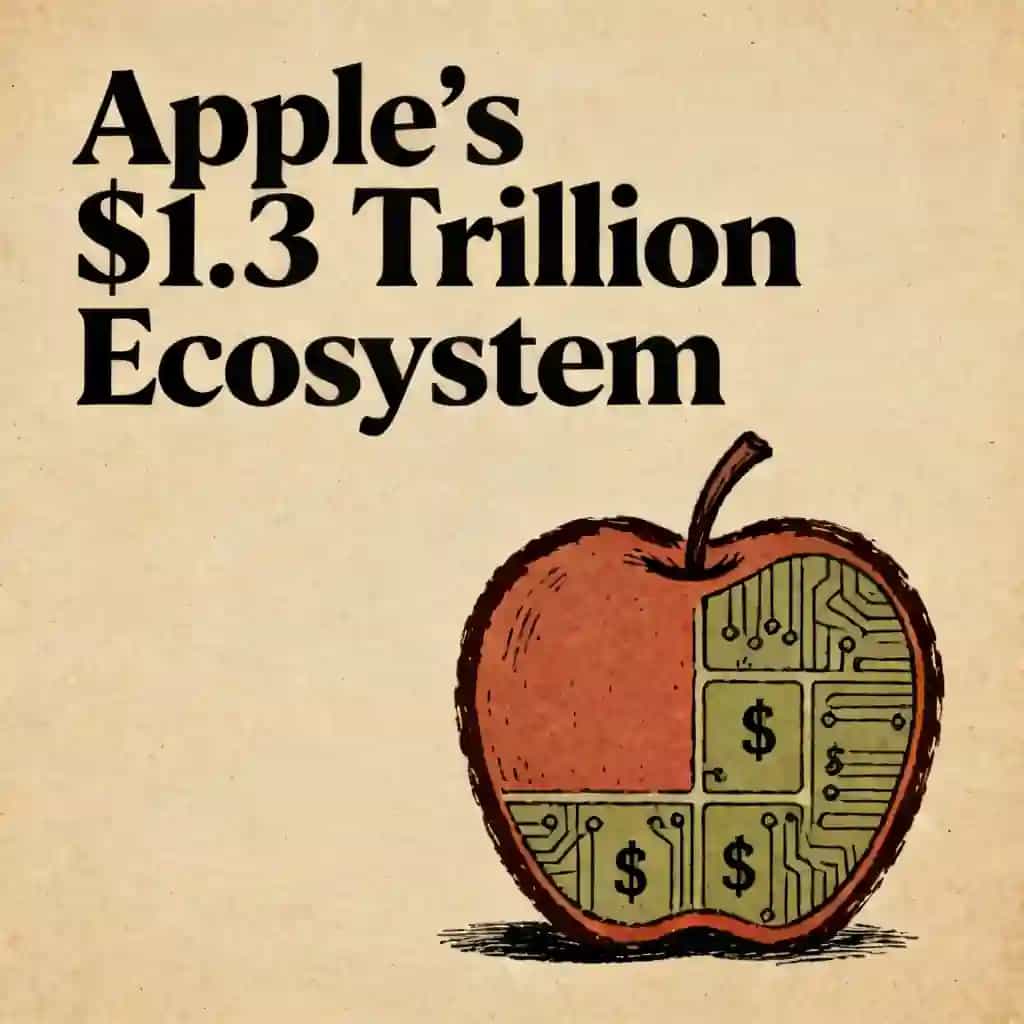
Apple demonstrates a unique market paradox by capturing an estimated 46% of global smartphone revenue despite holding only about 19% of the unit market share. Rather than attempting to sell a device to every person on Earth, Apple focuses on selling a premium gate pass to its ecosystem. This approach allows them to remain the most profitable consumer hardware company in history by prioritizing high-value users over total unit volume.
Apple's hardware, such as the iPhone, is viewed as the front door to a digital environment inhabited by over 2.5 billion active devices globally. While the devices are marvels of engineering and silicon, their primary strategic purpose is to install a user base that can be consistently monetized through services. This hardware monetization strategy ensures that the device is not just a one-off purchase but the start of a long-term financial relationship with the brand.
While Apple navigates competitors like Samsung in the consumer electronics space, its true competitive advantage lies in its supply chain prowess and ecosystem lock-in. By managing a premium environment that becomes more valuable the longer a user stays, Apple creates a barrier to entry for competitors. This strategy allows them to maintain dominant profitability and high retention rates that go beyond simple hardware specifications or price comparisons.
Discover more

苹果公司
苹果公司
苹果公司不仅是科技巨头,更是创新与商业美学的代名词。本方案适合企业家、产品经理及设计爱好者,旨在揭示其从产品设计到生态战略的成功密码。

Drive app traffic and user signups
Drive app traffic and user signups
In the competitive app economy, simply launching a product isn't enough; you need a systematic approach to scale and retain users. This plan is designed for growth marketers and product managers who want to master the full funnel from acquisition to long-term engagement.

Build and Scale a Billion-Dollar Tech Empire
Build and Scale a Billion-Dollar Tech Empire
This learning plan is designed for ambitious entrepreneurs and tech leaders aiming to transcend traditional startup success. It provides a strategic roadmap for navigating the journey from initial genesis to global market dominance through capital engineering and advanced platform strategies.
Tech, Investing & Economics Insights
Tech, Investing & Economics Insights
In an increasingly interconnected world, understanding the intersection of software, finance, and macroeconomics is essential for modern wealth creation. This plan is designed for professionals and aspiring investors who want to bridge the gap between technical innovation and market strategy.
Top Business Model from Industry Leaders
Top Business Model from Industry Leaders
Understanding successful business models is critical for entrepreneurs and executives navigating today's rapidly evolving marketplace. This learning plan provides practical frameworks and real-world case studies from industry leaders that help professionals design, evaluate, and transform business models for sustainable growth and competitive advantage.
Business, Tech & Productivity Strategy
Business, Tech & Productivity Strategy
In an era of rapid disruption, the ability to bridge the gap between high-level strategy and technical execution is a critical competitive advantage. This plan is designed for ambitious professionals and leaders who want to master digital transformation while optimizing their personal productivity for maximum scale.
Master Tech & Build a Business Empire
Master Tech & Build a Business Empire
In today's digital economy, the bridge between technical mastery and business acumen is where true empires are built. This path is designed for aspiring founders and tech leads who want to move beyond coding to master leadership, startup strategy, and exponential scaling.

Tech, Entrepreneurship & Innovation Explore
Tech, Entrepreneurship & Innovation Explore
In an era of rapid digital disruption, understanding the intersection of technology and business is essential for long-term success. This plan is designed for aspiring founders and corporate leaders who want to master the journey from technical literacy to scaling innovative, tech-driven organizations.
From Columbia University alumni built in San Francisco
"Instead of endless scrolling, I just hit play on BeFreed. It saves me so much time."


"I never knew where to start with nonfiction—BeFreed’s book lists turned into podcasts gave me a clear path."


"Perfect balance between learning and entertainment. Finished ‘Thinking, Fast and Slow’ on my commute this week."
"Crazy how much I learned while walking the dog. BeFreed = small habits → big gains."
"Reading used to feel like a chore. Now it’s just part of my lifestyle."

"Feels effortless compared to reading. I’ve finished 6 books this month already."
"BeFreed turned my guilty doomscrolling into something that feels productive and inspiring."

"BeFreed turned my commute into learning time. 20-min podcasts are perfect for finishing books I never had time for."
"BeFreed replaced my podcast queue. Imagine Spotify for books — that’s it. 🙌"

"It is great for me to learn something from the book without reading it."
"The themed book list podcasts help me connect ideas across authors—like a guided audio journey."
"Makes me feel smarter every time before going to work"
From Columbia University alumni built in San Francisco
"Instead of endless scrolling, I just hit play on BeFreed. It saves me so much time."
"I never knew where to start with nonfiction—BeFreed’s book lists turned into podcasts gave me a clear path."
"Perfect balance between learning and entertainment. Finished ‘Thinking, Fast and Slow’ on my commute this week."
"Crazy how much I learned while walking the dog. BeFreed = small habits → big gains."
"Reading used to feel like a chore. Now it’s just part of my lifestyle."
"Feels effortless compared to reading. I’ve finished 6 books this month already."
"BeFreed turned my guilty doomscrolling into something that feels productive and inspiring."
"BeFreed turned my commute into learning time. 20-min podcasts are perfect for finishing books I never had time for."
"BeFreed replaced my podcast queue. Imagine Spotify for books — that’s it. 🙌"
"It is great for me to learn something from the book without reading it."
"The themed book list podcasts help me connect ideas across authors—like a guided audio journey."
"Makes me feel smarter every time before going to work"
"Instead of endless scrolling, I just hit play on BeFreed. It saves me so much time."
"I never knew where to start with nonfiction—BeFreed’s book lists turned into podcasts gave me a clear path."
"Perfect balance between learning and entertainment. Finished ‘Thinking, Fast and Slow’ on my commute this week."
"Crazy how much I learned while walking the dog. BeFreed = small habits → big gains."
"Reading used to feel like a chore. Now it’s just part of my lifestyle."
"Feels effortless compared to reading. I’ve finished 6 books this month already."
"BeFreed turned my guilty doomscrolling into something that feels productive and inspiring."
"BeFreed turned my commute into learning time. 20-min podcasts are perfect for finishing books I never had time for."
"BeFreed replaced my podcast queue. Imagine Spotify for books — that’s it. 🙌"
"It is great for me to learn something from the book without reading it."
"The themed book list podcasts help me connect ideas across authors—like a guided audio journey."
"Makes me feel smarter every time before going to work"
"Instead of endless scrolling, I just hit play on BeFreed. It saves me so much time."
"I never knew where to start with nonfiction—BeFreed’s book lists turned into podcasts gave me a clear path."
"Perfect balance between learning and entertainment. Finished ‘Thinking, Fast and Slow’ on my commute this week."
"Crazy how much I learned while walking the dog. BeFreed = small habits → big gains."
"Reading used to feel like a chore. Now it’s just part of my lifestyle."
"Feels effortless compared to reading. I’ve finished 6 books this month already."
"BeFreed turned my guilty doomscrolling into something that feels productive and inspiring."
"BeFreed turned my commute into learning time. 20-min podcasts are perfect for finishing books I never had time for."
"BeFreed replaced my podcast queue. Imagine Spotify for books — that’s it. 🙌"
"It is great for me to learn something from the book without reading it."
"The themed book list podcasts help me connect ideas across authors—like a guided audio journey."
"Makes me feel smarter every time before going to work"


![[PDF] The Global App Store and Its Growth - Apple](/_next/image?url=https%3A%2F%2Fd1y2du6z1jfm9e.cloudfront.net%2Fassets%2Fpodcast%2Fpurple.png&w=1024&q=50)


![[f545b55c-fdd7-4cf9-a93c-82d33207b73b:c0000] 1111 p1-1](/_next/image?url=https%3A%2F%2Fd1y2du6z1jfm9e.cloudfront.net%2Fassets%2Fpodcast%2Fgreen.png&w=1024&q=50)


