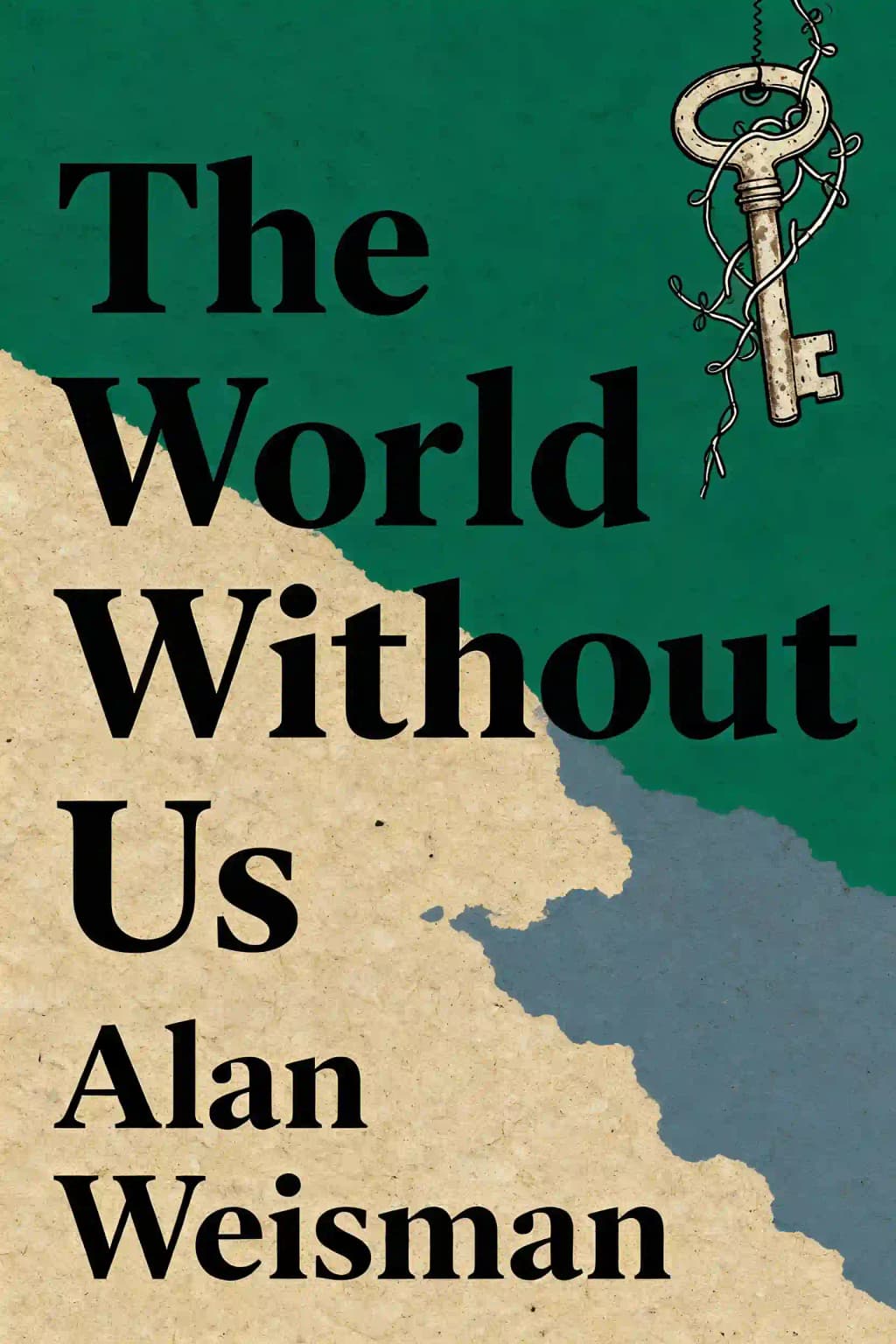
What if humans vanished tomorrow? TIME's #1 non-fiction book of 2007 explores Earth's recovery from our absence. Praised by Bill McKibben as "one of the grandest thought experiments of our time," it's changed how we understand our environmental footprint - and nature's resilience without us.
Alan H. Weisman, bestselling author of The World Without Us, is an award-winning journalist and environmental thinker whose work explores humanity’s impact on Earth. A former Laureate Professor in Journalism and Latin American Studies at the University of Arizona, Weisman combines scientific rigor with narrative flair.
His speculative nonfiction masterpiece envisions Earth’s recovery after human disappearance. His expertise spans global ecosystems and cultural anthropology, shaped by reporting from over 50 countries and radio documentaries for NPR.
Weisman’s critically acclaimed works include Countdown: Our Last, Best Hope for a Future on Earth? (a Los Angeles Times Book Prize finalist) and Gaviotas: A Village to Reinvent the World, which chronicles sustainable communities. The World Without Us became an international phenomenon, translated into 34 languages and named Best Nonfiction Book of 2007 by Time and Entertainment Weekly. Its enduring relevance underscores Weisman’s role as a leading voice in environmental discourse.
The World Without Us explores Earth’s transformation if humans vanished instantly, blending science and speculation. Alan Weisman details how cities like New York would flood within days, ecosystems would rebound in Chernobyl and the Korean DMZ, and lasting human legacies—like plastic waste and radioactive materials—would persist for millennia. The book combines environmental analysis with a call for sustainable population practices.
Environmental enthusiasts, science readers, and fans of speculative nonfiction will find this book compelling. It appeals to those curious about humanity’s planetary footprint, post-apocalyptic scenarios, or solutions to ecological crises. Educators and policymakers may also value its insights into long-term environmental consequences.
Yes—it’s a New York Times bestseller praised for its gripping narrative and rigorous research. The book won accolades from Time and Entertainment Weekly, offering a fresh perspective on humanity’s fragility against Earth’s resilience. Its blend of accessible science and vivid storytelling makes it a standout in environmental literature.
Within days, subway floods would erode New York’s foundations. Buildings would collapse within centuries, leaving only stainless steel, plastics, and bronze statues after 500 years. Nuclear plants might melt down without maintenance, causing localized disasters.
Plastic debris, radioactive isotopes, and Mount Rushmore’s granite faces could persist for millennia. Space artifacts like the Voyager Golden Record and radio waves might survive billions of years.
Weisman suggests reducing population growth and consumption, advocating for a global one-child policy as a controversial but impactful measure. He emphasizes that Earth’s recovery hinges on curbing human expansion.
Chernobyl’s exclusion zone, devoid of humans since 1986, has become a wildlife haven with thriving wolves, bears, and rare birds. This demonstrates nature’s rapid rebound when human activity ceases.
Farm animals like cows and chickens would struggle, while pets such as cats might adapt to hunting. Over time, surviving species could revert to wild behaviors, filling ecological niches left vacant by humans.
Some argue its population-control focus is unrealistic or ethically fraught. Others note it prioritizes long-term speculation over immediate climate solutions, though most praise its originality.
Weisman interviewed engineers, biologists, and art conservators, and visited locations like Chernobyl and the Korean DMZ. His interdisciplinary approach blends field observations with scientific projections.
“Our absence would leave a momentary scar, but Nature would heal it.” This underscores the book’s theme of Earth’s resilience versus humanity’s transient impact.
Unlike policy-driven works, Weisman’s narrative uses speculative scenarios to make ecological concepts tangible. It’s often paired with Silent Spring or The Sixth Extinction for its visionary approach.
저자의 목소리로 책을 느껴보세요
지식을 흥미롭고 예시가 풍부한 인사이트로 전환
핵심 아이디어를 빠르게 캡처하여 신속하게 학습
재미있고 매력적인 방식으로 책을 즐기세요
Without maintenance, structural integrity fails within decades.
Nature begins reclaiming our homes immediately after we're gone.
The oceans would absorb much of the excess CO2 over about 1,000 years.
The World Without Us의 핵심 아이디어를 이해하기 쉬운 포인트로 분해하여 혁신적인 팀이 어떻게 창조하고, 협력하고, 성장하는지 이해합니다.
The World Without Us을 빠른 기억 단서로 압축하여 솔직함, 팀워크, 창의적 회복력의 핵심 원칙을 강조합니다.

생생한 스토리텔링을 통해 The World Without Us을 경험하고, 혁신 교훈을 기억에 남고 적용할 수 있는 순간으로 바꿉니다.
무엇이든 물어보고, 목소리를 선택하고, 진정으로 공감되는 인사이트를 함께 만들어보세요.

샌프란시스코에서 컬럼비아 대학교 동문들이 만들었습니다
"Instead of endless scrolling, I just hit play on BeFreed. It saves me so much time."
"I never knew where to start with nonfiction—BeFreed’s book lists turned into podcasts gave me a clear path."
"Perfect balance between learning and entertainment. Finished ‘Thinking, Fast and Slow’ on my commute this week."
"Crazy how much I learned while walking the dog. BeFreed = small habits → big gains."
"Reading used to feel like a chore. Now it’s just part of my lifestyle."
"Feels effortless compared to reading. I’ve finished 6 books this month already."
"BeFreed turned my guilty doomscrolling into something that feels productive and inspiring."
"BeFreed turned my commute into learning time. 20-min podcasts are perfect for finishing books I never had time for."
"BeFreed replaced my podcast queue. Imagine Spotify for books — that’s it. 🙌"
"It is great for me to learn something from the book without reading it."
"The themed book list podcasts help me connect ideas across authors—like a guided audio journey."
"Makes me feel smarter every time before going to work"
샌프란시스코에서 컬럼비아 대학교 동문들이 만들었습니다

The World Without Us 요약을 무료 PDF 또는 EPUB으로 받으세요. 인쇄하거나 오프라인에서 언제든 읽을 수 있습니다.
What if every human disappeared overnight? Not through catastrophe or apocalypse, but simply vanished-as if we'd never existed at all. The alarm clocks would ring in empty bedrooms. Coffee pots would boil dry. Pets would wait by doors that never open. This isn't science fiction-it's a thought experiment that reveals something profound about our relationship with the planet we call home. Within hours, the world would begin transforming in ways both spectacular and unsettling. Subway tunnels in New York would flood as 753 pumps fall silent. Power grids would fail across continents. And nature, patient and relentless, would begin the slow work of reclaiming everything we've built. This scenario isn't about predicting our doom-it's about understanding what we've actually done to Earth, what might recover without us, and what scars we'd leave behind forever.