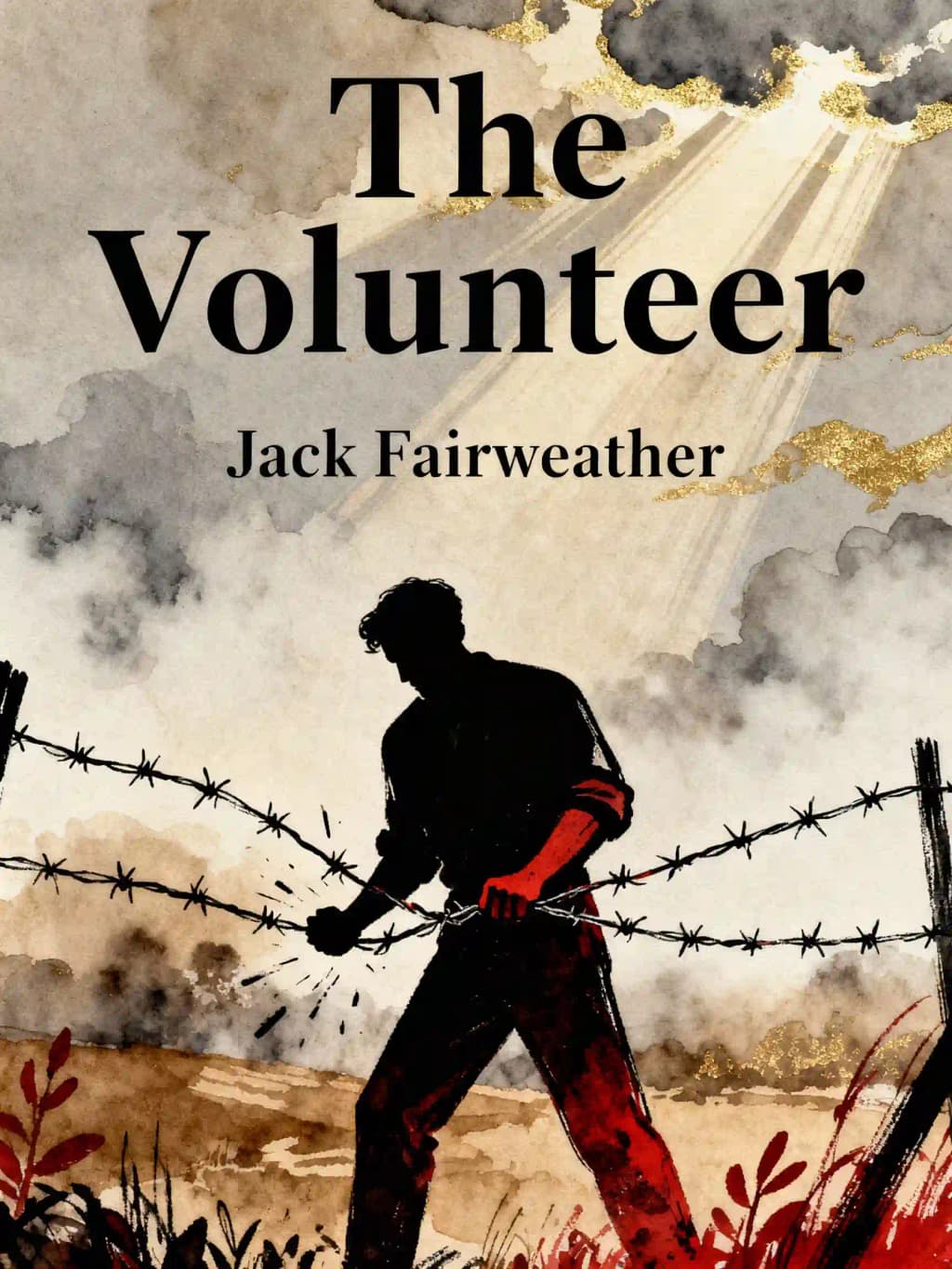
The Volunteer
One Man, an Underground Army, and the Secret Mission to Destroy Auschwitz
The Volunteer 개요
Witold Pilecki voluntarily entered Auschwitz to expose Nazi atrocities. This Costa Book Award winner reveals how one Polish hero risked everything, only to be thwarted not by Nazis, but by Allied indifference. Sebastian Junger calls it "breathtakingly researched" and "compelling."

The Volunteer의 핵심 주제
- holocaust resistance
- intelligence gathering
- polish underground state
- concentration camp survival
- moral courage
The Volunteer의 명언
"Your Poland is dead forever," pointing to the crematorium chimney as their "only way to freedom."
Food became the camp's currency.
Witold quickly realized his initial plan of staging a breakout was naive.
Life in the camp followed a brutal routine.
The Volunteer의 등장인물
- Witold PileckiPolish officer who volunteered to enter Auschwitz
- Jan WodarkiewiczLeader of the Secret Polish Army resistance
- Fritz SeidlerSS-Obersturmfuhrer at Auschwitz
- Stefan RoweckiColonel leading an inclusive resistance group
- Maria PileckiWitold's wife
저자 소개
The Volunteer의 저자 소개
Jack Fairweather, bestselling author of The Volunteer: One Man, an Underground Army, and the Secret Mission to Destroy Auschwitz, is an award-winning journalist and historian specializing in wartime narratives and Holocaust resistance.
A former Baghdad bureau chief for The Daily Telegraph and video journalist for The Washington Post in Afghanistan, Fairweather brings firsthand experience of conflict zones to his meticulously researched biographies. His work on The Volunteer—a Costa Book Award winner and Times book of the year—examines themes of courage and moral defiance through the true story of Witold Pilecki, a Polish operative who infiltrated Auschwitz to expose Nazi atrocities.
Fairweather’s other notable works include The Good War, a critique of modern conflict journalism, and The Prosecutor, which explores post-WWII war crime trials. His writing has been translated into 25 languages and forms the basis of a major exhibition in Berlin. A British Press Award recipient and board member of The Charlotte News, Fairweather combines rigorous historical analysis with gripping storytelling. The Volunteer has been hailed as a “modern classic” by critics and endorsed by institutions worldwide for its unflinching portrayal of resistance during humanity’s darkest hour.
The Volunteer 요약 다운로드
The Volunteer 요약을 무료 PDF 또는 EPUB으로 받으세요. 인쇄하거나 오프라인에서 언제든 읽을 수 있습니다.
이 책에 대한 FAQ
The Volunteer chronicles the true story of Witold Pilecki, a Polish resistance fighter who deliberately infiltrated Auschwitz to expose Nazi atrocities. Over two years, Pilecki organized an underground resistance, sabotaged camp operations, and escaped to deliver firsthand accounts of the Holocaust to the Allies. The book highlights his heroism, the Allies’ delayed response, and Pilecki’s tragic post-war persecution under Communist rule.
This book is essential for WWII history enthusiasts, Holocaust scholars, and readers seeking gripping narratives of resistance. Its blend of meticulous research and dramatic storytelling appeals to both academic and general audiences interested in unsung heroes.
The Costa judges praised The Volunteer as a “masterpiece of Holocaust testimony” for its revelation of Pilecki’s overlooked story and its examination of moral courage. Fairweather’s access to family archives and declassified files provided unprecedented depth, securing the 2019 biography award.
Pilecki volunteered for arrest during a Warsaw roundup in 1940. Inside Auschwitz, he built a covert network that smuggled intelligence to the Allies. After 2.5 years, he staged a daring escape through a bakery exit, trekked 100 miles to Warsaw, and compiled comprehensive reports on Nazi crimes.
Despite Pilecki’s detailed warnings about mass executions, Allied leaders initially dismissed Auschwitz as a “Polish problem.” The book reveals how political inertia and disbelief delayed intervention, allowing the Holocaust’s deadliest phase to unfold.
Key themes include the psychological toll of resistance, the fragility of moral conviction in oppressive regimes, and the legacy of individual bravery. Fairweather contrasts Pilecki’s idealism with the Allies’ pragmatic inaction.
Yes. Fairweather drew from recently declassified MI6 files, survivor testimonies, and Pilecki’s own covert reports—known as “Witold’s Report”—to reconstruct his missions. The book is widely regarded as the definitive account of Pilecki’s life.
Unlike broader Holocaust histories, it focuses on one man’s operational tactics against the SS, offering a ground-level view of resistance. Its narrative blends spy thriller pacing with academic rigor, setting it apart from memoirs or historical surveys.
As a war correspondent in Iraq and Afghanistan, Fairweather brings firsthand insight into combat psychology and intelligence operations. This expertise shapes his analysis of Pilecki’s strategic decisions under extreme duress.
The book underscores the dangers of complacency in confronting authoritarianism—a timely lesson amid modern genocides. Pilecki’s story also resonates with discussions about whistleblowing and ethical resistance in oppressive systems.
Executed by Poland’s Communist regime in 1948, Pilecki was erased from history until post-Soviet archives revealed his contributions. The book frames his death as a testament to lifelong defiance against tyranny.
While his earlier books (A War of Choice, The Good War) analyze modern conflicts, The Volunteer combines historical detective work with narrative drama, cementing Fairweather’s reputation for blending investigative journalism with gripping storytelling.





